




rear end

Race Director


Joined: May 2003
Posts: 10,956
Likes: 409
From: California

It's obvious that nothing will convince you guys that the world is not flat, nor are any of you willing to make any efforts (beyond pounding a keyboard) to prove your point.
Paul,
Again your best and only effort is to discredit people, this time it's the OP of the other thread and the people that have sent you PMs on the subject. I still have your PMs asking me for forgiveness about past rudeness. I thought you were FOS then, you've just proven me right. I did watch your thread on your brake fiasco and saw the same approach.
fordvicjr,
Please read what I wrote and compare it to what you wrote. You've again proven that you don't seem to be able to grasp any part of the discussion, nor did the diagram help. That's very sad. Since you like quoting sayings, here's one that fits: 'It is better to seem a fool than to open your mouth and remove all doubt.'
This discussion is now at the troll level, so buh-bye from me until someone has got some hard relevant evidence one way or the other.
I hear the Luddite society is looking for new members. I'll give them your CVs, the three of you are shoe-ins. Have fun!
Paul,
Again your best and only effort is to discredit people, this time it's the OP of the other thread and the people that have sent you PMs on the subject. I still have your PMs asking me for forgiveness about past rudeness. I thought you were FOS then, you've just proven me right. I did watch your thread on your brake fiasco and saw the same approach.
fordvicjr,
Please read what I wrote and compare it to what you wrote. You've again proven that you don't seem to be able to grasp any part of the discussion, nor did the diagram help. That's very sad. Since you like quoting sayings, here's one that fits: 'It is better to seem a fool than to open your mouth and remove all doubt.'
This discussion is now at the troll level, so buh-bye from me until someone has got some hard relevant evidence one way or the other.
I hear the Luddite society is looking for new members. I'll give them your CVs, the three of you are shoe-ins. Have fun!
it is you, that has proven NOTHING, and a video which shows just how wrong you are....
but it seems you have a narcissus type of complex. to bad...\\.... but you still have the mirror......
and my brakes? you had no input, but you sure do now hugh? well, we got it fixed, (no help from the self proclaimed expert here) and it was the valve, but i am sure by your math that it could not have been...
Last edited by pauldana; Jul 26, 2010 at 02:37 PM.

Burning Brakes


Joined: Jul 2009
Posts: 1,132
Likes: 14
From: A town SC
Mike, I have to prove not a !@#$ thing to you,But when your presented a video of what you said couldnt happen,you still dont admit that maybe your figures were off some. Instead you come back with excuses to support your bull!@#$.I know that when im told by one person im wrong about something I might argue, when told by a whole crew of people I might have to sit back and rethink my argument. Especially with video showing otherwise. This you will not do. Or maybe you just know everything about everything,which I know you think you do but....... Anyway Ill keep reading your bull!@#$ posts and such,you never know i might learn something else from you. Ive already learned that your perceived intelligence definitely doesn't match your IQ or common sense for that matter.So heres your insult from me,I figured since you liked to dish it out I would feed it back to you. 

Race Director
Joined: May 2005
Posts: 10,674
Likes: 122
From: Millington Illinois
St. Jude Donor '08-'09

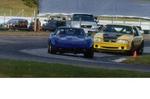
Your reading or comprehension skills seem to be impaired also. If you re-read it, this is a MODIFIED CAR with inwardly offset wheels. This, combined with the tuck-under of the tire negates probably two inches of the lever arm the GM designed into the suspension to achieve the constant inward load of the halfshaft ***'y. This video helps my assertions, not negates it. The OP of THIS thread has a non-modified car so your 'we're all a boy racers' stuff is not relevant.
Here's what the OP of that other thread thought about you table pounders:
"I have now finally had the patience to fully read some of the other posts and threads about this, and my personal conclusion is that except for a few select members, most of them are keyboard mechanics with little knowledge about what actually goes on. They have their own big bang theory but make it sound like its a science fact. "
"
I couldn't have said it better.
Here's what the OP of that other thread thought about you table pounders:
"I have now finally had the patience to fully read some of the other posts and threads about this, and my personal conclusion is that except for a few select members, most of them are keyboard mechanics with little knowledge about what actually goes on. They have their own big bang theory but make it sound like its a science fact.
"I couldn't have said it better.
I expected no less from you.
my personal conclusion is that except for a few select members, most of them are keyboard mechanics with little knowledge about what actually goes on. They have their own big bang theory but make it sound like its a science fact.
I couldn't have said it better either.
Think about this quote as you tap on your calculator keys and spew out your next BS theory.
Imagine that! The video disproves this statement. I have seen many differentials on unmodified cars that have cracked posi cases at the pin. The only way I can explain this is the yoke unloading and slaming back into the pin with enough force to crack the case. Any other explanations?

Instructor


Joined: Jul 2010
Posts: 241
Likes: 1
From: Lancaster California
Mako, you were doing good up until you said this...
edited:
Allow me to go a bit redneck for minute...
Look at this thing. Please just look.

It's an unmachined, stamped out retainer clip that retails for $1.75. It does not have a bearing surface. It's got a nice big gap in it. And it can be spread apart with your bare hands. I know we love to bash GM here, but do you really think those engineers designed the weight of the car to bear down on THAT part. :
:
edited:
Allow me to go a bit redneck for minute...
Look at this thing. Please just look.
It's an unmachined, stamped out retainer clip that retails for $1.75. It does not have a bearing surface. It's got a nice big gap in it. And it can be spread apart with your bare hands. I know we love to bash GM here, but do you really think those engineers designed the weight of the car to bear down on THAT part.
:Hi, i just had to chime in on this one
im working at nasa this summer and took this question to a few materials engineers, mechanical engineers, aerospace engineers, and other engineers, some of which also have older cars and are familiar with the subject.
anyways, all of these engineers (and i think a materials engineer would be a good source to answer this) have confirmed with total confidence that this cheap, unmacnined, stamped out retainer can withstand several thousand lbs of force, which is more than it will ever see in this sitatuion.
and yes, they did design it to hold the weight of the car. all chevy rear ends are like that. a co-worker of mine went through the same problem and said that putting that clip back on fixed his problem. but it is what holds the yokes in place, which hold the half shafts, which holds the wheel assembly tight in place.

Melting Slicks

Joined: Jun 2009
Posts: 2,343
Likes: 4
From: Anderson SC
Anyways, all of these engineers (and i think a materials engineer would be a good source to answer this) have confirmed with total confidence that this cheap, unmacnined, stamped out retainer can withstand several thousand lbs of force, which is more than it will ever see in this sitatuion.
and yes, they did design it to hold the weight of the car. all chevy rear ends are like that. a co-worker of mine went through the same problem and said that putting that clip back on fixed his problem. but it is what holds the yokes in place, which hold the half shafts, which holds the wheel assembly tight in place.
and yes, they did design it to hold the weight of the car. all chevy rear ends are like that. a co-worker of mine went through the same problem and said that putting that clip back on fixed his problem. but it is what holds the yokes in place, which hold the half shafts, which holds the wheel assembly tight in place.
-W
Last edited by Clams Canino; Jul 27, 2010 at 06:24 PM.
Instructor
Joined: Jul 2010
Posts: 241
Likes: 1
From: Lancaster California

which is all the more reason for this clip to be the problem.
the reason its there is to hold the yoke tight in place. nothing else holds it, and the clip holds nothing else... so this must be the purpose of this clip

Melting Slicks
Joined: Mar 2008
Posts: 2,666
Likes: 289
From: Spring Park MN
The axle can pull out because the lateral G force can exceed the down force in a turn. Both forces pivot around the same point from the contact point of the tire. Very simple.
And the reason I quoted this part of Mikes post was because when I was just autocrossing with my stock size 255/60/15 tires, they tucked under enough to show wear an inch up the sidewall. If that contributes to the issue than my stock suspension, stock style and sized tire car has the same issue.

Le Mans Master

Joined: Dec 2007
Posts: 6,422
Likes: 591
From: McHenry Illinois
And it's not actually the "whole weight" of the car it has to hold either. To get pullled out it's gotta be in the inboard wheel of a turn so the bulk of the weight is on the outboard wheel which is getting pushed to the inside. So really - all the clip has to hold is the weight on the unloaded wheel - untill the tire slides. I can see the clip holding that easily.
-W
-W
Corvette Stories
The Best of Corvette for Corvette Enthusiasts

Top 10 Most Explosive Corvettes Ever Made: Power-to-Weight Ratio Ranked!
Joe Kucinski
150 hp to 1,250 hp: Every Corvette Generation Compared by the Specs That Matter
Joe Kucinski
8 Coolest Corvette Pace Cars (and Replicas) of All Time
Verdad Gallardo
Top 10 Corvette Engines RANKED by Peak Torque (70+ Years of Muscle!)
Joe Kucinski
Corvette ZR1X Will Be Pacing the Indy 500, And Could Probably Race, Too!
Verdad Gallardo
Top 10 Corvettes Coming to Mecum Indy 2026!
Brett Foote
Top 10 C9 Corvette MUST-HAVES to Fix These C8 Generation Flaws!
Michael S. Palmer
10 Revolutionary 'Corvette Firsts' Most People Don't Know
Joe Kucinski
5 Reasons to Upgrade to an LS6-Powered Corvette; 5 Reasons to Stay LT2
Michael S. Palmer
Race Director
Joined: Mar 2006
Posts: 14,112
Likes: 28
From: Florida
Mako, you were doing good up until you said this...
It doesn't overcome it. Sorry, it just doesn't. The geometry of the rear suspension is designed such that it doesn't. 300 lbs of preload doesn't sound like a lot when, like you said, you're loading that tire up with ~1800lbs. But you have to remember that force is working on you from the small end of the lever.
edited:
Allow me to go a bit redneck for minute...
Look at this thing. Please just look.
It's an unmachined, stamped out retainer clip that retails for $1.75. It does not have a bearing surface. It's got a nice big gap in it. And it can be spread apart with your bare hands. I know we love to bash GM here, but do you really think those engineers designed the weight of the car to bear down on THAT part.:
It doesn't overcome it. Sorry, it just doesn't. The geometry of the rear suspension is designed such that it doesn't. 300 lbs of preload doesn't sound like a lot when, like you said, you're loading that tire up with ~1800lbs. But you have to remember that force is working on you from the small end of the lever.
edited:
Allow me to go a bit redneck for minute...
Look at this thing. Please just look.
It's an unmachined, stamped out retainer clip that retails for $1.75. It does not have a bearing surface. It's got a nice big gap in it. And it can be spread apart with your bare hands. I know we love to bash GM here, but do you really think those engineers designed the weight of the car to bear down on THAT part.
:Hi, i just had to chime in on this one
im working at nasa this summer and took this question to a few materials engineers, mechanical engineers, aerospace engineers, and other engineers, some of which also have older cars and are familiar with the subject.
anyways, all of these engineers (and i think a materials engineer would be a good source to answer this) have confirmed with total confidence that this cheap, unmacnined, stamped out retainer can withstand several thousand lbs of force, which is more than it will ever see in this sitatuion.
and yes, they did design it to hold the weight of the car. all chevy rear ends are like that. a co-worker of mine went through the same problem and said that putting that clip back on fixed his problem. but it is what holds the yokes in place, which hold the half shafts, which holds the wheel assembly tight in place.
I posted this before, also in a thread that mysteriously got deleted, but if I remember correctly, that cheap looking stamped snap ring installed properly in treated metal, is good up to around 17,000 lbs.
I'm sure GM put it there for some of that capability.

Having some NASA engineers calculate this would be great. Obviously they are used to designing failsafe systems that cannot be fully tested.
Maybe they can use a real CAE program, instead of just a cad/cam to produce a pretty picture.
Melting Slicks
Joined: Feb 2003
Posts: 3,053
Likes: 4
St. Jude Donor '03,'11
Please. It doesn't take a mechanical genius to intuitively look at that thing and decide it ain't gonna cut it.
This design is junk. Haven't you heard of c-clip eliminator kits being put on straight axles? They used to walk right out of the housing until you got a crash.
Race Director
Joined: May 2005
Posts: 10,674
Likes: 122
From: Millington Illinois
St. Jude Donor '08-'09
The way I see it the c clip only ever contacts the flat inner face of the spyder gear during cornering. The c clip is spring steel snapped into a tight fitting groove in the axle. The axle is a splined slip fit through this spyder gear. Any force the c clip sees is tranfered from the axle to the spyder. This outward force on the axle would only be approx 1/2 the weight of the car (1800 lbs.) at 1 G minus the inward force created from the suspension design and down force. For this clip to fail it would have to shear around the curcumference of the clip or fatigue from repeated hard contact with the spyder. It is adequate for the intended use and minimal load it sees under most conditions. I have seen them fail. For them to fail there has to be a lot of pressure pulling out on the sideyoke repeatedly. If the clip is seeing this type of loading it is obvious to me that if it were not there the axle will pull out until the trailing arm bushing stops the outward movement of the trailing arm assembly. This is what you are seeing in the video. These are the facts and they are undisputed.
Burning Brakes
Joined: Jul 2009
Posts: 1,132
Likes: 14
From: A town SC
The way I see it the c clip only ever contacts the flat inner face of the spyder gear during cornering. The c clip is spring steel snapped into a tight fitting groove in the axle. The axle is a splined slip fit through this spyder gear. Any force the c clip sees is tranfered from the axle to the spyder. This outward force on the axle would only be approx 1/2 the weight of the car (1800 lbs.) at 1 G minus the inward force created from the suspension design and down force. For this clip to fail it would have to shear around the curcumference of the clip or fatigue from repeated hard contact with the spyder. It is adequate for the intended use and minimal load it sees under most conditions. I have seen them fail. For them to fail there has to be a lot of pressure pulling out on the sideyoke repeatedly. If the clip is seeing this type of loading it is obvious to me that if it were not there the axle will pull out until the trailing arm bushing stops the outward movement of the trailing arm assembly. This is what you are seeing in the video. These are the facts and they are undisputed.
Melting Slicks
Joined: Mar 2008
Posts: 2,666
Likes: 289
From: Spring Park MN
Here, someone with the time can figure out the load capacity of the snap ring with this link.
http://www.americanring.net/rings_thrustloads.aspx
http://www.americanring.net/rings_thrustloads.aspx
Race Director
Joined: May 2005
Posts: 10,674
Likes: 122
From: Millington Illinois
St. Jude Donor '08-'09
PM from wcsinx
Originally Posted by wcsinx
Originally Posted by 63mako
What does this do to your theory?

Originally Posted by Mike Ward
this is a MODIFIED CAR with inwardly offset wheels. This, combined with the tuck-under of the tire negates probably two inches of the lever arm the GM designed into the suspension to achieve the constant inward load of the halfshaft ***'y. This video helps my assertions, not negates it.
And FYI the reason I didn't respond in the thread is because 1. I didn't see it pop back up and 2. I really don't care enough.
Originally Posted by Mike Ward

Last edited by 63mako; Jul 31, 2010 at 12:40 PM.

Racer
Joined: Dec 2004
Posts: 410
Likes: 0
From: Wichita Kansas
A couple of comments;
The drawing listed only shows the effect of a static load and because the shafts aren't level isn't taking into account the car weight. Also no where do I see any indication of what happens during a side load.
Good quality snap rings are made from spring steel 1070 or higher carbon so they are very strong when heat treated. They are loaded in shear and as long as they fit correctly and the groove in the axle doesn't elongate they will stay there. I had a stress Engineer do the calculations on the shear strength of the snap ring in an 1 inch axle and it can be from about 10,000 to 20,000 lbs depending on the material strengths of the axle and snap ring. The axles on my 72 had 135k miles and were barely worn. They Autocrossed for 12 years much of the time with 295/35/17 A Hoosiers. It is my understanding that the quality of axles supplied to GM over the years varied significantly. The best way to make an axle is to machine it from 4140 steel and induction harden it to about 1/8 inch depth. Induction hardening quality can vary tremendously from lot to lot and depends not only on the heat treating but also on the prior heat history of the steel, i.e. normalized steel induction hardens better than annealed. There are much cheaper ways to make these parts and we all know the GM quality was reduced to save costs over the years. This quality issue also goes for snap ring quality, they can be made from mild steel and not heat treated, therefore have much less strength. Some of this could have been that late 70's cars didn't have as high torque motors and someoned decided the stonger axles weren't needed.
The snap ring is in there for good reason the Video proves my seat of the pants experience that since a C-3 does not have an upper A arm the snap ring is needed to keep the axle from coming partially out and causing the tire to a very unsafe positive camber.
The drawing listed only shows the effect of a static load and because the shafts aren't level isn't taking into account the car weight. Also no where do I see any indication of what happens during a side load.
Good quality snap rings are made from spring steel 1070 or higher carbon so they are very strong when heat treated. They are loaded in shear and as long as they fit correctly and the groove in the axle doesn't elongate they will stay there. I had a stress Engineer do the calculations on the shear strength of the snap ring in an 1 inch axle and it can be from about 10,000 to 20,000 lbs depending on the material strengths of the axle and snap ring. The axles on my 72 had 135k miles and were barely worn. They Autocrossed for 12 years much of the time with 295/35/17 A Hoosiers. It is my understanding that the quality of axles supplied to GM over the years varied significantly. The best way to make an axle is to machine it from 4140 steel and induction harden it to about 1/8 inch depth. Induction hardening quality can vary tremendously from lot to lot and depends not only on the heat treating but also on the prior heat history of the steel, i.e. normalized steel induction hardens better than annealed. There are much cheaper ways to make these parts and we all know the GM quality was reduced to save costs over the years. This quality issue also goes for snap ring quality, they can be made from mild steel and not heat treated, therefore have much less strength. Some of this could have been that late 70's cars didn't have as high torque motors and someoned decided the stonger axles weren't needed.
The snap ring is in there for good reason the Video proves my seat of the pants experience that since a C-3 does not have an upper A arm the snap ring is needed to keep the axle from coming partially out and causing the tire to a very unsafe positive camber.
Race Director
Joined: Mar 2006
Posts: 14,112
Likes: 28
From: Florida
Finally
It would be interesting to test some NOS yokes for hardness, snaps too. If the hardness ran thru the depth of the snap ring cut, then the shear should be way up there.
On the snap ring, I doubt GM would be silly enough to resort to mild steel untreated, but you never know.
It would be interesting to test some NOS yokes for hardness, snaps too. If the hardness ran thru the depth of the snap ring cut, then the shear should be way up there.
On the snap ring, I doubt GM would be silly enough to resort to mild steel untreated, but you never know.
Race Director
Joined: May 2003
Posts: 10,956
Likes: 409
From: California
The way I see it the c clip only ever contacts the flat inner face of the spyder gear during cornering. The c clip is spring steel snapped into a tight fitting groove in the axle. The axle is a splined slip fit through this spyder gear. Any force the c clip sees is tranfered from the axle to the spyder. This outward force on the axle would only be approx 1/2 the weight of the car (1800 lbs.) at 1 G minus the inward force created from the suspension design and down force. For this clip to fail it would have to shear around the curcumference of the clip or fatigue from repeated hard contact with the spyder. It is adequate for the intended use and minimal load it sees under most conditions. I have seen them fail. For them to fail there has to be a lot of pressure pulling out on the sideyoke repeatedly. If the clip is seeing this type of loading it is obvious to me that if it were not there the axle will pull out until the trailing arm bushing stops the outward movement of the trailing arm assembly. This is what you are seeing in the video. These are the facts and they are undisputed.
A couple of comments;
The drawing listed only shows the effect of a static load and because the shafts aren't level isn't taking into account the car weight. Also no where do I see any indication of what happens during a side load.
Good quality snap rings are made from spring steel 1070 or higher carbon so they are very strong when heat treated. They are loaded in shear and as long as they fit correctly and the groove in the axle doesn't elongate they will stay there. I had a stress Engineer do the calculations on the shear strength of the snap ring in an 1 inch axle and it can be from about 10,000 to 20,000 lbs depending on the material strengths of the axle and snap ring. The axles on my 72 had 135k miles and were barely worn. They Autocrossed for 12 years much of the time with 295/35/17 A Hoosiers. It is my understanding that the quality of axles supplied to GM over the years varied significantly. The best way to make an axle is to machine it from 4140 steel and induction harden it to about 1/8 inch depth. Induction hardening quality can vary tremendously from lot to lot and depends not only on the heat treating but also on the prior heat history of the steel, i.e. normalized steel induction hardens better than annealed. There are much cheaper ways to make these parts and we all know the GM quality was reduced to save costs over the years. This quality issue also goes for snap ring quality, they can be made from mild steel and not heat treated, therefore have much less strength. Some of this could have been that late 70's cars didn't have as high torque motors and someoned decided the stonger axles weren't needed.
The snap ring is in there for good reason the Video proves my seat of the pants experience that since a C-3 does not have an upper A arm the snap ring is needed to keep the axle from coming partially out and causing the tire to a very unsafe positive camber.
The drawing listed only shows the effect of a static load and because the shafts aren't level isn't taking into account the car weight. Also no where do I see any indication of what happens during a side load.
Good quality snap rings are made from spring steel 1070 or higher carbon so they are very strong when heat treated. They are loaded in shear and as long as they fit correctly and the groove in the axle doesn't elongate they will stay there. I had a stress Engineer do the calculations on the shear strength of the snap ring in an 1 inch axle and it can be from about 10,000 to 20,000 lbs depending on the material strengths of the axle and snap ring. The axles on my 72 had 135k miles and were barely worn. They Autocrossed for 12 years much of the time with 295/35/17 A Hoosiers. It is my understanding that the quality of axles supplied to GM over the years varied significantly. The best way to make an axle is to machine it from 4140 steel and induction harden it to about 1/8 inch depth. Induction hardening quality can vary tremendously from lot to lot and depends not only on the heat treating but also on the prior heat history of the steel, i.e. normalized steel induction hardens better than annealed. There are much cheaper ways to make these parts and we all know the GM quality was reduced to save costs over the years. This quality issue also goes for snap ring quality, they can be made from mild steel and not heat treated, therefore have much less strength. Some of this could have been that late 70's cars didn't have as high torque motors and someoned decided the stonger axles weren't needed.
The snap ring is in there for good reason the Video proves my seat of the pants experience that since a C-3 does not have an upper A arm the snap ring is needed to keep the axle from coming partially out and causing the tire to a very unsafe positive camber.
Finally
It would be interesting to test some NOS yokes for hardness, snaps too. If the hardness ran thru the depth of the snap ring cut, then the shear should be way up there.
On the snap ring, I doubt GM would be silly enough to resort to mild steel untreated, but you never know.
It would be interesting to test some NOS yokes for hardness, snaps too. If the hardness ran thru the depth of the snap ring cut, then the shear should be way up there.
On the snap ring, I doubt GM would be silly enough to resort to mild steel untreated, but you never know.
with all above.....great video, it seems that the debate has been resolved... and a lot of interesting information...

Race Director
Joined: Jul 2001
Posts: 15,892
Likes: 42
I am truly baffled as to why you or any of the others here cannot understand this.
Burning Brakes
Joined: Jul 2009
Posts: 1,132
Likes: 14
From: A town SC
The non-stock wheel offset (1" inch narrower track), severe tuck under of the tire contact patch and greater overall tire diameter all have a pronounced negative effect on the inward loading of the yoke vs. the stock geometry.
I am truly baffled as to why you or any of the others here cannot understand this.
I am truly baffled as to why you or any of the others here cannot understand this.
Race Director
Joined: Jul 2001
Posts: 15,892
Likes: 42
And as predictable as clock work, one of the trolls feels the need to waste more ink. Being that you've not contributed one bit of technical information to this thread, don't seem to be able to comprehend or acknowledge what others are saying (most remarkably the ones that do agree with the viewpoint), and are here only to be disruptive, why don't you just go away before you get this post locked?