



Overheating problem
Le Mans Master


Joined: May 2006
Posts: 9,993
Likes: 1,136
From: League City Tx

FYI, here is my thread where I have been doing all of my water temp testing....
http://forums.corvetteforum.com/c3-t...e-step-in.html
I will update it tomorrow after the Dewitts rad install and following test.
http://forums.corvetteforum.com/c3-t...e-step-in.html
I will update it tomorrow after the Dewitts rad install and following test.
Advanced

Joined: Jul 2004
Posts: 76
Likes: 0
From: Charlotte North Carolina

Le Mans Master
Joined: Aug 2006
Posts: 7,431
Likes: 1,562
From: mount holly NC
2025 c3 ('74-'82) of the Year Finalist - Unmodified
2019 C3 of Year Finalist (appearance mods)
Pretty Cool Huh!
Radiator
I don't have cooling data for copper/brass vs. aluminum radiators, and I do see that the aluminum radiators do have the benefit of outstanding marketing. However, I do notice that copper has a much higher coefficient of thermal conductivity than aluminum, and dramatically more than aluminum oxide-
Aluminum- 255 W/(m *c K)
Aluminum oxide- 30 W/(m *c K)
Copper- 400 W/(m *c K)
Source: http://www.engineeringtoolbox.com/th...ity-d_429.html
Based on these material properties, if everything else remains equal (construction, capacity, etc), a copper radiator is superior to an aluminum one at a ratio of approximately 2:1 as far as being an effective heat transfer device. This doesn't help us shed weight, but it does help keep the engine cool. On paper, I'm with gingerbreadman1977. All that said, a lot of people say that a kick-butt super duper pure inobtanium coated aluminum radiator was a key element in fixing their overheating problems, so maybe there's a secret in how they're made. I hope I didn't make a mistake in ordering my new 4-core copper one.
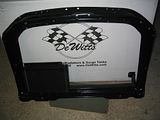
A page from DeWitts catalog might explain it better then me.


Team Owner


Joined: Aug 2000
Posts: 21,477
Likes: 463
From: Massillon,Ohio USA
2020 C3 of the Year Finalist - Unmodified
Cruise-In VI Veteran
St. Jude Donor '08-'09-'10-'11-'12
.....there was a "heavy duty cooling" option that could have been ordered on '77-'79 Corvette(may have been part of a package, such as "trailer towing" which they did have) . I've seen about a dozen of these and it basically was a thick, rubber 5 inch tall lower spoiler that took the place of the smaller hard plastic chin spoiler. Don't know if it's available anywhere, but the first one I saw I swore was homemade until I had seen several more over the years.
....remember this on "highway speeds". You're engine is working much harder pulling the car along at 65mph vs 30mph. Harder working gasoline engine=more friction, more heat.
...if you think this is BS, ride a bicycle at 15mph for a half hour. Then, try like 23mph for a half hour(if you can)and see how much harder your body is working.
....remember this on "highway speeds". You're engine is working much harder pulling the car along at 65mph vs 30mph. Harder working gasoline engine=more friction, more heat.
...if you think this is BS, ride a bicycle at 15mph for a half hour. Then, try like 23mph for a half hour(if you can)and see how much harder your body is working.
Last edited by Paul Borowski; Jun 12, 2010 at 09:19 PM.
Thread Starter
Pro


Joined: Jul 2005
Posts: 517
Likes: 7
From: Peoria IL
.....there was a "heavy duty cooling" option that could have been ordered on '77-'79 Corvette(may have been part of a package, such as "trailer towing" which they did have) . I've seen about a dozen of these and it basically was a thick, rubber 5 inch tall lower spoiler that took the place of the smaller hard plastic chin spoiler. Don't know if it's available anywhere, but the first one I saw I swore was homemade until I had seen several more over the years.
....remember this on "highway speeds". You're engine is working much harder pulling the car along at 65mph vs 30mph. Harder working gasoline engine=more friction, more heat.
...if you think this is BS, ride a bicycle at 15mph for a half hour. Then, try like 23mph for a half hour(if you can)and see how much harder your body is working.
....remember this on "highway speeds". You're engine is working much harder pulling the car along at 65mph vs 30mph. Harder working gasoline engine=more friction, more heat.
...if you think this is BS, ride a bicycle at 15mph for a half hour. Then, try like 23mph for a half hour(if you can)and see how much harder your body is working.
I'll go look for that right now. I'll build one if I can't find one for sale somewhere.
Last edited by dstaley; Jun 12, 2010 at 09:44 PM.
Le Mans Master
Joined: May 2006
Posts: 9,993
Likes: 1,136
From: League City Tx
Fantastic information. The fan clutch thing was just a left-field theory based on the confusing bits of information I am/was working with. I have been pondering this all winter, and have just in the last couple of days taken the car out of storage.
I need to get it back out on the highway for more testing. I can certainly fatten up the cruise AFR and see how it behaves. I couldn't hear pinging with the T-tops off and the exhaust roaring (nor could I hear much of anything) but there is no question it could have been happening undetected.
PLEASE DO keep us posted on what you find with the new radiator. I might have to save up for one of those and try to return the new copper one I have now. Nothing sorts the wheat from the chaff like real data.
I'll give the adjusted cruise fuel mixture a try. What's a good target AFR for cruise?
I'll also check into the extended chin spoiler. Maybe I can fabricate something or retrofit something from a junkyard car for a test.
I don't remember my RPM at 70 MPH, but I can check that the next time I get it out.
I need to get it back out on the highway for more testing. I can certainly fatten up the cruise AFR and see how it behaves. I couldn't hear pinging with the T-tops off and the exhaust roaring (nor could I hear much of anything) but there is no question it could have been happening undetected.
PLEASE DO keep us posted on what you find with the new radiator. I might have to save up for one of those and try to return the new copper one I have now. Nothing sorts the wheat from the chaff like real data.
I'll give the adjusted cruise fuel mixture a try. What's a good target AFR for cruise?
I'll also check into the extended chin spoiler. Maybe I can fabricate something or retrofit something from a junkyard car for a test.
I don't remember my RPM at 70 MPH, but I can check that the next time I get it out.
UPDATE....
Go check my thread for my latest test.....Dewitts seemed to knock 20* off of my highway water temps..... Today was 88* and I was running 165* on a 30 mile cruise at 3000 rpms with AC on...... I'd say it helped....

Thread Starter
Pro
Joined: Jul 2005
Posts: 517
Likes: 7
From: Peoria IL
This is depressing. We're working hard to pay off debts, so $550 for a new radiator is already out of reach. I guess we wasted our money on the new brass radiator. I'll have to try to return it, but they probably won't do better than replacing it with another new brass one.
Anyone want to buy an otherwise very nice Corvette?
Anyone want to buy an otherwise very nice Corvette?
Thread Starter
Pro
Joined: Jul 2005
Posts: 517
Likes: 7
From: Peoria IL
In case anyone is interested, I wanted to follow up on this thread.
I returned my new copper/brass radiator to Advance Auto and got a refund. I explained all I had been through to the store manager and he agreed to approve a refund since I had indeed exhausted all of the obvious other avenues.
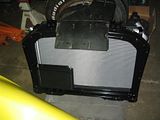
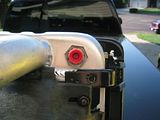
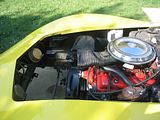
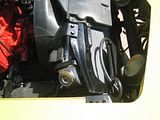
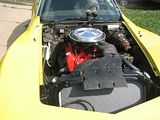
I was impressed with the scientific writeup from ajrothm and decided to follow his lead. I also returned the "heavy duty" fan clutch to O'Reillys and bought the "severe duty" one. I also ordered a new DeWitts radiator. It took two weeks (!!!) to get it, but it is a quality part. The only fitment issue I had was that the drain petcock needed a little love from the bench grinder to clear the right hand radiator support arm. While I was at it, I also ordered a new full seal set and chin spoiler from Dr. Rebuild, painted my inner fenders with Eastwood Underhood Black paint, and powder coated my core support, associated radiator and fan shroud brackets, and the hood hinges & hood prop. I also added a transmission cooler while I had the core support out.
The radiator arrived on Monday, I took Wednesday off of work to install it, and got to drive it to work and awhile afterwords for some testing today.
Here are some pictures for anyone interested:
Results:
Ambient temperatures today reached about 90*F. I had experimented with timing late last summer trying to address my overheating issue, and didn't remember where it was when I had put it up for the winter. I drove it today like it was when it was put into storage, and the difference was night & day. The temperature never exceeded 195 *F, and only exceeded 185 *F when I was following along with slow traffic. I drove for about 10 miles at 75 MPH and temperatures were stable at 183 *F. It is entirely possible that I may have some air still in the heads/block somehow, although I did drill three 1/16" holes in the brass thermostat on Wednesday to make it as easy as possible to bleed the cooling system.
After getting home from work, I measured the timing- 34* BTDC @ 3000 RPM without the vacuum advance. I took out 4* to eliminate the light detonation I had noticed under heavy throttle, and took it back out on the highway.
Ambient temperatures had dropped to 86 *F, but temps on the highway were still rock steady at 183 *F. Engine temperatures dropped slightly on the highway, so I'm confident that my original problem was insufficient cooling system capacity.
I noticed that my fan rotates several revolutions when I shut the engine off. I assume this may be related to the somewhat higher engine temperatures when I slow down, the opposite effect to what I had before (overheating on the highway, but instant cool down when speed dropped below 60 MPH). I still have a few seals left to install between the hood & the core support, and I will install them soon.
Overall, I'm very pleased with the radiator. I'm now confident enough in the cooling system that I'm ready to move ahead with my EFI swap and roller cam conversion plans, which I'll complete next year or later when our debt payoff goals are reached. For now, I can tinker with the Quadrajet carburetor, fine tune the performance & fuel economy, and enjoy driving the car.
Thanks for your help, guys!
I returned my new copper/brass radiator to Advance Auto and got a refund. I explained all I had been through to the store manager and he agreed to approve a refund since I had indeed exhausted all of the obvious other avenues.
I was impressed with the scientific writeup from ajrothm and decided to follow his lead. I also returned the "heavy duty" fan clutch to O'Reillys and bought the "severe duty" one. I also ordered a new DeWitts radiator. It took two weeks (!!!) to get it, but it is a quality part. The only fitment issue I had was that the drain petcock needed a little love from the bench grinder to clear the right hand radiator support arm. While I was at it, I also ordered a new full seal set and chin spoiler from Dr. Rebuild, painted my inner fenders with Eastwood Underhood Black paint, and powder coated my core support, associated radiator and fan shroud brackets, and the hood hinges & hood prop. I also added a transmission cooler while I had the core support out.
The radiator arrived on Monday, I took Wednesday off of work to install it, and got to drive it to work and awhile afterwords for some testing today.
Here are some pictures for anyone interested:


Results:
Ambient temperatures today reached about 90*F. I had experimented with timing late last summer trying to address my overheating issue, and didn't remember where it was when I had put it up for the winter. I drove it today like it was when it was put into storage, and the difference was night & day. The temperature never exceeded 195 *F, and only exceeded 185 *F when I was following along with slow traffic. I drove for about 10 miles at 75 MPH and temperatures were stable at 183 *F. It is entirely possible that I may have some air still in the heads/block somehow, although I did drill three 1/16" holes in the brass thermostat on Wednesday to make it as easy as possible to bleed the cooling system.
After getting home from work, I measured the timing- 34* BTDC @ 3000 RPM without the vacuum advance. I took out 4* to eliminate the light detonation I had noticed under heavy throttle, and took it back out on the highway.
Ambient temperatures had dropped to 86 *F, but temps on the highway were still rock steady at 183 *F. Engine temperatures dropped slightly on the highway, so I'm confident that my original problem was insufficient cooling system capacity.
I noticed that my fan rotates several revolutions when I shut the engine off. I assume this may be related to the somewhat higher engine temperatures when I slow down, the opposite effect to what I had before (overheating on the highway, but instant cool down when speed dropped below 60 MPH). I still have a few seals left to install between the hood & the core support, and I will install them soon.
Overall, I'm very pleased with the radiator. I'm now confident enough in the cooling system that I'm ready to move ahead with my EFI swap and roller cam conversion plans, which I'll complete next year or later when our debt payoff goals are reached. For now, I can tinker with the Quadrajet carburetor, fine tune the performance & fuel economy, and enjoy driving the car.
Thanks for your help, guys!
Corvette Stories
The Best of Corvette for Corvette Enthusiasts

Corvette & Porsche 911: How Two Icons Conquered the Last 25 Years
Joe Kucinski
2027 Chevrolet Silverado 1500 First Look: Everything You NEED to Know!
Michael S. Palmer
5 Best & 5 Worst Corvette Daily Drivers
Joe Kucinski
The Headlights of Every Corvette Generation Explained
Joe Kucinski
5 Best & 5 Most Overrated Corvette Track Packages of All Time!
Joe Kucinski
Every 2027 Corvette Engine Explained
Joe Kucinski
Designer Imagines A Corvette That Looks More Like a Corvette Than the Corvette
Verdad Gallardo
10 Ugly Corvettes That We Still Kinda Love
Joe Kucinski
