




Auto-X preparation
Thread Starter
Burning Brakes


Joined: Oct 2008
Posts: 955
Likes: 50
From: Jersey Shore
 Auto-X preparation
I plan on going to a "corvette show n go" this saturday at englishtown, and they have an auto cross set up. This will be my first autocross so Im hoping some of you can give me some tips on how to get my car ready, and maybe some tips on the driving part.
My current setup is VB&P performance plus suspension, rack and pinion, stock brakes with hawk pads, regular brake fluid.
Since this is my first time, I wont be pushing my car hard, but is it possible to boil the fluid on an auto x?
Also, I know that there are probably different rules for different clubs that host these events, but what kind of things might they generally look for at tech inspection? The main thing I am concerned with is that I run open headers right now and would really prefer if I didnt have to put my baffles back in
My current setup is VB&P performance plus suspension, rack and pinion, stock brakes with hawk pads, regular brake fluid.
Since this is my first time, I wont be pushing my car hard, but is it possible to boil the fluid on an auto x?
Also, I know that there are probably different rules for different clubs that host these events, but what kind of things might they generally look for at tech inspection? The main thing I am concerned with is that I run open headers right now and would really prefer if I didnt have to put my baffles back in
Race Director


Joined: Dec 1999
Posts: 19,610
Likes: 778
From: Forked River NJ
I might have some competition this Saturday then. I'll tell you then get a set of bias ply crappy tires, set up your suspension to the softest setting and under inflate your tires! 
I usually set my suspension up to the third hardest setting on my dual mount springs and inflate the tires to about 36 to 38 psi and just have fun. Your driving skill will be the hardest thing to dial in. Unless you are a seasoned driver at these just get the car so everything is tight and practice your driving while there. I was able to shave off 5 seconds just by getting my braking and driving smoother. The biggest problem and you more than me is we have to much power. You will be getting sideways more than you think. Apply the power carefully or you will be swapping ends quickly. Make sure your wheel bearings are tight. They check this very diligently at this event.
Your brake fluid will be fine. You are only on the course for about 45 seconds at most. There is a cool down time in between.
I usually set my suspension up to the third hardest setting on my dual mount springs and inflate the tires to about 36 to 38 psi and just have fun. Your driving skill will be the hardest thing to dial in. Unless you are a seasoned driver at these just get the car so everything is tight and practice your driving while there. I was able to shave off 5 seconds just by getting my braking and driving smoother. The biggest problem and you more than me is we have to much power. You will be getting sideways more than you think. Apply the power carefully or you will be swapping ends quickly. Make sure your wheel bearings are tight. They check this very diligently at this event.
Your brake fluid will be fine. You are only on the course for about 45 seconds at most. There is a cool down time in between.

Team Owner

Joined: Apr 1999
Posts: 21,953
Likes: 1,444
From: Reno Nevada
2024 C3 of the Year Finalist- Modified
If you are mechanically inclined. C-3's have a problem with "Bump Steer" I don't know if your aftermarket steering corrects this or not. but for all of us with stock steering you need this. I would call VB&P or one of the other places and install the front "Bump Steer kit" It gives the front tires the ability to not alter the alingment settings durring the vertical travel of the wheel.
http://www.vbandp.com/C2-C3-Corvette...Steer-Kit.html
As for advice on A-X. I did it with the SCCA for years. Before run time they allow you to walk the course.... do it. They use pointing cones to tell you where to turn. you can visualize the track and what you are going to be doing. I found that street tires measured with a temp probe are really the best 6-8 pound below the max rated psi. So if yours are like 44 max try about 38 psi. They don't allow big smoky burn outs before a run. So what I learned to do was hang way back at the starting line and put the tranny in second gear (auto tranny). Then when the flagger waves you off just floor it so your tires are burning to make them sticky and you hit the starting timer lights at a higher rate of speed. I might have been hitting the start lights at nearly 20 mph. don't shift.... it upsets the balance. Most tracks with an auto tranny are just second gear because they A-X tracks are rarely over about 80-85 mph even with a powerful car.
left foot braking is a must learn item for all road course driving. It saves all the time. Just like go-Karts. The fastest way around a track is that you actually leave your gas down somewhat while under braking. That way the motor is under power and not jerking the throttle blades open with the accompanied big squirt of gas from the Acc. pumps. Smooth driving is king.
Vettes are long and it's hard to judge where the front is. It's a learned thing with practice, but it better to go a little wide than to take the seconds of penalty for hitting a cone
http://www.vbandp.com/C2-C3-Corvette...Steer-Kit.html
As for advice on A-X. I did it with the SCCA for years. Before run time they allow you to walk the course.... do it. They use pointing cones to tell you where to turn. you can visualize the track and what you are going to be doing. I found that street tires measured with a temp probe are really the best 6-8 pound below the max rated psi. So if yours are like 44 max try about 38 psi. They don't allow big smoky burn outs before a run. So what I learned to do was hang way back at the starting line and put the tranny in second gear (auto tranny). Then when the flagger waves you off just floor it so your tires are burning to make them sticky and you hit the starting timer lights at a higher rate of speed. I might have been hitting the start lights at nearly 20 mph. don't shift.... it upsets the balance. Most tracks with an auto tranny are just second gear because they A-X tracks are rarely over about 80-85 mph even with a powerful car.
left foot braking is a must learn item for all road course driving. It saves all the time. Just like go-Karts. The fastest way around a track is that you actually leave your gas down somewhat while under braking. That way the motor is under power and not jerking the throttle blades open with the accompanied big squirt of gas from the Acc. pumps. Smooth driving is king.
Vettes are long and it's hard to judge where the front is. It's a learned thing with practice, but it better to go a little wide than to take the seconds of penalty for hitting a cone
Thread Starter
Burning Brakes
Joined: Oct 2008
Posts: 955
Likes: 50
From: Jersey Shore
I might have some competition this Saturday then. I'll tell you then get a set of bias ply crappy tires, set up your suspension to the softest setting and under inflate your tires!
I usually set my suspension up to the third hardest setting on my dual mount springs and inflate the tires to about 36 to 38 psi and just have fun. Your driving skill will be the hardest thing to dial in. Unless you are a seasoned driver at these just get the car so everything is tight and practice your driving while there. I was able to shave off 5 seconds just by getting my braking and driving smoother. The biggest problem and you more than me is we have to much power. You will be getting sideways more than you think. Apply the power carefully or you will be swapping ends quickly. Make sure your wheel bearings are tight. They check this very diligently at this event.
Your brake fluid will be fine. You are only on the course for about 45 seconds at most. There is a cool down time in between.
I usually set my suspension up to the third hardest setting on my dual mount springs and inflate the tires to about 36 to 38 psi and just have fun. Your driving skill will be the hardest thing to dial in. Unless you are a seasoned driver at these just get the car so everything is tight and practice your driving while there. I was able to shave off 5 seconds just by getting my braking and driving smoother. The biggest problem and you more than me is we have to much power. You will be getting sideways more than you think. Apply the power carefully or you will be swapping ends quickly. Make sure your wheel bearings are tight. They check this very diligently at this event.
Your brake fluid will be fine. You are only on the course for about 45 seconds at most. There is a cool down time in between.
I should be ok with the wheel bearings and major stuff like that. Its the little things that I am worried about like a cracked windshield, and open headers. Will they make me run with the T-tops and back window in? I would prefer to leave them at home so they arent sliding around in the back.And dont let my username fool you, I still only have a 350. Still saving my pennies for a 427, so your 385 should spank me pretty bad :o
If you are mechanically inclined. C-3's have a problem with "Bump Steer" I don't know if your aftermarket steering corrects this or not. but for all of us with stock steering you need this. I would call VB&P or one of the other places and install the front "Bump Steer kit" It gives the front tires the ability to not alter the alingment settings durring the vertical travel of the wheel.
http://www.vbandp.com/C2-C3-Corvette...Steer-Kit.html
As for advice on A-X. I did it with the SCCA for years. Before run time they allow you to walk the course.... do it. They use pointing cones to tell you where to turn. you can visualize the track and what you are going to be doing. I found that street tires measured with a temp probe are really the best 6-8 pound below the max rated psi. So if yours are like 44 max try about 38 psi. They don't allow big smoky burn outs before a run. So what I learned to do was hang way back at the starting line and put the tranny in second gear (auto tranny). Then when the flagger waves you off just floor it so your tires are burning to make them sticky and you hit the starting timer lights at a higher rate of speed. I might have been hitting the start lights at nearly 20 mph. don't shift.... it upsets the balance. Most tracks with an auto tranny are just second gear because they A-X tracks are rarely over about 80-85 mph even with a powerful car.
left foot braking is a must learn item for all road course driving. It saves all the time. Just like go-Karts. The fastest way around a track is that you actually leave your gas down somewhat while under braking. That way the motor is under power and not jerking the throttle blades open with the accompanied big squirt of gas from the Acc. pumps. Smooth driving is king.
Vettes are long and it's hard to judge where the front is. It's a learned thing with practice, but it better to go a little wide than to take the seconds of penalty for hitting a cone
http://www.vbandp.com/C2-C3-Corvette...Steer-Kit.html
As for advice on A-X. I did it with the SCCA for years. Before run time they allow you to walk the course.... do it. They use pointing cones to tell you where to turn. you can visualize the track and what you are going to be doing. I found that street tires measured with a temp probe are really the best 6-8 pound below the max rated psi. So if yours are like 44 max try about 38 psi. They don't allow big smoky burn outs before a run. So what I learned to do was hang way back at the starting line and put the tranny in second gear (auto tranny). Then when the flagger waves you off just floor it so your tires are burning to make them sticky and you hit the starting timer lights at a higher rate of speed. I might have been hitting the start lights at nearly 20 mph. don't shift.... it upsets the balance. Most tracks with an auto tranny are just second gear because they A-X tracks are rarely over about 80-85 mph even with a powerful car.
left foot braking is a must learn item for all road course driving. It saves all the time. Just like go-Karts. The fastest way around a track is that you actually leave your gas down somewhat while under braking. That way the motor is under power and not jerking the throttle blades open with the accompanied big squirt of gas from the Acc. pumps. Smooth driving is king.
Vettes are long and it's hard to judge where the front is. It's a learned thing with practice, but it better to go a little wide than to take the seconds of penalty for hitting a cone
Those are all great tips and I will try my best to put them to good use this weekend.

Melting Slicks


Joined: Jan 2004
Posts: 3,247
Likes: 210
From: Detroit MI
As for noise, it depends on the venue and the event organizers, but there may be sound restrictions in place. Most organizers are renting the lot they are using, and if the owners of the lot receive complaints of noise it could cause thesite owners to discontinue renting the site for autocross. I'd suggest putting the baffles in to try to minimize the chances of any noise complaints, and to save the course workers' ears. SCCA now has a pretty strict noise restriction in place, I would be worried with my setup even with muffled side exhaust.
Most clubs aren't going to allow a shallow stage specifically to eliminate the advantage that Gkull mentions, they will start everyone from the same line (unless they are somewhat more relaxed or if it's a "fun" event). My Corvette club even uses a stage beam similar to drag racing to start everyone from the same point.
Tech is mainly there to make sure you car is safe. They'll look for loose items, fluid leaks, throttle return, battery hold down, loose suspension, firm brake pedal, etc. In most cases classes are determined and policed by the competitors, not by tech unless they spot a blatant class violation like headers in stock class or DOT comp tires in a street tire class.
Most clubs aren't going to allow a shallow stage specifically to eliminate the advantage that Gkull mentions, they will start everyone from the same line (unless they are somewhat more relaxed or if it's a "fun" event). My Corvette club even uses a stage beam similar to drag racing to start everyone from the same point.
Tech is mainly there to make sure you car is safe. They'll look for loose items, fluid leaks, throttle return, battery hold down, loose suspension, firm brake pedal, etc. In most cases classes are determined and policed by the competitors, not by tech unless they spot a blatant class violation like headers in stock class or DOT comp tires in a street tire class.
Last edited by 69autoXr; Jul 26, 2010 at 12:24 PM.
Race Director
Joined: Dec 1999
Posts: 19,610
Likes: 778
From: Forked River NJ
This is not any SCCA event at all. It is a Corvette show and go and the SCCA is there and setup a course for us. They do not allow any "deep staging" AS the ymake you approach a line and stay there until the last car is halfway through the course then you get waved on. I have lit mine up pretty good coming off the line and it is allowed as long as you do it in a controlled way. No burnouts at the line jus tmotor away pretty hard. I would be real hesitant on the open headers since most of the cars there even the drag cars are muffled cars. They may allow it they may not. The timing is done by breaking the beam but yo uhave to start right close to it so maybe a few feet from the beam. Pretty relaxed but they are very safety minded. A few years ago a 91 ZR1 went in the lake and was ruined. Pretty much just a fun event. There is some competition but all in fun. I pretty much drive against myself and try to better myself. My car is by no means stock and the C3 class is very small so we are usually just lumped into 1 class. By shear HP I have won it for a few years but by no means am I the most skilled one out there. A guy in a well prepped VW kicked my shorts in. 
I usually run with the top down so the T tops should not be a problem. They do want you to remove anything that can become a projectile because it certainly will.
I usually run with the top down so the T tops should not be a problem. They do want you to remove anything that can become a projectile because it certainly will.

Race Director
Joined: Oct 2000
Posts: 12,639
Likes: 3,101
From: Shamong, NJ
Vette427, good luck Saturday. I'll be in the swap meet, but if I get a chance I'll try to catch a little of the autocross. You might want to check with Englishtown about the open headers, and see if there are any specific things required or not allowed. NJ is a pain in the neck for running things like an autocross, even at an approve race track. It's been many years, but I use to set up an autocross for one of the Corvette Clubs in Jersey and we had to go through all kinds of things with the State Police to run an event.
Last edited by gbvette62; Jul 26, 2010 at 04:51 PM.
Corvette Stories
The Best of Corvette for Corvette Enthusiasts

8 Coolest Corvette Pace Cars (and Replicas) of All Time
Verdad Gallardo
Top 10 Corvette Engines RANKED by Peak Torque (70+ Years of Muscle!)
Joe Kucinski
Corvette ZR1X Will Be Pacing the Indy 500, And Could Probably Race, Too!
Verdad Gallardo
Top 10 Corvettes Coming to Mecum Indy 2026!
Brett Foote
Top 10 C9 Corvette MUST-HAVES to Fix These C8 Generation Flaws!
Michael S. Palmer
10 Revolutionary 'Corvette Firsts' Most People Don't Know
Joe Kucinski
5 Reasons to Upgrade to an LS6-Powered Corvette; 5 Reasons to Stay LT2
Michael S. Palmer
2027 Corvette vs The World: Every C8 vs Its Closest Competitor
Joe Kucinski
10 Most Common Corvette Problems of the Last 20 Years!
Joe Kucinski
Racer


Joined: Dec 2004
Posts: 410
Likes: 0
From: Wichita Kansas
If you are running stock tires and rims, and stock alignment, better be thinking about 45psi in the front tires. In tight corners the sidewalls will really get scuffed up. The biggest car improvement for AutoX wheels, tires and alignment, next to the Driver of course.
Thread Starter
Burning Brakes
Joined: Oct 2008
Posts: 955
Likes: 50
From: Jersey Shore
Generally you want the tires as hard as possible for auto crossing, to stiffen the side walls. Most of the turns and maneuvers are very tight and come quickly, one right after another. If I remember right, the higher inflations allows for quicker steering, while preventing tire sidewall flex and tuck under that lower pressures will cause. Because of the short time that you are actually on course, there is no build up of pressure from heat, while autocrossing either.
Vette427, good luck Saturday. I'll be in the swap meet, but if I get a chance I'll try to catch a little of the autocross. You might want to check with Englishtown about the open headers, and see if there are any specific things required or not allowed. NJ is a pain in the neck for running things like an autocross, even at an approve race track. It's been many years, but I use to set up an autocross for one of the Corvette Clubs in Jersey and we had to go through all kinds of things with the State Police to run an event.
Vette427, good luck Saturday. I'll be in the swap meet, but if I get a chance I'll try to catch a little of the autocross. You might want to check with Englishtown about the open headers, and see if there are any specific things required or not allowed. NJ is a pain in the neck for running things like an autocross, even at an approve race track. It's been many years, but I use to set up an autocross for one of the Corvette Clubs in Jersey and we had to go through all kinds of things with the State Police to run an event.

If you are running stock tires and rims, and stock alignment, better be thinking about 45psi in the front tires. In tight corners the sidewalls will really get scuffed up. The biggest car improvement for AutoX wheels, tires and alignment, next to the Driver of course.
Burning Brakes


Joined: Oct 2003
Posts: 1,090
Likes: 74
From: New Carlisle IN
You don't want the tires to roll over. If you get some shoe polish and put a few dots on the outside edge, you can see how much the tires roll over in the turns. If they roll over alot, you need more pressure, and if they don't roll over much, you need less pressure. If I were you, I would start with the pressues high and decrease them 2psi in between runs untill the tires start to roll over a little bit.
You should be ok with running with out tops. I do all the time with NCCC and the few times i have run with SCCA.
The main thing with an autocross (especially one set up like this one) is to have fun. That is the main reason I do it. I go out there to have fun and compete with my self. I just keep trying to better my time throughout the day. I keep setting goals for my self and if I reach that goal it must have been too low. So, I set a new one.
You should be ok with running with out tops. I do all the time with NCCC and the few times i have run with SCCA.
The main thing with an autocross (especially one set up like this one) is to have fun. That is the main reason I do it. I go out there to have fun and compete with my self. I just keep trying to better my time throughout the day. I keep setting goals for my self and if I reach that goal it must have been too low. So, I set a new one.
Race Director
Joined: Oct 2000
Posts: 12,639
Likes: 3,101
From: Shamong, NJ
If you are running stock tires and rims, and stock alignment, better be thinking about 45psi in the front tires. In tight corners the sidewalls will really get scuffed up. The biggest car improvement for AutoX wheels, tires and alignment, next to the Driver of course.
 I think I would start out with more than 38psi. Bring a tire gauge, if they're sliding to much or don't feel right, you can always back off on the pressures. Check around with the other competitors and see what they're running. Most guys will be glad to help out, especially with a new guy.
I autocrossed an 82 Citation X-11 (don't laugh, in it's class it was pretty darn competitive) and later an 86 Cavalier Z-24. I always ran the tires around 42-45psi, on both of those cars.
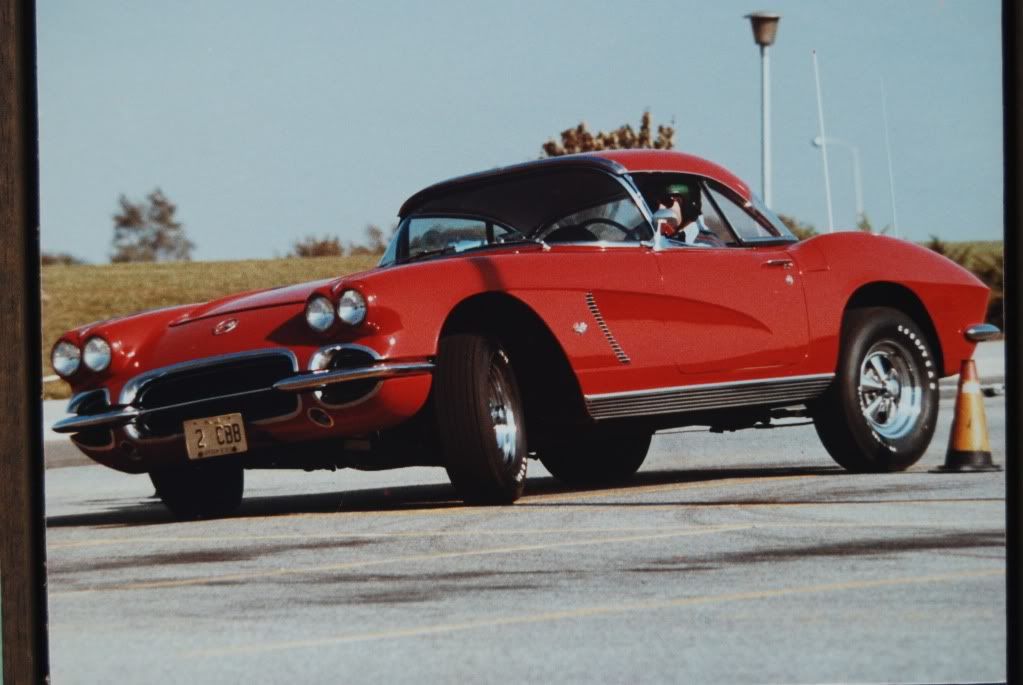
I didn't think of it earlier, but below is the picture from my avatar. That's me autocrossing my 62 around 1978. The tires are Goodyear Polyglass G70x15 bias plys. I was probably running 40psi in the tires and you can see how much the right front was still tucking under. It wasn't the most graceful thing going throw the pylons, but it sure was fun!

Drifting

Joined: Nov 2002
Posts: 1,951
Likes: 1
From: Shore NJ
You can not run open headers at this event, it's stated on their flyer and a guy last year wanted to run there coming from the drags and they told him no no.. ..you can try but be prepared to button them up.Good there will be some more C3's there....no competition this year for Gordonm...we'll see.....
..you can try but be prepared to button them up.Good there will be some more C3's there....no competition this year for Gordonm...we'll see.....
Last edited by 73jst4fun; Jul 27, 2010 at 07:28 AM.


Melting Slicks
Joined: Mar 2008
Posts: 2,666
Likes: 289
From: Spring Park MN
Before I went to Car Craft Summer Nationals to autocross, George, gkull, gave me the same tips. It helped a lot. I got onto where to throttle it and brake pretty quick with the left and right foot go kart style.
The tires were a big deal. I went the first day with steet alignment and my 255/60/15 Indy 500's set at 38 pounds. The front tires slid if I tried to push the corners very hard and then I would have to flick the throttle to kick the back end out so the front end wouldn't slide out into the cones. I let some air out of the front tires and went down to 36 and up to 40 on the rear. It helped and I got the quickest pass that way.
Before I went out sunday I put a bunch more caster and camber in the front. I put close to .300" of shim on the back of the top a-arm. I don't know the angles, but it was quite a bit. I didn't have time to measure, just stuck it in and went. I also set my toe out at 1/4".
At the course the tires were not rolling up the side anymore so I let the pressure down to 35 on the front and 38 on the rear. I knocked off over a full second on my time. This was on a course most except the purpouse built cars with slicks were running in the 40's for times. I had SCCA guys coming up to me and asking how I could get a stock suspession C3 with all season tires around the course that quick, especillay with the power I was trying to put through them. I had to really be carefull with the throttle.
I learned a lot that weekend. Oh, and the tires do get hot and the pressure did rise 2.5 pounds. I checked them right before each pass.
The tires were a big deal. I went the first day with steet alignment and my 255/60/15 Indy 500's set at 38 pounds. The front tires slid if I tried to push the corners very hard and then I would have to flick the throttle to kick the back end out so the front end wouldn't slide out into the cones. I let some air out of the front tires and went down to 36 and up to 40 on the rear. It helped and I got the quickest pass that way.
Before I went out sunday I put a bunch more caster and camber in the front. I put close to .300" of shim on the back of the top a-arm. I don't know the angles, but it was quite a bit. I didn't have time to measure, just stuck it in and went. I also set my toe out at 1/4".
At the course the tires were not rolling up the side anymore so I let the pressure down to 35 on the front and 38 on the rear. I knocked off over a full second on my time. This was on a course most except the purpouse built cars with slicks were running in the 40's for times. I had SCCA guys coming up to me and asking how I could get a stock suspession C3 with all season tires around the course that quick, especillay with the power I was trying to put through them. I had to really be carefull with the throttle.
I learned a lot that weekend. Oh, and the tires do get hot and the pressure did rise 2.5 pounds. I checked them right before each pass.
Last edited by v2racing; Jul 27, 2010 at 11:18 AM.
Thread Starter
Burning Brakes
Joined: Oct 2008
Posts: 955
Likes: 50
From: Jersey Shore
You can not run open headers at this event, it's stated on their flyer and a guy last year wanted to run there coming from the drags and they told him no no....you can try but be prepared to button them up.Good there will be some more C3's there....no competition this year for Gordonm...we'll see.....
..you can try but be prepared to button them up.Good there will be some more C3's there....no competition this year for Gordonm...we'll see.....I have a camera mount for my car that I will be using
Id be glad to let anyone that is going this sat use it... It will only work for a coupe though since it mounts to the rear window tray holes.
Before I went to Car Craft Summer Nationals to autocross, George, gkull, gave me the same tips. It helped a lot. I got onto where to throttle it and brake pretty quick with the left and right foot go kart style.
The tires were a big deal. I went the first day with steet alignment and my 255/60/15 Indy 500's set at 38 pounds. The front tires slid if I tried to push the corners very hard and then I would have to flick the throttle to kick the back end out so the front end wouldn't slide out into the cones. I let some air out of the front tires and went down to 36 and up to 40 on the rear. It helped and I got the quickest pass that way.
Before I went out sunday I put a bunch more caster and camber in the front. I put close to .300" of shim on the back of the top a-arm. I don't know the angles, but it was quite a bit. I didn't have time to measure, just stuck it in and went. I also set my toe out at 1/4".
At the course the tires were not rolling up the side anymore so I let the pressure down to 35 on the front and 38 on the rear. I knocked off over a full second on my time. This was on a course most except the purpouse built cars with slicks were running in the 40's for times. I had SCCA guys coming up to me and asking how I could get a stock suspession C3 with all season tires around the course that quick, especillay with the power I was trying to put through them. I had to really be carefull with the throttle.
I learned a lot that weekend. Oh, and the tires do get hot and the pressure did rise 2.5 pounds. I checked them right before each pass.
The tires were a big deal. I went the first day with steet alignment and my 255/60/15 Indy 500's set at 38 pounds. The front tires slid if I tried to push the corners very hard and then I would have to flick the throttle to kick the back end out so the front end wouldn't slide out into the cones. I let some air out of the front tires and went down to 36 and up to 40 on the rear. It helped and I got the quickest pass that way.
Before I went out sunday I put a bunch more caster and camber in the front. I put close to .300" of shim on the back of the top a-arm. I don't know the angles, but it was quite a bit. I didn't have time to measure, just stuck it in and went. I also set my toe out at 1/4".
At the course the tires were not rolling up the side anymore so I let the pressure down to 35 on the front and 38 on the rear. I knocked off over a full second on my time. This was on a course most except the purpouse built cars with slicks were running in the 40's for times. I had SCCA guys coming up to me and asking how I could get a stock suspession C3 with all season tires around the course that quick, especillay with the power I was trying to put through them. I had to really be carefull with the throttle.
I learned a lot that weekend. Oh, and the tires do get hot and the pressure did rise 2.5 pounds. I checked them right before each pass.


Melting Slicks
Joined: Mar 2008
Posts: 2,666
Likes: 289
From: Spring Park MN
Team Owner
Joined: Apr 1999
Posts: 21,953
Likes: 1,444
From: Reno Nevada
2024 C3 of the Year Finalist- Modified
Modern C-6 Vettes with traction control is actually a combination of computer applied brakes and if you have your foot on the gas it limits motor power to keep wheel spin way down.
In non-computer controlled cars left foot brake and right foot gas is traction control
Every racer out there has learned left foot braking in cars equiped with centrifical clutches, auto trannies, and clutchless manuals.
Just think about how many 1/10th of a second you have moving one right foot from gas to brake and then back on the gas?
Then you can actual get all the benefits of your left foot brake as a traction control. You are not going to overheat brakes in a sub 60 second lap even if they were draging nearly the whole lap.
In non-computer controlled cars left foot brake and right foot gas is traction control
Every racer out there has learned left foot braking in cars equiped with centrifical clutches, auto trannies, and clutchless manuals.
Just think about how many 1/10th of a second you have moving one right foot from gas to brake and then back on the gas?
Then you can actual get all the benefits of your left foot brake as a traction control. You are not going to overheat brakes in a sub 60 second lap even if they were draging nearly the whole lap.
Burning Brakes

Joined: Mar 2010
Posts: 1,079
Likes: 22
From: KY
Bleed your brakes, all 6 screws, until clear, clean fluid comes out. I always bleed my brakes every 2-3 events. I use Wilwood 600 fluid and Hawk blue pads. Always have the gas tank full, there are no baffles in these things.