




Does Ported Vacuum Work on an Early C3?

Thread Starter
Team Owner


Joined: Aug 1999
Posts: 30,995
Likes: 99
From: Ontario

Burning Brakes

Joined: Dec 2007
Posts: 889
Likes: 0

Here's what the instruction sheet says:
11. Connect the vacuum hose to the vacuum advance canister. The vacuum line for the vacuum advance should be connected to a ported/timed vacuum source. To properly identify this port, you will need to have a vacuum gage in hand and test and small (3/16") vacuum ports on the carb. The port that does hot have vacuum at idle is the ported/timed source and is the correct port for the advance of the distributor to be connected to.
11. Connect the vacuum hose to the vacuum advance canister. The vacuum line for the vacuum advance should be connected to a ported/timed vacuum source. To properly identify this port, you will need to have a vacuum gage in hand and test and small (3/16") vacuum ports on the carb. The port that does hot have vacuum at idle is the ported/timed source and is the correct port for the advance of the distributor to be connected to.
Race Director


Joined: Jun 2000
Posts: 10,046
Likes: 675
From: FL
Ported vauum was used to reduce emissions. That's it. No other reason. Generally speaking, hooking vacuum advance to a manifold source will help the engine run smoother and cooler at idle with less throttle opening needed.
Here is some more info:
Here is some more info:
However and old Peterson publication entitled "Basic Ignition and Electrical Systems" reviews the history of "Manifold" versus "Ported" vacuum. As they indicate, "Ported Vacuum" came about during the start of pollution controlled vehicles to reduce nitrous oxide emissions with lean air/fuel idle mixtures. They state that by using "Manifold Vacuum" the spark at idle will occur sooner and "less cylinder wall is exposed to the heat (of combustion), thereby lowering coolant temperature." Interpreting their statement, with more advance at idle, the combustion starts on the upper portion of the cylinder on the compression stroke. Flame front travels very slowly at the low cylinder pressure that occur when idling. Therefore the cylinder head and upper cylinder walls will absorb most of the combustion heat and the lower portion of the cylinder on the power stroke will be cooler. This transfers less total heat to the cooling system. In fact, on this 502/502 motor an additional ~ 10 degrees advance occurs at idle when the "Manifold Vacuum" port is connected to the distributor vacuum advance. This provides about 25 degrees advance in total when idling or when cranking! The engine idles considerably faster compared to when the "Ported Vacuum" port is employed. The throttle butterfly's have to be closed about 1/2 turn on the idle adjustment screw to maintain the ~900 RPM idle speed. All else being equal, less butterfly opening means less fuel consumed which equates to less total heat to transfer to the coolant.

Tech Contributor


Joined: Jun 2004
Posts: 20,910
Likes: 962
From: I tend to be leery of any guy who doesn't own a chainsaw or a handgun.
Good grief, how often is this topic going to keep popping up? 
What's the point of having a Timing Sticky if it appears half the members won't read it?
What's the point of having a Timing Sticky if it appears half the members won't read it?
Burning Brakes
Joined: Dec 2007
Posts: 889
Likes: 0
900 RPM at idle seems kind of high.

Race Director
Joined: May 2006
Posts: 16,528
Likes: 53
From: Dayton, Ohio
Paul I think the key word is "work" , does it work ? The benefits of manifold vacuum are usually substantial, but some combination's just don't work with manifold vacuum. My first choice is manifold but in the end if ported works best I use that, its only an "idle" thing , once off idle everything is the same. 
Corvette Stories
The Best of Corvette for Corvette Enthusiasts

Top 10 Most Expensive Corvettes Ever Sold on Bring A Trailer
Brett Foote
10 Things Every Corvette Owner Needs (2026 Edition)
Michael S. Palmer
8 Most "Only Corvette Owners Understand" Quirks and Problems
Pouria Savadkouei
10 Reasons the C6 Z06 is Still A Performance Benchmark After 20 Years
Joe Kucinski
How Much Horsepower Every Corvette Engine "LOST" in 1972
Joe Kucinski
Top 10 DOs and DON'Ts for Protecting Your Convertible Top!
Michael S. Palmer
Top 10 Most Explosive Corvettes Ever Made: Power-to-Weight Ratio Ranked!
Joe Kucinski
150 hp to 1,250 hp: Every Corvette Generation Compared by the Specs That Matter
Joe Kucinski
8 Coolest Corvette Pace Cars (and Replicas) of All Time
Verdad Gallardo
Advanced


Joined: Mar 2007
Posts: 90
Likes: 3
From: Warren MI
Vacuum
Here is an article posted by an ex GM engineer that explains the vacuum advance system. It is a great read
http://www.camaros.net/forums/showth...ght=timing+101
http://www.camaros.net/forums/showth...ght=timing+101


Thread Starter
Team Owner
Joined: Aug 1999
Posts: 30,995
Likes: 99
From: Ontario
OK, there is more than meets the eye here and I have negligent in not providing more details.
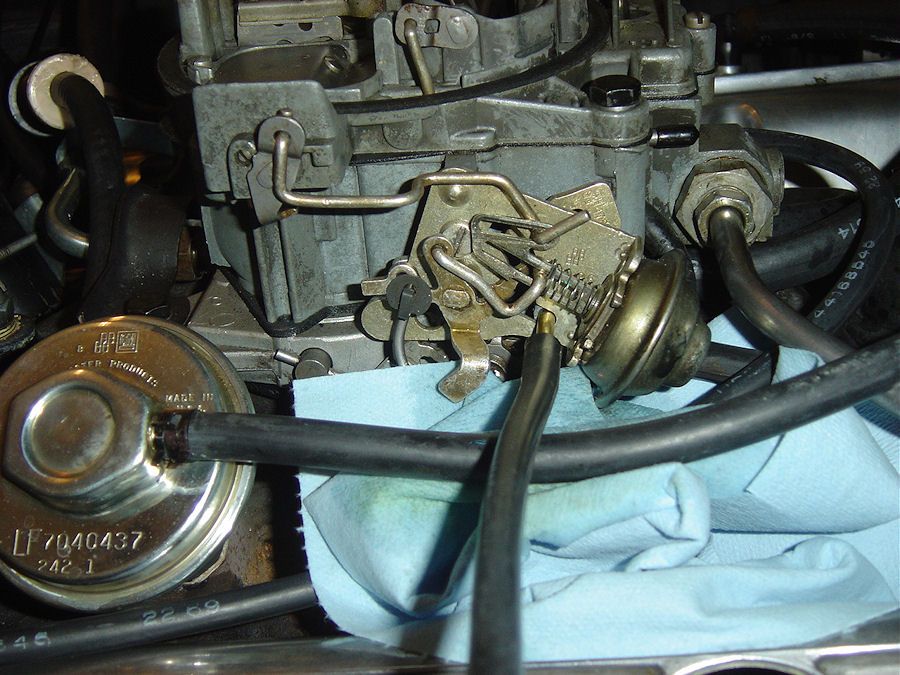
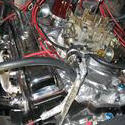
In recent days I have been fighting with the distributor. After I finally sorted out the wire set fiasco, and the car was running, I set the dwell and timing. No problem. I did notice that when I connected/disconnected the vacuum advance there was no change in idle RPM as there should be. Odd but the idle was fine at ~750 in P and 550 in D. And the car actually seemed to run well. The vacuum advance was hooked up to manifold vacuum as shown in the pic (near choke assembly).
I got to thinking about that lack of change in idle so yesterday I checked vacuum at the spout in the pic. There is none! It is plugged. So basically I was driving lately with no vacuum advance. I hooked up ported vacuum and again the car runs well (idle is as above unchanged as with ported there is no advance at idle and given the blocked spout there was no vacuum before).
I hit the spout orifice with carb cleaner in case some debris was doing the evil deed. That did not work. So I am at a loss to understand the lack of vacuum?? I thought of running a fine wire through the hole to manually dislodge the blockage and may try that today but I don't know where the far end of that passageway is to see any success. My other thought is perhaps an incorrect bowl gasket was used but again I don't even know if a gasket is associated with the spout internals.
Any ideas on this would be appreciated. If need be I can use ported vacuum (as per the original question) and ignore the defective manifold vacuum.
In recent days I have been fighting with the distributor. After I finally sorted out the wire set fiasco, and the car was running, I set the dwell and timing. No problem. I did notice that when I connected/disconnected the vacuum advance there was no change in idle RPM as there should be. Odd but the idle was fine at ~750 in P and 550 in D. And the car actually seemed to run well. The vacuum advance was hooked up to manifold vacuum as shown in the pic (near choke assembly).
I got to thinking about that lack of change in idle so yesterday I checked vacuum at the spout in the pic. There is none! It is plugged. So basically I was driving lately with no vacuum advance. I hooked up ported vacuum and again the car runs well (idle is as above unchanged as with ported there is no advance at idle and given the blocked spout there was no vacuum before).
I hit the spout orifice with carb cleaner in case some debris was doing the evil deed. That did not work. So I am at a loss to understand the lack of vacuum?? I thought of running a fine wire through the hole to manually dislodge the blockage and may try that today but I don't know where the far end of that passageway is to see any success. My other thought is perhaps an incorrect bowl gasket was used but again I don't even know if a gasket is associated with the spout internals.
Any ideas on this would be appreciated. If need be I can use ported vacuum (as per the original question) and ignore the defective manifold vacuum.

Race Director

Joined: Jul 2001
Posts: 15,892
Likes: 42
Paul,
I don't know the purpose of the port you're hooked the rubber line to. It may indeed be ported/timed vacuum or a plugged passage but you'll never know by testing it at idle. Hook up a vacuum gauge and see what happens when you raise the engine speed above idle.
I don't know the purpose of the port you're hooked the rubber line to. It may indeed be ported/timed vacuum or a plugged passage but you'll never know by testing it at idle. Hook up a vacuum gauge and see what happens when you raise the engine speed above idle.
Thread Starter
Team Owner
Joined: Aug 1999
Posts: 30,995
Likes: 99
From: Ontario
No vacuum at any RPM. My spare Q-Jet in the basement shows a free flow at that spout as a comparison. The car does run well with ported (driver's side upper) and that spout does pull a lot of vacuum above idle. That's by finger test as my gauge is "somewhere" in the basement.
Thread Starter
Team Owner
Joined: Aug 1999
Posts: 30,995
Likes: 99
From: Ontario
don't you have more ports in the front of the carb ?
Too many...
 . Counter-clockwise from left top.
spare
choke pull-off
EGR
PCV
fuel evaporative canister
ported vacuum advance
I have pretty much decided to leave things as is with ported advance. The car idles and runs well (much better now with vacuum advance). Overheating at idle does not seem to be a problem (sits at a nice 180*F). I need to drive and fiddle less. It is August already and I have put on only 320 miles this year.

Thread Starter
Team Owner
Joined: Aug 1999
Posts: 30,995
Likes: 99
From: Ontario
I had the opportunity to drive today for about 60 miles, both in-city and at highway speeds. Ambient temp was about 80*F. The car ran very well with ported vacuum. No idle over-heating (180*F). Having vacuum advance function with a B26 can does make a difference. I did not have that as described above.
Ideally I should pull that Q-Jet apart and find out why that manifold vacuum spout is non-functional (I suspect a wrong bowl gasket). But realistically the car is a pleasure to drive and I know darn well what happens when I open up a Q-Jet: gross confusion and foul-ups. I wish that I had the talent of people like Lars and Cliff Ruggles. Not much time left in the season here so I will just drive as is.
For those who are interested my rebuilt points/tach drive distributor (my 1974 self-destructed a couple of weeks ago; another issue) it is just fine. It came from my 1967 days (basement inventory). I will be looking for a new spare soon.
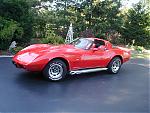
People like pics so here is the old 1974 ready for duty this morning. And even with ported it hummed!

Ideally I should pull that Q-Jet apart and find out why that manifold vacuum spout is non-functional (I suspect a wrong bowl gasket). But realistically the car is a pleasure to drive and I know darn well what happens when I open up a Q-Jet: gross confusion and foul-ups. I wish that I had the talent of people like Lars and Cliff Ruggles. Not much time left in the season here so I will just drive as is.
For those who are interested my rebuilt points/tach drive distributor (my 1974 self-destructed a couple of weeks ago; another issue) it is just fine. It came from my 1967 days (basement inventory). I will be looking for a new spare soon.
People like pics so here is the old 1974 ready for duty this morning. And even with ported it hummed!
Last edited by Paul L; Aug 18, 2010 at 04:13 PM.
Le Mans Master

Joined: Oct 2002
Posts: 7,098
Likes: 378
From: Las Vegas - Just stop perpetuating myths please.
Try them one at time and see if u like the results.
 Like u say Pual u need to sort out the ports. And its alot easier with the carb off the car. What i use is WD-40 as it has enough pressure and spray volume to make it through the carb and out the internal slots/ports inside the throat. That way u see which goes to what. Also some fine SS safety wire can be very helpful. But again u still need to drive the car and verify good results.
BTW since i read Cliff Ruggles book on Qjets i will never look back to my stock Qjet since i can choose better late Qjets to use. Better tuning and electric chokes came on Qjets after '74. U may want to take a look before carb shopping.

This has become a frequent topic and u should find plenty of posts with a search.
Good luck Paul,
cardo0

Team Owner


Joined: Jan 2006
Posts: 37,637
Likes: 3,118
From: Crossville TN
The car will run fine on 'ported' vacuum. That's the way it came from the factory. The purpose for hooking to 'ported' is to eliminate vacuum advance when sitting at idle. That 'ported' outlet changes to manifold vacuum as soon as the throttle plates move a small amount. You can check this out with a vacuum gauge: hook the gauge to that outlet--it should read "0" vacuum at idle but full vacuum advance amount when you just crack the throttle.
The 'manifold' outlet on the right side of the Q-Jet should be OK to use. But, the casting could have some flash/blockage from the casting operation; or the wrong gasket could have been used; or the right gasket still has the 'punch-out' in place which is blocking flow.
The engine idles cooler and more efficiently with 'manifold' vacuum. But it has less emissions at idle with 'ported' vacuum. I prefer to use 'manifold' vacuum, but it's not a big deal to run on 'ported' since your carb has a problem supplying manifold vacuum at that port.
The 'manifold' outlet on the right side of the Q-Jet should be OK to use. But, the casting could have some flash/blockage from the casting operation; or the wrong gasket could have been used; or the right gasket still has the 'punch-out' in place which is blocking flow.
The engine idles cooler and more efficiently with 'manifold' vacuum. But it has less emissions at idle with 'ported' vacuum. I prefer to use 'manifold' vacuum, but it's not a big deal to run on 'ported' since your carb has a problem supplying manifold vacuum at that port.