Very rough running/no power, vacuum pump problem?
Thread Starter
Melting Slicks


Joined: Jul 2002
Posts: 3,000
Likes: 22
From: Boulder Creek California
 Very rough running/no power, vacuum pump problem?
I had an odd problem that I thought was behind me crop up this morning. See the specs below for context of just what this thing is. I didn't build it and fuel injection is rather new to me so keep that in mind.
6 months ago when first driving the car I proved Mercedes right for not trusting their customers with a dipstick when I overfilled the oil. This resulted in gradually worsening loss of power until the thing just wouldn't go at all. No white smoke, nothing, just refusal to respond to the throttle. I thought it was a miss but finally realized the oil situation and once I drained out the excess it righted itself and I drove another several hundred miles without a hitch. Now this engine has a vacuum pump which as I understand it is supposed to do great things to improve ring seal. Its little catch-can however seems to fill with oil rather quickly. Is that normal?
This morning it was deja vu all over again. At first I chalked it up to the cold morning but it soon dawned on me that it was the same symptoms as before. The thing is I haven't added a drop of oil recently and it has been running well enough until this morning when I had to turn around for home it got so bad. What I wonder is, could the catch can be filling with oil and then preventing the vacuum system from doing its job? Thus the crankcase builds up pressure (there is no other vent) and blows oil into the combustion chamber? (Or something else as there is no visible smoke) This would seem to be supported by the fact that letting it sit for a minute fixes the problem temporarily (pressure bleeds down?) Could also explain the excessive rear main seal dripping in the garage as oil is forced out. Furthermore today I saw that the serpentine belt is split, perhaps overheating on a vacuum pump that refuses to turn?
Anyone familiar with vacuum pumps that can point me in the right direction?

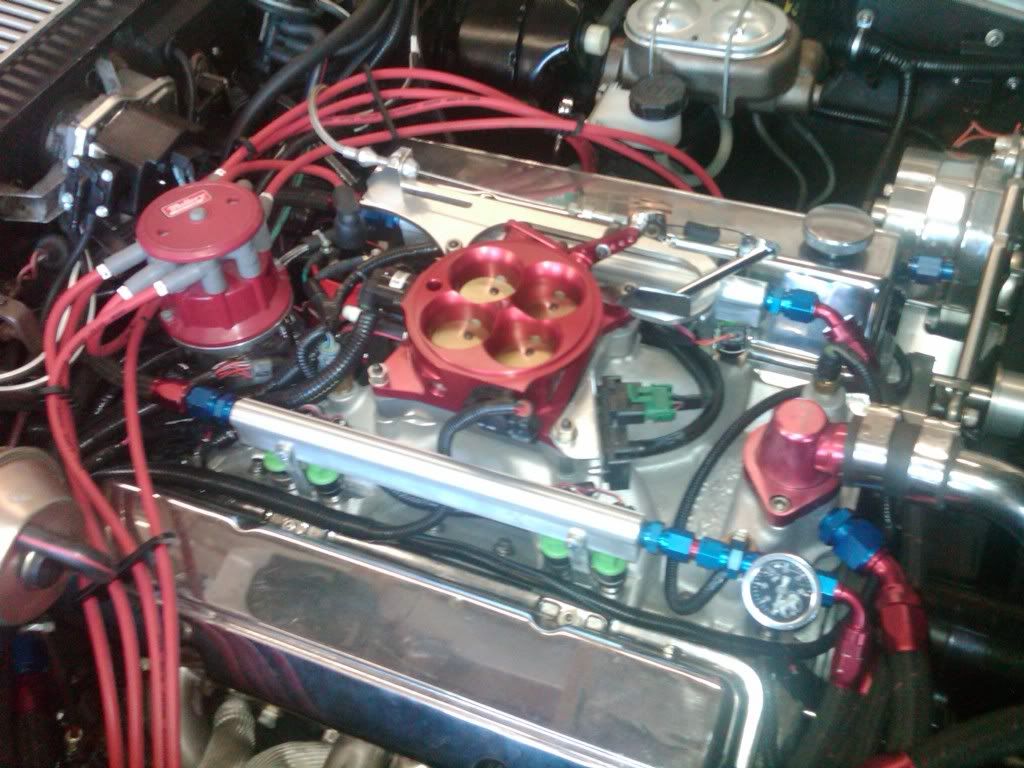
From the ad when I bought it:

6 months ago when first driving the car I proved Mercedes right for not trusting their customers with a dipstick when I overfilled the oil. This resulted in gradually worsening loss of power until the thing just wouldn't go at all. No white smoke, nothing, just refusal to respond to the throttle. I thought it was a miss but finally realized the oil situation and once I drained out the excess it righted itself and I drove another several hundred miles without a hitch. Now this engine has a vacuum pump which as I understand it is supposed to do great things to improve ring seal. Its little catch-can however seems to fill with oil rather quickly. Is that normal?
This morning it was deja vu all over again. At first I chalked it up to the cold morning but it soon dawned on me that it was the same symptoms as before. The thing is I haven't added a drop of oil recently and it has been running well enough until this morning when I had to turn around for home it got so bad. What I wonder is, could the catch can be filling with oil and then preventing the vacuum system from doing its job? Thus the crankcase builds up pressure (there is no other vent) and blows oil into the combustion chamber? (Or something else as there is no visible smoke) This would seem to be supported by the fact that letting it sit for a minute fixes the problem temporarily (pressure bleeds down?) Could also explain the excessive rear main seal dripping in the garage as oil is forced out. Furthermore today I saw that the serpentine belt is split, perhaps overheating on a vacuum pump that refuses to turn?
Anyone familiar with vacuum pumps that can point me in the right direction?
From the ad when I bought it:
- Original 4-bolt LT-1 block bored .040 with a 3.75" stroke forged Scat crank, Scat 6" forged H-beam rods, and forged SRP flat top pistons (0 deck height)
- ARP main studs, head studs, and bolts used throughout
- Pro-Action (now RHS) aluminum heads (63cc chambers) with 2.10" intake valves and Isky springs
- Comp Cams solid roller cam (Intake = .577/.248 @ .050, Exhaust = .583/.254@.050 w/112 degree lsa)
- Cloyes billet timing set
- Edelbrock Victor Jr. "E" intake with a FAST 1350 cfm throttle body
- Accel Gen VII Direct Fuel Injection (DFI) ECM running sequentially through 42lb Ford Motorsport injectors
- Moroso crank trigger to alleviate harmonics commonly found when using "Dual Sync" distributors
- Hooker Super Comp headers with custom 3" exhaust all the way out the rear
- Meziere electric water pump (controlled by the DFI ECM)
- Aeromotive fuel filters and regulator with a Mallory electric pump

Instructor


Joined: Apr 2010
Posts: 233
Likes: 2
From: Sacramento CA
I just HAD to drool....
That cam must sound NASTY in that thing!
Ok, well...a PCV system vents out the crankcase pressure. The gas is then recirculated through the intake (usually through the TB or air cleaner assembly) so that the vacuum of the incoming air can help create a vacuum to pull the crankcase pressure's more efficiently.
The Crankcase gasses are toxic and should be vented back through the intake to burn off properly!
A Catch Can is a great tool on a poorly designed PCV system.
IF you are pulling oil through the intake (you have to look around the TB or the air intake for oily residue or puddling) you can add a Catch Can as a "filter" of sorts.
Inside the catch can should be some "steel wool" looking mesh to help collect the oil and allowing only the "gas" to then pass thorough to the intake.
If you have a well designed PCV system (like proper baffling on the valve cover's) you shouldn't need a catch can, really.
Since you happen to have one, I would look at the design of the catch can itself. You should have a "In" hose on one side with an "out" hose on the other. On the inside of the catch can should be a "baffling" system that allows the oil to fall to the bottom and only the gas to escape back out to the air intake.
Is there any blockage? Are the lines plugged up (a good way to test is to blow a low amount of compressed air through the system, just quick and dirty method).
Do you have 2 PCV valves on the motor, one for each valve cover?
With motors that build up a lot of crankcase pressure, you want to vent that as much as possible, or you will get all kinds of problems.
That cam must sound NASTY in that thing!
Ok, well...a PCV system vents out the crankcase pressure. The gas is then recirculated through the intake (usually through the TB or air cleaner assembly) so that the vacuum of the incoming air can help create a vacuum to pull the crankcase pressure's more efficiently.
The Crankcase gasses are toxic and should be vented back through the intake to burn off properly!
A Catch Can is a great tool on a poorly designed PCV system.
IF you are pulling oil through the intake (you have to look around the TB or the air intake for oily residue or puddling) you can add a Catch Can as a "filter" of sorts.
Inside the catch can should be some "steel wool" looking mesh to help collect the oil and allowing only the "gas" to then pass thorough to the intake.
If you have a well designed PCV system (like proper baffling on the valve cover's) you shouldn't need a catch can, really.
Since you happen to have one, I would look at the design of the catch can itself. You should have a "In" hose on one side with an "out" hose on the other. On the inside of the catch can should be a "baffling" system that allows the oil to fall to the bottom and only the gas to escape back out to the air intake.
Is there any blockage? Are the lines plugged up (a good way to test is to blow a low amount of compressed air through the system, just quick and dirty method).
Do you have 2 PCV valves on the motor, one for each valve cover?
With motors that build up a lot of crankcase pressure, you want to vent that as much as possible, or you will get all kinds of problems.
Instructor
Joined: Apr 2010
Posts: 233
Likes: 2
From: Sacramento CA
I keep looking back at your picture, where is your PCV system pulling from ? Under the intake, maybe?
I don't see any reliefs for it on the Valve covers, that's why I'm asking.
Your TB's seem to be really clean! But that's not saying that they aren't all oily. OR, your pulling the PCV into the intake PAST the TB. Like at the base of the TB.
I don't see any reliefs for it on the Valve covers, that's why I'm asking.
Your TB's seem to be really clean! But that's not saying that they aren't all oily. OR, your pulling the PCV into the intake PAST the TB. Like at the base of the TB.
Last edited by SOMFormula; Nov 3, 2010 at 03:01 PM. Reason: Added info

Race Director


Joined: Jun 2000
Posts: 10,049
Likes: 676
From: FL
I keep looking back at your picture, where is your PCV system pulling from ? Under the intake, maybe?
I don't see any reliefs for it on the Valve covers, that's why I'm asking.
Your TB's seem to be really clean! But that's not saying that they aren't all oily. OR, your pulling the PCV into the intake PAST the TB. Like at the base of the TB.
I don't see any reliefs for it on the Valve covers, that's why I'm asking.
Your TB's seem to be really clean! But that's not saying that they aren't all oily. OR, your pulling the PCV into the intake PAST the TB. Like at the base of the TB.
OP needs to drain the catch can on a regular basis and replace the belt. I expect that the fitting on the passenger valve cover is not baffled and that is why he is getting so much oil.
Like I said above, there is no reason for a vacuum pump on a street engine with standard tension rings. You might get 4-5 hp advantage. Big gains come with very low tension rings but that is more of a specialized race setup.
For the OP, disconnect the vacuum pump line from the valve cover and see how the engine runs. Remember, simple is usually better for the street. Also, vacuum pumps wear out. Good at the track, not on the street. GZ Motorsports has one specifically designed for street use that has better lubrication. Link: http://www.gzmotorsports.com/street-pump-kits.html
Last edited by SteveG75; Nov 3, 2010 at 04:12 PM.
Thread Starter
Melting Slicks
Joined: Jul 2002
Posts: 3,000
Likes: 22
From: Boulder Creek California
It does indeed sound pretty mean. The 3" exhaust to Flowmaster 40's helps with that too. My '77 set off alarms in parking garages but this does the same in open air  Indeed the TB is clean as it sees only air, hopefully clean air.
I have yet to take the valve covers off (though it's starting to sound due for a valve lash check) so I don't know whether it's baffled. I always assumed it was but I'm getting some intake parts this week so I'll be taking things apart this weekend and then we'll see. I'll pop the catch can out too and have a good look at the whole vac system. It's a new concept to me. Running with a valvecover uncorked will be one task.
This engine exceeded 600 at the crank with an individual runner intake, now expected to be more like 550, so all that power is coming from somewhere. The guy who built it builds sprint car engines so I'll have to dig through the receipts some more to see just what tricks might have made it in there. Besides this problem it is extremely well-behaved (low-speed friendly, idles low, stable temperature always, pump-gas friendly, 18+mpg highway with 4.11 diff+OD) so I am not inclined to think that it was built like a race engine.
Indeed the TB is clean as it sees only air, hopefully clean air.I have yet to take the valve covers off (though it's starting to sound due for a valve lash check) so I don't know whether it's baffled. I always assumed it was but I'm getting some intake parts this week so I'll be taking things apart this weekend and then we'll see. I'll pop the catch can out too and have a good look at the whole vac system. It's a new concept to me. Running with a valvecover uncorked will be one task.
This engine exceeded 600 at the crank with an individual runner intake, now expected to be more like 550, so all that power is coming from somewhere. The guy who built it builds sprint car engines so I'll have to dig through the receipts some more to see just what tricks might have made it in there. Besides this problem it is extremely well-behaved (low-speed friendly, idles low, stable temperature always, pump-gas friendly, 18+mpg highway with 4.11 diff+OD) so I am not inclined to think that it was built like a race engine.
Last edited by LiveandLetDrive; Nov 3, 2010 at 05:00 PM.
Thread Starter
Melting Slicks
Joined: Jul 2002
Posts: 3,000
Likes: 22
From: Boulder Creek California
Nevermind the vacuum pump hypothesis (though I still have that to look into also.)
Here is the culprit of the rough-running, a dead pushrod:
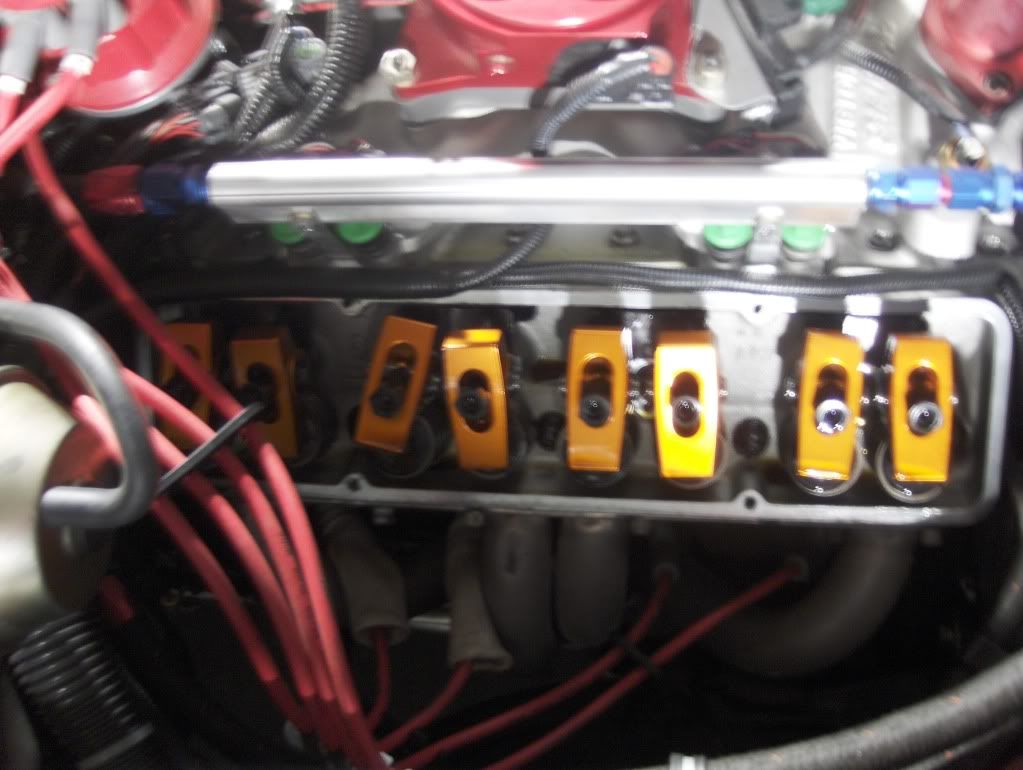


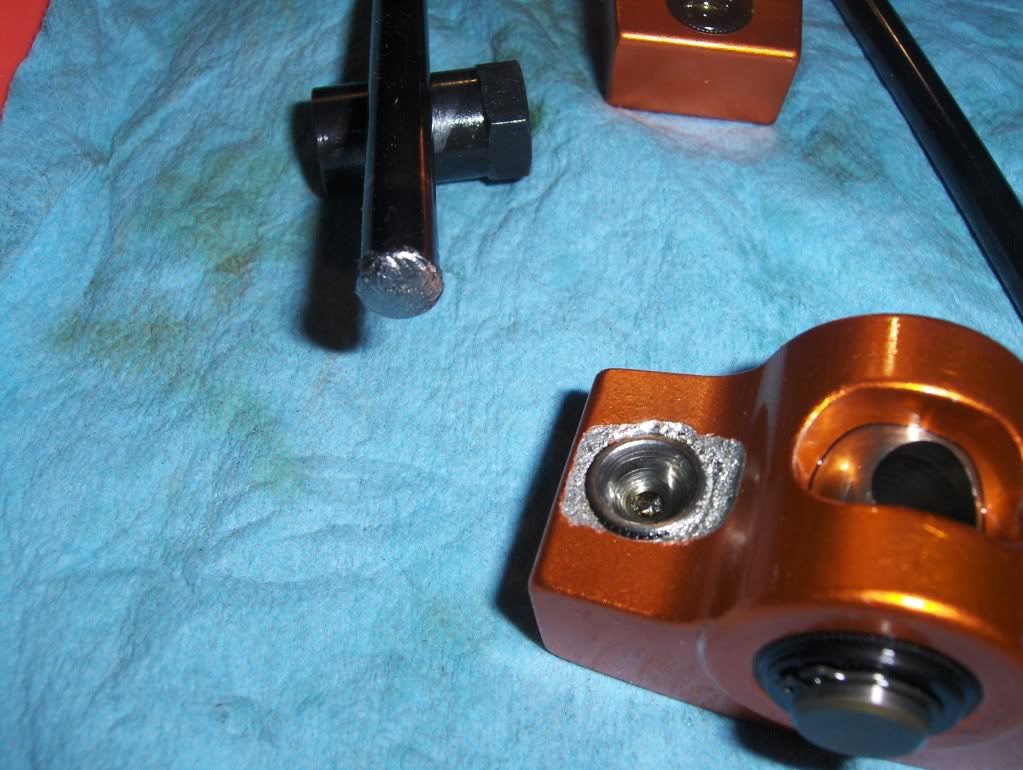
Not sure what the cause of the failure was. It's rev limited to 7k and I don't hit that hardly at all. Everything in there is relatively new, just a few 1000 miles. Will take a better look at what's available but it may have just been a bad one in the batch. Looks like I can replace the one rocker without having to buy a whole set though I'll be replacing all 16 pushrods.
Here is the culprit of the rough-running, a dead pushrod:
Not sure what the cause of the failure was. It's rev limited to 7k and I don't hit that hardly at all. Everything in there is relatively new, just a few 1000 miles. Will take a better look at what's available but it may have just been a bad one in the batch. Looks like I can replace the one rocker without having to buy a whole set though I'll be replacing all 16 pushrods.
Thread Starter
Melting Slicks
Joined: Jul 2002
Posts: 3,000
Likes: 22
From: Boulder Creek California
Frustration: Rocker, all pushrods, and all spark plugs replaced ... symptoms remain unchanged!
I detached the vac pump hose for shiggles but that made no difference. (It is properly baffled inside the valve cover, btw.)
The demolished pushrod is clearly too much of a coincidence to be unrelated, but the amount of debris in the oil pan and filter is exactly what I'd expect from what is missing from the pushrod. So I have a hard time imagining a destroyed cam lobe or lifter without there being more debris. I haven't rigged up a dial gauge to check that the lift is correct yet but visually it is moving a reasonable amount.
Could the mashed pushrod have done further damage to some other component? Could there have even been valve to piston contact? I'll check valve lift and cylinder compression, anything else I can test before being forced to dig deeper?
I detached the vac pump hose for shiggles but that made no difference. (It is properly baffled inside the valve cover, btw.)
The demolished pushrod is clearly too much of a coincidence to be unrelated, but the amount of debris in the oil pan and filter is exactly what I'd expect from what is missing from the pushrod. So I have a hard time imagining a destroyed cam lobe or lifter without there being more debris. I haven't rigged up a dial gauge to check that the lift is correct yet but visually it is moving a reasonable amount.
Could the mashed pushrod have done further damage to some other component? Could there have even been valve to piston contact? I'll check valve lift and cylinder compression, anything else I can test before being forced to dig deeper?
Corvette Stories
The Best of Corvette for Corvette Enthusiasts

Every 2027 Corvette Engine Explained
Joe Kucinski
Designer Imagines A Corvette That Looks More Like a Corvette Than the Corvette
Verdad Gallardo
10 Ugly Corvettes That We Still Kinda Love
Joe Kucinski
Top 10 Most Expensive Corvettes Ever Sold on Bring A Trailer
Brett Foote
10 Things Every Corvette Owner Needs (2026 Edition)
Michael S. Palmer
8 Most "Only Corvette Owners Understand" Quirks and Problems
Pouria Savadkouei
10 Reasons the C6 Z06 is Still A Performance Benchmark After 20 Years
Joe Kucinski
How Much Horsepower Every Corvette Engine "LOST" in 1972
Joe Kucinski
Top 10 DOs and DON'Ts for Protecting Your Convertible Top!
Michael S. Palmer


Heel & Toe
Joined: Feb 2010
Posts: 15
Likes: 0
From: Shelton Wa
well?
So whaaaaat was the culprit? I hate that, not having a conclusion. I guess this is my pay back for never watching tv and getting caught up in a two part movie, or whatever.
Man, I really am scratchin' my head on this one. Was it something to do with the rocker arm ratio?
Man, I really am scratchin' my head on this one. Was it something to do with the rocker arm ratio?
Thread Starter
Melting Slicks
Joined: Jul 2002
Posts: 3,000
Likes: 22
From: Boulder Creek California
Hello patient thread-followers, thought I'd resurrect this thread as there has finally been some development. Ran a compression test and leakdown and the suspect cylinder is fine by both measures. Cam and lifter check will be next weekend, off comes the intake, likely out comes the radiator and red goes the bank account for a new cam and lifter set! Still better than a piston/valve clash by far!
The only other thing I can think of is that maybe the O2 sensor was fouled while the pushrod was broken, I'll probably pop that out just to have a look before tearing things apart.
To be continued ... soon!
The only other thing I can think of is that maybe the O2 sensor was fouled while the pushrod was broken, I'll probably pop that out just to have a look before tearing things apart.
To be continued ... soon!