



Holley carb experts, a quick question, please
Thread Starter
Le Mans Master


Joined: Mar 2008
Posts: 5,948
Likes: 72
From: Oxford MA-----You just lost the game!!!!
 Holley carb experts, a quick question, please
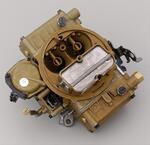
Hi, I have a model 4160, LIST# 6619-1 Holley squarebore, single feed carb, it's one of those that have the idle screws that work backwards. (in makes it richer) Anyway, I would like to know if I installed this metering block:
http://www.summitracing.com/parts/HLY-134-128/
(it's a replacement for a LIST# 1850)
Would I end up with what amounts to an 1850 carb? Or just a carb that has passages that don't line up and doesn't work?
Thanks in advance for your help,
Scott
http://www.summitracing.com/parts/HLY-134-128/
(it's a replacement for a LIST# 1850)
Would I end up with what amounts to an 1850 carb? Or just a carb that has passages that don't line up and doesn't work?
Thanks in advance for your help,
Scott
Burning Brakes

Joined: May 2008
Posts: 860
Likes: 0
From: Stratford Ontario
I would have to look that up but it may be possible. What would be the advantage other than the direction of the screws? I believe this was a change for the newer engines and can remember some of the metering circuit but not enough.
Thread Starter
Le Mans Master
Joined: Mar 2008
Posts: 5,948
Likes: 72
From: Oxford MA-----You just lost the game!!!!
Scott
You just lost the game!!!
Burning Brakes
Joined: May 2008
Posts: 860
Likes: 0
From: Stratford Ontario
I went and looked into this and as far as I can see now it wont work as the idle discharge slot and the curb idle discharge are fed off same feed on your carb. The other carbs are idle transfer slot fed above idle screw and the idle discharge is fed below idle screw allowing more gas air mixture in rather than just closing the extra air circuit off as in your setup.So the carbs would have to have different passages.I still see no reason other than the idle circuit may have to be more accurately set, that this carb wouldnt work on your setup. Its only going to effect your idle and just off idle on the carb. The rest off the carb will function the same. It cant hurt to try it, making sure all gaskets and settings are proper for this carb.
Thread Starter
Le Mans Master
Joined: Mar 2008
Posts: 5,948
Likes: 72
From: Oxford MA-----You just lost the game!!!!
Well, you sure do sound like you know what you are talking about. Alright then, scratch that plan; thanks, you just saved me about 50 bucks and some frustration. Aside from the weird idle setup, it's a normal Holley carb, eh? I guess I can live with it the way it is.
Can you tell me a little about why the idle setup is so different from a normal Holley carb? It is supposed to be an "emissions" carb, maybe it allows for a more precise air/fuel mixture at idle, for emission reasons?
I finished installing it yesterday, and it runs pretty good, even without any tuning so far. Thanks again for the help, dude,
Scott
Can you tell me a little about why the idle setup is so different from a normal Holley carb? It is supposed to be an "emissions" carb, maybe it allows for a more precise air/fuel mixture at idle, for emission reasons?
I finished installing it yesterday, and it runs pretty good, even without any tuning so far. Thanks again for the help, dude,
Scott
Burning Brakes
Joined: May 2008
Posts: 860
Likes: 0
From: Stratford Ontario
The reason they went to this type setup is that the original idle was tapped into the the idle transfer line. This means it was taking the air and fuel already mixed and adding more in. Therefore making it like a bigger line of fuel air mixture. Never changing the air fuel ratio. Thus these carbs almost never pass emissions. So to counter act this problem Holley placed a complete new line of idle transfer line and idle circuit seperately. They ran a straight fuel mixture line for the idle circuit and the screw was tapped into an air bleed to allow addition of air to the fuel mixture. So by turning outward you actually lean mixture out, and turning it in makes it rich. This is what makes this a good street performance carb. The problem is when people here emmissions they think power loss. I suggest you get that holley carb book, an engine tuning book and learn to tune that thing perfect and not only will you be helping save a dieing art. You will be more in tune with your car and going to love it that much more. Sorry about the long post.
Corvette Stories
The Best of Corvette for Corvette Enthusiasts

Corvette & Porsche 911: How Two Icons Conquered the Last 25 Years
Joe Kucinski
2027 Chevrolet Silverado 1500 First Look: Everything You NEED to Know!
Michael S. Palmer
5 Best & 5 Worst Corvette Daily Drivers
Joe Kucinski
The Headlights of Every Corvette Generation Explained
Joe Kucinski
5 Best & 5 Most Overrated Corvette Track Packages of All Time!
Joe Kucinski
Every 2027 Corvette Engine Explained
Joe Kucinski
Designer Imagines A Corvette That Looks More Like a Corvette Than the Corvette
Verdad Gallardo
10 Ugly Corvettes That We Still Kinda Love
Joe Kucinski
Top 10 Most Expensive Corvettes Ever Sold on Bring A Trailer
Brett Foote
Thread Starter
Le Mans Master
Joined: Mar 2008
Posts: 5,948
Likes: 72
From: Oxford MA-----You just lost the game!!!!
The reason they went to this type setup is that the original idle was tapped into the the idle transfer line. This means it was taking the air and fuel already mixed and adding more in. Therefore making it like a bigger line of fuel air mixture. Never changing the air fuel ratio. Thus these carbs almost never pass emissions. So to counter act this problem Holley placed a complete new line of idle transfer line and idle circuit seperately. They ran a straight fuel mixture line for the idle circuit and the screw was tapped into an air bleed to allow addition of air to the fuel mixture. So by turning outward you actually lean mixture out, and turning it in makes it rich. This is what makes this a good street performance carb. The problem is when people here emmissions they think power loss. I suggest you get that holley carb book, an engine tuning book and learn to tune that thing perfect and not only will you be helping save a dieing art. You will be more in tune with your car and going to love it that much more. Sorry about the long post.
OK, I am beginning to not look at this carb as an inferior carb, but rather, a "special" carb. Thanks for taking the time to explain all this to me, I appreciate it.
Scott
Burning Brakes
Joined: May 2008
Posts: 860
Likes: 0
From: Stratford Ontario
Thats right you have the understanding of what its doing good luck and enjoy. One of the things I like about the holley is that once you understand how it works they are fairly easy to dial in.Not that they are any better than any other carb but they are modular which simplifies some of the work.
6619, 66191, adjustment, carb, carberator, carburetor, corvette, eh, experts, fuel, holley, holly, massachusetts, mixture, ontrio, shop
