Replace fusible link with fuse?

Thread Starter
Burning Brakes

Joined: Sep 2008
Posts: 805
Likes: 5
From: Naperville Illinois
 Replace fusible link with fuse?
Sometime last year I either created a big short, or else the fusible link sawed itself apart on the underside edge of the distributor shielding; in any event, I've not had an ammeter for quite awhile. I'm getting around to fixing it, and have run all over town this weekend and could only find 14awg fusible wire. (I don't believe the wiring that the link is protecting is 10 gauge, but I'm not sure). I did a forum search, which indicated the fusible link in question (see pic) is 20 awg...?
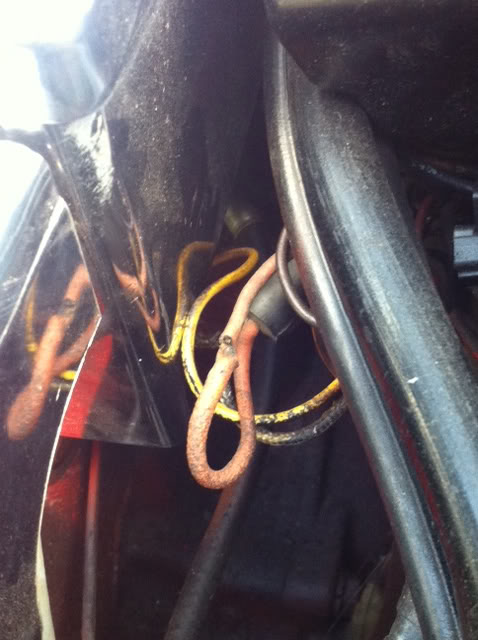
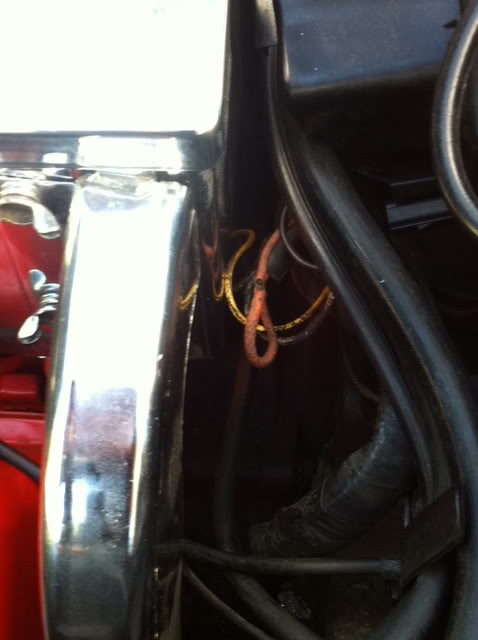
I'm considering replacing the fusible link with a fuse holder and 10-amp fuse. Can anyone give me any insight about this fusible link and if the fuse is a good idea?
Thanks,
Chris
I'm considering replacing the fusible link with a fuse holder and 10-amp fuse. Can anyone give me any insight about this fusible link and if the fuse is a good idea?
Thanks,
Chris

Team Owner


Joined: Jan 2006
Posts: 37,637
Likes: 3,117
From: Crossville TN
A fusible link is a solid wire (but smaller awg) placed in a current carrying line where there should NEVER be a dead short....unless something unusual happens or a component device fails internally to cause a short (starter, for example). So, you don't need a [replaceable] fuse where you shouldn't have to change fuses.
Also, when a dead short (VERY high current) occurs, you don't want the wiring insulation to catch fire. So, fusible links have non-flammable insulation on its wire AND non-flammable terminals on either side of that fusible link wire.
Most fusible links in old automobiles never fail...unless some major component shorts out or the owner does something...well...of dubious intellegence {so to speak}--like work on something having a high-current carrying line without disconnecting the battery. It happens.
Install a legitimate fusible link for a failed fusible link. {my .02}
Also, when a dead short (VERY high current) occurs, you don't want the wiring insulation to catch fire. So, fusible links have non-flammable insulation on its wire AND non-flammable terminals on either side of that fusible link wire.
Most fusible links in old automobiles never fail...unless some major component shorts out or the owner does something...well...of dubious intellegence {so to speak}--like work on something having a high-current carrying line without disconnecting the battery.
It happens.Install a legitimate fusible link for a failed fusible link. {my .02}
Thread Starter
Burning Brakes
Joined: Sep 2008
Posts: 805
Likes: 5
From: Naperville Illinois
 I can handle putting in a new link...any idea what gauge that link is supposed to be?

Le Mans Master

Joined: Sep 2004
Posts: 5,116
Likes: 5
From: Livonia MI
Main advantage of a fusible link, is it's cheap, compact, and not much affected by ambient heat. Not sure how #10 wiring is rated in the automotive world, but national code for commercial is usually 30 amps. Probably a bit higher for auto fine strand wire, and maybe ok with an FRN tubular type fuse for now, if away from heat. Agree, if you can get the original fusible link, probably the best way.
Corvette Stories
The Best of Corvette for Corvette Enthusiasts

How Much Horsepower Every Corvette Engine "LOST" in 1972
Joe Kucinski
Top 10 DOs and DON'Ts for Protecting Your Convertible Top!
Michael S. Palmer
Top 10 Most Explosive Corvettes Ever Made: Power-to-Weight Ratio Ranked!
Joe Kucinski
150 hp to 1,250 hp: Every Corvette Generation Compared by the Specs That Matter
Joe Kucinski
8 Coolest Corvette Pace Cars (and Replicas) of All Time
Verdad Gallardo
Top 10 Corvette Engines RANKED by Peak Torque (70+ Years of Muscle!)
Joe Kucinski
Corvette ZR1X Will Be Pacing the Indy 500, And Could Probably Race, Too!
Verdad Gallardo
Top 10 Corvettes Coming to Mecum Indy 2026!
Brett Foote
Top 10 C9 Corvette MUST-HAVES to Fix These C8 Generation Flaws!
Michael S. Palmer

Race Director

Joined: May 2006
Posts: 16,528
Likes: 53
From: Dayton, Ohio
In case anyone is interested here a matching fusible link to the OPs in the same location, 1st pic looks just like the OPs with the plastic factory crimp connectors intact ,2nd pic is without the connectors.
The fusible links IS the wire in between the crimp connectors.
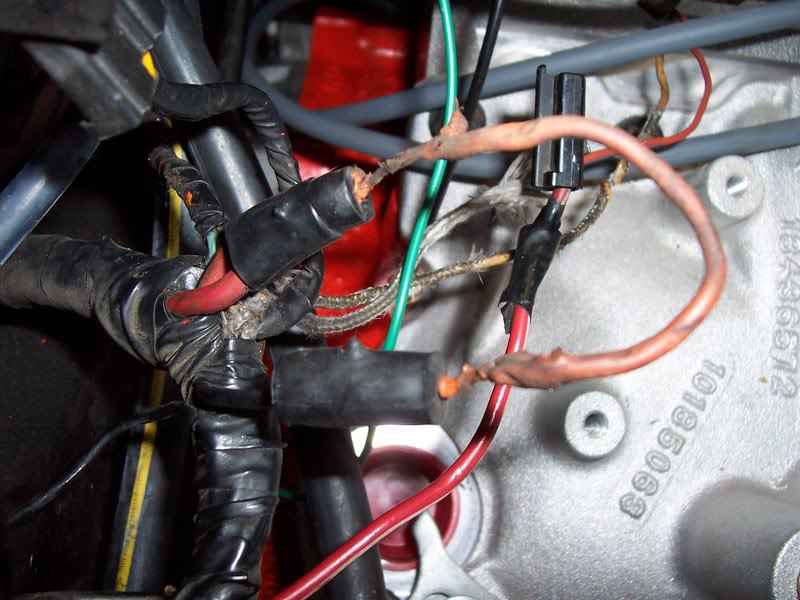
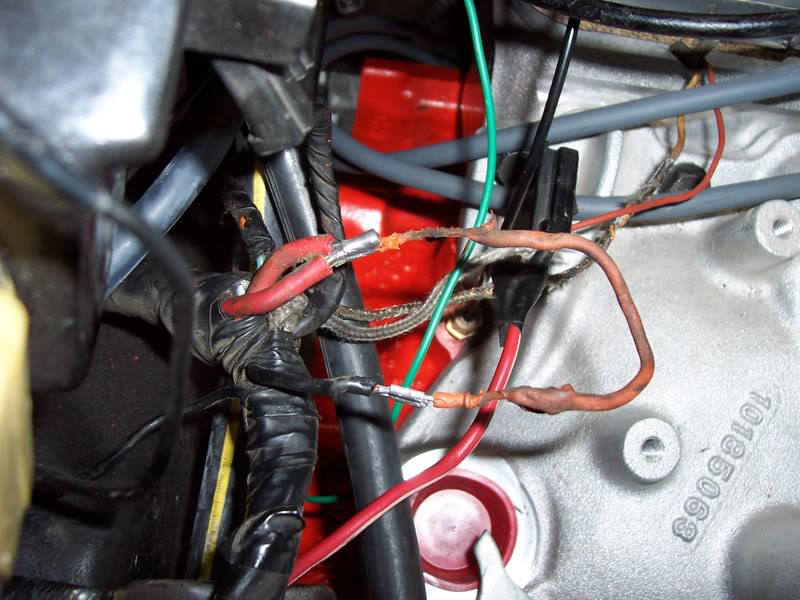
The fusible links IS the wire in between the crimp connectors.

Instructor


Joined: Jan 2008
Posts: 155
Likes: 1
From: Bowmanville Ontario
please excuse my ignorance...but walk me through the fix...since the fusable link is cut and not burnt, couldn't it just be cut right through, slip on some fireproof heatshrink tubing (if it exists) and solder the cut link back together and shrink the heatshrink?
Race Director
Joined: May 2006
Posts: 16,528
Likes: 53
From: Dayton, Ohio
I "think" the reason the fusible links are around 6" and not 2" is the longer length handles the heat better. Could be wrong about that.
Hopefully some of our EEs will chime in with some info on these things.
Team Owner
Joined: Jan 2006
Posts: 37,637
Likes: 3,117
From: Crossville TN
Since the fusible link melts (or burns to a crisp) when overloaded, regular insulation could catch fire. That's the purpose of the black terminal ends on the link. You need to keep something like that at either end of the link to prevent the 'normal' wiring from catching fire when the link burns. I doubt that you can use the existing ones, as the wire inside them could be burned/melted, as well. Metal terminals would work, as the heat in the link is very short-lived and metal terminals would not be able to gain enough heat to pass it to the other wiring. If you make your own link, use wire made for fusible links to get the non-flammable insulation.
Le Mans Master
Joined: Sep 2004
Posts: 5,116
Likes: 5
From: Livonia MI
Suppose since the the link is just cut you could try a Sta-Con crimp type splice connector. Think I'd stay away from the soldering, and just grease or silicon the connector ends to keep out moisture. If doing this, would highly recommend a real crimp tool, such as a Klein from an electrical wholesale house.
Instructor
Joined: Jan 2008
Posts: 155
Likes: 1
From: Bowmanville Ontario
Great info, guys!...
But in my case, i've removed the most of the wiring going between firewall and distributor, and am left with 2 bigger wires, a red and a purple. One has a fusible link.
To me, it is nasty looking and replacing it with an actual spade fuse (in its own little case) would LOOK 200 times better.
BUT if there is still the risk of fire, i certainly like the fusible link better.
Is there a risk of fire with the spade fuse?
If not, any idea about what rating of a fuse i would use?
But in my case, i've removed the most of the wiring going between firewall and distributor, and am left with 2 bigger wires, a red and a purple. One has a fusible link.
To me, it is nasty looking and replacing it with an actual spade fuse (in its own little case) would LOOK 200 times better.
BUT if there is still the risk of fire, i certainly like the fusible link better.
Is there a risk of fire with the spade fuse?
If not, any idea about what rating of a fuse i would use?


Le Mans Master
Joined: Sep 2004
Posts: 5,116
Likes: 5
From: Livonia MI
"69's" right. A standard fuse will pop instantly if the current rating is exceeded, while a slow blow will allow some brief current peaks. Haven't seen any spade type slow blows, only tubular inline types. Once again, ambient heat can be a factor on these too. Probably just repair the link for now, or replace it all together.
Instructor
Joined: Jan 2008
Posts: 155
Likes: 1
From: Bowmanville Ontario
to me that would be MORE of a reason to switch...would reduce risk of fire...
UNLESS...we are saying that what ever is on the circuit can momentarily use more amps than a fuse can handle?
UNLESS...we are saying that what ever is on the circuit can momentarily use more amps than a fuse can handle?