









Backpressure?

Thread Starter
Drifting

Joined: Aug 2009
Posts: 1,635
Likes: 8
From: Enid Oklahoma
 Backpressure?
There is another thread running amuck from the original posters question so I decided to put forth a query based on a comment there. A lot of comments are made talking about (exhaust)backpressure and power. Is it not true that back pressure is only a factor in an engine that has a lot of valve overlap? It seems to me in a fairly stock or mildly modded motor it would be of no real concern, since the exhaust valve is basically only open during the complete exhaust stroke. Maybe I need to be educated, but it seems simple to me, but some people instantly say you must have back pressure and these pipes or those will lose power yadayadayada. My opinion is that in this case less is what you want....Maybe I am wrong if so please enlighten me...Thanks.
Last edited by 81pilot; Sep 21, 2011 at 09:34 AM.

Drifting

Joined: Aug 2005
Posts: 1,682
Likes: 3
From: League City TX
 Exhaust backpressure is a bad thing.
What confuses some people is the loss in low rpm power that can come from running pipes that are too large. Larger pipes don't always mean lower backpressure.
Pipes that are the correct size for the rpm range where you are operating will lead to a high velocity exhaust gas flow.
The fast moving exhaust will help to pull the gasses behind it out of the chamber, like siphoning a tank with a water hose.
There is of course a point where the pipe is to small and the high velocity will be counteracted by a pipe that just cant flow enough to get rid of all of the exhaust.
An overly large pipe results in lazy, slow moving exhaust gasses that only leave the chamber because they are pushed. This does not remove exhaust as efficiently as a smaller (correctly sized) pipe will.
Thread Starter
Drifting
Joined: Aug 2009
Posts: 1,635
Likes: 8
From: Enid Oklahoma
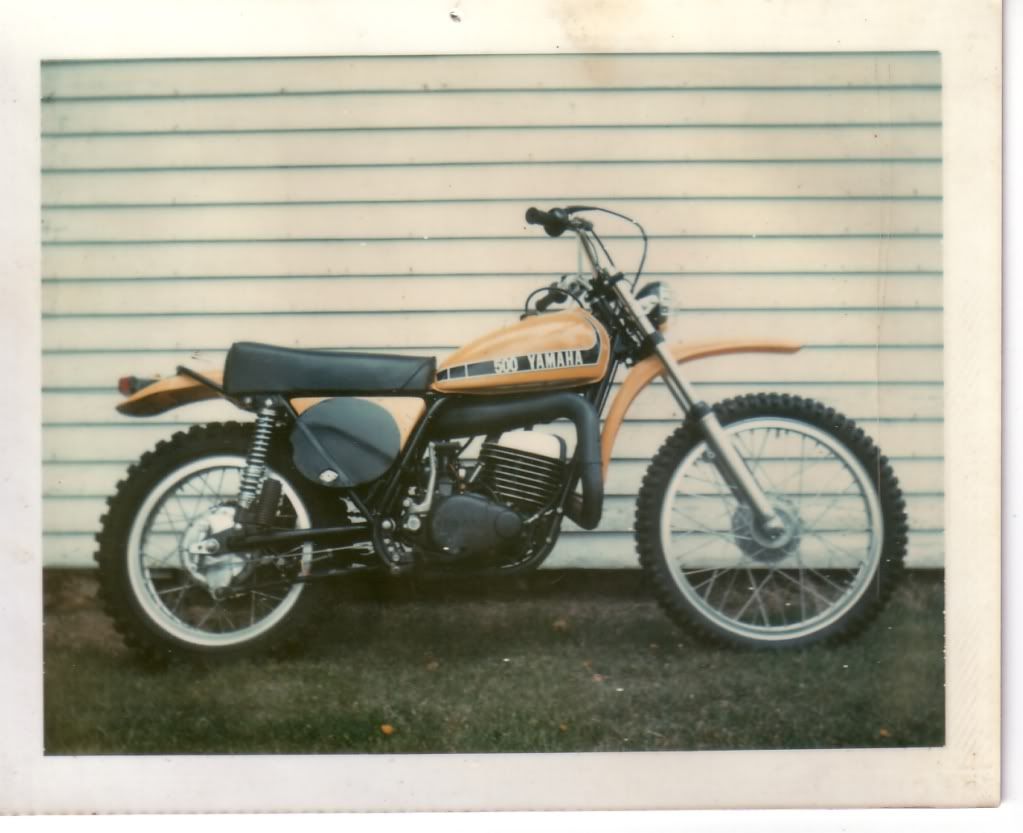
[QUOTE=69 Chevy;1578758115]As I recall, the only engine that I've ever owned that needed some back pressure to operate at its best was a 2 stroke Yamaha SC500A.
Yes, on a 2 stroke motor with reed valves, the backpressure actually assists to close the reed valve all the way.
Yes, on a 2 stroke motor with reed valves, the backpressure actually assists to close the reed valve all the way.

Race Director


Joined: Mar 2006
Posts: 14,112
Likes: 28
From: Florida
Corvette Stories
The Best of Corvette for Corvette Enthusiasts

Top 10 Most Expensive Corvettes Ever Sold on Bring A Trailer
Brett Foote
10 Things Every Corvette Owner Needs (2026 Edition)
Michael S. Palmer
8 Most "Only Corvette Owners Understand" Quirks and Problems
Pouria Savadkouei
10 Reasons the C6 Z06 is Still A Performance Benchmark After 20 Years
Joe Kucinski
How Much Horsepower Every Corvette Engine "LOST" in 1972
Joe Kucinski
Top 10 DOs and DON'Ts for Protecting Your Convertible Top!
Michael S. Palmer
Top 10 Most Explosive Corvettes Ever Made: Power-to-Weight Ratio Ranked!
Joe Kucinski
150 hp to 1,250 hp: Every Corvette Generation Compared by the Specs That Matter
Joe Kucinski
8 Coolest Corvette Pace Cars (and Replicas) of All Time
Verdad Gallardo

Le Mans Master


Joined: Jun 2004
Posts: 6,231
Likes: 65
From: Seattle WA
St. Jude Donor '14
Always an interesting discussion  I was on another board where someone expounded on the virtue of small exhaust pipes, even noting that he couldn't wait to prove everyone wrong by making more power with 1.5" exhaust! While exhaust velocity is the key...the impact of larger pipes is overstated once you move outside of the header and about 18" back from the collectors. I found this article to be good reading:
http://www.hotrod.com/techarticles/e...tem/index.html
"In theory, the larger the engine's displacement and the higher the rpm where peak horsepower occurs, the better it should respond to the reduced backpressure of a larger-diameter exhaust. Conversely, it's been said that a mild engine with too much exhaust flow may fall on its face with not enough backpressure, though we've never seen that to be true and can't even imagine how backpressure could help performance in a four-stroke engine.
...it came as no great surprise that our test revealed more power everywhere with the 3-inch system compared to the 2.5-inch system."
I was on another board where someone expounded on the virtue of small exhaust pipes, even noting that he couldn't wait to prove everyone wrong by making more power with 1.5" exhaust! While exhaust velocity is the key...the impact of larger pipes is overstated once you move outside of the header and about 18" back from the collectors. I found this article to be good reading:http://www.hotrod.com/techarticles/e...tem/index.html
"In theory, the larger the engine's displacement and the higher the rpm where peak horsepower occurs, the better it should respond to the reduced backpressure of a larger-diameter exhaust. Conversely, it's been said that a mild engine with too much exhaust flow may fall on its face with not enough backpressure, though we've never seen that to be true and can't even imagine how backpressure could help performance in a four-stroke engine.
...it came as no great surprise that our test revealed more power everywhere with the 3-inch system compared to the 2.5-inch system."
Last edited by billla; Sep 24, 2011 at 12:30 PM.

Race Director

Joined: Apr 2000
Posts: 17,676
Likes: 201
From: Who says "Nothing is impossible" ? I've been doing nothing for years.
Exhaust backpressure is a bad thing.What confuses some people is the loss in low rpm power that can come from running pipes that are too large. Larger pipes don't always mean lower backpressure.
Pipes that are the correct size for the rpm range where you are operating will lead to a high velocity exhaust gas flow.
The fast moving exhaust will help to pull the gasses behind it out of the chamber, like siphoning a tank with a water hose.
There is of course a point where the pipe is to small and the high velocity will be counteracted by a pipe that just cant flow enough to get rid of all of the exhaust.
An overly large pipe results in lazy, slow moving exhaust gasses that only leave the chamber because they are pushed. This does not remove exhaust as efficiently as a smaller (correctly sized) pipe will.
I have have had experience with this so called "backpressure" and when you think about it do you really want something blocking the exhaust route. Ever see mufflers on Top Fuel Dragster, no, they are open and they look simple but they are tuned to the 10,000RPM the motor turns when it goes down the track. Actually easier than tuning our own exhausts. The TFD starts at 10,00RPM and ends 10,000RPM via a multiple clutch disc setup. So once they find the exhaust size and length they are happy with they are done.
The explanation above is very good as it discusses low end power loss and this is a result of not having the correct size pipe for the RPM range. At 2000RPM it will feel like it has more torque, put it on a dyno and you may very well see a bit more torque down in the low RPM range but you will lose power once you get into the cam's power range and overall average power will be down with an exhaust that is too small.
The Top Fuel Dragster or circle track cars are actually easier to tune the exhaust too because of the narrow RPM band they run in.
We have to find the correct size headers, exhaust pipes and mufflers for a huge RPM range of say 1500RPM to 7000RPM and it really can't be done without extensive testing of different size tubes and mufflers.
One thing is for sure if you feel more torque with a certain smaller muffler or pipe at 2000RPM it is not going to give you as much overall power as a bigger pipe or muffler that doesn't feel as "torquey" at 2000 RPM. It is a balancing act and most of us are just guessing and as stated above getting confused. None of us have the time and money to get the perfect exhaust for such a large RPM range, you can get close though

Last edited by MotorHead; Sep 24, 2011 at 11:41 AM.

Drifting
Joined: Mar 2011
Posts: 1,886
Likes: 9
The factory tunes the engine to run well with the amount of backpressure in the stock exhaust. If you make the exhaust less restrictive, the engine may need to be retuned to match the new setup, to produce all the power it is capable of. Until you do that, the engine might not make any more power than before.
As far as smaller pipes making more power, they are talking about the 4 primary pipes in each header. For street cars. Once you are past the end of the collector, you want to minimize backpressure. And that generally means bigger pipes and free flowing mufflers.
An engine basically is an air/fuel pump. Anything you can do to make the engine process more air and fuel in a given amount of time will allow the engine will make more power. You can improve that situation with 1)more RPM, 2) more displacement, or 3)less restrictions to the flow.
As far as smaller pipes making more power, they are talking about the 4 primary pipes in each header. For street cars. Once you are past the end of the collector, you want to minimize backpressure. And that generally means bigger pipes and free flowing mufflers.
An engine basically is an air/fuel pump. Anything you can do to make the engine process more air and fuel in a given amount of time will allow the engine will make more power. You can improve that situation with 1)more RPM, 2) more displacement, or 3)less restrictions to the flow.
Le Mans Master
Joined: Mar 2008
Posts: 5,948
Likes: 72
From: Oxford MA-----You just lost the game!!!!
The factory tunes the engine to run well with the amount of backpressure in the stock exhaust. If you make the exhaust less restrictive, the engine may need to be retuned to match the new setup, to produce all the power it is capable of. Until you do that, the engine might not make any more power than before.
As far as smaller pipes making more power, they are talking about the 4 primary pipes in each header. For street cars. Once you are past the end of the collector, you want to minimize backpressure. And that generally means bigger pipes and free flowing mufflers.
An engine basically is an air/fuel pump. Anything you can do to make the engine process more air and fuel in a given amount of time will allow the engine will make more power. You can improve that situation with 1)more RPM, 2) more displacement, or 3)less restrictions to the flow.
As far as smaller pipes making more power, they are talking about the 4 primary pipes in each header. For street cars. Once you are past the end of the collector, you want to minimize backpressure. And that generally means bigger pipes and free flowing mufflers.
An engine basically is an air/fuel pump. Anything you can do to make the engine process more air and fuel in a given amount of time will allow the engine will make more power. You can improve that situation with 1)more RPM, 2) more displacement, or 3)less restrictions to the flow.
Scott
Thread Starter
Drifting
Joined: Aug 2009
Posts: 1,635
Likes: 8
From: Enid Oklahoma
Yeah, I've always heard the old saw about "The engine was designed to operate with backpressure, if there's not enough backpressure it'll lose power" and it never made any sense to me. I always figured it was just guys who put a set of headers on and didn't re-jet the carb, so now it's running lean. Never really thought about larger primaries moving the rpm range up. Interesting!!
Scott
Scott
Last edited by 81pilot; Sep 25, 2011 at 09:04 PM.
Le Mans Master
Joined: Mar 2008
Posts: 5,948
Likes: 72
From: Oxford MA-----You just lost the game!!!!
Scott
Le Mans Master
Joined: Jun 2004
Posts: 6,231
Likes: 65
From: Seattle WA
St. Jude Donor '14
There is always at least a bit of overlap to ensure the escaping exhaust pulls the intake charge (scavenging) and that the exhaust valve gets a bit of cooling from that incoming charge.
The formula for overlap is Exhaust Closing + Intake Opening, so even on a mild cam there's around 20-50 degrees of overlap.
The formula for overlap is Exhaust Closing + Intake Opening, so even on a mild cam there's around 20-50 degrees of overlap.
Thread Starter
Drifting
Joined: Aug 2009
Posts: 1,635
Likes: 8
From: Enid Oklahoma
That is not much.....The escaping gas creates a low pressure gradient allowing the intake charge to enter faster on the intial surge I understand that. I mispoke, there is always some, but 20 degrees ain't much :O)
Last edited by 81pilot; Sep 25, 2011 at 09:03 PM.

Le Mans Master
Joined: Apr 2006
Posts: 5,403
Likes: 95
