






Factory Engine Upgrades??
Le Mans Master


Joined: Mar 2008
Posts: 5,948
Likes: 72
From: Oxford MA-----You just lost the game!!!!

Don't get wrapped around the axle about the distributor cap, they are relatively inexpensive, and it probably would have been a good idea to replace it, anyway. If you have cracked the distributor shaft, well, that's just a good excuse to upgrade it to an HEI or another more modern distributor. Chevys have their distributor on the wrong end of the engine, I have seen more than one distributor cap get crunched while removing or dropping an engine, the distributor body itself seems to be relatively rugged, it's probably fine.
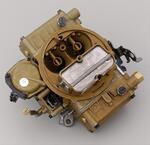
If it drives OK, you can probably assume that the carb is rebuildable, it's not that big of a deal. I remember the first time I rebuilt a carb, all those little pieces, it's kind of intimidating, but if you just keep everything well organized, and have some good instructions, you will be just fine. Here is a link to a good article on rebuilding a Q-jet:
http://vetteprojects.com/kstyer/quadrajet.htm
here's a good site to bookmark for info on Q-jets:
http://www.florida4x4.com/tech/quadrajet/
63mako and 7T1vette are giving you some primo free advice. And on this forum, free advice comes with a double-your-money-back guarantee!!! It will cost you a little coin, but an overdrive tranny will be worth it, and then some. Like I said before, we have become accustomed to having overdive, not having it is really annoying on the highway, you wife probably won't like it at all. She has probably never driven a car that buzzes down the highway at 3000 rpm.
I am by no means what you would call an engine expert, but I am reasonably certain that 63mako is. You can trust his judgement. I am pretty much in the same boat as you are (3.07 diff, th350 tranny, want to keep the stock hood, have between 300-350 horsepower in a usable rpm range) and his recomended combo sounds very similar to the one that I have planned, after months of research and consultation with the members of this forum. One thing I have learned is to take the advice of racers with a grain of salt. Race cars and street cars need a completely different perspective toward power delivery.
If the engine only has 16k miles on it, I wouldn't worry about the bottom end too much, but with that many years gone by, gaskets and seal might be an issue. You will be replacing them anyway, if you perform the head and cam upgrade proposed, so that will be taken care of.
If you go with aftermarket heads, then yes, you will need to determine correct pushrod length. I haven't done it yet, but from what I have been told, it is a relatively straightforward procedure. When the time comes, you can count on someone from this forum to hold your hand during the process (figuratively speaking, of course).
One of the people who really seems to know what he is talking about, and is willing to be very helpful, is Billla. The only thing is, he has this thing about a budget. Give him a number, and he will jump in and be very, very helpful. Don't just throw out a number to get him to talk to you, though, make it a realistic number that you will be willing to stick to. Once you find a few people who are willing to stick with you through your project, you will find that it will be much easier to communicate with them using the PM function.
When you are done, definitely share your results with the mebers of this forum!! Sometimes I think that this forum was really made for the sole purpose of crowing about stuff that you have successfully done to your 'vette!!! Personally, I would love to hear all about your 'vette once your engine work is completed, because my engine and drivetrain is, and will be, so similar.
As far as re-curving the distributor goes, it's very technical sounding and intimidating for that reason, but it is actually a very, very simple procedure, with surprisingly good results, as far as percieved power goes. Here is a link that will tell you a little more about how it works:
http://forums.corvetteforum.com/c3-t...long-post.html
I got this link from the consolidated FAQ at the top of the tech/performance page, give it a look-see, there is a lot of great info there for guys like you and me, who don't know what the heck they are doing, but don't want to pay someone who does!!! Like my Dad used to say: "If you don't want to pay an expert, you have to become an expert yourself."
There a lot of things that must be done when doing a project like you have in mind, if you want it to be reliable and run well. My first engine re-build was a Ford 289 out of my '68 mustang, I didn't measure anything, I just took it apart and put it back together with new bearings and rings. Looking back, I'm surprised it didn't just blow up in the first ten minutes of running!!!!! I didn't use any aftermarket parts, and that's probably the only reason it ran as well as it did. My second one was a 440 out of my '73 roadrunner, that one used some aftermarket parts, I was a little smarter with that one, and it was a really good runner for a good long time. This one will be my third engine build, (first time working with a SBC) and I'm a little more knowledgable now, and hoping for good results. The trick is to not look at the entire project, or it will all seem overwhelming. There are lots of thigs to do, but just take them one at a time, biting off small pieces of the whole project, and before you know it, you will be done. Keep your engine, parts, and work area as clean as possible, and measure everything three times!!!!
That's about all I have for ya right now, see ya, and good luck!!!
Scott
If it drives OK, you can probably assume that the carb is rebuildable, it's not that big of a deal. I remember the first time I rebuilt a carb, all those little pieces, it's kind of intimidating, but if you just keep everything well organized, and have some good instructions, you will be just fine. Here is a link to a good article on rebuilding a Q-jet:
http://vetteprojects.com/kstyer/quadrajet.htm
here's a good site to bookmark for info on Q-jets:
http://www.florida4x4.com/tech/quadrajet/
63mako and 7T1vette are giving you some primo free advice. And on this forum, free advice comes with a double-your-money-back guarantee!!! It will cost you a little coin, but an overdrive tranny will be worth it, and then some. Like I said before, we have become accustomed to having overdive, not having it is really annoying on the highway, you wife probably won't like it at all. She has probably never driven a car that buzzes down the highway at 3000 rpm.
I am by no means what you would call an engine expert, but I am reasonably certain that 63mako is. You can trust his judgement. I am pretty much in the same boat as you are (3.07 diff, th350 tranny, want to keep the stock hood, have between 300-350 horsepower in a usable rpm range) and his recomended combo sounds very similar to the one that I have planned, after months of research and consultation with the members of this forum. One thing I have learned is to take the advice of racers with a grain of salt. Race cars and street cars need a completely different perspective toward power delivery.
If the engine only has 16k miles on it, I wouldn't worry about the bottom end too much, but with that many years gone by, gaskets and seal might be an issue. You will be replacing them anyway, if you perform the head and cam upgrade proposed, so that will be taken care of.
If you go with aftermarket heads, then yes, you will need to determine correct pushrod length. I haven't done it yet, but from what I have been told, it is a relatively straightforward procedure. When the time comes, you can count on someone from this forum to hold your hand during the process (figuratively speaking, of course).
One of the people who really seems to know what he is talking about, and is willing to be very helpful, is Billla. The only thing is, he has this thing about a budget. Give him a number, and he will jump in and be very, very helpful. Don't just throw out a number to get him to talk to you, though, make it a realistic number that you will be willing to stick to. Once you find a few people who are willing to stick with you through your project, you will find that it will be much easier to communicate with them using the PM function.
When you are done, definitely share your results with the mebers of this forum!! Sometimes I think that this forum was really made for the sole purpose of crowing about stuff that you have successfully done to your 'vette!!! Personally, I would love to hear all about your 'vette once your engine work is completed, because my engine and drivetrain is, and will be, so similar.
As far as re-curving the distributor goes, it's very technical sounding and intimidating for that reason, but it is actually a very, very simple procedure, with surprisingly good results, as far as percieved power goes. Here is a link that will tell you a little more about how it works:
http://forums.corvetteforum.com/c3-t...long-post.html
I got this link from the consolidated FAQ at the top of the tech/performance page, give it a look-see, there is a lot of great info there for guys like you and me, who don't know what the heck they are doing, but don't want to pay someone who does!!! Like my Dad used to say: "If you don't want to pay an expert, you have to become an expert yourself."
There a lot of things that must be done when doing a project like you have in mind, if you want it to be reliable and run well. My first engine re-build was a Ford 289 out of my '68 mustang, I didn't measure anything, I just took it apart and put it back together with new bearings and rings. Looking back, I'm surprised it didn't just blow up in the first ten minutes of running!!!!! I didn't use any aftermarket parts, and that's probably the only reason it ran as well as it did. My second one was a 440 out of my '73 roadrunner, that one used some aftermarket parts, I was a little smarter with that one, and it was a really good runner for a good long time. This one will be my third engine build, (first time working with a SBC) and I'm a little more knowledgable now, and hoping for good results. The trick is to not look at the entire project, or it will all seem overwhelming. There are lots of thigs to do, but just take them one at a time, biting off small pieces of the whole project, and before you know it, you will be done. Keep your engine, parts, and work area as clean as possible, and measure everything three times!!!!
That's about all I have for ya right now, see ya, and good luck!!!
Scott
Last edited by scottyp99; Jan 6, 2012 at 01:21 PM.

Thread Starter
Racer

Joined: Nov 2010
Posts: 364
Likes: 0
From: Flower Mound TX
thanks for all the feedback, i am very much an attention to detail person (**** as my wife says), so I am sure I can do the engine work. trying to get my head around what needs to be swapped out and not get over whelmed (in my mind).
I was able to rebuild my own trailing arms and got them within the factory specs, after a lot of worry, so I guess now that it is done, this is my new worry spot.
I am going to use the list from summit earlier in the post as a starting point and the list given to the other items as a read up point. Need to clean the engine up and then I will disassemble and take some meassurements. I knew I would have to meassure how far down in the bore the pistons are to help decide on which gasket, not sure the exact reason for it (but I think compression since the air space could change.
It has been real good with all the help and view points quite honestly. not just related to the engine but my whole build.
I was able to rebuild my own trailing arms and got them within the factory specs, after a lot of worry, so I guess now that it is done, this is my new worry spot.
I am going to use the list from summit earlier in the post as a starting point and the list given to the other items as a read up point. Need to clean the engine up and then I will disassemble and take some meassurements. I knew I would have to meassure how far down in the bore the pistons are to help decide on which gasket, not sure the exact reason for it (but I think compression since the air space could change.
It has been real good with all the help and view points quite honestly. not just related to the engine but my whole build.

Le Mans Master


Joined: Jun 2004
Posts: 6,231
Likes: 65
From: Seattle WA
St. Jude Donor '14
I do  I see more engine projects fail for an unrealistic budget or going far over budget than any other reason. Budget is the way we translate dreams into reality instead of disappointment. Better a little less power in the car and running great than more power sitting incomplete on a stand in the garage.
It's the little stuff that kills you. New balancer? $80 - more than twice that if it need to be SFI. Valve covers? New front cover? Timing chain? New intake bolts? New spiffy Lokar linkages? Any other "while we're in there" stuff? Not at all hard to spend $1K just on incidentals for a top, the sky's the limit on an overhaul.
With a $2K budget, and the posted shopping list being around $1,500 just on the big stuff, the OP is likely going to be over budget before it's done and running. Just one guy's opinion.
These days for a QJet rebuild most folks are better off sending it to one of the quality rebuild shops. The carb will need bushings for sure, and likely a lot of other little touches that the pros do really well. It's not a difficult carb to overhaul, but it has become a specialized skill.
I see more engine projects fail for an unrealistic budget or going far over budget than any other reason. Budget is the way we translate dreams into reality instead of disappointment. Better a little less power in the car and running great than more power sitting incomplete on a stand in the garage. It's the little stuff that kills you. New balancer? $80 - more than twice that if it need to be SFI. Valve covers? New front cover? Timing chain? New intake bolts? New spiffy Lokar linkages? Any other "while we're in there" stuff? Not at all hard to spend $1K just on incidentals for a top, the sky's the limit on an overhaul.
With a $2K budget, and the posted shopping list being around $1,500 just on the big stuff, the OP is likely going to be over budget before it's done and running. Just one guy's opinion.
These days for a QJet rebuild most folks are better off sending it to one of the quality rebuild shops. The carb will need bushings for sure, and likely a lot of other little touches that the pros do really well. It's not a difficult carb to overhaul, but it has become a specialized skill.
Last edited by billla; Jan 6, 2012 at 02:02 PM.
Le Mans Master
Joined: Jun 2004
Posts: 6,231
Likes: 65
From: Seattle WA
St. Jude Donor '14
Two reasons - compression and quench.Compression can be roughly estimated by knowing the bore diameter, piston dome volume, deck height (how far the piston is down in the bore), head gasket compressed thickness and cylinder head chamber volume. Not perfect, but "close enough".
Quench is the distance between the top of the piston and the head deck - ideally, this is around .040 which is made up of how far the piston is down in the bore + head gasket thickness. Thin gaskets can get expen$ive, but are often required if there's significant deck height.
Ideally, when a rebuild is done the engine builder should provide a "build book" with this information in it in case the owner wants to do an upgrade later...but I don't see it very often.
Last edited by billla; Jan 6, 2012 at 02:15 PM.

Race Director

Joined: May 2005
Posts: 10,674
Likes: 122
From: Millington Illinois
St. Jude Donor '08-'09
If you can rebuild your trailing arms and set them up correctly this is a piece of cake, it just takes a little research and attention to detail. I was assuming a stock bottom end rebuild when I recommended the head gaskets. I would do a compression and leakdown test before disassembly and if it all checks out get your deck to piston top measurements and see what pistons you have. With stock deck height and factory dish pistons these are usually about .025 in the hole and the .015 gasket gets you .040 quench. Do not buy anything until you do the above. If it all checks out and is a factory configuration I would stand by my recommendation. Rebuild your carb and reuse your edlebrock intake this saves the hastle of changing air cleaner assemblies, linkages and everything associated with your fuel and vacumn plumbing and should be adequate for your build. You will need intake gaskets and bolts, head bolts, timing set and gaskets, head gaskets. You could upgrade to the Cloyes timing cover with the built in thrust button and roller rockers. I still think my recommendation will get you over 350 HP, match everything well. come in about $2000 and be an easy job. The hydraulic roller cam is well worth the extra $400. It will give you more power across the entire RPM range and to tell you the truth I have never seen a sub .500 lift failed hydraulic roller in a small block but have seen a lot of even mild hydraulic flat tappet cam failures.
Things to make sure you address are proper ignition timing curve, proper valvetrain setup with correct pushrod lengths, correct valvesprings. Measure and check everything twice.
Things to make sure you address are proper ignition timing curve, proper valvetrain setup with correct pushrod lengths, correct valvesprings. Measure and check everything twice.
Le Mans Master
Joined: Jun 2004
Posts: 6,231
Likes: 65
From: Seattle WA
St. Jude Donor '14
Can you elaborate on this? This seems to be quite counter to your previous posts...? I'm not seeing this in my universe if the right break-in is done and the right oil is used. No pushback on the roller, other than cost. 
Haven't used those Dart heads, so can't speak to that. I tend to recommend from personal experience, just to be 100% confident. Interested in learning more about them given the specs and price!
Haven't used those Dart heads, so can't speak to that. I tend to recommend from personal experience, just to be 100% confident. Interested in learning more about them given the specs and price!

Le Mans Master
Joined: May 2002
Posts: 5,086
Likes: 787
From: Lebanon Township New Jersey
Maybe I missed something here, but are you guys talking about an using an L48 bottom end, with CAST pistons, to make around 350 net HP? I wouldn't feel comfortable doubling the power output those pistons were specified for 35 years ago. With increased likelihood of detination and revving to at least 5500 rpm, I think you're asking for trouble.
Corvette Stories
The Best of Corvette for Corvette Enthusiasts

Corvette & Porsche 911: How Two Icons Conquered the Last 25 Years
Joe Kucinski
2027 Chevrolet Silverado 1500 First Look: Everything You NEED to Know!
Michael S. Palmer
5 Best & 5 Worst Corvette Daily Drivers
Joe Kucinski
The Headlights of Every Corvette Generation Explained
Joe Kucinski
5 Best & 5 Most Overrated Corvette Track Packages of All Time!
Joe Kucinski
Every 2027 Corvette Engine Explained
Joe Kucinski
Designer Imagines A Corvette That Looks More Like a Corvette Than the Corvette
Verdad Gallardo
10 Ugly Corvettes That We Still Kinda Love
Joe Kucinski
Top 10 Most Expensive Corvettes Ever Sold on Bring A Trailer
Brett Foote
Le Mans Master
Joined: Jun 2004
Posts: 6,231
Likes: 65
From: Seattle WA
St. Jude Donor '14
Maybe I missed something here, but are you guys talking about an using an L48 bottom end, with CAST pistons, to make around 350 net HP? I wouldn't feel comfortable doubling the power output those pistons were specified for 35 years ago. With increased likelihood of detination and revving to at least 5500 rpm, I think you're asking for trouble.
Increasing power and CR to reasonable numbers don't really appreciably change the likelyhood of detonation with the right gas.
Race Director
Joined: May 2005
Posts: 10,674
Likes: 122
From: Millington Illinois
St. Jude Donor '08-'09
Can you elaborate on this? This seems to be quite counter to your previous posts...? I'm not seeing this in my universe if the right break-in is done and the right oil is used. No pushback on the roller, other than cost.
Haven't used those Dart heads, so can't speak to that. I tend to recommend from personal experience, just to be 100% confident. Interested in learning more about them given the specs and price!
Haven't used those Dart heads, so can't speak to that. I tend to recommend from personal experience, just to be 100% confident. Interested in learning more about them given the specs and price!
There are posts everywhere on this and other forums. I have gotten a lot of static about this from others but I thought you were in the same school of thought on this. The right oil helps but the ramp rates are what they are and the modern flat tappet cam grinds just don't make sense for a durable build.
Nothing is worse than spending the time and money to do a nice build and then have a failure that causes you to have to start over. Pretty devastating to your budget.

I have not used the new Dart heads yet either but I have use the older designs and the quality of their parts has always been top shelf. Flow numbers look real good for the price. They look to be Darts answer to the chinese heads flooding the market and I am glad to see the competition from a reputable US company.
Le Mans Master
Joined: Jun 2004
Posts: 6,231
Likes: 65
From: Seattle WA
St. Jude Donor '14
The modern Hydraulic flat tappet lobe profiles are counter to good engineering and longevity. There are posts everywhere on this and other forums. I have gotten a lot of static about this from others but I thought you were in the same school of thought on this. The right oil helps but the ramp rates are what they are and the modern flat tappet cam grinds just don't make sense for a durable build.
I'm in complete agreement right up to the "don't make sense for a durable build" part  I have many, many flat-tappet cam builds out there making 1-1.2 HP/CID that have lasted for a decade or more and still running - including near-roller profile cams like the CompCams Xtreme Energy line. I agree with roller cams if the budget permits - I just didn't see it fitting into this budget. The Howards stuff is cheaper than other retrofit roller stuff I've used - but again, I haven't used them. I'll own being very conservative on my budgeting
 I would agree that .500+ lift is beyond the capabilities of a flat-tappet cam in a street engine - but my flat-tappet cam recommendation for this build would be in the .450-.475 lift range.
The Dart heads are interesting - I don't see any "Made in the USA" claims for them, but it'll be interesting to see how they do. I'm sure someone will do a build with them soon and report back.
Again no pushback at all - just a different perspective. Lots of good ways to approach this top.
Last edited by billla; Jan 6, 2012 at 04:03 PM.

Le Mans Master


Joined: Oct 2010
Posts: 6,952
Likes: 858
From: melbourne florida
2023 C3 of the Year Finalist - Modified
no! it is not wheel horsepower. net power is s the engine with factory accessories and exhaust. gross power is the engine by itself. crate engines are rated by gross horsepower.
Thread Starter
Racer
Joined: Nov 2010
Posts: 364
Likes: 0
From: Flower Mound TX
Certainly is ALOT of information. Kind of hard to break it apart to be honest when it gets into all these diff types of cams etc.
My budget was a ball park not having ever dealt with swaping components out of an engine before to get more power. I understand I may go over, but still trying to keep it reasonable.
Maybe my next project car (which will be sitting at the house tomorrow) I will really go after beefing it up since that one will be mine, where as this car is for my wife who "just wants to be able to drive it". She will be happy no matter as long as she gets the car
My budget was a ball park not having ever dealt with swaping components out of an engine before to get more power. I understand I may go over, but still trying to keep it reasonable.
Maybe my next project car (which will be sitting at the house tomorrow) I will really go after beefing it up since that one will be mine, where as this car is for my wife who "just wants to be able to drive it". She will be happy no matter as long as she gets the car
Le Mans Master
Joined: Mar 2008
Posts: 5,948
Likes: 72
From: Oxford MA-----You just lost the game!!!!
The compression ratio is very sensitive to small changes in the volume of the combustion chamber. Even something as inconsequential sounding as a few thousandths of an inch in the head gasket thickness can make a big difference. Here's the thing of it: the compression ratio is basically the ratio of the entire volume of the cylinder and combustion chamber, at bottom dead center, to the remaining volume of the combustion chamber at top dead center. So, if you change the volume of the combustion chamber, even a little, it will change this ratio, because the swept volume of the cylinder doesn't change at all. Check out this link:
http://en.wikipedia.org/wiki/Compression_ratio
Once you get the heads off, and measure the piston to deck height, and see what you have for pistons, there won't really be any unknown variables left to speak of, so you will start getting much more specific advice, such as what sort of head gasket to run, what combustion chamber size you should go with, etc.
I have rebuilt a few Q-jets, but never taken a crack at rebuilding a trailing arm. I did look into it a bit before deciding to just order rebuilt trailing arms, and I would have to agree that if you have the mechanical wherewithal to rebuild a trailing arm successfully, you shouldn't feel too much trepidation over doing a carb.
As I said before, as you learn more about what you will be doing, try to compartmentalize each individual task, and be aware of the order that each task must be performed in. It's called Task Organization, I learned it in the Army, and it really helps bring large, involved projects into focus. I would say, if it's out of the car and on an engine stand right now, focus on cleaning it up nice and spic-n-span (remember, you can't be too clean or too precise!!) wipe it down with lacquer thinner, and give it a few coats of engine paint. Now is the best time, because you won't have to worry about overspray, and it'll be nice to work on, all clean and painted up nice. Remove the distributor, carb and intake, and the heads, and see what you're working with. Then, with the input of fellow forum members, finalize the plan, and go from there. To me, you sound like you have the general mechanical skills, just not the specific knowledge you need to have, so an engine building book may be just what you need. Something like this:
http://www.amazon.com/How-Rebuild-Yo.../dp/1557880298
There are several good ones, what I would do if I were you, is google search "small block chevy engine book", write down a few of the titles you see, and go to your local public library and see if they have any of them. Even if they don't they can get them for you from another library for you to peruse for a few weeks. Find one or two that you like, and purchase a copy. This will go a long way toward making you feel more comfortable with what you are going to be doing.
Scott
http://en.wikipedia.org/wiki/Compression_ratio
Once you get the heads off, and measure the piston to deck height, and see what you have for pistons, there won't really be any unknown variables left to speak of, so you will start getting much more specific advice, such as what sort of head gasket to run, what combustion chamber size you should go with, etc.
I have rebuilt a few Q-jets, but never taken a crack at rebuilding a trailing arm. I did look into it a bit before deciding to just order rebuilt trailing arms, and I would have to agree that if you have the mechanical wherewithal to rebuild a trailing arm successfully, you shouldn't feel too much trepidation over doing a carb.
As I said before, as you learn more about what you will be doing, try to compartmentalize each individual task, and be aware of the order that each task must be performed in. It's called Task Organization, I learned it in the Army, and it really helps bring large, involved projects into focus. I would say, if it's out of the car and on an engine stand right now, focus on cleaning it up nice and spic-n-span (remember, you can't be too clean or too precise!!) wipe it down with lacquer thinner, and give it a few coats of engine paint. Now is the best time, because you won't have to worry about overspray, and it'll be nice to work on, all clean and painted up nice. Remove the distributor, carb and intake, and the heads, and see what you're working with. Then, with the input of fellow forum members, finalize the plan, and go from there. To me, you sound like you have the general mechanical skills, just not the specific knowledge you need to have, so an engine building book may be just what you need. Something like this:
http://www.amazon.com/How-Rebuild-Yo.../dp/1557880298
There are several good ones, what I would do if I were you, is google search "small block chevy engine book", write down a few of the titles you see, and go to your local public library and see if they have any of them. Even if they don't they can get them for you from another library for you to peruse for a few weeks. Find one or two that you like, and purchase a copy. This will go a long way toward making you feel more comfortable with what you are going to be doing.
Scott
Race Director
Joined: May 2005
Posts: 10,674
Likes: 122
From: Millington Illinois
St. Jude Donor '08-'09
Thanks for the additional background. I'm in complete agreement right up to the "don't make sense for a durable build" part I have many, many flat-tappet cam builds out there making 1-1.2 HP/CID that have lasted for a decade or more and still running - including near-roller profile cams like the CompCams Xtreme Energy line. I agree with roller cams if the budget permits - I just didn't see it fitting into this budget. The Howards stuff is cheaper than other retrofit roller stuff I've used - but again, I haven't used them. I'll own being very conservative on my budgeting
I would agree that .500+ lift is beyond the capabilities of a flat-tappet cam in a street engine - but my flat-tappet cam recommendation for this build would be in the .450-.475 lift range.
The Dart heads are interesting - I don't see any "Made in the USA" claims for them, but it'll be interesting to see how they do. I'm sure someone will do a build with them soon and report back.
Again no pushback at all - just a different perspective. Lots of good ways to approach this top.
I'm in complete agreement right up to the "don't make sense for a durable build" part I have many, many flat-tappet cam builds out there making 1-1.2 HP/CID that have lasted for a decade or more and still running - including near-roller profile cams like the CompCams Xtreme Energy line. I agree with roller cams if the budget permits - I just didn't see it fitting into this budget. The Howards stuff is cheaper than other retrofit roller stuff I've used - but again, I haven't used them. I'll own being very conservative on my budgeting I would agree that .500+ lift is beyond the capabilities of a flat-tappet cam in a street engine - but my flat-tappet cam recommendation for this build would be in the .450-.475 lift range.
The Dart heads are interesting - I don't see any "Made in the USA" claims for them, but it'll be interesting to see how they do. I'm sure someone will do a build with them soon and report back.
Again no pushback at all - just a different perspective. Lots of good ways to approach this top.
Even in the last decade the aftermarket lobe profiles have changed. They make them steeper and faster to keep up with the competition and the part number may not change.
There is a good reason why GM went to the roller cam in the late 80's and it was not because it is cheaper, it is not. It was not because the ZDDP levels of the oil was decreased because that did not happen until much later. It is because they can get a lobe profile that produces more power without sacrificing fuel mileage or emmisions and not have the warrantee issues that would go along with that profile in a flat tappet design.
I do understand the budget is the budget but this is one spot I just can't recommend anyone cut corners. I think the power gains across the entire RPM range combined with better durability is worth the small price difference per hp. A roller cam will make good flowing heads more able to maximize their potential due to better lift with a given duration and a larger area under the curve with similar advertised duration.
Howards cams use a billet core and come in a nice, protective hardshell plastic case. They have been around since the 60's in the NHRA circuit. My machinist has used quite a few of them and I have a couple friends with them and they seem to be a top quality product at a very good price. The downside is the ramp rates are not very radical for a roller and the lobe profiles are limited.
We are revisiting an earlier discussion. See post #38 and look at the graph a few posts before that.
http://forums.corvetteforum.com/c3-t...-roller-2.html
Le Mans Master
Joined: Jun 2004
Posts: 6,231
Likes: 65
From: Seattle WA
St. Jude Donor '14
We'll have to respectfully agree to disagree regarding using a flat-tappet as a "cut corner"; I still see it as a very reasonable, practical alternative for builds up to around the 1.2 HP/CID range, with a roller cam not required for every single build.
Le Mans Master
Joined: Mar 2008
Posts: 5,948
Likes: 72
From: Oxford MA-----You just lost the game!!!!
Guys, I don't want to sound presumptuous here, but do we want to help this guy with his top-end re-build, or do we want to argue? efather is just going to have to do his homework and make his own decision regarding roller or flat-tappet camshaft, that's all. I hope you don't think I'm getting too big for my britches here, I just don't want to see this thread get sidetracked like so many do.
Scott
Scott
Race Director
Joined: May 2005
Posts: 10,674
Likes: 122
From: Millington Illinois
St. Jude Donor '08-'09
The only reason not to use a roller cam today is if you can't afford it.
More power throughout the range, better driveability.
Flat tappet cams are fine with the right oil and spring pressure.
If you're not set on rebuilding your motor, get a used roller-cam engine and base your build on that.
More power throughout the range, better driveability.
Flat tappet cams are fine with the right oil and spring pressure.
If you're not set on rebuilding your motor, get a used roller-cam engine and base your build on that.

Flat tappet cams are fine with the proper oil, spring pressure and rate, valvetrain geometry, correct break in and the ramp rates are kept within the boundries they are safely designed to run in. Those cams with ramp rates that they are safely designed to run with long term are also going to cost you noticable power across the board.
Last edited by 63mako; Jan 6, 2012 at 07:27 PM.
Race Director
Joined: May 2005
Posts: 10,674
Likes: 122
From: Millington Illinois
St. Jude Donor '08-'09
Guys, I don't want to sound presumptuous here, but do we want to help this guy with his top-end re-build, or do we want to argue? efather is just going to have to do his homework and make his own decision regarding roller or flat-tappet camshaft, that's all. I hope you don't think I'm getting too big for my britches here, I just don't want to see this thread get sidetracked like so many do.
Scott
Scott
We are all here to help.Here is a good link for that homework.
http://forums.corvetteforum.com/c3-t...-roller-2.html
Le Mans Master
Joined: Jun 2004
Posts: 6,231
Likes: 65
From: Seattle WA
St. Jude Donor '14
But I also said...
Last edited by billla; Jan 6, 2012 at 08:15 PM.