








Really dumb question, but I need help!

Thread Starter
Cruising


Joined: Aug 2011
Posts: 13
Likes: 1
 Really dumb question, but I need help!
I'm pretty much grasping at straw here, but could removing an intake while there is coolant in it cause coolant to get into the oil?
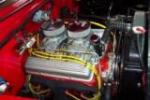
Backstory: A couple months ago, my Vette overheated. Long story short, I replaced the radiator, and it was good. But it was using oil and blowing white smoke on startup. So I changed the headgaskets. Never did it before, but fairly straightforward, right? I had the heads re-surfaced, and put it all back together. Put a new Edelbrock intake on it. I changed the oil and ran it for a few minutes. But when I checked the oil, there was coolant in it. I pulled the intake, checked the gaskets, made sure everything was good, and put it back together. Another oil change, started it up, and still coolant in the oil.
I took it to the garage, and they pressurized the coolant system, and only lost about 1 psi over 15 minutes. Pulled all the plugs, and they looked good. Compression on all the cylinders was good. So I took it home.
Again I drained the oil, and changed it, but like a dummy I forgot to change the filter. Ran it for a few minutes, and again coolant in the oil, but it didn't seem quite as much. I didn't run it as long though.
So basically, I probably have a cracked head or block. But each time I pulled the intake, I only disconnected the hose and pulled it off. Could that have spilled enough coolant into the engine to be what I'm seeing?
Backstory: A couple months ago, my Vette overheated. Long story short, I replaced the radiator, and it was good. But it was using oil and blowing white smoke on startup. So I changed the headgaskets. Never did it before, but fairly straightforward, right? I had the heads re-surfaced, and put it all back together. Put a new Edelbrock intake on it. I changed the oil and ran it for a few minutes. But when I checked the oil, there was coolant in it. I pulled the intake, checked the gaskets, made sure everything was good, and put it back together. Another oil change, started it up, and still coolant in the oil.
I took it to the garage, and they pressurized the coolant system, and only lost about 1 psi over 15 minutes. Pulled all the plugs, and they looked good. Compression on all the cylinders was good. So I took it home.
Again I drained the oil, and changed it, but like a dummy I forgot to change the filter. Ran it for a few minutes, and again coolant in the oil, but it didn't seem quite as much. I didn't run it as long though.
So basically, I probably have a cracked head or block. But each time I pulled the intake, I only disconnected the hose and pulled it off. Could that have spilled enough coolant into the engine to be what I'm seeing?

Racer
Joined: Mar 2009
Posts: 331
Likes: 1
From: Brooklin Ontario
The coolant will sit at the bottom of the pan. Drain until oil comes out the oil drain, that should remove the coolant. run the car some more. after it cools, see if there is more coolant in the bottom of the pan by draining again.
I'm hoping for you but it doesn't look good.
Later, Rog.
I'm hoping for you but it doesn't look good.
Later, Rog.

Melting Slicks

Joined: Feb 2006
Posts: 3,428
Likes: 5
From: Japan
It's surprising that whoever resurfaced your heads didn't check them for cracks before they did it. If they turn out not to be cracked, make sure to use sealer on the head bolt threads as moosie mentioned...this is essential on Chevys since the threads go into the water jackets, and it would be a good idea to put a thin bead of sealer around the head-to-intake water ports as well. This still applies even if your heads are cracked and you get a replacement pair...
Corvette Stories
The Best of Corvette for Corvette Enthusiasts

Top 10 Most Expensive Corvettes Ever Sold on Bring A Trailer
Brett Foote
10 Things Every Corvette Owner Needs (2026 Edition)
Michael S. Palmer
8 Most "Only Corvette Owners Understand" Quirks and Problems
Pouria Savadkouei
10 Reasons the C6 Z06 is Still A Performance Benchmark After 20 Years
Joe Kucinski
How Much Horsepower Every Corvette Engine "LOST" in 1972
Joe Kucinski
Top 10 DOs and DON'Ts for Protecting Your Convertible Top!
Michael S. Palmer
Top 10 Most Explosive Corvettes Ever Made: Power-to-Weight Ratio Ranked!
Joe Kucinski
150 hp to 1,250 hp: Every Corvette Generation Compared by the Specs That Matter
Joe Kucinski
8 Coolest Corvette Pace Cars (and Replicas) of All Time
Verdad Gallardo
Thread Starter
Cruising
Joined: Aug 2011
Posts: 13
Likes: 1
It was about .006 out, and I had them resurfaced, so it should be good. They will be magnafluxed, so if that comes out ok, I'm gonna try to use them. I have too many projects right now, and this wasn't supposed to be one of them lol.


Thread Starter
Cruising
Joined: Aug 2011
Posts: 13
Likes: 1
Lol, yeah, but I didn't ask him to. He checked them visually and they looked good. We have a pretty good relationship, so it's cool. He built a 383 for me, and has helped me with a lot of little issues for no charge, so I don't hold it against him.
Racer
Joined: Sep 2009
Posts: 437
Likes: 3
From: Alvin Texas
If removing the upper hose to drain the coolant before removing the intake is all you did to drain it then quite amount of the coolant could have entered the engine, as much as one +pint.
Just a thought, .006 is not much, check the fit of the manifold to the heads and block and dont forget the RTV sealer around the coolant ports in the head to manifold, insurance.
Just a thought, .006 is not much, check the fit of the manifold to the heads and block and dont forget the RTV sealer around the coolant ports in the head to manifold, insurance.

Drifting


Joined: Jul 2007
Posts: 1,889
Likes: 23
From: Kansas
Yes Sir; Some times when you mill the heads, you need to mill the intake also. How much did you mill the heads?? Yes, when you overheat the engine, some times you crack a head. I would of thought that the guy that milled the heads, would of checked for cracks first, before milling. Have you talked to the shop that did the job for you? Sorry your having the problem. Put a set of Vortex heads on it, it will add around 45 H. P. without any changes. Have a great day. Gene
Thread Starter
Cruising
Joined: Aug 2011
Posts: 13
Likes: 1
Sorry I haven't replied until now. The heads were only milled about .006" so I don't think that should have affected the intake. I have a good relationship with the guy who milled them for me. He did a complete build of a 383 for my truck a couple years ago, and did smaller jobs for me both before and after.
He checked for cracks visually on the heads, multiple times. He also came out to my house and checked the block. It is still in the car, but any cracks big enough to cause the problems I'm seeing should be visible. We're talking a massive influx of coolant. He says he's almost positive this issue can't be caused by a crack.
With fresh oil, the engine doesn't need to run for even a minute before the oil starts to look like soured milk. There is also an odd sound, like glug, glug when it turns over. Funny way to put it, but I don't know how to describe it. It sounds as if liquid is being pumped through somewhere...
Could there be an issue with the intake? It's new, and there are no noticeable cracks. If this was a head or block issue, why would it only show up now, and not before pulling the heads? Yes, I was loosing coolant, but not into the oil. New heads certainly aren't in the budget. If I have to, I will, but only as a very last resort.
He checked for cracks visually on the heads, multiple times. He also came out to my house and checked the block. It is still in the car, but any cracks big enough to cause the problems I'm seeing should be visible. We're talking a massive influx of coolant. He says he's almost positive this issue can't be caused by a crack.
With fresh oil, the engine doesn't need to run for even a minute before the oil starts to look like soured milk. There is also an odd sound, like glug, glug when it turns over. Funny way to put it, but I don't know how to describe it. It sounds as if liquid is being pumped through somewhere...
Could there be an issue with the intake? It's new, and there are no noticeable cracks. If this was a head or block issue, why would it only show up now, and not before pulling the heads? Yes, I was loosing coolant, but not into the oil. New heads certainly aren't in the budget. If I have to, I will, but only as a very last resort.