









Suspension Suggestions
Thread Starter
Intermediate

Joined: Mar 2009
Posts: 41
Likes: 0
 Suspension Suggestions
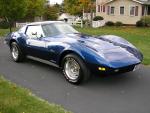
73 350 auto. Just replaced T/A's, & wheel bearing assemblies. half-shafts, and added VBP HD rear camber strut rods & #330 rear mono-spring, using KYB gas adjust shocks f&r. Looking to install new VBP front monospring .
I Need sway bar suggestions, currently no sway bar rear, OEM front, No racing just want a tight nice handling vehicle to enjoy.
As usual THANKS!
I Need sway bar suggestions, currently no sway bar rear, OEM front, No racing just want a tight nice handling vehicle to enjoy.
As usual THANKS!

Le Mans Master


Joined: Apr 2007
Posts: 7,353
Likes: 72
From: Graceland in a Not Correctly Restored Stingray
Don't guess. Only add rear bar if you really need to stiffen rear roll resistance to balance the car. Given you've already added more rear spring rate, unless you've also stiffened up the front, you could well end up with final oversteer if you further stiffen up the rear. In any event, while figuring out where you are, do bear in mind what feels awesome at 7-8/10'ths may not indicate how your car will handle at 10/10'ths of its limits. FWIW, many a well sorted C3 has no rear bar.
TSW
TSW
Thread Starter
Intermediate
Joined: Mar 2009
Posts: 41
Likes: 0
Thanks for the insight. I will drive it with new rear & front composite springs with the OEM sway bar. If i want a firmer ride i'll most probably add a 1" front & 5/8 rear. Do you think changing to bilstein sports is worth the additional $

Melting Slicks


Joined: Jun 2003
Posts: 2,802
Likes: 241
From: Niles, MI
" All Corvettes nead a rear sway bar. When one is added it will generally require an increase in the front sway bar diameter also. A good starting point for sway bars would be 5/8" to 11/16" diameter rear and 1" diameter in the front." Vette Improvement Program by John Greenwood
"When you venture out to the track or skid pad, you will need to select the rear stabilizer bar diameter that gives the car neutral steer characteristics. Understeer is when the front of the car loses traction first; oversteer is when the rear loses traction first. Some drivers prefer a tendency towards under-steer on the skid pad because this makes the car less likely to spin out during actual racing conditions. If you initially test with the recommended 1 1/4-inch front bar and all the spring heights correct, you will probably experience considerable understeer if no rear bar is installed. Bolting on the smallest diameter rear bar will reduce the understeer; you will notice more neutral handling characteristics and improved skid pad times.
Adding a rear stabilizer bar reduces understeer because it lets the rear wheels absorb more of the weight transfer forces. If a car with equal tire loadings and equal stiffness front and rear is run around a skid pad, it will generally exhibit neutral steering. But the stiff front anti-roll bar we have specified causes the outside front tire to absorb a large percentage of the forces trying to roll the body due to weight transfer from the inside to the outside of the turn. The car's springs can absorb some of these forces, but the thick front bar causes a higher percentage of this loading to be on the outside front tire.
Since the tires are already overloaded due to weight transfer, they are probably above the linear portion of their weight-traction curve. This means that as the front tires are loaded more heavily than the rears, the car will understeer; the front tires offer less traction in relation to the rear since they are operating at a point higher on the traction-weight curve. When a rear anti-roll bar is added, the rear tires share a percentage of the roll resisting forces, so they move up on the curve and the front tires move down. Substituting an even larger rear stabilizer bar takes even more of the roll-resisting force off the front tires and places it on the rear.
Eventually one of your larger bars will produce oversteer. Oversteer is not necessarily undesirable, so spend some time driving an oversteering car to get accustomed to how it feels. You can then select the rear bar diameter that you feel gives the best handling and the best skid pad times." Corvette Handling - A Performance Workbook by Herb Adams
"When you venture out to the track or skid pad, you will need to select the rear stabilizer bar diameter that gives the car neutral steer characteristics. Understeer is when the front of the car loses traction first; oversteer is when the rear loses traction first. Some drivers prefer a tendency towards under-steer on the skid pad because this makes the car less likely to spin out during actual racing conditions. If you initially test with the recommended 1 1/4-inch front bar and all the spring heights correct, you will probably experience considerable understeer if no rear bar is installed. Bolting on the smallest diameter rear bar will reduce the understeer; you will notice more neutral handling characteristics and improved skid pad times.
Adding a rear stabilizer bar reduces understeer because it lets the rear wheels absorb more of the weight transfer forces. If a car with equal tire loadings and equal stiffness front and rear is run around a skid pad, it will generally exhibit neutral steering. But the stiff front anti-roll bar we have specified causes the outside front tire to absorb a large percentage of the forces trying to roll the body due to weight transfer from the inside to the outside of the turn. The car's springs can absorb some of these forces, but the thick front bar causes a higher percentage of this loading to be on the outside front tire.
Since the tires are already overloaded due to weight transfer, they are probably above the linear portion of their weight-traction curve. This means that as the front tires are loaded more heavily than the rears, the car will understeer; the front tires offer less traction in relation to the rear since they are operating at a point higher on the traction-weight curve. When a rear anti-roll bar is added, the rear tires share a percentage of the roll resisting forces, so they move up on the curve and the front tires move down. Substituting an even larger rear stabilizer bar takes even more of the roll-resisting force off the front tires and places it on the rear.
Eventually one of your larger bars will produce oversteer. Oversteer is not necessarily undesirable, so spend some time driving an oversteering car to get accustomed to how it feels. You can then select the rear bar diameter that you feel gives the best handling and the best skid pad times." Corvette Handling - A Performance Workbook by Herb Adams
Le Mans Master
Joined: Apr 2007
Posts: 7,353
Likes: 72
From: Graceland in a Not Correctly Restored Stingray
FWIW, there is more than way to go about sorting a chassis, and despite my great respect for Messrs. Greenwood and Adams, many of us have found it entirely possible to do so without a rear bar. Also, it depends on what are your purposes and driving style as to what exactly a well sorted chassis might be.
Last edited by TheSkunkWorks; Mar 10, 2012 at 09:01 PM. Reason: sp
Corvette Stories
The Best of Corvette for Corvette Enthusiasts

5 Best & 5 Worst Corvette Daily Drivers
Joe Kucinski
The Headlights of Every Corvette Generation Explained
Joe Kucinski
5 Best & 5 Most Overrated Corvette Track Packages of All Time!
Joe Kucinski
Every 2027 Corvette Engine Explained
Joe Kucinski
Designer Imagines A Corvette That Looks More Like a Corvette Than the Corvette
Verdad Gallardo
10 Ugly Corvettes That We Still Kinda Love
Joe Kucinski
Top 10 Most Expensive Corvettes Ever Sold on Bring A Trailer
Brett Foote
10 Things Every Corvette Owner Needs (2026 Edition)
Michael S. Palmer
8 Most "Only Corvette Owners Understand" Quirks and Problems
Pouria Savadkouei
Melting Slicks
Joined: Jun 2003
Posts: 2,802
Likes: 241
From: Niles, MI
FWIW, there is more than way to go about sorting a chassis, and despite my great respect for Mr's. Greenwood and Adams, many of us have found it entirely possible to do so without a rear bar. Also, it depends on what are your purposes and driving style as to what exactly a well sorted chassis might be.
Thread Starter
Intermediate
Joined: Mar 2009
Posts: 41
Likes: 0
From what I am reading the set up is a matter of personal driving habits and personal preference. Since I will not be driving in any competitions and strictly use the car for pleasure. I'll drive it set the way it is and do some trial and error modifications as I see fit. My ultimate goal is just to get the best handling for the street as I can. I have also added a bar from VB&P across the the front shock towers to try and eliminate the chatter you get when cornering on a rough surface.
Since I just replaced the trailing arms and added the smart struts with the hemi ends. I'll need to get the car alignment set and will use the specs for advance street settings on the corvette tech web site to start. Thanks for all the input. It is always interesting and educational.
Since I just replaced the trailing arms and added the smart struts with the hemi ends. I'll need to get the car alignment set and will use the specs for advance street settings on the corvette tech web site to start. Thanks for all the input. It is always interesting and educational.
Last edited by kwikcc; Mar 11, 2012 at 02:37 PM. Reason: incomplete
Le Mans Master
Joined: Apr 2007
Posts: 7,353
Likes: 72
From: Graceland in a Not Correctly Restored Stingray
From what I am reading the set up is a matter of personal driving habits and personal preference. Since I will not be driving in any competitions and strictly use the car for pleasure. I'll drive it set the way it is and do some trial and error modifications as I see fit. My ultimate goal is just to get the best handling for the street as I can. I have also added a bar from VB&P across the the front shock towers to try and eliminate the chatter you get when cornering on a rough surface.
Since I just replaced the trailing arms and added the smart struts with the hemi ends. I'll need to get the car alignment set and will use the specs for advance street settings on the corvette tech web site to start. Thanks for all the input. It is always interesting and educational.
Since I just replaced the trailing arms and added the smart struts with the hemi ends. I'll need to get the car alignment set and will use the specs for advance street settings on the corvette tech web site to start. Thanks for all the input. It is always interesting and educational.

