




fuel line help!

Thread Starter
Instructor

Joined: May 2011
Posts: 135
Likes: 0
From: Horicon Wisconsin
 fuel line help!
So Im finishing up my first rebuild of a motor and I have some questions on fuel line from pump to carb. I dont want to reuse the hard line since it just looks plain ugly. But Ive never dealt with fuel line fittings. So I need some help on deciding what I need. The carb feed line has a 3/8" NPT for an input and I believe the fuel pump has the same for output. Any suggestions or help would be great!! Thanks!

Tech Contributor


Joined: Aug 1999
Posts: 14,370
Likes: 6,361
From: At my Bar drinking and wrenching in Lafayette Colorado
Bend up hard lines. GM used hard line on the pressure side of the pump for a reason: It's safe and reliable.
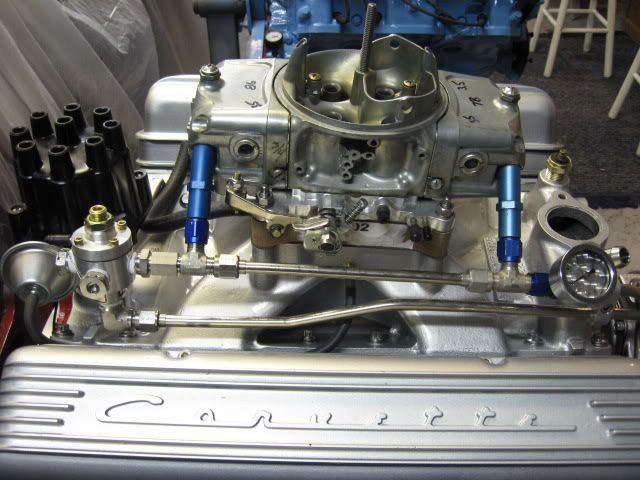
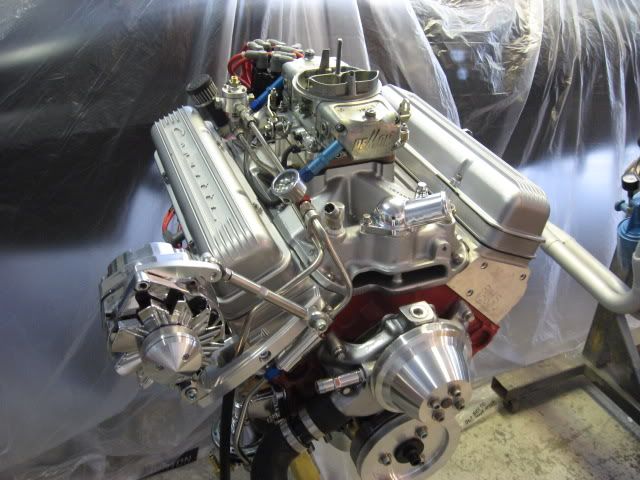
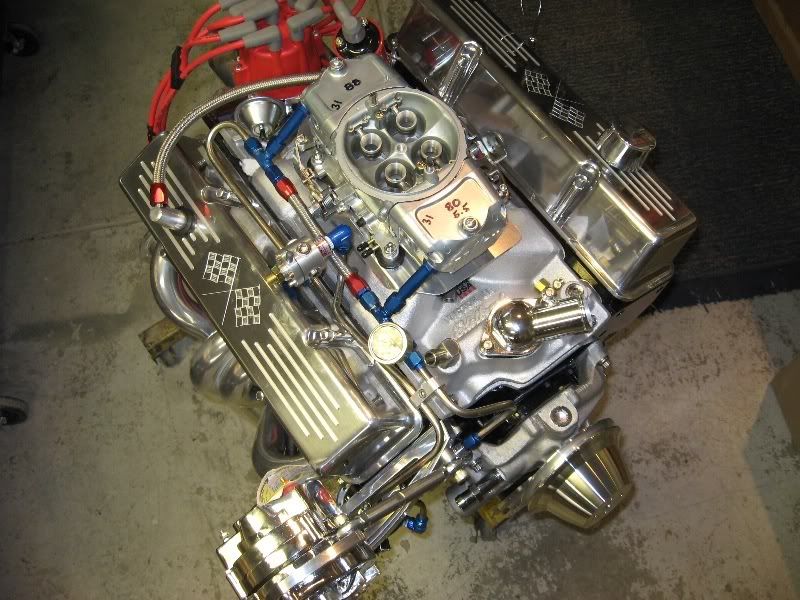
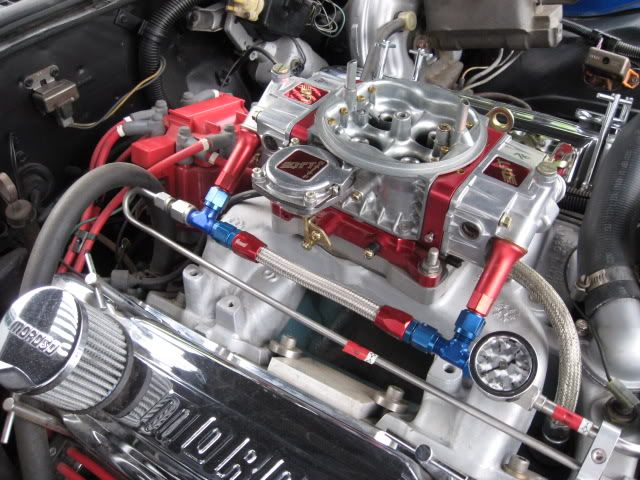
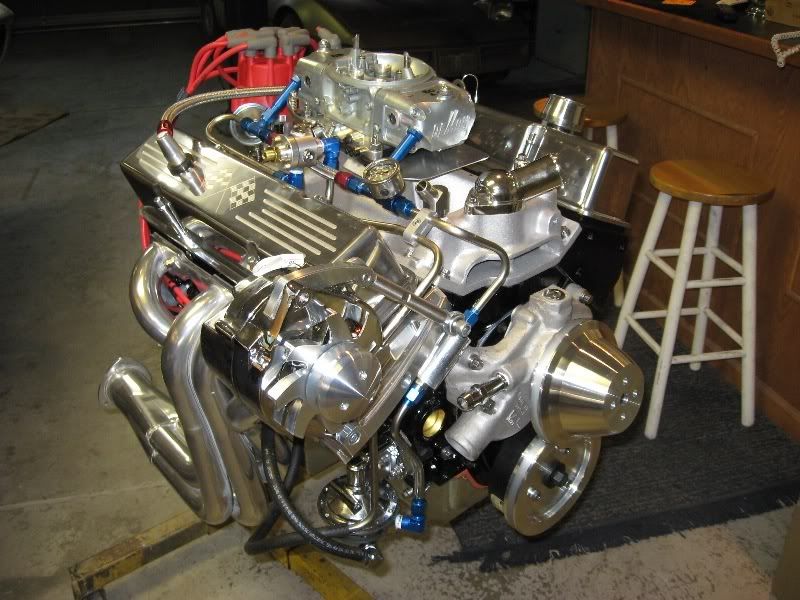
For complete instructions, with part numbers, you can e-mail me a request for my "How to Build a Fuel Line" tech paper. A couple of engines I've built using the parts and techniques described in my paper:
Lars
V8FastCars@msn.com
For complete instructions, with part numbers, you can e-mail me a request for my "How to Build a Fuel Line" tech paper. A couple of engines I've built using the parts and techniques described in my paper:
Lars
V8FastCars@msn.com
Last edited by lars; May 13, 2012 at 11:25 PM.
Le Mans Master


Joined: Mar 2008
Posts: 5,948
Likes: 72
From: Oxford MA-----You just lost the game!!!!
So Im finishing up my first rebuild of a motor and I have some questions on fuel line from pump to carb. I dont want to reuse the hard line since it just looks plain ugly. But Ive never dealt with fuel line fittings. So I need some help on deciding what I need. The carb feed line has a 3/8" NPT for an input and I believe the fuel pump has the same for output. Any suggestions or help would be great!! Thanks!
Keep the shiny side up!

Scott

Drifting

Joined: Jul 2002
Posts: 1,944
Likes: 20
From: The only Corvettes in Highett Victoria
"Ugly?"
What the hell has "ugly" got to do with it? It's a fuel line, not a blind date. Polish or paint it to make it look acceptable or replace it with a line as per Lars' paper. Please.
Regards from Down Under.
aussiejohn
Regards from Down Under.
aussiejohn

Le Mans Master
Joined: Jun 2007
Posts: 7,666
Likes: 1
From: Where it's always hot as Hell-South Louisiana.
St. Jude Donor '07-'08-'09-'10-'11-'12-'13
Does anyone know how many engine compartment fires start from a bursted flex fuel line ?
I'd bet the vast majority are from this one item.
With that said, the ZZ4 crate i just installed came from the supplier with a braided flex hose. A hard line will be installed this summer.
I'm in agreement with Lars that GM designed a hard line from pump to carb for a reason.
If you depend on a flex hose from pump to carb, then you should always carry a fire extinguisher and be able to use it readily...IMHO..

By the way, I'm not having any luck with a fuel gauge. The 2 I got both went bad after only a couple of hours. Any suggestions without breaking the bank ?
I'd bet the vast majority are from this one item.
With that said, the ZZ4 crate i just installed came from the supplier with a braided flex hose. A hard line will be installed this summer.
I'm in agreement with Lars that GM designed a hard line from pump to carb for a reason.
If you depend on a flex hose from pump to carb, then you should always carry a fire extinguisher and be able to use it readily...IMHO..
By the way, I'm not having any luck with a fuel gauge. The 2 I got both went bad after only a couple of hours. Any suggestions without breaking the bank ?
Last edited by mikejpss; May 14, 2012 at 10:18 AM.
Tech Contributor
Joined: Aug 1999
Posts: 14,370
Likes: 6,361
From: At my Bar drinking and wrenching in Lafayette Colorado
If you're going to run hose, I hope you also have a fire extinguisher... I've seen several Vettes and musclecars burn to the ground due to hose on the pressure side of the system. If you run any type of flexible line, at least use good quality fuel compatible hose with screw-on end fittings, such as "AN" braided steel line or other hose material (Parker makes fuel-specific hose designed for good end fittings) intended for fuel system pressure lines.
Lars
Lars
Last edited by lars; May 14, 2012 at 10:54 AM.
Le Mans Master
Joined: Mar 2008
Posts: 5,948
Likes: 72
From: Oxford MA-----You just lost the game!!!!
Keep the shiny side up!
Scott
Corvette Stories
The Best of Corvette for Corvette Enthusiasts

8 Coolest Corvette Pace Cars (and Replicas) of All Time
Verdad Gallardo
Top 10 Corvette Engines RANKED by Peak Torque (70+ Years of Muscle!)
Joe Kucinski
Corvette ZR1X Will Be Pacing the Indy 500, And Could Probably Race, Too!
Verdad Gallardo
Top 10 Corvettes Coming to Mecum Indy 2026!
Brett Foote
Top 10 C9 Corvette MUST-HAVES to Fix These C8 Generation Flaws!
Michael S. Palmer
10 Revolutionary 'Corvette Firsts' Most People Don't Know
Joe Kucinski
5 Reasons to Upgrade to an LS6-Powered Corvette; 5 Reasons to Stay LT2
Michael S. Palmer
2027 Corvette vs The World: Every C8 vs Its Closest Competitor
Joe Kucinski
10 Most Common Corvette Problems of the Last 20 Years!
Joe Kucinski
Thread Starter
Instructor
Joined: May 2011
Posts: 135
Likes: 0
From: Horicon Wisconsin
There may be some confusion here regarding the terms fuel hose and fuel line. A hose is flexible, and can flop around and chafe and develop a leak, and since it's under pressure, it won't just drip, it'll squirt all over the place; there are better situations to have going on under the hood than that! Fuel line is rigid, made of metal, and much safer. You probably meant fuel line when you said hose, but we can't be sure of that. It's important to get your terminology correct. BTW, at this point, a pic or two would help out a lot.
Keep the shiny side up!
Scott
Keep the shiny side up!
Scott
Le Mans Master
Joined: Mar 2008
Posts: 5,948
Likes: 72
From: Oxford MA-----You just lost the game!!!!
I did mean line. I will be using hard lines for the pump to carb. After reading Lar's paper it doesnt seem to be as hard as I thought. I just need to get a double flare tool and some fittings. The carb supply line from summit http://www.summitracing.com/parts/SUM-G3120-1/ Is what I have to hook to my carb. It has a built in fuel filter so it will make less work for me. At least I hope so!
It has a 3/8"NPT fitting, doesn't it? It would make things easier for you if you could find a fitting that would screw into the female 3/8" NPT on the Summit fuel line, and on the other side accept a 5/8" x 18 inverted flare. I'm not positive, but I think this fitting will do the trick. Can anybody verify?
https://shop.tifco.com/catalog/id/37263
Keep the shiny side up!
Scott
Drifting
Joined: Jul 2002
Posts: 1,944
Likes: 20
From: The only Corvettes in Highett Victoria
Good choice!
I did mean line. I will be using hard lines for the pump to carb. After reading Lar's paper it doesnt seem to be as hard as I thought. I just need to get a double flare tool and some fittings. The carb supply line from summit http://www.summitracing.com/parts/SUM-G3120-1/ Is what I have to hook to my carb. It has a built in fuel filter so it will make less work for me. At least I hope so!
Remember, if the filter is fitted BEFORE the pump, then it will not be under any pressure. Filters fitted AFTER the pump will not only be under pressure, but will also be sitting a few inches from a HOT engine. In a worst case scenario, a leak here could be disastrous.
Good luck and send us some photos.
Regards from Down Under.
aussiejohn

Race Director


Joined: May 2005
Posts: 10,674
Likes: 122
From: Millington Illinois
St. Jude Donor '08-'09
I'm glad you've come to that conclusion, however, if you MUST run a fuel filter, then the best place is BEFORE your fuel pump. That way, the filter will protect both the pump AND the carb. Then you can just buy a one piece fuel line from the pump to the carb or, use Lars' advice and make your own.
Remember, if the filter is fitted BEFORE the pump, then it will not be under any pressure. Filters fitted AFTER the pump will not only be under pressure, but will also be sitting a few inches from a HOT engine. In a worst case scenario, a leak here could be disastrous.
Good luck and send us some photos.
Regards from Down Under.
aussiejohn
Remember, if the filter is fitted BEFORE the pump, then it will not be under any pressure. Filters fitted AFTER the pump will not only be under pressure, but will also be sitting a few inches from a HOT engine. In a worst case scenario, a leak here could be disastrous.
Good luck and send us some photos.
Regards from Down Under.
aussiejohn

Race Director
Joined: Mar 2006
Posts: 14,112
Likes: 28
From: Florida
Filters are always used after a pump, approx 40 microns for a carb and 10 microns for FI.
Strainers are always used before the pump, generally around 100 microns. Filters are too fine for suction use.
This is so that a pump is never starved, but still protected and the gas ends up being filtered properly before the carb or injectors.
Strainers are always used before the pump, generally around 100 microns. Filters are too fine for suction use.
This is so that a pump is never starved, but still protected and the gas ends up being filtered properly before the carb or injectors.
Thread Starter
Instructor
Joined: May 2011
Posts: 135
Likes: 0
From: Horicon Wisconsin
It has a 3/8"NPT fitting, doesn't it? It would make things easier for you if you could find a fitting that would screw into the female 3/8" NPT on the Summit fuel line, and on the other side accept a 5/8" x 18 inverted flare. I'm not positive, but I think this fitting will do the trick. Can anybody verify?
https://shop.tifco.com/catalog/id/37263
Keep the shiny side up!
Scott
https://shop.tifco.com/catalog/id/37263
Keep the shiny side up!
Scott
Le Mans Master
Joined: Mar 2008
Posts: 5,948
Likes: 72
From: Oxford MA-----You just lost the game!!!!
Keep the shiny side up!
Scott


Le Mans Master
Joined: Oct 2006
Posts: 7,123
Likes: 433
From: Gladstone MO
C3 of Year Finalist (appearance mods) 2019
I've seen those fancy braided fuel lines spring a leak too. Problem is, the fuel might navigate it's way down thru the braid before it shows up. And it's a safe bet that it'll drip out at the worst possible place.
Drifting
Joined: Jul 2002
Posts: 1,944
Likes: 20
From: The only Corvettes in Highett Victoria
I fully agree.
I agree with you, but I have met Lars at his home and have seen first hand the quality of his work. His fuel line WILL NOT leak! I can't speak about the skills of the OP and as I said, "IF you must run a filter..." Ideally, he should make sure the strainer in his fuel tank is good and rely on the stock Qjet filter and still run a one piece line from the pump to the carb. I'm not sure if it needs any bracing, GM didn't think so.
Regards from Down Under.
aussiejohn

Pro

Joined: Apr 2009
Posts: 650
Likes: 1
Filters are always used after a pump, approx 40 microns for a carb and 10 microns for FI.
Strainers are always used before the pump, generally around 100 microns. Filters are too fine for suction use.
This is so that a pump is never starved, but still protected and the gas ends up being filtered properly before the carb or injectors.
Strainers are always used before the pump, generally around 100 microns. Filters are too fine for suction use.
This is so that a pump is never starved, but still protected and the gas ends up being filtered properly before the carb or injectors.
For fuel injection, 100 microns before and 10 microns post pump.

