





Issues after cam swap

Thread Starter
Racer


Joined: Mar 2007
Posts: 377
Likes: 0
From: Holmen Wisconsin

The idle did seem better today just going between 600 and 700 RPM, and not the larger jump like last night, so maybe re-torquing the bolts helped some?

Safety Car


Joined: Jan 2009
Posts: 3,873
Likes: 25
stumble.......hummmmmmm.
I was thinking......since you had the manifold off and on 3 times now, grab that dist, and turn it an inch ccw to advance timing. jump in and go around the block. you'll go ( dang, thats better ). Then turn it another inch and cruse around. Now you have a bunch of timing and the low speed circut loves it and will need adjustment to slow it down some. course now it wants to ping a bit....so you'll have to compromise on the dist position . If nothing else, you'll have to limit total advance with springs or weights. p.s. tight valve adj is like having a vacuum leak....so follow these guys advice alot. Cams change the game. Fun! 
Thread Starter
Racer
Joined: Mar 2007
Posts: 377
Likes: 0
From: Holmen Wisconsin
I backed all of them off 1/2 turn and the idle seems better and the chugging is almost gone now. Could the valves still be to tight, or should I check the timing again first? Does the valve adjustment effect timing?

Melting Slicks

Joined: Mar 2007
Posts: 2,520
Likes: 11
From: Hinckley OH
The valves could be too tight. Adjusting the valves does not affect timing.

Le Mans Master


Joined: Aug 2010
Posts: 9,272
Likes: 17
its kinda messy, but you can with the valve covers off, start the engine and adjust the valves with it running. You start at the front, on either side, back them off, one at a time till they start to clatter, snug them down one at a time, till they stop clattering, and go 1/2 turn past that. Then go to the next one. used to be the cold lash adjustment was only to get it running. hope this helps. btw , they used to make two piece valve covers for this method and some folks would take an old set and cut the tops off.
Last edited by oldalaskaman; Jun 7, 2012 at 09:03 PM.
Corvette Stories
The Best of Corvette for Corvette Enthusiasts

Corvette & Porsche 911: How Two Icons Conquered the Last 25 Years
Joe Kucinski
2027 Chevrolet Silverado 1500 First Look: Everything You NEED to Know!
Michael S. Palmer
5 Best & 5 Worst Corvette Daily Drivers
Joe Kucinski
The Headlights of Every Corvette Generation Explained
Joe Kucinski
5 Best & 5 Most Overrated Corvette Track Packages of All Time!
Joe Kucinski
Every 2027 Corvette Engine Explained
Joe Kucinski
Designer Imagines A Corvette That Looks More Like a Corvette Than the Corvette
Verdad Gallardo
10 Ugly Corvettes That We Still Kinda Love
Joe Kucinski
Top 10 Most Expensive Corvettes Ever Sold on Bring A Trailer
Brett Foote
Race Director


Joined: May 2005
Posts: 10,674
Likes: 122
From: Millington Illinois
St. Jude Donor '08-'09
 If backing them off helped you need to readjust them all again. I always jiggle them up and down instead of spinning them to determine zero lash. You can tell just when you hit zero this way. This will not affect timing. Keep plugging away, you will get it.
Thread Starter
Racer
Joined: Mar 2007
Posts: 377
Likes: 0
From: Holmen Wisconsin
Okay, I will adjust them all again. I did the up and down to get what I thought was zero lash. The first time around I did 1 full turn after I had no movement up or down on the pushrod.
Thread Starter
Racer
Joined: Mar 2007
Posts: 377
Likes: 0
From: Holmen Wisconsin
I'm going to do these again tomorrow. I am trying to decide if to adjust running or not. Since everything is already tight, how would I adjust them with the motor off? I just want to get this right tomorrow.
Thread Starter
Racer
Joined: Mar 2007
Posts: 377
Likes: 0
From: Holmen Wisconsin
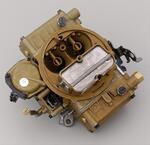
Well I re-adjusted the valves and replaced the intake gasket again and guess what? Exactly the same! So asked asked a guy I used to work for in high school (auto garage). He asked me about 5 questions and told me the carb was to lean. I went up 2 stages richer on the rods and the car runs a lot lot better. It still needs a little more fine tuning, but it's nice to know that the valves and intake where right.
Race Director
Joined: May 2005
Posts: 10,674
Likes: 122
From: Millington Illinois
St. Jude Donor '08-'09
After the cam swap I took it for a run and when I got back I had a lot of oil on the back of the motor and thought it was coming from the distributor because the clamp was not in the right spot. Tried that with no luck and then replaced the gasket with the same result. So, pulled the intake and replaced the gasket again. Now, no more oil leak, but now I have the other issue stated above. I have done the intake on my car two other times with no issues.
Thread Starter
Racer
Joined: Mar 2007
Posts: 377
Likes: 0
From: Holmen Wisconsin
It was a strange couple of days with this, but I'm getting there. I have richend it up 16% according to the chart that came with my carb.
My buddy also told me a good way to know if the intake has a leak is to hold it steady at like 2100 rpm. If it's smooth like mine was, it's not the intake.
My buddy also told me a good way to know if the intake has a leak is to hold it steady at like 2100 rpm. If it's smooth like mine was, it's not the intake.
Last edited by Camss57; Jun 11, 2012 at 10:21 PM. Reason: More info
Race Director
Joined: May 2005
Posts: 10,674
Likes: 122
From: Millington Illinois
St. Jude Donor '08-'09
When you get it sorted post up how the new cam is working out for your combination. Real world feedback is always helpful for others in the same situation.


Drifting

Joined: Mar 2011
Posts: 1,886
Likes: 9
Changing the cam will very likely require a change in the calibration of the carburetor. You can get an air/fuel ratio gauge and see what the carb is sending to the engine in real time; it can be an invaluable tuning aid.
If the engine will run, and you have hydraulic lifters, you can adjust the valves with the engine idling. Remove one valve cover, and position some cardboard so the oil won't fly everywhere. Start the engine, and carefully loosen the first rocker arm nut to where the valve just stops clattering. This is zero lash. Do the other seven valves on that side. Shut off the engine, and tighten each nut to your preferred preload setting- usually 1/4 or 1/2 or 3/4 turn. (Some of the old hands say that the smaller preloads can increase the RPM at which valve float occurs. But don't bet your engine on it. Obey the redline that the factory or your engine builder specifies.) Button it up and do the same thing to the other side.
If the engine will run, and you have hydraulic lifters, you can adjust the valves with the engine idling. Remove one valve cover, and position some cardboard so the oil won't fly everywhere. Start the engine, and carefully loosen the first rocker arm nut to where the valve just stops clattering. This is zero lash. Do the other seven valves on that side. Shut off the engine, and tighten each nut to your preferred preload setting- usually 1/4 or 1/2 or 3/4 turn. (Some of the old hands say that the smaller preloads can increase the RPM at which valve float occurs. But don't bet your engine on it. Obey the redline that the factory or your engine builder specifies.) Button it up and do the same thing to the other side.
Thread Starter
Racer
Joined: Mar 2007
Posts: 377
Likes: 0
From: Holmen Wisconsin
Okay guys, I still have a low rpm stumble or hesitation. I have tried several different metering rods and riching up the carb has helped. I also adjusted the secondaries on my AVS carb to kick in a little later. I have replaced the vacuum lines for the brake booster and the PCV valve. I would like to get a kit and replace them all, but I have been replacing the ones that I can easily get. I have had my hood open more than it's been closed the last few weeks and I still can't totally eliminate my issue. I have the vacuum advance hooked up to the passanger side of the carb. Would trying it on the other side do anything or not?
Last edited by Camss57; Jun 14, 2012 at 03:49 PM.