




ANOTHER timing thread...sorry guys...

Race Director


Joined: May 2005
Posts: 10,674
Likes: 121
From: Millington Illinois
St. Jude Donor '08-'09

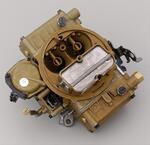
OK, so I had some time to work on this again, before it got dark last night, and I think timing has finally clicked for me. Not sure why it was so hard for me to understand, lol. Anyway, I unplugged the vac hose, set timing to 12 deg. BUT. When I unplugged the vac hose, something strange occurred to me...the idle stayed the same. Typically, when I advance or retard the timing, it changes the idle. And unplugging the vac hose should DEF retard the timing at idle. So I plugged it back in, and checked. Sure enough, timing had not changed, still at 12 deg, at idle...WITH the vac hose plugged in. So, now I figure I've got a whole new set of problems...I check the hose, and then, come to find out, the nipple it's plugged into is not producing any suction at all. It's the one on the front passenger side of the carb, just over and above the passenger side fuel adjustment screw. So, I took the hose off of that, and plugged it into on on the driver side, directly above the fuel adjustment screw for that side, and VOILA, vacuum. I plug THAT into the dizzy, and bam, my timing jumps to 30 deg at idle. So, I unplugged it from the dizzy, and blocked it off, and checked my mech advance...I revved it to 4K, and it was JUST at 34 deg...so I need to switch it out for the other spring in my recurve kit, the gold one, I think. The run down, then is, 12 deg base, no advance, and 18 deg vac advance, for a total of 30 degree at idle, and then 34 deg at 4,000 rpms.

Thread Starter
Drifting

Joined: Jun 2007
Posts: 1,404
Likes: 1
From: Ansonia/NYC CT
This Friday, I'll finally have more than 20 minutes to work with...I'll have all day...and I'm not quitting till the timing is nailed, and I get a reading of the header temps with my IR gun. They currently temp at around 520 deg...with header wrap.

Drifting

Joined: Jul 2002
Posts: 1,944
Likes: 20
From: The only Corvettes in Highett Victoria
Almost there.........
The reason you were not getting vacuum when idling is because the port you were using is ABOVE the venturis and is open to atmospheric pressure, therefore no vacuum. The other port would appear to come from BELOW the venturis, i.e. the inlet manifold, where the "pressure" is below atmospheric due to the closed venturis. This negative pressure is called vacuum.
The reason GM used ported vacuum, i.e. ABOVE the venturis, is that with no vacuum advance at idle, the timing would be RETARDED from its optimal setting. When an engine runs retarded, it runs hotter and this tends to burn up any unburnt fuel in the exhaust manifold (to a degree) but its main purpose is to reduce the amount of NOX or HCs being emitted IIRC. This was all part of early (read CRUDE) emissions control.
By connecting your vacuum advance to a port that comes from the high vacuum inlet manifold (with closed throttles) you will have an advanced timing situation at idle. Normally, an advanced timing condition would lead to pinking or preignition under load, but at idle, the engine is not under load and can happily tolerate this advanced timing.
However, as soon as you crack open the throttle, atmospheric pressure will nullify the inlet manifold's vacuum and the timing will be retarded to the static timing mark, around 12 degrees in your case. This will eliminate any chance of preignition and your car will pull away smoothly.
As the revs increase, the centrifugal timing will come into play and the timing will advance, up to the limit of the advance mechanism. You should not get any pinking with this extra advance because of the speed at which the engine is running. Also, you will not be getting any vacuum advance with the throttle open.
When you reach a cruising speed above the point where maximum mechanical advance is engaged, you will back off the throttle and then the timing will be further advanced due to the vacuum advance coming in. With very little load on the engine, it will tolerate 50 or more degrees of advance with no ill effect.
As soon as you open the throttle to overtake etc., the vacuum advance will drop off and the timing will be retarded to the combined static and mechanical combination and therefore minimise any pinking that a sudden load situation would otherwise cause.
You should always obtain your vacuum source from the inlet manifold, the only down side is that you MIGHT emit a few extra nasty emissions at idle. However, by keeping your car in tune and checking it on a regular basis, you are most likely emitting FEWER emissions than another old car that's driven by a non caring owner.
Hope this helps.
Regards from Down Under.

aussiejohn
Le Mans Master

Joined: Mar 2008
Posts: 5,948
Likes: 72
From: Oxford MA-----You just lost the game!!!!
OK, so I had some time to work on this again, before it got dark last night, and I think timing has finally clicked for me. Not sure why it was so hard for me to understand, lol. Anyway, I unplugged the vac hose, set timing to 12 deg. BUT. When I unplugged the vac hose, something strange occurred to me...the idle stayed the same. Typically, when I advance or retard the timing, it changes the idle. And unplugging the vac hose should DEF retard the timing at idle. So I plugged it back in, and checked. Sure enough, timing had not changed, still at 12 deg, at idle...WITH the vac hose plugged in. So, now I figure I've got a whole new set of problems...I check the hose, and then, come to find out, the nipple it's plugged into is not producing any suction at all. It's the one on the front passenger side of the carb, just over and above the passenger side fuel adjustment screw. So, I took the hose off of that, and plugged it into on on the driver side, directly above the fuel adjustment screw for that side, and VOILA, vacuum. I plug THAT into the dizzy, and bam, my timing jumps to 30 deg at idle. So, I unplugged it from the dizzy, and blocked it off, and checked my mech advance...I revved it to 4K, and it was JUST at 34 deg...so I need to switch it out for the other spring in my recurve kit, the gold one, I think. The run down, then is, 12 deg base, no advance, and 18 deg vac advance, for a total of 30 degree at idle, and then 34 deg at 4,000 rpms.
Keep the shiny side up!

Scott
Thread Starter
Drifting
Joined: Jun 2007
Posts: 1,404
Likes: 1
From: Ansonia/NYC CT
OK, so, SUCCESS! I had to play around a little with those little plastic limiter bushings, but I got it to 16 deg initial, no vac no mech advance, then I had to replace the springs twice, as at first, the mech advance started to come in as soon as I quickened the idle up on the carb...backed off the idle again, did one gold, and one of the OLD springs, and VOILA, mech advance comes in full at 2,700RPMS...from there, I had to reduce the amount of mech advance, which took me a while to get, but now I'm rolling with 34 deg timing at idle with the vac plugged in, and the advance is right at 34 deg at 2,700rpms.
One thing I have YET to do, however, is drive it. I'm not gonna lie...it's hot as ***** out right now, and the AC feels wonderfull, I've sweated out about a gallon, and am beat...and I didn't even work that hard, lol. I'll drive it tomorrow, maybe. Thanks for all the helps, guys!
One thing I have YET to do, however, is drive it. I'm not gonna lie...it's hot as ***** out right now, and the AC feels wonderfull, I've sweated out about a gallon, and am beat...and I didn't even work that hard, lol. I'll drive it tomorrow, maybe. Thanks for all the helps, guys!
Thread Starter
Drifting
Joined: Jun 2007
Posts: 1,404
Likes: 1
From: Ansonia/NYC CT
OK, so, NO SUCCESS! I decided to take it for a drive after all, once I cooled off, and, being the guy I am, I checked everything all hooked up, before heading out. Good thing.
So, my initial with no vac at idle is 16 deg. The new timing curve kit limits the advance, so that, with two silver springs, I am getting 26 deg at around 2,700 rpms. However...what I DIDN"T check was, how this all worked out WITH the vacuum plugged in. With it advanced to 16 deg initial, with vacuum I am looking at 34 deg total at idle...which seems fine...until I rev it. For some reason, with the vac plugged, when the mechanical advance kicks in, my timing goes WAY high, like, close to 50 deg high...and I heard what must have been pinging....sounded AWFUL, like metal beating on metal, at those higher rpms...so I didn't hold it long enough to get a good reading.
I'm gonna put of those pics of where I have the vac hose plugged into, now, also. I'm assuming that is the problem...are there some areas that make constant vacuum, regardless of rpms?
Help?
So, my initial with no vac at idle is 16 deg. The new timing curve kit limits the advance, so that, with two silver springs, I am getting 26 deg at around 2,700 rpms. However...what I DIDN"T check was, how this all worked out WITH the vacuum plugged in. With it advanced to 16 deg initial, with vacuum I am looking at 34 deg total at idle...which seems fine...until I rev it. For some reason, with the vac plugged, when the mechanical advance kicks in, my timing goes WAY high, like, close to 50 deg high...and I heard what must have been pinging....sounded AWFUL, like metal beating on metal, at those higher rpms...so I didn't hold it long enough to get a good reading.
I'm gonna put of those pics of where I have the vac hose plugged into, now, also. I'm assuming that is the problem...are there some areas that make constant vacuum, regardless of rpms?
Help?
Last edited by KevinK; Jun 22, 2012 at 06:05 PM.
Thread Starter
Drifting
Joined: Jun 2007
Posts: 1,404
Likes: 1
From: Ansonia/NYC CT
After some searching, I found this image, and my vac hose is plugged in the same spot.
https://www.corvetteforum.com/techti...D=86&TopicID=3
https://www.corvetteforum.com/techti...D=86&TopicID=3
Le Mans Master
Joined: Mar 2008
Posts: 5,948
Likes: 72
From: Oxford MA-----You just lost the game!!!!
The only thing I can think of is that your vacuum advance can is sticking, and not backing off the timing as the vacuum goes down. I've never seen or heard of this happeneing, but it's all I can think of. Is it an adjustable vacuum can? Maybe it's adjusted wrong.
Keep the shiny side up!
Scott
Keep the shiny side up!
Scott
Corvette Stories
The Best of Corvette for Corvette Enthusiasts

10 Revolutionary 'Corvette Firsts' Most People Don't Know
Joe Kucinski
5 Reasons to Upgrade to an LS6-Powered Corvette; 5 Reasons to Stay LT2
Michael S. Palmer
2027 Corvette vs The World: Every C8 vs Its Closest Competitor
Joe Kucinski
10 Most Common Corvette Problems of the Last 20 Years!
Joe Kucinski
5 MOST and 5 LEAST Popular Corvette Model Years in History!
Joe Kucinski
2027 Corvette Buyer's Guide: Everything You Need to Know!
Joe Kucinski
10 Things C8 Corvette Owners Hate (But Won't Tell You)
Joe Kucinski
10 Best Corvettes Coming to Barrett-Jackson Palm Beach 2026!
Brett Foote
Every Corvette Grand Sport Explained! (C2, C4, C6, C7, & C8)
Joe Kucinski
Thread Starter
Drifting
Joined: Jun 2007
Posts: 1,404
Likes: 1
From: Ansonia/NYC CT
The only thing I can think of is that your vacuum advance can is sticking, and not backing off the timing as the vacuum goes down. I've never seen or heard of this happeneing, but it's all I can think of. Is it an adjustable vacuum can? Maybe it's adjusted wrong.
Keep the shiny side up!
Scott
Keep the shiny side up!
Scott
Le Mans Master
Joined: Mar 2008
Posts: 5,948
Likes: 72
From: Oxford MA-----You just lost the game!!!!
If it looks like this:
http://www.junglee.com/ACCEL-31034-A.../dp/B00062YHRO
It's adjustable.
Keep the shiny side up!
Scott
http://www.junglee.com/ACCEL-31034-A.../dp/B00062YHRO
It's adjustable.
Keep the shiny side up!
Scott
Thread Starter
Drifting
Joined: Jun 2007
Posts: 1,404
Likes: 1
From: Ansonia/NYC CT
If it looks like this:
http://www.junglee.com/ACCEL-31034-A.../dp/B00062YHRO
It's adjustable.
Keep the shiny side up!
Scott
http://www.junglee.com/ACCEL-31034-A.../dp/B00062YHRO
It's adjustable.
Keep the shiny side up!
Scott
I just double checked my numbers to make sure, and braved getting a reading at full mech advance, and with vac plugged in, at 2,700rpms, timing is at 45 deg. It seems to only ping if I go PAST 2,700rpms, even though the timing remains the same. I'm thinking this might be the reason the guy I paid had the vac hose plugged to the port on the passenger side, rather than the drivers side...
Thread Starter
Drifting
Joined: Jun 2007
Posts: 1,404
Likes: 1
From: Ansonia/NYC CT
The only thing I can think of is that your vacuum advance can is sticking, and not backing off the timing as the vacuum goes down. I've never seen or heard of this happeneing, but it's all I can think of. Is it an adjustable vacuum can? Maybe it's adjusted wrong.
Keep the shiny side up!
Scott
Keep the shiny side up!
Scott

Melting Slicks


Joined: Oct 2011
Posts: 3,453
Likes: 67
From: Midland Ontario
NCM Sinkhole Donor
The new timing curve kit limits the advance, so that, with two silver springs, I am getting 26 deg at around 2,700 rpm
--------------------------------------
Kevin ....these guys have all been telling you that you need to be at 34* all in.....you are still only at 26*.
You need to go slightly heavier on your spring rate I believe (Lars said to try the "gold" springs).
Get 34* all in with vacuum plugged at 2700rpm, then adjust idle accordingly. You're more worried about base timing and the final readings with vacuum applied than need be at this point in time.
Lars' paper CLEARLY states not to worry about base as long as you are in the window.
I'm certainly no expert....but this isn't rocket science as these guys have stated. I think you're just over thinking things bud....keep it simple, and work the process one step at a time as Lars says.
Once you are all in at 34* at you desired rpm you're almost home. Set idle and road test, if she's "pinging" back her off a bit.
Good luck my man....we're all pulling for ya!!!
--------------------------------------
Kevin ....these guys have all been telling you that you need to be at 34* all in.....you are still only at 26*.
You need to go slightly heavier on your spring rate I believe (Lars said to try the "gold" springs).
Get 34* all in with vacuum plugged at 2700rpm, then adjust idle accordingly. You're more worried about base timing and the final readings with vacuum applied than need be at this point in time.
Lars' paper CLEARLY states not to worry about base as long as you are in the window.
I'm certainly no expert....but this isn't rocket science as these guys have stated. I think you're just over thinking things bud....keep it simple, and work the process one step at a time as Lars says.
Once you are all in at 34* at you desired rpm you're almost home. Set idle and road test, if she's "pinging" back her off a bit.
Good luck my man....we're all pulling for ya!!!
Race Director
Joined: May 2005
Posts: 10,674
Likes: 121
From: Millington Illinois
St. Jude Donor '08-'09
I just double checked my numbers to make sure, and braved getting a reading at full mech advance, and with vac plugged in, at 2,700rpms, timing is at 45 deg. It seems to only ping if I go PAST 2,700rpms, even though the timing remains the same. I'm thinking this might be the reason the guy I paid had the vac hose plugged to the port on the passenger side, rather than the drivers side...
Thread Starter
Drifting
Joined: Jun 2007
Posts: 1,404
Likes: 1
From: Ansonia/NYC CT
The new timing curve kit limits the advance, so that, with two silver springs, I am getting 26 deg at around 2,700 rpm
--------------------------------------
Kevin ....these guys have all been telling you that you need to be at 34* all in.....you are still only at 26*.
You need to go slightly heavier on your spring rate I believe (Lars said to try the "gold" springs).
Get 34* all in with vacuum plugged at 2700rpm, then adjust idle accordingly. You're more worried about base timing and the final readings with vacuum applied than need be at this point in time.
Lars' paper CLEARLY states not to worry about base as long as you are in the window.
I'm certainly no expert....but this isn't rocket science as these guys have stated. I think you're just over thinking things bud....keep it simple, and work the process one step at a time as Lars says.
Once you are all in at 34* at you desired rpm you're almost home. Set idle and road test, if she's "pinging" back her off a bit.
Good luck my man....we're all pulling for ya!!!
--------------------------------------
Kevin ....these guys have all been telling you that you need to be at 34* all in.....you are still only at 26*.
You need to go slightly heavier on your spring rate I believe (Lars said to try the "gold" springs).
Get 34* all in with vacuum plugged at 2700rpm, then adjust idle accordingly. You're more worried about base timing and the final readings with vacuum applied than need be at this point in time.
Lars' paper CLEARLY states not to worry about base as long as you are in the window.
I'm certainly no expert....but this isn't rocket science as these guys have stated. I think you're just over thinking things bud....keep it simple, and work the process one step at a time as Lars says.
Once you are all in at 34* at you desired rpm you're almost home. Set idle and road test, if she's "pinging" back her off a bit.
Good luck my man....we're all pulling for ya!!!
Race Director
Joined: May 2005
Posts: 10,674
Likes: 121
From: Millington Illinois
St. Jude Donor '08-'09
Thread Starter
Drifting
Joined: Jun 2007
Posts: 1,404
Likes: 1
From: Ansonia/NYC CT
I slapped my vac gauge onto the manifold port, and got about 12-13hg at slow idle, and 20hg at 3,000rpms. Normal?
Over on the venturi side, it was nothing at idle, then around 10hg at 2,500rpms, and then progressively higher, the more rpms.
I am using premium fuel, and it's not more than 2 months old, or so. I filled it up after I got it out of the garage, right after winter.
I fiddled around some more, and I think it got it JUST right, but i have YET to check it with everything hooked up, namely, vacuum...to check for pings. It's at 15 deg initial, it makes 19 deg vac at idle, for 34 deg total at idle, which is about as close as I could get to what you said, without pinging...though I still have yet to drive it, to see if it pings. I have another 19 deg mechanical advance, coming in at 2,700rpms, resulting in 34 deg again at 2,700rpms.
Before I hop in this thing to drive it, as I'm worried I won't be able to hear the pings, due to the really loud exhaust...a question...is it more likely to ping under load, with timing too advanced? Or is it more likely to have WAY too advanced timing revving it while in neutral, resulting in detonation? And last, doesn't that mean revving a motor is bad for it, even though everyone does it?
Race Director
Joined: May 2005
Posts: 10,674
Likes: 121
From: Millington Illinois
St. Jude Donor '08-'09
You have 15 initial, 19 mechanical for a total of 34 @ 2700. All good. You also have 19 vacuum at idle. Add them together your at 53. That is surpassing the 52 max recommended. (there is your ping above 2700 in neutral) You say your vacuum goes from 12-13 at idle to 20 @ 3000. If your vacuum advance is continuing to add vacuum you may be well surpassing 53 degrees causing your ping in neutral. This should not affect ping while accelerating but could cause ping at cruise if your vacuum advance continues to advance past 19 degrees, again your surpassing 53 degrees total with advance. Solution is to limit vacuum advance to about 16 degrees for 50 total with vacuum. You have efficent heads that allow 34 degrees total so I would drop the total with vacuum to 50 degrees to be safe.
This is a quote from Lars:
"How much centrifugal advance (“total timing”) is in effect at cruise rpm? If the distributor has very stiff centrifugal
advance springs in it that allow maximum timing to only come in near red-line rpm, the vacuum advance control
unit can be allowed to pull in more advance without the risk of exceeding the 52-degree maximum limit at cruise. If
the engine has an advance curve that allows a full 36-degree mechanical advance at cruise rpm, the vacuum advance
unit can only be allowed to pull in 16 more degrees of advance."
You want your vacuum can to start @ 2HG below idle vacuum and pull 8 distributor degrees at 2 HG below your max vacuum. The below numbers are for points distributor. If you have HEI let me know.
A VC1675 also known as a B13 vacuum can will start advancing @ 9-11 HG and get maximum 8 distributor degrees (16 crankshaft degrees) @ 16-18 HG.
This is perfect for your combination. It is the vacuum can used on:
1968 327 Camaro Powerglide
1968 327 Impala AT
1968 307 AT
1968 302, 307, 327, 350 Camaro, Chevy II
1970 350 Camaro, Chevelle Exc. High Perf.
If you can't find one go with
VC680 Also known as B1 will start advancing @ 8-11 HG with a total of 8 degrees maximum distributor advance (16 degrees crankshaft advance) @ 16-18 HG
Used on:
1959 – 63 All Chevrolet
1964 Corvette exc. FI
1964 Impala, Chevy II
1965 396 High Perf.
1965-67 283, 409
1966-68 327 exc. Powerglide
1967-68 All 396
1969 Corvette 427 High Perf.
1969 396 Exc. High Perf.
1969 Corvette 350 TI
1969-70 302 Camaro
1970 400 4-bbl
1970 396 High Perf.
1970 Corvette 350 High Perf.
1973-74 454 Exc. HEI
Buy one, they are cheap. Leave your initial and mechanical as is, replace vacuum can with the one above, your golden. If you have HEI let me know..
This is a quote from Lars:
"How much centrifugal advance (“total timing”) is in effect at cruise rpm? If the distributor has very stiff centrifugal
advance springs in it that allow maximum timing to only come in near red-line rpm, the vacuum advance control
unit can be allowed to pull in more advance without the risk of exceeding the 52-degree maximum limit at cruise. If
the engine has an advance curve that allows a full 36-degree mechanical advance at cruise rpm, the vacuum advance
unit can only be allowed to pull in 16 more degrees of advance."
You want your vacuum can to start @ 2HG below idle vacuum and pull 8 distributor degrees at 2 HG below your max vacuum. The below numbers are for points distributor. If you have HEI let me know.
A VC1675 also known as a B13 vacuum can will start advancing @ 9-11 HG and get maximum 8 distributor degrees (16 crankshaft degrees) @ 16-18 HG.
This is perfect for your combination. It is the vacuum can used on:
1968 327 Camaro Powerglide
1968 327 Impala AT
1968 307 AT
1968 302, 307, 327, 350 Camaro, Chevy II
1970 350 Camaro, Chevelle Exc. High Perf.
If you can't find one go with
VC680 Also known as B1 will start advancing @ 8-11 HG with a total of 8 degrees maximum distributor advance (16 degrees crankshaft advance) @ 16-18 HG
Used on:
1959 – 63 All Chevrolet
1964 Corvette exc. FI
1964 Impala, Chevy II
1965 396 High Perf.
1965-67 283, 409
1966-68 327 exc. Powerglide
1967-68 All 396
1969 Corvette 427 High Perf.
1969 396 Exc. High Perf.
1969 Corvette 350 TI
1969-70 302 Camaro
1970 400 4-bbl
1970 396 High Perf.
1970 Corvette 350 High Perf.
1973-74 454 Exc. HEI
Buy one, they are cheap. Leave your initial and mechanical as is, replace vacuum can with the one above, your golden. If you have HEI let me know..
Last edited by 63mako; Jun 23, 2012 at 06:49 PM.