



ANOTHER timing thread...sorry guys...

Thread Starter
Drifting

Joined: Jun 2007
Posts: 1,404
Likes: 1
From: Ansonia/NYC CT
 ANOTHER timing thread...sorry guys...
My timing light and vac gauge finally came in. Now, I need a touch more info, and I couldn't seem to find it on Lunati's website, so I'm wondering if maybe I DON'T need that info? Specifically, does a change in cam alter what I need to set for initial and total timing? The cam in question is this...
Hydraulic flat tappet
Basic Operating RPM Range 1,500-5,200
Intake Duration at 050 inch Lift 218
Exhaust Duration at 050 inch Lift 218
Duration at 050 inch Lift 218 int./218 exh.
Advertised Intake Duration 284
Advertised Exhaust Duration 284
Advertised Duration 284 int./284 exh.
Intake Valve Lift with Factory Rocker Arm Ratio 0.458 in.
Exhaust Valve Lift with Factory Rocker Arm Ratio 0.458 in.
Valve Lift with Factory Rocker Arm Ratio 0.458 int./0.458 exh.
Lobe Separation (degrees) 110
Also, to rant a little...so, a while back, I paid a fella to recurve my dist. This was BEFORE I learned to distrust ALL mechanics (no offense to any here). I will say, it ran better AFTER he gave the keys back...so I never thought to question it. I go poking around in my dist the other day, when my timing light finally got in, and the springs and weights are rusty. Not, like, TOTALLY rusted...but, you know, rusty enough to make me wonder. I mean, I've only put about 1,000 miles on it, total, in the past 3-4 years or so, and it was about 3-4 years ago I had the recurve done. Should it rust at all in that amount of time?
Now, my other question is, what SHOULD my initial timing be? And if you know, HOW do you know? Where would I find that info? The motor isn't stock, so I can't go by what I can look up...it's got vortec heads, and a new cam, headers, etc. I've got the basic idea, now. The timing light was actually NOTHING like what I was expecting, lol. Very easy. From what I was able to look up, it seems that 12-14 degrees is the number for initial timing on gen one small blocks, even with a top end rebuild. So I did that. Then, I unplugged the vac hose on the dist, and set total to 32 degrees. Killed the motor, went to restart, and it dragged, the starter had a hard time turning it over. At this point, I have now stopped, and am coming here for advise. I imagine that when I reconnect the vac hose, the drag will get worse, as the total timing increases, correct? Also, is doing the cintrifugal timing a 2 person job? I can't tell what rpm I'm at by pulling the throttle, to see when it's all in. Thanks in advance, guys!
Hydraulic flat tappet
Basic Operating RPM Range 1,500-5,200
Intake Duration at 050 inch Lift 218
Exhaust Duration at 050 inch Lift 218
Duration at 050 inch Lift 218 int./218 exh.
Advertised Intake Duration 284
Advertised Exhaust Duration 284
Advertised Duration 284 int./284 exh.
Intake Valve Lift with Factory Rocker Arm Ratio 0.458 in.
Exhaust Valve Lift with Factory Rocker Arm Ratio 0.458 in.
Valve Lift with Factory Rocker Arm Ratio 0.458 int./0.458 exh.
Lobe Separation (degrees) 110
Also, to rant a little...so, a while back, I paid a fella to recurve my dist. This was BEFORE I learned to distrust ALL mechanics (no offense to any here). I will say, it ran better AFTER he gave the keys back...so I never thought to question it. I go poking around in my dist the other day, when my timing light finally got in, and the springs and weights are rusty. Not, like, TOTALLY rusted...but, you know, rusty enough to make me wonder. I mean, I've only put about 1,000 miles on it, total, in the past 3-4 years or so, and it was about 3-4 years ago I had the recurve done. Should it rust at all in that amount of time?
Now, my other question is, what SHOULD my initial timing be? And if you know, HOW do you know? Where would I find that info? The motor isn't stock, so I can't go by what I can look up...it's got vortec heads, and a new cam, headers, etc. I've got the basic idea, now. The timing light was actually NOTHING like what I was expecting, lol. Very easy. From what I was able to look up, it seems that 12-14 degrees is the number for initial timing on gen one small blocks, even with a top end rebuild. So I did that. Then, I unplugged the vac hose on the dist, and set total to 32 degrees. Killed the motor, went to restart, and it dragged, the starter had a hard time turning it over. At this point, I have now stopped, and am coming here for advise. I imagine that when I reconnect the vac hose, the drag will get worse, as the total timing increases, correct? Also, is doing the cintrifugal timing a 2 person job? I can't tell what rpm I'm at by pulling the throttle, to see when it's all in. Thanks in advance, guys!

Le Mans Master


Joined: Jun 2004
Posts: 6,231
Likes: 65
From: Seattle WA
St. Jude Donor '14
Every engine may require a slightly different timing curve, but that's best sorted out on the chassis dyno. The general information provided in the sticky will get you pretty darn close and you can adust from there. You will want your vacuum advance connected to manifold vacuum.
No, I wouldn't expect the weights and springs to be rusty, as they're anodized. I suspect the "mechanic" just adjuted initial timing and called it good.
Everything you need is in the sticky below - grab a beer, sit down and read through it. The process isn't complex. Make sure if you pull the vacuum advance at the distrbutor that you plug it - otherwise that creates a vacuum leak. Setting mechanical advance is a 2-person job unless you have a tach you can connect underhood.
http://forums.corvetteforum.com/c3-t...long-post.html
No, I wouldn't expect the weights and springs to be rusty, as they're anodized. I suspect the "mechanic" just adjuted initial timing and called it good.
Everything you need is in the sticky below - grab a beer, sit down and read through it. The process isn't complex. Make sure if you pull the vacuum advance at the distrbutor that you plug it - otherwise that creates a vacuum leak. Setting mechanical advance is a 2-person job unless you have a tach you can connect underhood.
http://forums.corvetteforum.com/c3-t...long-post.html
Last edited by billla; Jun 14, 2012 at 10:25 PM.

Team Owner


Joined: Jan 2006
Posts: 37,637
Likes: 3,118
From: Crossville TN
Well, he was probably being thorough and put the weights, etc. in some type of cleaner when he had that stuff off. And, he probably did NOT put any light oil on the steel parts when he reinstalled that stuff. So, if that's what happened, "Yes" those parts would now be lightly rusted. Hey!! All the parts are still in there and working!! In this day & age, getting that much from an auto repair guy/gal is pretty good!
Now that you have a good timing light, you can have loads of FUN finding out how good a job the guy did. And you get to play with new tools & stuff!! How fun is that??
Now that you have a good timing light, you can have loads of FUN finding out how good a job the guy did. And you get to play with new tools & stuff!! How fun is that??

Race Director

Joined: May 2005
Posts: 10,674
Likes: 122
From: Millington Illinois
St. Jude Donor '08-'09
Timing sticky is all you need.  Go to the link in it, scroll through and find the timing section then click on the link from Lars on setting up a performance timing curve and follow it to the letter. Then check your vacuum and in the same section of the timing links there is a vacuum can chart. Click on it and select the proper can for your engines vacuum. This will cost you under $30 total, a couple hours of you time and will be the single best mod you can do to your engine.
Go to the link in it, scroll through and find the timing section then click on the link from Lars on setting up a performance timing curve and follow it to the letter. Then check your vacuum and in the same section of the timing links there is a vacuum can chart. Click on it and select the proper can for your engines vacuum. This will cost you under $30 total, a couple hours of you time and will be the single best mod you can do to your engine.
Le Mans Master
Joined: Mar 2008
Posts: 5,948
Likes: 72
From: Oxford MA-----You just lost the game!!!!
[QUOTE=The timing light was actually NOTHING like what I was expecting, lol. Very easy. From what I was able to look up, it seems that 12-14 degrees is the number for initial timing on gen one small blocks, even with a top end rebuild. So I did that. Then, I unplugged the vac hose on the dist, and set total to 32 degrees. Killed the motor, went to restart, and it dragged, the starter had a hard time turning it over. [/QUOTE]
I'm not exactly sure, but it sounds like all you did was change the initial timing from 12-14, to 32, which is way too much. If you set the initial timing at 14, and the distributor has 20 degrees of mechanical advance, then the timing will gradually climb up to 34 degrees, as rpm increases. Vacuum advance has nothing to do with it. Just read the sticky, and you will see what I mean. Good luck!
Keep the shiny side up!
Scott
I'm not exactly sure, but it sounds like all you did was change the initial timing from 12-14, to 32, which is way too much. If you set the initial timing at 14, and the distributor has 20 degrees of mechanical advance, then the timing will gradually climb up to 34 degrees, as rpm increases. Vacuum advance has nothing to do with it. Just read the sticky, and you will see what I mean. Good luck!
Keep the shiny side up!
Scott
Team Owner
Joined: Jan 2006
Posts: 37,637
Likes: 3,118
From: Crossville TN
What you are calling "initial timing" really could be called "final timing", because you don't start with it....it's a [final] result of the 'timing adjustment process'. GM specified a 'base timing' at idle because it was simple to do and 'detuned' the engine so that it didn't make as much power, but lowered emissions AND warranty costs. If you can't go fast, stuff doesn't break!
Setting timing for "performance", as per Lars timing papers, works us through the process of setting maximum mechanical timing and developing a reasonable advance curve rate to achieve that max timing in a specified rpm range. The timing at idle is then just a result, when you get all that done. As long as you can achieve a decent idle with that 'resultant' timing, all is well and you have maximized the engine's performance, in it's present configuration.
Setting timing for "performance", as per Lars timing papers, works us through the process of setting maximum mechanical timing and developing a reasonable advance curve rate to achieve that max timing in a specified rpm range. The timing at idle is then just a result, when you get all that done. As long as you can achieve a decent idle with that 'resultant' timing, all is well and you have maximized the engine's performance, in it's present configuration.
Thread Starter
Drifting
Joined: Jun 2007
Posts: 1,404
Likes: 1
From: Ansonia/NYC CT
Well, he was probably being thorough and put the weights, etc. in some type of cleaner when he had that stuff off. And, he probably did NOT put any light oil on the steel parts when he reinstalled that stuff. So, if that's what happened, "Yes" those parts would now be lightly rusted. Hey!! All the parts are still in there and working!! In this day & age, getting that much from an auto repair guy/gal is pretty good!
Now that you have a good timing light, you can have loads of FUN finding out how good a job the guy did. And you get to play with new tools & stuff!! How fun is that??
Now that you have a good timing light, you can have loads of FUN finding out how good a job the guy did. And you get to play with new tools & stuff!! How fun is that??
Corvette Stories
The Best of Corvette for Corvette Enthusiasts

Corvette & Porsche 911: How Two Icons Conquered the Last 25 Years
Joe Kucinski
2027 Chevrolet Silverado 1500 First Look: Everything You NEED to Know!
Michael S. Palmer
5 Best & 5 Worst Corvette Daily Drivers
Joe Kucinski
The Headlights of Every Corvette Generation Explained
Joe Kucinski
5 Best & 5 Most Overrated Corvette Track Packages of All Time!
Joe Kucinski
Every 2027 Corvette Engine Explained
Joe Kucinski
Designer Imagines A Corvette That Looks More Like a Corvette Than the Corvette
Verdad Gallardo
10 Ugly Corvettes That We Still Kinda Love
Joe Kucinski
Top 10 Most Expensive Corvettes Ever Sold on Bring A Trailer
Brett Foote
Thread Starter
Drifting
Joined: Jun 2007
Posts: 1,404
Likes: 1
From: Ansonia/NYC CT
I'm not exactly sure, but it sounds like all you did was change the initial timing from 12-14, to 32, which is way too much. If you set the initial timing at 14, and the distributor has 20 degrees of mechanical advance, then the timing will gradually climb up to 34 degrees, as rpm increases. Vacuum advance has nothing to do with it. Just read the sticky, and you will see what I mean. Good luck!
Keep the shiny side up!
Scott
Keep the shiny side up!
Scott
I read the sticky, and I understand what vac advance is. It's for low rpm, low load, and the mechanical, or cintrifugal advance is for higher rpm, heavy load. The work in tandem of each other. No vac at high rpms or heavy throttle would result in BAD timing, hence the springs and weights. HOWEVER. Based on the sticky...if i set my total timing at 36 degrees (12 deg initial and 24 degree centrifugal), and THEN plug in the vac hose again, that 36 deg timing has just increased. Correct? By how much depends on my car, but the simple way to figure it out would be see what the timing is after replugging vac, and then doing the subtraction. However, I didn't want to risk it, without first figuring out why the starter is having trouble.
Thread Starter
Drifting
Joined: Jun 2007
Posts: 1,404
Likes: 1
From: Ansonia/NYC CT
And when you say that, do you mean, 12 deg initial, and 22 deg centrifugal, WITHOUT accounting for the vac advance? Also, how do you know this? As in, where would I find this info? Should I look at the specs laid out for a typical vortec motor, a standard V8 from 1986 and on?
Le Mans Master
Joined: Jun 2004
Posts: 6,231
Likes: 65
From: Seattle WA
St. Jude Donor '14
There should be no mechanical advance at idle...so no need to rubber band the weights - just adjust initial timing as required to provide 34-36 degrees mechanical advance (vacuum advance disconnected) and then adjust the springs to ensure it's coming in before 3,000 RPM.
From your post, it looks like you were plugging the vacuum can...not the vacuum hose; no need to plug the can - but the vacuum hose must be plugged.
Vacuum advance operates when the engine has high vacuum - idle, part throttle, etc. And yes - it ADDS advance - again, to 50+ degrees total. Adjusting vacuum advance requires changing the vacuum can or buying and installing an adjustable one. If it's not pinging on part-throttle acceleration, you can tackle this later.
Vortecs have very efficient chambers and so typically require less advance - but anywhere in the 32-36 ballpark will get you there.
From your post, it looks like you were plugging the vacuum can...not the vacuum hose; no need to plug the can - but the vacuum hose must be plugged.
Vacuum advance operates when the engine has high vacuum - idle, part throttle, etc. And yes - it ADDS advance - again, to 50+ degrees total. Adjusting vacuum advance requires changing the vacuum can or buying and installing an adjustable one. If it's not pinging on part-throttle acceleration, you can tackle this later.
Vortecs have very efficient chambers and so typically require less advance - but anywhere in the 32-36 ballpark will get you there.
Thread Starter
Drifting
Joined: Jun 2007
Posts: 1,404
Likes: 1
From: Ansonia/NYC CT
So, any thoughts? I have red Lar's papers, and he suggests 18 degree initial, and 36-38 total, all in by 2,500 rpms. This goes contrary to what I have read in the very same thread that info is referenced. I'm not so much QUESTIONING, as I am, wondering how this info has been accumulated? I mean, I understand that, after years of experience, you just know these things...but what I'm wondering is, is this info simply what "usually works" for most applications? As in, it all started with a guy tuning blind, WITHOUT that info, and he found what worked for him, and passed that on to the next, so on and so forth? Just as a matter of curiosity,
I'm thinking I'm going to back off the initial timing to about 10 deg, and compensate with more total timing, to fix the starter drag issue, and then get onto seeing if I did those springs correctly.
One more question, though? What CAUSES starter drag? I mean, too far advanced timing, yes? But why? I tried googling it, with no real success, only simple answers, like, retard your timing a bit, lol. Does advanced timing make it harder to turn the motor, and if so, how, and also, is that bad for your starter?
I'm thinking I'm going to back off the initial timing to about 10 deg, and compensate with more total timing, to fix the starter drag issue, and then get onto seeing if I did those springs correctly.
One more question, though? What CAUSES starter drag? I mean, too far advanced timing, yes? But why? I tried googling it, with no real success, only simple answers, like, retard your timing a bit, lol. Does advanced timing make it harder to turn the motor, and if so, how, and also, is that bad for your starter?
Thread Starter
Drifting
Joined: Jun 2007
Posts: 1,404
Likes: 1
From: Ansonia/NYC CT
There should be no mechanical advance at idle...so no need to rubber band the weights - just adjust initial timing as required to provide 34-36 degrees mechanical advance (vacuum advance disconnected) and then adjust the springs to ensure it's coming in before 3,000 RPM.
From your post, it looks like you were plugging the vacuum can...not the vacuum hose; no need to plug the can - but the vacuum hose must be plugged.
Vacuum advance operates when the engine has high vacuum - idle, part throttle, etc. And yes - it ADDS advance - again, to 50+ degrees total. Adjusting vacuum advance requires changing the vacuum can or buying and installing an adjustable one. If it's not pinging on part-throttle acceleration, you can tackle this later.
Vortecs have very efficient chambers and so typically require less advance - but anywhere in the 32-36 ballpark will get you there.
From your post, it looks like you were plugging the vacuum can...not the vacuum hose; no need to plug the can - but the vacuum hose must be plugged.
Vacuum advance operates when the engine has high vacuum - idle, part throttle, etc. And yes - it ADDS advance - again, to 50+ degrees total. Adjusting vacuum advance requires changing the vacuum can or buying and installing an adjustable one. If it's not pinging on part-throttle acceleration, you can tackle this later.
Vortecs have very efficient chambers and so typically require less advance - but anywhere in the 32-36 ballpark will get you there.
I rubber banded the weights because I have never done anything with a distributor in my life, and I wanted to make sure I did it correctly, IE, was checking to make sure there were no changes in timing at idle from rubber band to no rubber band.
Le Mans Master
Joined: Mar 2008
Posts: 5,948
Likes: 72
From: Oxford MA-----You just lost the game!!!!
I had to redo the recurve, since those springs looked old. It was about 5 bucks, so I thought, what the heck, simple fix. From there, I wrapped a rubber band around the weights so that I could see what the timing was without the centrifugal advance. Initial timing was 12 degrees, and since the springs were new, they worked fine...once the band was taken off, and the cap put back on, the timing did not change. At this point, is when I set the total timing to 36 degrees. I unplugged the vac hose, and corked the little can on the dist, and set the timing at idle to 36 deg. I did NOT check to see if the centrifugal advance was coming in by revving the motor, as I wanted to make sure the total timing was correct before revving the heck out of the thing. I killed the motor, went to restart, and the starter had a hard time turning over. It DID start, but it seemed like the starter was working on something really high compression, all of a sudden. I have not daylight to work on it since. Gonna try to get on it again today. But NOT until I know EXACTLY what specs I should be setting it to, rather than going by the specs someone is using for their '65 365hp motor.
I read the sticky, and I understand what vac advance is. It's for low rpm, low load, and the mechanical, or cintrifugal advance is for higher rpm, heavy load. The work in tandem of each other. No vac at high rpms or heavy throttle would result in BAD timing, hence the springs and weights. HOWEVER. Based on the sticky...if i set my total timing at 36 degrees (12 deg initial and 24 degree centrifugal), and THEN plug in the vac hose again, that 36 deg timing has just increased. Correct? By how much depends on my car, but the simple way to figure it out would be see what the timing is after replugging vac, and then doing the subtraction. However, I didn't want to risk it, without first figuring out why the starter is having trouble.
I read the sticky, and I understand what vac advance is. It's for low rpm, low load, and the mechanical, or cintrifugal advance is for higher rpm, heavy load. The work in tandem of each other. No vac at high rpms or heavy throttle would result in BAD timing, hence the springs and weights. HOWEVER. Based on the sticky...if i set my total timing at 36 degrees (12 deg initial and 24 degree centrifugal), and THEN plug in the vac hose again, that 36 deg timing has just increased. Correct? By how much depends on my car, but the simple way to figure it out would be see what the timing is after replugging vac, and then doing the subtraction. However, I didn't want to risk it, without first figuring out why the starter is having trouble.
OK, the distributor spins. As the distributor spins faster, (engine rpm increasing) the centrifugal advance advances the spark. You can't set it at idle, it has to be spinning fast enough to engage the centrifugal advance. Disconnect the vacuum advance, set up your timing light, point it at the harmonic dampener, and take note of where the timing mark is. Now, rev the engine up to about 2000-2500 rpm, and you will see the timing mark move. That is the centrifugal advance working. If you set the fully advanced timing at, say, 34 degrees at, say, 3000 rpm, (bear in mind that the engine has to be spinning at 3000 rpm in order for you to set the timing at 3000 rpm) and the centrifugal advance has, say, 20 degrees of range, Then, when you let the engine come back down to idle, the timing will be 14 degrees at idle. Centrifugal advance only advances with increasing rpm, vacuum has no effect on it. Vacuum advance advances as vacuum increases, rpm has no effect on it. They literally don't have anything to do with each other. (EDIT: Except that vacuum advance is on top of centrifugal advance.) It's not rocket surgery. Once you understand it, you will wonder why you had such a problem understanding it before. Keep trying, you'll get it!
Keep the shiny side up!
Scott
Last edited by scottyp99; Jun 15, 2012 at 09:18 PM.

Drifting


Joined: Dec 2004
Posts: 1,714
Likes: 42
From: Austin Texas
1. Unplug the vacuum hose from the advance can and put a screw in the rubber hose to block it off.
2. Start motor and get the car to idle as low as possible.
3. Set timing to 12 deg. This will get you in the ball park.
Now, to check your curve, leave the advance hose plugged.
1. If you have a dial back timing light, set it to 36 deg.
2. Now, point the gun at the mark and rev the motor with the other hand. IF you have a dial back, the mark will be on 0 when you hit 36 degrees advance.
3. Hopefully you will hit your maximum advance between 2500 and 3200 rpm.
Lets say you are reving at 3500 and the timing mark is maxed out at 32 degrees. At that point, you can increase your base by 4 to give you the total of 36 .
After you have the 36 degrees set between 2500 and 3200 rpm, plug in your vacuum can.
Last edited by johnt365; Jun 15, 2012 at 07:34 PM.
Team Owner
Joined: Jan 2006
Posts: 37,637
Likes: 3,118
From: Crossville TN
You folks should be revving the engine as far as you need to reach MAXIMUM centrifugal advance. Watch the timing mark using a timing light, increase throttle slowly so that timing mark continues to advance. Once that mark STOPS ADVANCING (even though the throttle is increased more), you have reached max centrifugal advance. Ideally, you want to reach that point somewhere between 2500 and 3000 rpm (stock max point may be over 4000 rpm). So you need to record "the amount of advance achieved at max. cent. advance" and "the rpm at which that max advance is reached".
If the max centrifugal [mechanical] advance is not between 34-36 degrees, rotate the distributor to set it in that range. Then lock down the distributor. If the rpm value recorded is later than 3000 rpm, install lighter spring set and check it again. You can mix springs (different color on either side) to get the max cent. advance in the 2500-3000 rpm range.
Once you have the max advance set and it all comes in between 2500-3000 rpm, you are nearly done with your work. Bring the engine down to idle and check 'base' timing. You want it to be between 8-18 degrees. Normally, it will be around 12-15. Reconnect the vacuum advance and the idle should be smooth and responsive when throttle is bumped.
There are some potential "issues" beyond this summary and Lar's papers might expand on those concerns. If you get close and still have some problems, it would be best to contact Lars and ask for his assistance and guidance. {V8FastCars@msn.com} Be sure to include a summary (not a detailed accout) of the steps you have taken and the results at each step...so keep records of what you do.
Good luck.
If the max centrifugal [mechanical] advance is not between 34-36 degrees, rotate the distributor to set it in that range. Then lock down the distributor. If the rpm value recorded is later than 3000 rpm, install lighter spring set and check it again. You can mix springs (different color on either side) to get the max cent. advance in the 2500-3000 rpm range.
Once you have the max advance set and it all comes in between 2500-3000 rpm, you are nearly done with your work. Bring the engine down to idle and check 'base' timing. You want it to be between 8-18 degrees. Normally, it will be around 12-15. Reconnect the vacuum advance and the idle should be smooth and responsive when throttle is bumped.
There are some potential "issues" beyond this summary and Lar's papers might expand on those concerns. If you get close and still have some problems, it would be best to contact Lars and ask for his assistance and guidance. {V8FastCars@msn.com} Be sure to include a summary (not a detailed accout) of the steps you have taken and the results at each step...so keep records of what you do.
Good luck.
Race Director
Joined: May 2005
Posts: 10,674
Likes: 122
From: Millington Illinois
St. Jude Donor '08-'09
I wrapped a rubber band around the weights so that I could see what the timing was without the centrifugal advance. Initial timing was 12 degrees, and since the springs were new, they worked fine...once the band was taken off, and the cap put back on, the timing did not change. At this point, is when I set the total timing to 36 degrees. I unplugged the vac hose, and corked the little can on the dist, and set the timing at idle to 36 deg. I did NOT check to see if the centrifugal advance was coming in by revving the motor, as I wanted to make sure the total timing was correct before revving the heck out of the thing.
I read the sticky, and I understand what vac advance is. It's for low rpm, low load, and the mechanical, or cintrifugal advance is for higher rpm, heavy load. The work in tandem of each other. No vac at high rpms or heavy throttle would result in BAD timing, hence the springs and weights. HOWEVER. Based on the sticky...if i set my total timing at 36 degrees (12 deg initial and 24 degree centrifugal), and THEN plug in the vac hose again, that 36 deg timing has just increased. Correct?
Last edited by 63mako; Jun 16, 2012 at 12:49 AM.
Thread Starter
Drifting
Joined: Jun 2007
Posts: 1,404
Likes: 1
From: Ansonia/NYC CT
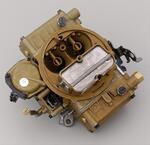
OK, so I had some time to work on this again, before it got dark last night, and I think timing has finally clicked for me. Not sure why it was so hard for me to understand, lol. Anyway, I unplugged the vac hose, set timing to 12 deg. BUT. When I unplugged the vac hose, something strange occurred to me...the idle stayed the same. Typically, when I advance or retard the timing, it changes the idle. And unplugging the vac hose should DEF retard the timing at idle. So I plugged it back in, and checked. Sure enough, timing had not changed, still at 12 deg, at idle...WITH the vac hose plugged in. So, now I figure I've got a whole new set of problems...I check the hose, and then, come to find out, the nipple it's plugged into is not producing any suction at all. It's the one on the front passenger side of the carb, just over and above the passenger side fuel adjustment screw. So, I took the hose off of that, and plugged it into on on the driver side, directly above the fuel adjustment screw for that side, and VOILA, vacuum. I plug THAT into the dizzy, and bam, my timing jumps to 30 deg at idle. So, I unplugged it from the dizzy, and blocked it off, and checked my mech advance...I revved it to 4K, and it was JUST at 34 deg...so I need to switch it out for the other spring in my recurve kit, the gold one, I think. The run down, then is, 12 deg base, no advance, and 18 deg vac advance, for a total of 30 degree at idle, and then 34 deg at 4,000 rpms.
Thread Starter
Drifting
Joined: Jun 2007
Posts: 1,404
Likes: 1
From: Ansonia/NYC CT
Oh, shoot, I forgot to add, I'm gonna post some picks later, of which spot it was plugged into on the carb, and which spot it's plugged into now. And also, thanks for the patience, guys, I hope I'm not running it out on you...


