




Low RPM stumble. Timing?
Thread Starter
Racer

Joined: Oct 2011
Posts: 294
Likes: 0
From: Easton pennsylvania
 Low RPM stumble. Timing?
I just got my engine back in the car after a complete rebuild. 0.040 over. Mild comp cam. About 9.1:1 cr. Dart SHP Heads. Edelbrock carb that was on the car prior to the rebuild.
So I got the car timed at about 12 initial as most recommend. At low RPM when gentle on the gas, the car stumbles a bit. Happens when starting from a dead stop, a slow roll and even when cruising at any speed and then gently apply the gas. Rhomp on it and everything is great, no stumble. Only when being gentle with it.
I had a friend help me re-time it. He races SBC on dirt track and does all his own motor work. He found that the car sounded smoothest at about 18-20 degree initial and about 50 overall. I didn't seem to have the stumble with that much initial timing, but I didn't give a chance. I didn't feel comfortable with reading everything on the forum.. I changed it back to 12 after he left my house..
What are your thoughts? When I asked why he had so much initial timing and not the standard 12, he said that it's a crap shoot with the mods I have on the car. he did agree that 12 is a good starting point but he felt like the engine sounded best and smoothest with the larger initial timing.
So I am back to 12 right now and getting the low end stumble. This is the first car that I have ever timed, so I am a complete amateur. Could the car actually need more that 12 initial and could the timing cause the low end stumble?
So I got the car timed at about 12 initial as most recommend. At low RPM when gentle on the gas, the car stumbles a bit. Happens when starting from a dead stop, a slow roll and even when cruising at any speed and then gently apply the gas. Rhomp on it and everything is great, no stumble. Only when being gentle with it.
I had a friend help me re-time it. He races SBC on dirt track and does all his own motor work. He found that the car sounded smoothest at about 18-20 degree initial and about 50 overall. I didn't seem to have the stumble with that much initial timing, but I didn't give a chance. I didn't feel comfortable with reading everything on the forum.. I changed it back to 12 after he left my house..
What are your thoughts? When I asked why he had so much initial timing and not the standard 12, he said that it's a crap shoot with the mods I have on the car. he did agree that 12 is a good starting point but he felt like the engine sounded best and smoothest with the larger initial timing.
So I am back to 12 right now and getting the low end stumble. This is the first car that I have ever timed, so I am a complete amateur. Could the car actually need more that 12 initial and could the timing cause the low end stumble?
Racer

Joined: Apr 2006
Posts: 322
Likes: 0
From: Rockford MI
You need to set your timing at 3000 rpm, not at idle, and make sure your vac advance is "all in" by then You should read the timing sticky at the top of this forum. Also email Lars for a copy of his timing paper. V8fastcars@msn.com
Thread Starter
Racer
Joined: Oct 2011
Posts: 294
Likes: 0
From: Easton pennsylvania
Burning Brakes


Joined: Oct 2001
Posts: 1,241
Likes: 4
From: Okinawa Okinawa
Here is Lars Timing paper. Kinda long but great info. Sounds like you may be a little lean during acceleration. May be vac leak, timing or the lean condition. I'd check for all three. I wouldn't worry too much about 12 degrees at idle. I'd look for all in by 2500-3000 rpm (36 degrees). Mine comes in at 2500 and I think idle is around 14-15 degrees.
How to Set the Timing
When you think about it, setting the timing at idle speed makes no sense at all: You don’t operate your car at idle, and timing
changes as the rpm changes. Fact is, the timing spec at idle speed is provided as a simple way for most people to set the
timing, and is not a good procedure for optimum performance.
Small block Chevys (and most other GM performance V8 engines) perform best when the total timing (full centrifugal
advance plus the initial timing setting with vacuum advance hose disconnected) is all in by 2,500 – 2,800 rpm and is set to
about 36 degrees. If you have an adjustable timing light, this is very easy to check. If you don’t, you need to scribe a 36-
degree mark on your harmonic balancer. Here’s how:
Measure the circumference of your harmonic balancer using a sewing tape measure (or other flexible tape measure). Get it as
accurate as you can. Take this measurement and divide by 10. The number you get is the distance to 36 degrees. Measure
this distance CLOCKWISE from your existing harmonic balancer timing mark as viewed from the front of the engine and
place a clear mark on the balancer.
Remove your distributor cap and rotor. If you have a points-style distributor with the stock, factory, heavy springs in place,
remove one of the springs. Disconnect the vacuum advance. Install the rotor and cap. Loosen the distributor hold-down
clamp bolt just enough so that the distributor can by turned, yet leave it snug enough that the distributor will hold its position.
Start the engine. If you’re using an adjustable timing light, set the light to 36 degrees advanced. Now rev the engine while
observing the timing marks with the light. You will notice that the stock line on the balancer will move up towards the
timing plate as rpm increases. Continue to increase rpm until the line does not move any further (centrifugal advance is
“pegged out”). Once the timing is “pegged out,” the line on the balancer should line up with the “0” mark on the timing tab.
Rotate the distributor to achieve this.
If you’re using a non-adjustable light, perform the same process, but align your new 36-degree mark with “0” mark on the
timing tab.
Shut it down.
Pop the cap and rotor and re-install the spring, if you removed it. Put everything back together, but leave the vacuum
disconnected. Start it up. For future reference, make a note of the timing setting at idle. This is your new curb idle timing
spec. Now give the engine a few quick rev’s past 3,000 rpm and verify that the full timing (36 degrees) is coming in. If it’s
not, you need to change to a softer set of springs until you get full 36-degree advance before 3000 rpm. (NOTE: A stock set
of springs will often not allow full centrifugal advance to come in before redline rpm. If you have heavy stock springs
installed, don’t rev the engine beyond its limits to try to force full advance in.) I suggest obtaining Mr. Gasket kit part
number 927 or 928: Use the gold springs on HEI systems. For points-style systems, use one black spring and one silver
spring – these springs will get your total timing all in by 2500-2800 rpm, providing very good throttle response and power.
The black & silver spring combo can also be used on MSD distributors if you widen out the spring hook ends.
Hook up the vacuum. Re-set your idle speed and idle mixtures if necessary to lower the idle speed. Now do a road test.
The 36-degree 2500 rpm advance curve is optimum for performance, but may require premium fuel. Lug the car around, and
punch the throttle at low rpm while listening for detonation (“engine knock”). If you’re getting any audible knock, you
MUST retard the timing. Retard the timing in 2-degree increments until engine knock stops. Engine knock will seriously
damage engine components if not corrected. If you get no knock, you may see slightly improved performance at 38 degrees
total timing. This is particularly true if you’re running at high altitude.
If you have no engine knock under acceleration, but the car “chugs” or “jerks” at cruising speed (light throttle application),
you are getting too much vacuum advance on top of the mechanical advance. You may need to change out the vacuum
advance diaphragm with a unit producing no more than 16 degrees of vacuum advance. See my paper on “Vacuum Advance
Control Units Facts and Specs” for more info on this.
Your timing is now set for best possible performance. Make note of the new setting, and use this for your future tune-up
work.
Lars’ Suggested Timing Specs for GM V8 Performance Applications:
• 36 degrees total timing (vacuum advance hose disconnected), all “in” by 2500 rpm
• 18 degrees initial timing at idle (vacuum advance hose disconnected). Note that it may not be possible to achieve the
18-degree initial spec with the 36-degree total without modifying the distributor advance stop system. It is more
important to achieve the 36 total than to hit an exact 18 initial. However, if your initial timing is very low (below 12
degrees) with the 36 total, it is important that you repair or modify your distributor in order to achieve correct engine
performance
• 16 degree vacuum advance control unit with a pull-in spec that allows the full range of vacuum advance to be pulled
in at the engine’s idle manifold vacuum level. Connect to manifold vacuum for most applications (this will allow
the engine to idle with actual timing at idle of 34 degrees).
How to Set the Timing
When you think about it, setting the timing at idle speed makes no sense at all: You don’t operate your car at idle, and timing
changes as the rpm changes. Fact is, the timing spec at idle speed is provided as a simple way for most people to set the
timing, and is not a good procedure for optimum performance.
Small block Chevys (and most other GM performance V8 engines) perform best when the total timing (full centrifugal
advance plus the initial timing setting with vacuum advance hose disconnected) is all in by 2,500 – 2,800 rpm and is set to
about 36 degrees. If you have an adjustable timing light, this is very easy to check. If you don’t, you need to scribe a 36-
degree mark on your harmonic balancer. Here’s how:
Measure the circumference of your harmonic balancer using a sewing tape measure (or other flexible tape measure). Get it as
accurate as you can. Take this measurement and divide by 10. The number you get is the distance to 36 degrees. Measure
this distance CLOCKWISE from your existing harmonic balancer timing mark as viewed from the front of the engine and
place a clear mark on the balancer.
Remove your distributor cap and rotor. If you have a points-style distributor with the stock, factory, heavy springs in place,
remove one of the springs. Disconnect the vacuum advance. Install the rotor and cap. Loosen the distributor hold-down
clamp bolt just enough so that the distributor can by turned, yet leave it snug enough that the distributor will hold its position.
Start the engine. If you’re using an adjustable timing light, set the light to 36 degrees advanced. Now rev the engine while
observing the timing marks with the light. You will notice that the stock line on the balancer will move up towards the
timing plate as rpm increases. Continue to increase rpm until the line does not move any further (centrifugal advance is
“pegged out”). Once the timing is “pegged out,” the line on the balancer should line up with the “0” mark on the timing tab.
Rotate the distributor to achieve this.
If you’re using a non-adjustable light, perform the same process, but align your new 36-degree mark with “0” mark on the
timing tab.
Shut it down.
Pop the cap and rotor and re-install the spring, if you removed it. Put everything back together, but leave the vacuum
disconnected. Start it up. For future reference, make a note of the timing setting at idle. This is your new curb idle timing
spec. Now give the engine a few quick rev’s past 3,000 rpm and verify that the full timing (36 degrees) is coming in. If it’s
not, you need to change to a softer set of springs until you get full 36-degree advance before 3000 rpm. (NOTE: A stock set
of springs will often not allow full centrifugal advance to come in before redline rpm. If you have heavy stock springs
installed, don’t rev the engine beyond its limits to try to force full advance in.) I suggest obtaining Mr. Gasket kit part
number 927 or 928: Use the gold springs on HEI systems. For points-style systems, use one black spring and one silver
spring – these springs will get your total timing all in by 2500-2800 rpm, providing very good throttle response and power.
The black & silver spring combo can also be used on MSD distributors if you widen out the spring hook ends.
Hook up the vacuum. Re-set your idle speed and idle mixtures if necessary to lower the idle speed. Now do a road test.
The 36-degree 2500 rpm advance curve is optimum for performance, but may require premium fuel. Lug the car around, and
punch the throttle at low rpm while listening for detonation (“engine knock”). If you’re getting any audible knock, you
MUST retard the timing. Retard the timing in 2-degree increments until engine knock stops. Engine knock will seriously
damage engine components if not corrected. If you get no knock, you may see slightly improved performance at 38 degrees
total timing. This is particularly true if you’re running at high altitude.
If you have no engine knock under acceleration, but the car “chugs” or “jerks” at cruising speed (light throttle application),
you are getting too much vacuum advance on top of the mechanical advance. You may need to change out the vacuum
advance diaphragm with a unit producing no more than 16 degrees of vacuum advance. See my paper on “Vacuum Advance
Control Units Facts and Specs” for more info on this.
Your timing is now set for best possible performance. Make note of the new setting, and use this for your future tune-up
work.
Lars’ Suggested Timing Specs for GM V8 Performance Applications:
• 36 degrees total timing (vacuum advance hose disconnected), all “in” by 2500 rpm
• 18 degrees initial timing at idle (vacuum advance hose disconnected). Note that it may not be possible to achieve the
18-degree initial spec with the 36-degree total without modifying the distributor advance stop system. It is more
important to achieve the 36 total than to hit an exact 18 initial. However, if your initial timing is very low (below 12
degrees) with the 36 total, it is important that you repair or modify your distributor in order to achieve correct engine
performance
• 16 degree vacuum advance control unit with a pull-in spec that allows the full range of vacuum advance to be pulled
in at the engine’s idle manifold vacuum level. Connect to manifold vacuum for most applications (this will allow
the engine to idle with actual timing at idle of 34 degrees).
Last edited by scottw; Jun 17, 2012 at 12:32 PM.
Thread Starter
Racer
Joined: Oct 2011
Posts: 294
Likes: 0
From: Easton pennsylvania
Thanks for them post. I read it before and it didn't make all that much sense to me. Now that I am playing around with it, It is getting a little more clear... I'll give it shot and see what I get.

Tech Contributor


Joined: Aug 1999
Posts: 14,379
Likes: 6,390
From: At my Bar drinking and wrenching in Lafayette Colorado
Your dirt track friend had the timing set about right: With a street cam, you want about 18-20 initial, 36 total mechanical, and around 50 with vacuum and mechanical all-in. You can e-mail me for current copies of my papers describing this process.
What type of carb are you running? Even with the timing slightly retarded the car should not stumble as you describe. It seems you're seeing a lean condition on slight acceleration, so a carb setup may be in order: You may need to richen up the pump shot, transition circuit, or both - this is typically required after the mods you have performed.
Lars
V8FastCars@msn.com
What type of carb are you running? Even with the timing slightly retarded the car should not stumble as you describe. It seems you're seeing a lean condition on slight acceleration, so a carb setup may be in order: You may need to richen up the pump shot, transition circuit, or both - this is typically required after the mods you have performed.
Lars
V8FastCars@msn.com
Thread Starter
Racer
Joined: Oct 2011
Posts: 294
Likes: 0
From: Easton pennsylvania
Lars, the ledgend. 
I played around with it (left the springs alone for now). I am currently at 18 initial. Hits 36 pretty quick but I can get 38 out of it if I go up to about 3200-3300 RPM. No more stumble..
I am currently running an Edelbrock 600 cfm, electric choke. (# 1406) Edelbrock Performer Intake, Dart SHP Heads, Mild Comp Cam. I did not know what HP the engine had before I had it rebult (as the PO did some engine work) but I can say that it is not a night and day improvement. My weak point right now is the 3.08 rear end. But everyone is telling me that a new carb will prove to be a somewhat good investment.
I played around with it (left the springs alone for now). I am currently at 18 initial. Hits 36 pretty quick but I can get 38 out of it if I go up to about 3200-3300 RPM. No more stumble..
I am currently running an Edelbrock 600 cfm, electric choke. (# 1406) Edelbrock Performer Intake, Dart SHP Heads, Mild Comp Cam. I did not know what HP the engine had before I had it rebult (as the PO did some engine work) but I can say that it is not a night and day improvement. My weak point right now is the 3.08 rear end. But everyone is telling me that a new carb will prove to be a somewhat good investment.
Corvette Stories
The Best of Corvette for Corvette Enthusiasts

Top 10 Most Expensive Corvettes Ever Sold on Bring A Trailer
Brett Foote
10 Things Every Corvette Owner Needs (2026 Edition)
Michael S. Palmer
8 Most "Only Corvette Owners Understand" Quirks and Problems
Pouria Savadkouei
10 Reasons the C6 Z06 is Still A Performance Benchmark After 20 Years
Joe Kucinski
How Much Horsepower Every Corvette Engine "LOST" in 1972
Joe Kucinski
Top 10 DOs and DON'Ts for Protecting Your Convertible Top!
Michael S. Palmer
Top 10 Most Explosive Corvettes Ever Made: Power-to-Weight Ratio Ranked!
Joe Kucinski
150 hp to 1,250 hp: Every Corvette Generation Compared by the Specs That Matter
Joe Kucinski
8 Coolest Corvette Pace Cars (and Replicas) of All Time
Verdad Gallardo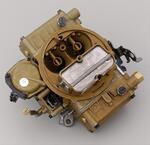
Le Mans Master

Joined: Mar 2008
Posts: 5,948
Likes: 72
From: Oxford MA-----You just lost the game!!!!
Lars, the ledgend.
I played around with it (left the springs alone for now). I am currently at 18 initial. Hits 36 pretty quick but I can get 38 out of it if I go up to about 3200-3300 RPM. No more stumble..
I am currently running an Edelbrock 600 cfm, electric choke. (# 1406) Edelbrock Performer Intake, Dart SHP Heads, Mild Comp Cam. I did not know what HP the engine had before I had it rebult (as the PO did some engine work) but I can say that it is not a night and day improvement. My weak point right now is the 3.08 rear end. But everyone is telling me that a new carb will prove to be a somewhat good investment.
I played around with it (left the springs alone for now). I am currently at 18 initial. Hits 36 pretty quick but I can get 38 out of it if I go up to about 3200-3300 RPM. No more stumble..
I am currently running an Edelbrock 600 cfm, electric choke. (# 1406) Edelbrock Performer Intake, Dart SHP Heads, Mild Comp Cam. I did not know what HP the engine had before I had it rebult (as the PO did some engine work) but I can say that it is not a night and day improvement. My weak point right now is the 3.08 rear end. But everyone is telling me that a new carb will prove to be a somewhat good investment.
Keep the shiny side up!
Scott

Team Owner

Joined: Oct 2004
Posts: 81,241
Likes: 3,063
From: altered state
St. Jude Donor '05
Those carbs are mainly calibrated for stock replacements. Anything more than that they are notorious for that stumble. May need more initial shot/jet/metering rods whatever they use.
Thread Starter
Racer
Joined: Oct 2011
Posts: 294
Likes: 0
From: Easton pennsylvania

Racer


Joined: Feb 2010
Posts: 362
Likes: 10
From: nashville tn
Lars, the ledgend.
I played around with it (left the springs alone for now). I am currently at 18 initial. Hits 36 pretty quick but I can get 38 out of it if I go up to about 3200-3300 RPM. No more stumble..
I am currently running an Edelbrock 600 cfm, electric choke. (# 1406) Edelbrock Performer Intake, Dart SHP Heads, Mild Comp Cam. I did not know what HP the engine had before I had it rebult (as the PO did some engine work) but I can say that it is not a night and day improvement. My weak point right now is the 3.08 rear end. But everyone is telling me that a new carb will prove to be a somewhat good investment.
I played around with it (left the springs alone for now). I am currently at 18 initial. Hits 36 pretty quick but I can get 38 out of it if I go up to about 3200-3300 RPM. No more stumble..
I am currently running an Edelbrock 600 cfm, electric choke. (# 1406) Edelbrock Performer Intake, Dart SHP Heads, Mild Comp Cam. I did not know what HP the engine had before I had it rebult (as the PO did some engine work) but I can say that it is not a night and day improvement. My weak point right now is the 3.08 rear end. But everyone is telling me that a new carb will prove to be a somewhat good investment.
Thread Starter
Racer
Joined: Oct 2011
Posts: 294
Likes: 0
From: Easton pennsylvania
Funny you should say that. I was thinking the same thing.
Edelbrocks seem to be a love/hate thing. People that love them say that the problems with Edelbrocks are operator error. I think everyone agree's that they are harder to tune, but are a beter carb IF you can get them working properly with your set up.
Not to start a new topic, but how do you go about picking out a new carb? Where do you start? cfm?
Edelbrocks seem to be a love/hate thing. People that love them say that the problems with Edelbrocks are operator error. I think everyone agree's that they are harder to tune, but are a beter carb IF you can get them working properly with your set up.
Not to start a new topic, but how do you go about picking out a new carb? Where do you start? cfm?
Racer
Joined: Feb 2010
Posts: 362
Likes: 10
From: nashville tn
Funny you should say that. I was thinking the same thing.
Edelbrocks seem to be a love/hate thing. People that love them say that the problems with Edelbrocks are operator error. I think everyone agree's that they are harder to tune, but are a beter carb IF you can get them working properly with your set up.
Not to start a new topic, but how do you go about picking out a new carb? Where do you start? cfm?
Edelbrocks seem to be a love/hate thing. People that love them say that the problems with Edelbrocks are operator error. I think everyone agree's that they are harder to tune, but are a beter carb IF you can get them working properly with your set up.
Not to start a new topic, but how do you go about picking out a new carb? Where do you start? cfm?
Le Mans Master
Joined: Mar 2008
Posts: 5,948
Likes: 72
From: Oxford MA-----You just lost the game!!!!
Funny you should say that. I was thinking the same thing.
Edelbrocks seem to be a love/hate thing. People that love them say that the problems with Edelbrocks are operator error. I think everyone agree's that they are harder to tune, but are a beter carb IF you can get them working properly with your set up.
Not to start a new topic, but how do you go about picking out a new carb? Where do you start? cfm?
Edelbrocks seem to be a love/hate thing. People that love them say that the problems with Edelbrocks are operator error. I think everyone agree's that they are harder to tune, but are a beter carb IF you can get them working properly with your set up.
Not to start a new topic, but how do you go about picking out a new carb? Where do you start? cfm?
Keep the shiny side up!
Scott
Le Mans Master
Joined: Mar 2008
Posts: 5,948
Likes: 72
From: Oxford MA-----You just lost the game!!!!
Lars, the ledgend.
I played around with it (left the springs alone for now). I am currently at 18 initial. Hits 36 pretty quick but I can get 38 out of it if I go up to about 3200-3300 RPM. No more stumble..
I am currently running an Edelbrock 600 cfm, electric choke. (# 1406) Edelbrock Performer Intake, Dart SHP Heads, Mild Comp Cam. I did not know what HP the engine had before I had it rebult (as the PO did some engine work) but I can say that it is not a night and day improvement. My weak point right now is the 3.08 rear end. But everyone is telling me that a new carb will prove to be a somewhat good investment.
I played around with it (left the springs alone for now). I am currently at 18 initial. Hits 36 pretty quick but I can get 38 out of it if I go up to about 3200-3300 RPM. No more stumble..
I am currently running an Edelbrock 600 cfm, electric choke. (# 1406) Edelbrock Performer Intake, Dart SHP Heads, Mild Comp Cam. I did not know what HP the engine had before I had it rebult (as the PO did some engine work) but I can say that it is not a night and day improvement. My weak point right now is the 3.08 rear end. But everyone is telling me that a new carb will prove to be a somewhat good investment.
Keep the shiny side up!
Scott
Burning Brakes
Joined: Feb 2011
Posts: 849
Likes: 0
From: Woodland California
Funny you should say that. I was thinking the same thing.
Edelbrocks seem to be a love/hate thing. People that love them say that the problems with Edelbrocks are operator error. I think everyone agree's that they are harder to tune, but are a beter carb IF you can get them working properly with your set up.
Not to start a new topic, but how do you go about picking out a new carb? Where do you start? cfm?
Edelbrocks seem to be a love/hate thing. People that love them say that the problems with Edelbrocks are operator error. I think everyone agree's that they are harder to tune, but are a beter carb IF you can get them working properly with your set up.
Not to start a new topic, but how do you go about picking out a new carb? Where do you start? cfm?
Ralph

Racer
Joined: Mar 2007
Posts: 377
Likes: 0
From: Holmen Wisconsin
I just put the same cam in my 80 and was having low rpm issues as well. I now have my timing set at 38 all in and it seems to have mostly cured it. I also have an Edelbrock carb, but it's the 650 AVS. I had to richen it up some as well.
Thread Starter
Racer
Joined: Oct 2011
Posts: 294
Likes: 0
From: Easton pennsylvania
Thanks for the info! I am learning little by little.. But I too agree that my motor like a little more timing..