



 .....but what size are they!



Big block carbs.......?

Thread Starter
Race Director


Joined: Mar 2009
Posts: 19,777
Likes: 4,592
From: Canada's capital
2020 Corvette of the Year Finalist (appearance mods)
C1 of Year Finalist (appearance mods) 2019
 Big block carbs.......?
How many CFMs were the carbs that came on big block engines from the factory from 396s (65s) to the last 454s? Thanks. 
Thread Starter
Race Director
Joined: Mar 2009
Posts: 19,777
Likes: 4,592
From: Canada's capital
2020 Corvette of the Year Finalist (appearance mods)
C1 of Year Finalist (appearance mods) 2019

Race Director


Joined: May 2005
Posts: 10,674
Likes: 122
From: Millington Illinois
St. Jude Donor '08-'09
The highest HP factory rated Chevy engine was the 1970 454 LS6 in the chevelles. 11.25 to 1 compression, solid lifter cam. This was pretty much an all out racing engine. 780 vacuum secondary holley.
Corvette Stories
The Best of Corvette for Corvette Enthusiasts

Top 10 Most Expensive Corvettes Ever Sold on Bring A Trailer
Brett Foote
10 Things Every Corvette Owner Needs (2026 Edition)
Michael S. Palmer
8 Most "Only Corvette Owners Understand" Quirks and Problems
Pouria Savadkouei
10 Reasons the C6 Z06 is Still A Performance Benchmark After 20 Years
Joe Kucinski
How Much Horsepower Every Corvette Engine "LOST" in 1972
Joe Kucinski
Top 10 DOs and DON'Ts for Protecting Your Convertible Top!
Michael S. Palmer
Top 10 Most Explosive Corvettes Ever Made: Power-to-Weight Ratio Ranked!
Joe Kucinski
150 hp to 1,250 hp: Every Corvette Generation Compared by the Specs That Matter
Joe Kucinski
8 Coolest Corvette Pace Cars (and Replicas) of All Time
Verdad Gallardo
Drifting

Joined: Feb 2005
Posts: 1,879
Likes: 38
From: Los Gatos CA
The engine in my 70 Coupe was stamped CRR, which is the 70 Chevelle LS6 450 HP / Turbo 400 combo. The car was not safe as the suspension was worn, and the brakes were, well you know. I was lookin' for Vipers. The engine was worth more than the car; if I only knew... 4 to 6 mpg...
Burning Brakes


Joined: Dec 2010
Posts: 848
Likes: 60
From: CA
The highest HP factory rated Chevy engine was the 1970 454 LS6 in the chevelles. 11.25 to 1 compression, solid lifter cam.
Then there was the 69 ZL1 rated at 600HP. Two produced and VERY expensive. 12:1 compression, aluminum block, aluminum heads, 850CFM Holley... all the go fast stuff Chevy had available.
Ed

Race Director
Joined: Nov 2002
Posts: 12,142
Likes: 54
From: Taylor Michigan
Close. The 66 L72 was also rated at 450HP until approx mid October, 1965. It was then downgraded to 425HP because insurance companies were having cows! Same engine, same car, but marketing decided to apease the insurance companies, so it went to 425HP.
Then there was the 69 ZL1 rated at 600HP. Two produced and VERY expensive. 12:1 compression, aluminum block, aluminum heads, 850CFM Holley... all the go fast stuff Chevy had available.
Ed
Then there was the 69 ZL1 rated at 600HP. Two produced and VERY expensive. 12:1 compression, aluminum block, aluminum heads, 850CFM Holley... all the go fast stuff Chevy had available.
Ed

Race Director

Joined: Apr 2000
Posts: 17,676
Likes: 201
From: Who says "Nothing is impossible" ? I've been doing nothing for years.


Race Director
Joined: Jul 2001
Posts: 15,892
Likes: 42
Not that the flow ratings mean much or have a direct relationship with performance, but I remember reading somewhere that Holley and Rochester did not use the same method for rating their carbs- so there was a slanted playing field.
Race Director
Joined: May 2005
Posts: 10,674
Likes: 122
From: Millington Illinois
St. Jude Donor '08-'09
Close. The 66 L72 was also rated at 450HP until approx mid October, 1965. It was then downgraded to 425HP because insurance companies were having cows! Same engine, same car, but marketing decided to apease the insurance companies, so it went to 425HP.
Then there was the 69 ZL1 rated at 600HP. Two produced and VERY expensive. 12:1 compression, aluminum block, aluminum heads, 850CFM Holley... all the go fast stuff Chevy had available.
Ed
Then there was the 69 ZL1 rated at 600HP. Two produced and VERY expensive. 12:1 compression, aluminum block, aluminum heads, 850CFM Holley... all the go fast stuff Chevy had available.
Ed
 You are right, all those and the LS6 were rated at an RPM much lower than peak HP to keep the insurance co's off their back.
Burning Brakes
Joined: Dec 2010
Posts: 848
Likes: 60
From: CA
Good point Kevin. As a matter of fact, I just had this conversation with John Hinckley (JohnZ) and although Dobbins states the ZL1 was a "600HP monster", it was still factory rated at 430HP like the L88. In reality, with headers and an open exhaust, both produced more in the neighborhood of 560-580HP. Still much more than Chevy wanted to let on about!
Ed
Ed
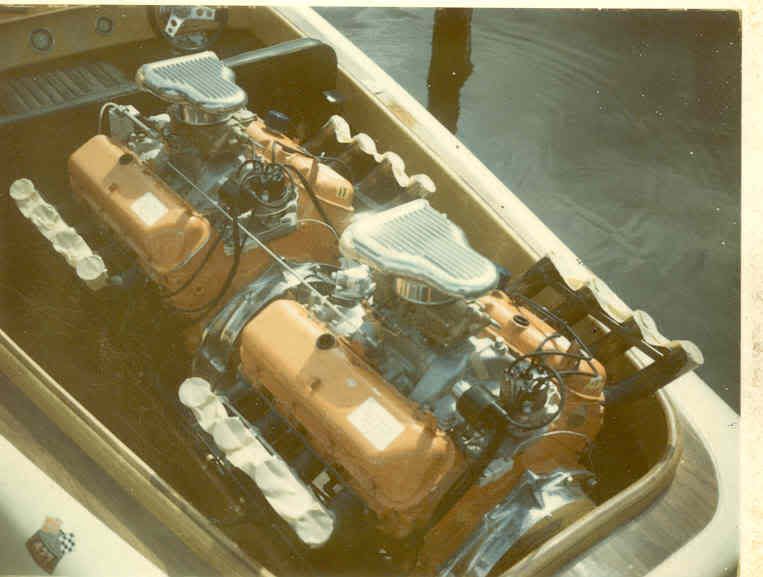 .....1200 HP 18 ft. Drag boat
Race Director
Joined: May 2005
Posts: 10,674
Likes: 122
From: Millington Illinois
St. Jude Donor '08-'09
Good point Kevin. As a matter of fact, I just had this conversation with John Hinckley (JohnZ) and although Dobbins states the ZL1 was a "600HP monster", it was still factory rated at 430HP like the L88. In reality, with headers and an open exhaust, both produced more in the neighborhood of 560-580HP. Still much more than Chevy wanted to let on about!
Ed
Ed



Had a 1976 L-82, 4-sp


Joined: Mar 2011
Posts: 5,338
Likes: 1,213
From: Some days your the dog and some days your the hydrant.
Royal Canadian Navy
I recall something about wet and dry flow testing methods. Holley used wet flow and QJ used dry flow. The dry flow would show a higher cfm flow because the medium was less dense when compared to wet flow testing that Holley uses. Anyone else shed some light on this?