




additives/octane

Thread Starter
Heel & Toe

Joined: Dec 2011
Posts: 20
Likes: 0
 additives/octane
I finally took the plunge and purchased a 1970 Vette 454. Telling you all I'm excited is an understatement. Here's my question to you gurus. I've read a few posts regarding additives and octane to Lt1 only and not a 454.
This is my first classic..and I don't want to blow it up! The engine is original. I live in Canada and I can access 89-93 octane out here. What do you guys recommend I use? I am basing my question on the fact I think the classics preferred a higher lead content (I don't know what effects it will have otherwise).
Basically, do I need a lead substitute, what happens if I miss it at a fill up?
Do I need a zinc additive or any oil supplements?
Can I use synthetic oil? I wonder if too much of a good thing can be bad!
Thanks
This is my first classic..and I don't want to blow it up! The engine is original. I live in Canada and I can access 89-93 octane out here. What do you guys recommend I use? I am basing my question on the fact I think the classics preferred a higher lead content (I don't know what effects it will have otherwise).
Basically, do I need a lead substitute, what happens if I miss it at a fill up?
Do I need a zinc additive or any oil supplements?
Can I use synthetic oil? I wonder if too much of a good thing can be bad!
Thanks

Burning Brakes


Joined: Oct 2001
Posts: 1,241
Likes: 4
From: Okinawa Okinawa
First of all, congrats on the new vette. Need some pics as soon as you can.
You can do a search and look up the multiple threads on oil.
Here are my first thoughts on your two questions.
1. Fuel - I would go with the 93 octane. If you can get it ethanol free, I would. Where I live, the closest ethanol free gas is about 55 miles away so I can't do anything about it.
2. Synthetic Oil - If you have the original engine on a 1970 engine that has been using conventional oil, I would stay with the conventional. If it already used synthetic oil and doesn't leak, I would stay with synthetic. You can get a good quality oil that already has plenty of zinc in it without the need of an extra additive.
Others, much smarter than I am will chime in. Congrats again on the 70.
You can do a search and look up the multiple threads on oil.
Here are my first thoughts on your two questions.
1. Fuel - I would go with the 93 octane. If you can get it ethanol free, I would. Where I live, the closest ethanol free gas is about 55 miles away so I can't do anything about it.
2. Synthetic Oil - If you have the original engine on a 1970 engine that has been using conventional oil, I would stay with the conventional. If it already used synthetic oil and doesn't leak, I would stay with synthetic. You can get a good quality oil that already has plenty of zinc in it without the need of an extra additive.
Others, much smarter than I am will chime in. Congrats again on the 70.
Burning Brakes
Joined: Oct 2008
Posts: 1,037
Likes: 14
From: Mobile Alabama
Congratulation on the new Vette.
Some topics, (fuel, oil, ect.) will bring out all of the experts and their opinions. Read through them and make your own decision. The lead was added to fuel to raise the octane rating, and had a side affect of forming deposits on the exhaust valves that helped to lubricate and minimize erosion of the valve seat. Around the time of lead phaseout, manufacturers started adding hardened valve seats for unleaded fuel. Using a higher octane will allow your engine to be tuned to its maximum power potential. As to the "lead" additives, my opinion, is it depends on the use of the vehicle. Many collector vehicles with moderate use show little valve erosion, but racing, heavy or extended use could cause you to see erosion. If I was going for "heavy use", I would freshen the heads and add hardened seats rather than add stuff to my fuel.
Some topics, (fuel, oil, ect.) will bring out all of the experts and their opinions. Read through them and make your own decision. The lead was added to fuel to raise the octane rating, and had a side affect of forming deposits on the exhaust valves that helped to lubricate and minimize erosion of the valve seat. Around the time of lead phaseout, manufacturers started adding hardened valve seats for unleaded fuel. Using a higher octane will allow your engine to be tuned to its maximum power potential. As to the "lead" additives, my opinion, is it depends on the use of the vehicle. Many collector vehicles with moderate use show little valve erosion, but racing, heavy or extended use could cause you to see erosion. If I was going for "heavy use", I would freshen the heads and add hardened seats rather than add stuff to my fuel.

CF Community Team


Joined: Oct 2004
Posts: 19,365
Likes: 5,244
From: Cape Cod, Mass.
2025 C6 of the Year Finalist - Unmodified
2025 C8 Z06/7/E-Ray of the Year Finalist - Unmodified
2023 C3 of the Year Finalist - Unmodified
2021 C8 of the Year Finalist Unmodified
2020 Corvette of the Year Finalist (performance mods)
2019 C1 of Year Winner (performance mods)
2017 Corvette of the Year Finalist
2016 C2 of Year
2015 C3 of Year Finalist
93 unleaded gas is fine for your 454. Lead is not needed. No additives are needed. I run Shell Rotella 15W40 in my big block and high compression small blocks.

Le Mans Master


Joined: Oct 2004
Posts: 6,314
Likes: 508
From: South-central Missouri

Wife's L46 (350/350) with 11.0:1 runs just fine on 93 unleaded. I have a 160ºF thermostat in it, and she runs cool and no knock issues.
I DID have knock issues with a 427 BBC with 11.0:1 compression, used all kinds of additives to little avail, especially as the engine got hot in traffic. In the end it was the 160º 'stat AND dumping the mechanical MDS distributor for a vacuum advance unit. Presto! Gone were my ping issues - after 3 years of putting up with it all that time.
P.

Race Director


Joined: Jul 2001
Posts: 15,892
Likes: 42

Advanced
Joined: Nov 2011
Posts: 53
Likes: 0
From: Lynnwood WA

Drifting


Joined: Mar 2007
Posts: 1,936
Likes: 1
From: Winston-Salem NC
This ethanol fuel has been killing me on my equipment here at home, and probably will have repairs coming along on my vehicles. I've got to llok at my carb on the Vette and see how it looks. Is Staybilt a good additive to use?
Corvette Stories
The Best of Corvette for Corvette Enthusiasts

Top 10 Most Expensive Corvettes Ever Sold on Bring A Trailer
Brett Foote
10 Things Every Corvette Owner Needs (2026 Edition)
Michael S. Palmer
8 Most "Only Corvette Owners Understand" Quirks and Problems
Pouria Savadkouei
10 Reasons the C6 Z06 is Still A Performance Benchmark After 20 Years
Joe Kucinski
How Much Horsepower Every Corvette Engine "LOST" in 1972
Joe Kucinski
Top 10 DOs and DON'Ts for Protecting Your Convertible Top!
Michael S. Palmer
Top 10 Most Explosive Corvettes Ever Made: Power-to-Weight Ratio Ranked!
Joe Kucinski
150 hp to 1,250 hp: Every Corvette Generation Compared by the Specs That Matter
Joe Kucinski
8 Coolest Corvette Pace Cars (and Replicas) of All Time
Verdad Gallardo

Team Owner

Joined: Oct 2004
Posts: 81,241
Likes: 3,063
From: altered state
St. Jude Donor '05
http://www.wildbillscorvette.com/OctaneSupreme01.htm
I run this stuff, love it.
Surely wont hurt anything. Lot cheaper than race gas
I run this stuff, love it.
Surely wont hurt anything. Lot cheaper than race gas
Race Director
Joined: Jul 2001
Posts: 15,892
Likes: 42
http://www.wildbillscorvette.com/OctaneSupreme01.htm
I run this stuff, love it.
Surely wont hurt anything. Lot cheaper than race gas
I run this stuff, love it.
Surely wont hurt anything. Lot cheaper than race gas
A full bottle of that stuff will raise 2 gallons of gas from 91 to 92.6 octane. Big deal. 'Racing gas' is cheap by comparison.


Drifting

Joined: Nov 2007
Posts: 1,716
Likes: 279
From: New York
Since you may not be sure what was done to the car before you purchased it, listed closely for knock. I had a 350/350 with 11 to 1 or better compression ratio. I Always ran 93 octane. When the engine came apart, the forged pistons had chips from detonation damage.

Melting Slicks

Joined: Apr 1999
Posts: 2,010
Likes: 3
From: Moon Twp. PA USA
I have a SBC 383 with a CC XE274 cam. Calculated static CR is 10.3, dynamic CR is about 8.1.
I run 89 octane gas with no problems.
Run the octane that the engine needs, not what you think it needs.
Intake closing point has a lot to do with octane requirements. Just my opinion, based upon my set up.
I run 89 octane gas with no problems.
Run the octane that the engine needs, not what you think it needs.
Intake closing point has a lot to do with octane requirements. Just my opinion, based upon my set up.
Drifting

Joined: Mar 2011
Posts: 1,347
Likes: 121
From: Kernersville NC
Ethanol is hard on equipment, especially small 2 stroke carbs. Most damage seems to happen when the equipment is not used and fuel is not run out of thr carb. It should not be too much problem in your regular driven vehicles. Stabil, Blue Marine grade, works well in the small carbs to combat the effects of ethanol. I would add to my car gas, and runt it long enough to ensure the carb bowl is full, if it was going to sit all winter as many do.
Drifting
Joined: Mar 2007
Posts: 1,936
Likes: 1
From: Winston-Salem NC
Ethanol is hard on equipment, especially small 2 stroke carbs. Most damage seems to happen when the equipment is not used and fuel is not run out of thr carb. It should not be too much problem in your regular driven vehicles. Stabil, Blue Marine grade, works well in the small carbs to combat the effects of ethanol. I would add to my car gas, and runt it long enough to ensure the carb bowl is full, if it was going to sit all winter as many do.
Thanks flyeri!
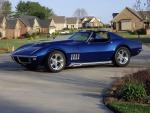
 BTW, that car looks very,very familiar!

Sent pm.
Last edited by eagle275; Sep 26, 2012 at 01:33 AM.