When you click on links to various merchants on this site and make a purchase, this can result in this site earning a commission. Affiliate programs and affiliations include, but are not limited to, the eBay Partner Network.
Hey folks, had an unfortunate occurance on Saturday. Out for a cruise on a beautiful day with the top down, when it suddenly felt like I lost spark. Lasted maybe a second or two, but came back with a loud backfire (which confirmed in my mind I had lost spark). This happened three times on the ride before I got back to the house.
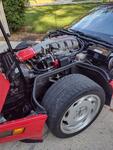
Now normally, the first thing I would do is shoot a new set of points and a new condenser in there. But, I have one of these in my dizzy, installed by a previous owner:
I have no idea how that works, so I am not sure where to start looking for the problem.
Any suggestions?
Last edited by Derrick Reynolds; Oct 9, 2012 at 09:22 AM.
Red wire is power
Green wire is signal to coil negative
Brown wire is ground
Have mine for a couple of decades. When placing rotor back do not overtighten the nuts. If you have a dwell meter hook it up and see if you get a reading while cranking the engine with cap off.
Thanks guys, I'll check all the wires this weekend. I actually took that picture some years ago, it just came in handy yesterday when I posted. Looking at the picture again, it looks like there is still a condenser there bracketed to the coil. Does that do anything when using the Mallory? Should I replace that? I have never replaced it in the 4+ years I have owned the car. I have only driven it a little over 5000 miles since I have owned it, but I have no idea how long it has been in there before I bought it.
Check those two wires that run over, then under, the advance plate in the dizzy. If vibration has caused the insulation to wear off, you may be grounding out the spark signal from that module. I've seen that happen on a stock distributor before.
Leif
Unless you have reasonably low cycles & high confidence in your starter from it's last refurbishing, posts 23 & 24 (solenoid) seem worthy of exploring at this stage. The contact & wheel on the plunger can get really cruddy with arc strikes. The intermittent nature of the problem could be due to the plunger wheel rotating somewhat upon each energizing ... hit a particularly bad spot on the wheel relative to the contact & resistance may be too high to overcome. Here's pic of my '66 327, similar problem last summer. Note the 'moon' shaped erosion of the contact's serrations & the arc-scarred surface of the wheel.
Jeff
Leif
Unless you have reasonably low cycles & high confidence in your starter from it's last refurbishing, posts 23 & 24 (solenoid) seem worthy of exploring at this stage. The contact & wheel on the plunger can get really cruddy with arc strikes. The intermittent nature of the problem could be due to the plunger wheel rotating somewhat upon each energizing ... hit a particularly bad spot on the wheel relative to the contact & resistance may be too high to overcome. Here's pic of my '66 327, similar problem last summer. Note the 'moon' shaped erosion of the contact's serrations & the arc-scarred surface of the wheel.
Jeff
I would hope he got this fixed by now-- this thread is from 2012
I had this problem with my 66 with a pertronix ignitor. Pertronix told me to bypass the ballast resistor and after doing that it has been perfect ever since. The only purpose of the ballast resistor is to prevent the points from burning up. If you don't have points, you should bypass it...the ignition pickup unit is looking for 12 volts, not 8 or 6. I would also recommend having the coil that is recommended by ignition unit manufacturer.
The ballast bypass will fix it.
Ray
FYI -- Some aftermarket electronic ignition modules want straight 12 vdc going to their box; some want the power coming from that [ballast] resistor wire. You have to read the installation instructions for whichever module you have to know how to wire it.







 Ignition problem, need help....