




Brakes fade
Thread Starter
Racer

Joined: Jan 2013
Posts: 302
Likes: 2
From: Sayville New york
 Brakes fade
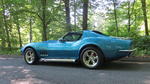
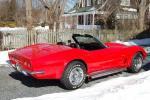
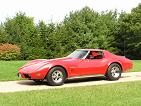
I have 1971 convertible trying to find source of brake failure.went thru system replaced all four brake hoses ,rear brake lines replaced,master cylinder,pads and calipers look good . Car does not pull one way or another Manuel brake pressed to floor with maximum effort does not lock up wheels. Rear calipers seem to have poor brake fluid pressure when bleeding. Brake fluid drools out instead of pissing out like front does.anybody know where to start troubleshooting ?
Last edited by Captain bob; Feb 20, 2013 at 05:09 PM. Reason: Spelling
Thread Starter
Racer
Joined: Jan 2013
Posts: 302
Likes: 2
From: Sayville New york
stock wheel and tires but i look at that valve and wonder if it somehow became clogs when i sent all that contaminated fluid thru it when i chaged master brake after sitting for 10 years.

Team Owner


Joined: Jan 2006
Posts: 37,637
Likes: 3,118
From: Crossville TN
It may be contaminated....or it may have just shifted over so that only one half of the system is now working. If that is the case, the blue "BRAKE" light should be showing. (If the bulb is burned out, there will be no light, of course. Check for this light to come on when you turn the ignition key to "ON" position, before you start the engine.)
Also, the brand/type of brake pads you are using is one of the biggest variables regarding brake stopping power. If you have the run-of-the-mill pads from the "Zone", don't expect much of the brake system.
Also, the brand/type of brake pads you are using is one of the biggest variables regarding brake stopping power. If you have the run-of-the-mill pads from the "Zone", don't expect much of the brake system.
Thread Starter
Racer
Joined: Jan 2013
Posts: 302
Likes: 2
From: Sayville New york
Just check the car , there is no blue light Nor was I aware there was a brake indicator light to begin with.the proportioning valve does have a clean electrical connection but circuitry or bulb is at fault apparently.i will change both engine and a/c heat wiring harness shortly. I am old school and do not shop box stores or zone Chinese knock off junk.ihave had many corvettes over the years and sold the garage queen 1967 big block coupe . This 1971 convertible will be driven any suggestion on brake pads.

Race Director


Joined: Sep 2001
Posts: 10,560
Likes: 439
From: Wellington, FL
St. Jude Donor '11 thru '25
Is your brake fluid fresh? Also, I had a similar problem with my '76 where the wheels wouldn't lock up. This was after I replaced the master cylinder as you have done. What happened was when bench bleeding the m/c, I just couldn't get all the air out of it despite bleeding it many times. Someone on the forum told me it was nearly impossible to completely remove all air from it and to just drive the car (safely) and that the brakes would soon operate normally. As it turned out, he was correct as shortly thereafter the wheels could be locked up upon hard breaking. I hope this is of some help to you.
Last edited by Jud Chapin; Feb 20, 2013 at 08:27 PM.
Thread Starter
Racer
Joined: Jan 2013
Posts: 302
Likes: 2
From: Sayville New york
I remove and replaced master cylinder .dumped fluid and kept running dot3 synthetic fluid thru bleeder until spotless. However front bleeders like water pistol and all four rear bleeders dribble out.
Corvette Stories
The Best of Corvette for Corvette Enthusiasts

Top 10 Most Expensive Corvettes Ever Sold on Bring A Trailer
Brett Foote
10 Things Every Corvette Owner Needs (2026 Edition)
Michael S. Palmer
8 Most "Only Corvette Owners Understand" Quirks and Problems
Pouria Savadkouei
10 Reasons the C6 Z06 is Still A Performance Benchmark After 20 Years
Joe Kucinski
How Much Horsepower Every Corvette Engine "LOST" in 1972
Joe Kucinski
Top 10 DOs and DON'Ts for Protecting Your Convertible Top!
Michael S. Palmer
Top 10 Most Explosive Corvettes Ever Made: Power-to-Weight Ratio Ranked!
Joe Kucinski
150 hp to 1,250 hp: Every Corvette Generation Compared by the Specs That Matter
Joe Kucinski
8 Coolest Corvette Pace Cars (and Replicas) of All Time
Verdad Gallardo


Race Director

Joined: Jul 2001
Posts: 15,892
Likes: 42
There is no blue light. There's a red light that also serves as the warning for the e-brake.
Thread Starter
Racer
Joined: Jan 2013
Posts: 302
Likes: 2
From: Sayville New york
Mike thank you for the tip." E- brake same light" yes that red light works fine when e- brake is applied and ED's tip on volt meter shows p- valve good however the analysis with front and rear brakes still show correct fluid stream front and dribbling rear. I order new p- valve anyway.clearly indicates car is stopping by front brakes only . All functions are correct with rear calipers they both apply and release evenly but pressure is almost nil.
Melting Slicks

Joined: Mar 2007
Posts: 2,520
Likes: 11
From: Hinckley OH
That sounds like air in the rear brake system. There are two bleeder screws on the rear calipers. Are you bleeding the inner ones first? If you do the outer bleeders first you will not get all the air out of the calipers.

Race Director
Joined: Mar 2006
Posts: 14,112
Likes: 28
From: Florida
Loosen or remove the rear brake line from the differential valve and test for full flow there first.
If not full flow, then try to reset (center) the valve and test again.
They can and do get crudded up internally, but since they are of all (other than spring and rubber) brass construction, replacement is rarely necessary.
If not full flow, then try to reset (center) the valve and test again.
They can and do get crudded up internally, but since they are of all (other than spring and rubber) brass construction, replacement is rarely necessary.
Thread Starter
Racer
Joined: Jan 2013
Posts: 302
Likes: 2
From: Sayville New york
I did not forget you Noonie I am waiting for new p- valve to come by ups. I want brakes to be as best they can be. I am best friends with sheriff so I put down top take it to straight two lane eastbound road and he calls up ahead so I can let her go.first time took her to 120 mph and rear was not stable ( for some reason no sway bar in base 350 sbc)I installed 7/8" bar and corrected problem but brakes were terrible now I will try to find source of problem so new p-valve,new brake hoses, new brake lines. Then retest ,thank you and the test of forum for taking the time to help me.----------- captain bob.

Burning Brakes


Joined: Jan 2009
Posts: 845
Likes: 54
From: Bangor, Northern Ireland
It took us a long time ( and a lot of fluid!) to get the air out of the rear brakes, ended up going back and forth from the inner to the outer nipple to get the air out, it seemed it was all out then more would come. I had a 5ltr bottle and went through half of it doing the backs.
Oh and others have said, cheap pads are pants
Get something like Hawk, EBC etc
Oh and others have said, cheap pads are pants
Get something like Hawk, EBC etc
Last edited by aaroncorvette; Feb 23, 2013 at 02:05 PM.
Thread Starter
Racer
Joined: Jan 2013
Posts: 302
Likes: 2
From: Sayville New york
i purchase hawk brake pads i find it odd the front and the rear are the same? have not install yet because i open a can of worms! the piston seals are leaking and all four rotors are oem with rivets 56,000 miles on rotors and they measure 1.290 .show very little wear almost non existent however they are glazed up front and rear left inner was soaked with brake fluid .i believe rear brakes added nothing to stopping power. i am looking into SS sleeved with O-ring calipers and remove and just break glaze on rotor due to no wear.


Thread Starter
Racer
Joined: Jan 2013
Posts: 302
Likes: 2
From: Sayville New york
Wow 171,000 miles on rotors ,somebody took a lot of car changing pads before metal to metal occur. Best statement "if it ain't broke don't fix it" I will leave well enough alone with respect to rotors but ordered DIY kit for SS pistons and O-rings in calipers because car sits in winter months.nice to get into the real nuts and bolts again after i sold that 1967 big block coupe sitting in garage deteriorating for 32 years.never liked that car 427" 400hp tri- power, no air suffocating car in summer with heat coming thru firewall when you use it and bicycle tires on it. That would brake loose while parking!
Last edited by Captain bob; Mar 4, 2013 at 10:33 AM.