



Hot 350 or not

Thread Starter
Melting Slicks


Joined: Apr 2010
Posts: 2,790
Likes: 108
From: On the coast North of SF bay
 Hot 350 or not
Have an older (classic) vette 350 iron block that I'm trying to get the cooling system under control. Runs at 225 on the highway and hotter than I would like it otherwise.
Tried to check the temps with an infrared meter at a couple of locations on the radiator and goose neck and found something curious. The temps on the bottom of the radiator were much hotter than at the top - 150 vs 110. These are probably low because they are surface readings, but they are relative, and confusing to me as I would have expected them to be just the opposite.
At the time I took these readings, the temp gauge on the dash read 165, so at that moment, the engine was not running hot. After the engine cooled down, I pulled the cap with the engine off, started it up to see if I could tell which way the coolant was flowing, but the only thing that happened was coolant bursting through the cap opening and that was inconclusive.
The pulley setup us a standard v-belt with the fan running clockwise.
Also, talked to the counter guys at the local Napa Auto and the didn’t know of a pump for an older 350 that works CCW They thought the pump impeller may have come loose from the shaft.
One other thought, there is definitey still some air in the system and at the time this happened, the heater core was out of the firewall and hoses were plugged.
None of this seems to make any sense - my search produced no answers.
Tried to check the temps with an infrared meter at a couple of locations on the radiator and goose neck and found something curious. The temps on the bottom of the radiator were much hotter than at the top - 150 vs 110. These are probably low because they are surface readings, but they are relative, and confusing to me as I would have expected them to be just the opposite.
At the time I took these readings, the temp gauge on the dash read 165, so at that moment, the engine was not running hot. After the engine cooled down, I pulled the cap with the engine off, started it up to see if I could tell which way the coolant was flowing, but the only thing that happened was coolant bursting through the cap opening and that was inconclusive.
The pulley setup us a standard v-belt with the fan running clockwise.
Also, talked to the counter guys at the local Napa Auto and the didn’t know of a pump for an older 350 that works CCW They thought the pump impeller may have come loose from the shaft.
One other thought, there is definitey still some air in the system and at the time this happened, the heater core was out of the firewall and hoses were plugged.
None of this seems to make any sense - my search produced no answers.

Safety Car

Joined: Jan 2009
Posts: 3,736
Likes: 56
From: anchorage ak
Did you change the sending unit? I had to change mine due to the spade connector breaking off. This one reads higher, i to used an infared thermometer, and my temps are much lower with it, dont know how much to trust either one. I wonder if the resistance in the new one is different, causing a different reading?
Last edited by bluedawg; May 12, 2013 at 01:58 PM.
Thread Starter
Melting Slicks
Joined: Apr 2010
Posts: 2,790
Likes: 108
From: On the coast North of SF bay
Ok, so I was not able to run the engine with the cap off because coolant went everywhere. So I took an old radiator cap, removed the lower rubber gasket and drilled a 3/16” hole in the stainless steel backing plate. Installed the cap removed the overflow hose and connected a 5/16” translucent plastic hose and put the end into a plastic milk jug, just in case.
Well, initially the fluid came up about 18'” and air started bubbling out and slowly the level came down and at times disappeared. I was somewhat concerned that what I was looking at was a head gasket problem, but eventually, I could race the engine (3-4k) and very little coolant would show and when it did, air also escaped. Have shut off and restarted numerous times and each time more coolant/air comes out and goes back to no coolant showing.
Could all this have to do with too much air?
Well, initially the fluid came up about 18'” and air started bubbling out and slowly the level came down and at times disappeared. I was somewhat concerned that what I was looking at was a head gasket problem, but eventually, I could race the engine (3-4k) and very little coolant would show and when it did, air also escaped. Have shut off and restarted numerous times and each time more coolant/air comes out and goes back to no coolant showing.
Could all this have to do with too much air?

Melting Slicks

Joined: May 2012
Posts: 2,192
Likes: 343
From: Allenton Wisconsin
is this a c-3? both of mine whenever the cooling needed refilling I had to cycle the system 3 to four times and added fluid every time until it was about 2" down from the neck. I can run the engines up to temp with the cap off and it does not bubble out. the coolant flows out of the core into the right tank. check the coolant level the next day after the pressure has subsided. bad head gaskets on sbc is rare but does happen. the way I like to fill the system is to put as much coolant into the system leave cap off come back the next day add more. it seem as if you don't have enough coolant in system and air is being pumped into the block heated by a running engine expanding and pushing out the coolant. hope this helps
Thread Starter
Melting Slicks
Joined: Apr 2010
Posts: 2,790
Likes: 108
From: On the coast North of SF bay
The thermostat is new and opens at the right time and the old 180 was doing the same thing.
Only a C-3 engine and radiator, they're in a 75 Vega. Here's some more info:
The thermostat/cap/neck are all together on the intake manifold and there is no space for moving coolant above the coolant level which is just below the seal in that very small chamber just above the thermostat. The raidator is a closed subject and there it no veiwing the inside, but the level of the coolant in the neck is near the top of the hose going into the radiator which leave room in the top of the radiator for expansion.
This looks like the problem is either too much air in the system or a radiator that needs cleaning. Of course, I don’t have much experience with either.
There are no leaks and there is a coolant recovery system. No smoke, no coolant in the oil and no oil in the coolant.
is this a c-3? both of mine whenever the cooling needed refilling I had to cycle the system 3 to four times and added fluid every time until it was about 2" down from the neck. I can run the engines up to temp with the cap off and it does not bubble out. the coolant flows out of the core into the right tank. check the coolant level the next day after the pressure has subsided. bad head gaskets on sbc is rare but does happen. the way I like to fill the system is to put as much coolant into the system leave cap off come back the next day add more. it seem as if you don't have enough coolant in system and air is being pumped into the block heated by a running engine expanding and pushing out the coolant. hope this helps
The thermostat/cap/neck are all together on the intake manifold and there is no space for moving coolant above the coolant level which is just below the seal in that very small chamber just above the thermostat. The raidator is a closed subject and there it no veiwing the inside, but the level of the coolant in the neck is near the top of the hose going into the radiator which leave room in the top of the radiator for expansion.
This looks like the problem is either too much air in the system or a radiator that needs cleaning. Of course, I don’t have much experience with either.
There are no leaks and there is a coolant recovery system. No smoke, no coolant in the oil and no oil in the coolant.
Le Mans Master

Joined: Mar 2008
Posts: 5,948
Likes: 72
From: Oxford MA-----You just lost the game!!!!
As I'm sure you know, this is a corvette forum. There are a lot of people here who are experts on corvettes. But your corvette engine and radiator in a vega is not a corvette. Who knows what has been changed in the swap. Radiator height compared to the engine, radiator angle, amount of airflow available, just to name a few. So, you may not be able to find the help you need from corvette experts. Some pics would be a big help. Sorry I can't be more helpful,
Scott
Scott

Drifting


Joined: Apr 2007
Posts: 1,970
Likes: 45
From: Cameron Park CA
The thermostat is new and opens at the right time and the old 180 was doing the same thing.
Only a C-3 engine and radiator, they're in a 75 Vega. Here's some more info:
The raidator is a closed subject and there it no veiwing the inside, but the level of the coolant in the neck is near the top of the hose going into the radiator which leave room in the top of the radiator for expansion.
There are no leaks and there is a coolant recovery system. No smoke, no coolant in the oil and no oil in the coolant.
Only a C-3 engine and radiator, they're in a 75 Vega. Here's some more info:
The raidator is a closed subject and there it no veiwing the inside, but the level of the coolant in the neck is near the top of the hose going into the radiator which leave room in the top of the radiator for expansion.
There are no leaks and there is a coolant recovery system. No smoke, no coolant in the oil and no oil in the coolant.
The coolant level in the tank is about half way up, the rest is air. The tank is located higher than the top of the rad and the thermostat. If you do that, you can get rid of that thermostat housing/cap lash up and rid yourself of the problems you are having.
That small hose going off to the left of the photo goes to a fitting on the top of the rad so air can escape the rad.
Hope this helps!

Pete
Corvette Stories
The Best of Corvette for Corvette Enthusiasts

10 Reasons the C6 Z06 is Still A Performance Benchmark After 20 Years
Joe Kucinski
How Much Horsepower Every Corvette Engine "LOST" in 1972
Joe Kucinski
Top 10 DOs and DON'Ts for Protecting Your Convertible Top!
Michael S. Palmer
Top 10 Most Explosive Corvettes Ever Made: Power-to-Weight Ratio Ranked!
Joe Kucinski
150 hp to 1,250 hp: Every Corvette Generation Compared by the Specs That Matter
Joe Kucinski
8 Coolest Corvette Pace Cars (and Replicas) of All Time
Verdad Gallardo
Top 10 Corvette Engines RANKED by Peak Torque (70+ Years of Muscle!)
Joe Kucinski
Corvette ZR1X Will Be Pacing the Indy 500, And Could Probably Race, Too!
Verdad Gallardo
Top 10 Corvettes Coming to Mecum Indy 2026!
Brett Foote
Safety Car
Joined: Jan 2009
Posts: 3,736
Likes: 56
From: anchorage ak
As I'm sure you know, this is a corvette forum. There are a lot of people here who are experts on corvettes. But your corvette engine and radiator in a vega is not a corvette. Who knows what has been changed in the swap. Radiator height compared to the engine, radiator angle, amount of airflow available, just to name a few. So, you may not be able to find the help you need from corvette experts. Some pics would be a big help. Sorry I can't be more helpful,
Scott
Scott
Thread Starter
Melting Slicks
Joined: Apr 2010
Posts: 2,790
Likes: 108
From: On the coast North of SF bay
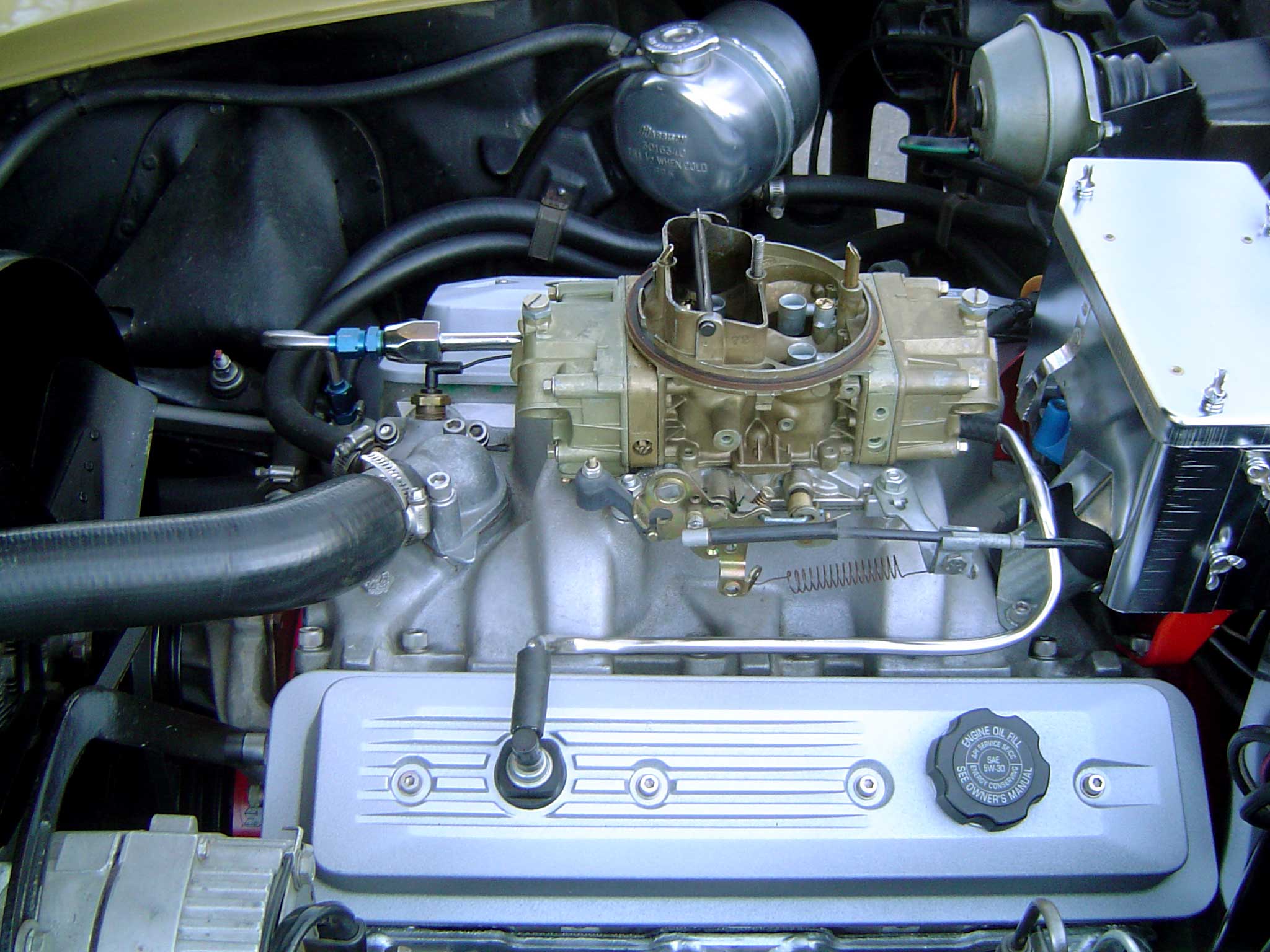
If I understand your statement "the radiator is a closed subject" correctly your rad does not have a radiator cap. If this is the case, you NEED an expansion tank like ALL Corvettes with cap less radiators had. Like in this photo:
The coolant level in the tank is about half way up, the rest is air. The tank is located higher than the top of the rad and the thermostat. If you do that, you can get rid of that thermostat housing/cap lash up and rid yourself of the problems you are having.
That small hose going off to the left of the photo goes to a fitting on the top of the rad so air can escape the rad.
Hope this helps!
Pete
The coolant level in the tank is about half way up, the rest is air. The tank is located higher than the top of the rad and the thermostat. If you do that, you can get rid of that thermostat housing/cap lash up and rid yourself of the problems you are having.
That small hose going off to the left of the photo goes to a fitting on the top of the rad so air can escape the rad.
Hope this helps!
Pete

Last edited by pcguy2u; May 13, 2013 at 09:37 AM.
Drifting
Joined: Apr 2007
Posts: 1,970
Likes: 45
From: Cameron Park CA
As for the fitting on the top of the rad that connects to the tank, this image should give you an idea of what it looks like. http://www.dewitts.com/collections/c...minum-radiator
It is that little hooked shaped pipe on the top right.
Pete
PS. I used to live over the hill from you in Cotati & Petaluma. Great Corvette roads over there.
Last edited by PeteZO6; May 13, 2013 at 11:10 AM.

Race Director

Joined: Jul 2001
Posts: 15,892
Likes: 42
And here I thought I was plagued with the other car Syndrome - so it appears that some of these Corvette experts are able to interpret across lines - thanks for that Pete - right on and very helpful. I wonder how difficult it will be to install the fitting in the radiator or maybe it's there already and plugged. Have had the radiator out and it comes out from under the car and can't recall seeing the fitting/plug - a real PITA.
Thread Starter
Melting Slicks
Joined: Apr 2010
Posts: 2,790
Likes: 108
From: On the coast North of SF bay
You can't see any part of the radiator except the fins in front of the water pump fan. No shroud and a pusher electric fan on the front side.
Even the top is enclosed in the body framework - that's why it has to come out from the bottom.
Tanks are on the sides (4 tubes on the fins) and the flow is from the drivers side to the passeger side.

Team Owner


Joined: Jun 2000
Posts: 38,923
Likes: 1,481
From: Southbound
Cruise-In II Veteran
C3 radiators are designed to be mounted with a backwards tilt toward the fire wall. If you have it mounted straight up and down in the Vega, it is not cooling as efficently as designed.
Le Mans Master
Joined: Mar 2008
Posts: 5,948
Likes: 72
From: Oxford MA-----You just lost the game!!!!
Scott
Le Mans Master
Joined: Mar 2008
Posts: 5,948
Likes: 72
From: Oxford MA-----You just lost the game!!!!
Think about the basics: if there is sufficient coolant flowing through the radiator and engine, and there is sufficient air flowing through the radiator fins, it should just work. I know this sounds obvious, but sometimes we overlook the obvious. It's never a bad idea to start at the beginning. One last thing: Pictures!!!!!
Scott
Thread Starter
Melting Slicks
Joined: Apr 2010
Posts: 2,790
Likes: 108
From: On the coast North of SF bay
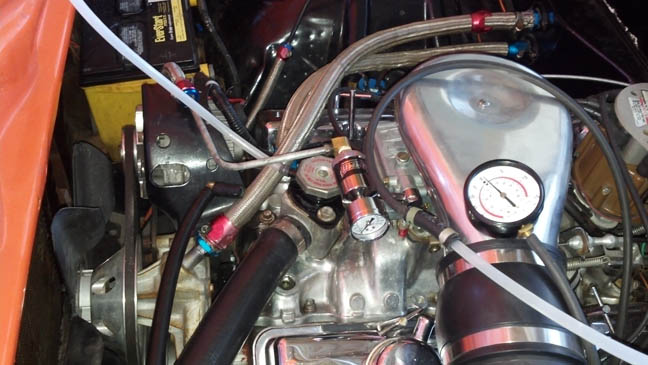
Might be a little confusing, but here goes. Right in the center is the radiator cap and the translucent hose coming of the neck on the left is the same hose coming back down on the right – it is then connected to my vacuum gauge. The way I made this work was to remove the lower rubber sealing gasket from an old cap and then drilled a 3/16” hole in the base behind that gasket. This allows the system to be sealed for pressure and to force any pressure into the translucent tube where I can see any coolant/bubbles.
Here’s a picture of my setup with my pressure test still in place – BTW, I ran the engine this morning, stone cold, with this setup/vacuum/fuel pressure gauge in place this morning and the only motion on the needle was a very slight movement toward vacuum. This seems reasonable because the water pump would be pulling on the cap and that provides some indication that a head gasket leak is less likely, at least when the engine is cold.
Hope this helps....
Here’s a picture of my setup with my pressure test still in place – BTW, I ran the engine this morning, stone cold, with this setup/vacuum/fuel pressure gauge in place this morning and the only motion on the needle was a very slight movement toward vacuum. This seems reasonable because the water pump would be pulling on the cap and that provides some indication that a head gasket leak is less likely, at least when the engine is cold.
Hope this helps....
Safety Car
Joined: Jan 2009
Posts: 3,736
Likes: 56
From: anchorage ak
And here I thought I was plagued with the other car Syndrome - so it appears that some of these Corvette experts are able to interpret across lines - thanks for that Pete - right on and very helpful. I wonder how difficult it will be to install the fitting in the radiator or maybe it's there already and plugged. Have had the radiator out and it comes out from under the car and can't recall seeing the fitting/plug - a real PITA.
Thread Starter
Melting Slicks
Joined: Apr 2010
Posts: 2,790
Likes: 108
From: On the coast North of SF bay
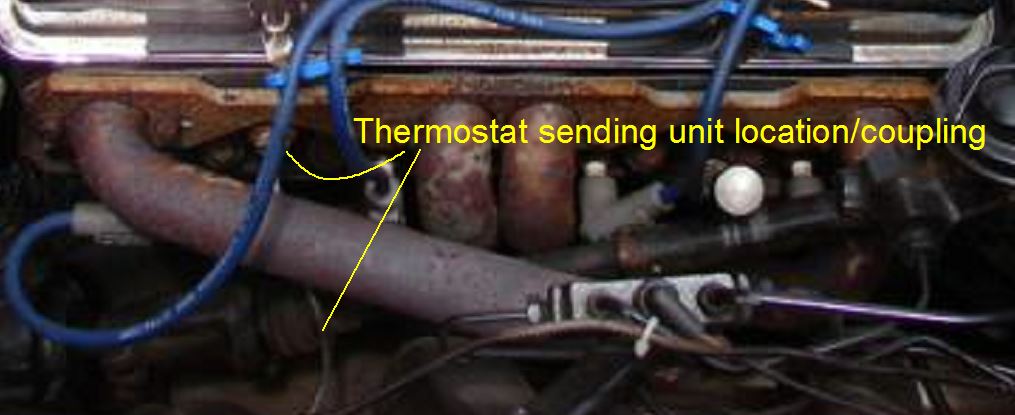
Sorry, it's an after market analog - here's a picture. Should actually read Temp Gauge sending unit location. Plug wires are the old ones and have been replaced/rerouted.
Last edited by pcguy2u; May 13, 2013 at 02:17 PM.