




Hot 350 or not
Drifting


Joined: Apr 2007
Posts: 1,970
Likes: 45
From: Cameron Park CA

A point that many folks don't realize is that water is the best coolant, better than a water/anti-freeze combination. If you decide to run straight water, you should add an anit-corrosive and water pump lubricant. As long as freezing is not a concern that is the most efficient coolant.

Pete
Thread Starter
Melting Slicks


Joined: Apr 2010
Posts: 2,790
Likes: 108
From: On the coast North of SF bay
Set the engine to run at 2000 rpm, preferably have a strong fan aiming at the grill intake, use a IR gun to shoot the metal inlet tube (top) of the radiator and then shoot the outlet metal tube (bottom) of the radiator. Temp at the bottom should be 20-30° cooler than the top. I suggest you use a 195° tstat for this. That's the only test you need perform.
Of course, I'm totally unsure of where this all is at this juncture. Really don't want to put the radiator back in without some reasonable belief that the problem is solved - may have to do that.
Anyone know what combination of water/coolant is good for anti-corrosion and water pump lubrication - like 20% coolant? Freezing is not an issue.
Thread Starter
Melting Slicks
Joined: Apr 2010
Posts: 2,790
Likes: 108
From: On the coast North of SF bay
As promised, here are some pics:
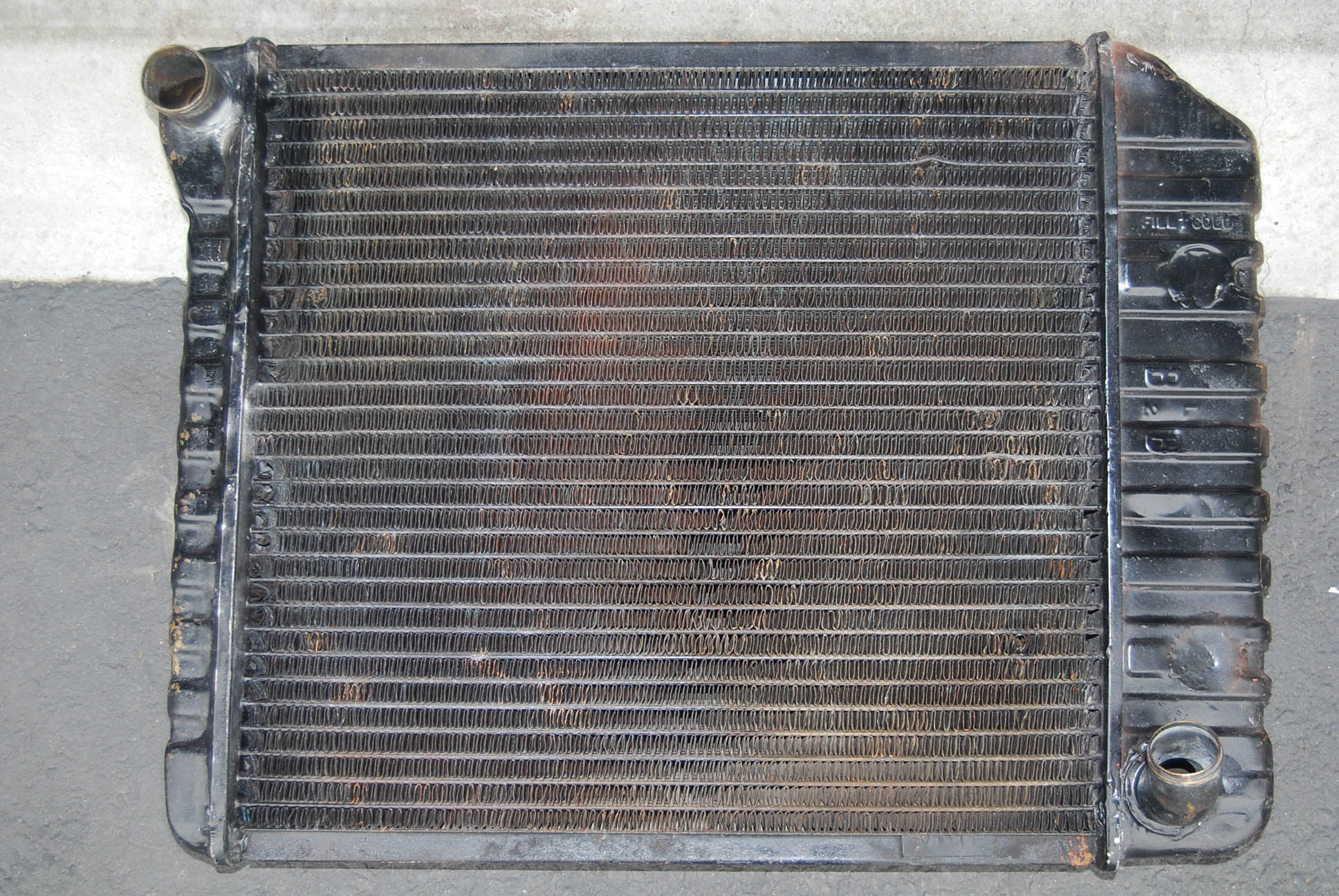
Radiator holds pressure fine and doesn’t leak at all, but obiously has seen better days. Considering soldering on a pitcock for a drain and an air line connection to a pressurized expansion tank (still haven't found one that fits).
Here’s a piece of what looks like latex paint or some kind of rubber – method of sealing??
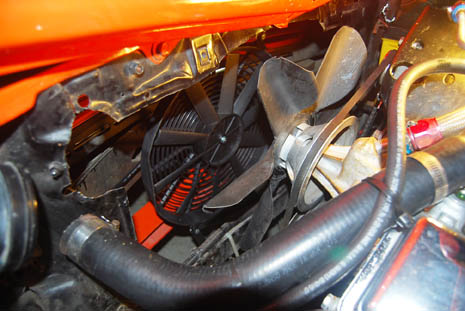
Here’s the mounting for the radiator – as you can see, there is about zero room, especially for a shroud. The hood accually comes within a half inch of the water pump fan as it closes.
Radiator holds pressure fine and doesn’t leak at all, but obiously has seen better days. Considering soldering on a pitcock for a drain and an air line connection to a pressurized expansion tank (still haven't found one that fits).
Here’s a piece of what looks like latex paint or some kind of rubber – method of sealing??
Here’s the mounting for the radiator – as you can see, there is about zero room, especially for a shroud. The hood accually comes within a half inch of the water pump fan as it closes.
Thread Starter
Melting Slicks
Joined: Apr 2010
Posts: 2,790
Likes: 108
From: On the coast North of SF bay
Well, I've been through this way too many times and I began to wonder if it's something more obvious. Unfortunately, I'm not able to easily test any changes since I live on the coast and it never gets hot here - 60 mile round trip on a hot day inland to determine what effects, if any, a given change will have.
After completely boiling out the radiator (lots of stuff came out) and reverse flushing with a hi volume of water (trapping the output for inspection), there is zero change - well, maybe a couple of degrees better at 215. This setup should run at under 200 at all ambient temps.
So I was looking to see if the under hood temps (thin wall headers, small compartment, etc) could be the contributing factor - looking at hood louvers. The trans cooler was/is mounted on the flat under the radiator and was/am considering removing the grill and mounting it up front and off to the passenger side as much as possible.
Well, in trying to figure out what the proper steps would be, I noticed that the front license plate hung down fully below the bumper and right in front of the central part of the radiator. It also extended toward the front of the engine right up to the main pulley.
Does it make sense to you guys that at 65 MPH that plate location would cause enough turbulence to keep the system from cooling properly? I’m going to remove it and move the trans cooler, but I’m wondering if, in the meantime, I should continue my search for the right hood louvers.
After completely boiling out the radiator (lots of stuff came out) and reverse flushing with a hi volume of water (trapping the output for inspection), there is zero change - well, maybe a couple of degrees better at 215. This setup should run at under 200 at all ambient temps.
So I was looking to see if the under hood temps (thin wall headers, small compartment, etc) could be the contributing factor - looking at hood louvers. The trans cooler was/is mounted on the flat under the radiator and was/am considering removing the grill and mounting it up front and off to the passenger side as much as possible.
Well, in trying to figure out what the proper steps would be, I noticed that the front license plate hung down fully below the bumper and right in front of the central part of the radiator. It also extended toward the front of the engine right up to the main pulley.
Does it make sense to you guys that at 65 MPH that plate location would cause enough turbulence to keep the system from cooling properly? I’m going to remove it and move the trans cooler, but I’m wondering if, in the meantime, I should continue my search for the right hood louvers.
Instructor


Joined: Nov 2011
Posts: 234
Likes: 24
From: Warsaw Ohio
Did You check to see if the Electric Fan is actually pushing Air thru the Radiator and not pulling it thru ? The reason I ask is that most of these fans were designed to pull Air thru from the backside of the Radiator. If it is a puller and attached to the front of the Radiator it will be fighting the natural airflow at hi-way speeds. If this is the case , just reverse the polearity of the 2 wires at the motor and that "should" reverse the fan rotation. Check first never "***"ume anything. 
Thread Starter
Melting Slicks
Joined: Apr 2010
Posts: 2,790
Likes: 108
From: On the coast North of SF bay
Did You check to see if the Electric Fan is actually pushing Air thru the Radiator and not pulling it thru ? The reason I ask is that most of these fans were designed to pull Air thru from the backside of the Radiator. If it is a puller and attached to the front of the Radiator it will be fighting the natural airflow at hi-way speeds. If this is the case , just reverse the polearity of the 2 wires at the motor and that "should" reverse the fan rotation. Check first never "***"ume anything.
Many thanks for the reminder


Race Director

Joined: Mar 2006
Posts: 14,112
Likes: 28
From: Florida
Thanks for the rad pic, that helps explain what you have.
At this point, this is what I would do.
Solder a 3/8" air tube to the top drivers side of your rad where the cap normally goes. This will go to the upper feed of an external expansion tank. This external expansion tank will have a bottom "out port" that goes to the 1/2" port on the water pump. The purpose of this is to remove any air that accumulates in the radiator, allowing it and the coolant entering the engine to be air free. GM did it as well as many exotic car cooling designs.
Here is a pic of a vette radiator to show the tube.

Somewhere, somehow install an external expansion tank with a minimum 15lb cap. It should have an upper 3/8" feed tube and a 1/2" or 5/8" out tube. Lots of them available, but you may have to make your own or have one modified. The cap should be higher than the tstat elbow.
Then get rid of the funky cap setup on the tstat you presently have. It's not a preferred setup.
Your thoughts on the front grill and license plate are great, try them.
The hood vents are also on. The Viper uses them, The genuine Shelby mustangs of the 60s used them, anywhere, that had a congested engine compartment that restricted flow.
If you can't get the hot air out of the engine compartment, you can't get fresh air in thru the rad, pretty simple.
I had a Vega for a short period back in the 70s, don't remember which way the hood opened, but I thought it was hinged by the radiator. If it is you could just prop it open 5-6" by the windshield and see if the running temps improve, confirming the air flow.
That's just my opinion, but post your remedies and progress.
At this point, this is what I would do.
Solder a 3/8" air tube to the top drivers side of your rad where the cap normally goes. This will go to the upper feed of an external expansion tank. This external expansion tank will have a bottom "out port" that goes to the 1/2" port on the water pump. The purpose of this is to remove any air that accumulates in the radiator, allowing it and the coolant entering the engine to be air free. GM did it as well as many exotic car cooling designs.
Here is a pic of a vette radiator to show the tube.
Somewhere, somehow install an external expansion tank with a minimum 15lb cap. It should have an upper 3/8" feed tube and a 1/2" or 5/8" out tube. Lots of them available, but you may have to make your own or have one modified. The cap should be higher than the tstat elbow.
Then get rid of the funky cap setup on the tstat you presently have. It's not a preferred setup.
Your thoughts on the front grill and license plate are great, try them.
The hood vents are also on. The Viper uses them, The genuine Shelby mustangs of the 60s used them, anywhere, that had a congested engine compartment that restricted flow.
If you can't get the hot air out of the engine compartment, you can't get fresh air in thru the rad, pretty simple.
I had a Vega for a short period back in the 70s, don't remember which way the hood opened, but I thought it was hinged by the radiator. If it is you could just prop it open 5-6" by the windshield and see if the running temps improve, confirming the air flow.
That's just my opinion, but post your remedies and progress.
Corvette Stories
The Best of Corvette for Corvette Enthusiasts

Top 10 Most Expensive Corvettes Ever Sold on Bring A Trailer
Brett Foote
10 Things Every Corvette Owner Needs (2026 Edition)
Michael S. Palmer
8 Most "Only Corvette Owners Understand" Quirks and Problems
Pouria Savadkouei
10 Reasons the C6 Z06 is Still A Performance Benchmark After 20 Years
Joe Kucinski
How Much Horsepower Every Corvette Engine "LOST" in 1972
Joe Kucinski
Top 10 DOs and DON'Ts for Protecting Your Convertible Top!
Michael S. Palmer
Top 10 Most Explosive Corvettes Ever Made: Power-to-Weight Ratio Ranked!
Joe Kucinski
150 hp to 1,250 hp: Every Corvette Generation Compared by the Specs That Matter
Joe Kucinski
8 Coolest Corvette Pace Cars (and Replicas) of All Time
Verdad Gallardo

Thread Starter
Melting Slicks
Joined: Apr 2010
Posts: 2,790
Likes: 108
From: On the coast North of SF bay
Neglected to say that I already installed the expansion tank and bleed tube at the top of the radiator - just as described above. I also tested the tub for air - I disconnected it from the tank and lowered it just a bit until a steady stream of coolant flowed out.
I had been hopeful that would fix the problem, but no help.
Currently in the process of moving the coolant overflow tank (making room for cold air intake) and the trans cooler from under the radiator/engine pulley to the area in front of the front passenger wheel well.
The hood hinges above the radiator and I'll be proping it open 5-6" next time out. The license plate/mount has been removed.
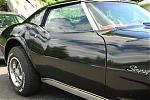
Here are a couple of photos from Summit of the louvers I'm considering. Emailed them for profile info/dimensions but they have not responded.
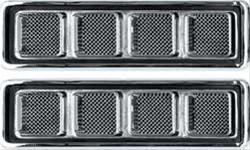
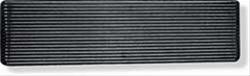
Both for early SS Chevys
I had been hopeful that would fix the problem, but no help.
Currently in the process of moving the coolant overflow tank (making room for cold air intake) and the trans cooler from under the radiator/engine pulley to the area in front of the front passenger wheel well.
The hood hinges above the radiator and I'll be proping it open 5-6" next time out. The license plate/mount has been removed.
Here are a couple of photos from Summit of the louvers I'm considering. Emailed them for profile info/dimensions but they have not responded.
Both for early SS Chevys
Thread Starter
Melting Slicks
Joined: Apr 2010
Posts: 2,790
Likes: 108
From: On the coast North of SF bay
OK, nearing the end of this saga and may end up with a new/rebuilt radiator... but there is one nagging detail that keeps coming back to haunt me.
Has anyone ever installed a cam one tooth off? What was the result of that error? Did the engine run well? What other anomalies were evident?
Don't know who built this 350, but early on I had the timing gearset open/off and it appeared to be ok - I actually removed the cam drive gear hoping that there would be some info about the grind/cut on the end. but no luck on that. The reason for removing the cover was a front seal leak.
Before reinstalling everything, I set number one piston to TDC and checke the dots.
Has anyone ever installed a cam one tooth off? What was the result of that error? Did the engine run well? What other anomalies were evident?
Don't know who built this 350, but early on I had the timing gearset open/off and it appeared to be ok - I actually removed the cam drive gear hoping that there would be some info about the grind/cut on the end. but no luck on that. The reason for removing the cover was a front seal leak.
Before reinstalling everything, I set number one piston to TDC and checke the dots.

Melting Slicks
Joined: Jul 2006
Posts: 2,291
Likes: 492
From: Salmon Arm, BC
I'm a little late to the party here, but have read all the replys and have myself had cooling problems with my corvette and some other cars I've had....I feel your pain.
From what you describe, I bet your rad is plugged up. I know you said your frustrated with rad shops, but you should try to find a small owner operated shop, and have him remove one of the end caps while your there, and you can see firsthand whats inside there. If its all plugged up, have him recore it.
If it's possible to first take the hood right off and go for a blast down the highway that could confirm or dispell an airflow problem.
Hope you find a solution....
From what you describe, I bet your rad is plugged up. I know you said your frustrated with rad shops, but you should try to find a small owner operated shop, and have him remove one of the end caps while your there, and you can see firsthand whats inside there. If its all plugged up, have him recore it.
If it's possible to first take the hood right off and go for a blast down the highway that could confirm or dispell an airflow problem.
Hope you find a solution....
Thread Starter
Melting Slicks
Joined: Apr 2010
Posts: 2,790
Likes: 108
From: On the coast North of SF bay
I'm a little late to the party here, but have read all the replys and have myself had cooling problems with my corvette and some other cars I've had....I feel your pain.
From what you describe, I bet your rad is plugged up. I know you said your frustrated with rad shops, but you should try to find a small owner operated shop, and have him remove one of the end caps while your there, and you can see firsthand whats inside there. If its all plugged up, have him recore it.
If it's possible to first take the hood right off and go for a blast down the highway that could confirm or dispell an airflow problem.
Hope you find a solution....
From what you describe, I bet your rad is plugged up. I know you said your frustrated with rad shops, but you should try to find a small owner operated shop, and have him remove one of the end caps while your there, and you can see firsthand whats inside there. If its all plugged up, have him recore it.
If it's possible to first take the hood right off and go for a blast down the highway that could confirm or dispell an airflow problem.
Hope you find a solution....
Have one more test to perform with an infrared meter to scan the fins looking for anomalous cold/hot spots.
Will pull the radiator and have it flow tested - if it tests bad, looks like I may have 3 options. Rod it, recore it or have a custom aluminum radiator made.

Race Director
Joined: Mar 2006
Posts: 14,112
Likes: 28
From: Florida
Did you try the temps driving with the hood propped up?
Just for fun, next time you have the coolant drained, pull the 2 1/4"npt block drain plugs. Will give you a good idea if the block is crudded up.
Post some picks of the new expansion tank and hoses setup.
Just for fun, next time you have the coolant drained, pull the 2 1/4"npt block drain plugs. Will give you a good idea if the block is crudded up.
Post some picks of the new expansion tank and hoses setup.
Thread Starter
Melting Slicks
Joined: Apr 2010
Posts: 2,790
Likes: 108
From: On the coast North of SF bay
Yesterday's test was with the vacuum advance removed – going to check the timing and if it is still as I last recorded it, I’ll reconnect the vacuum and try it again.
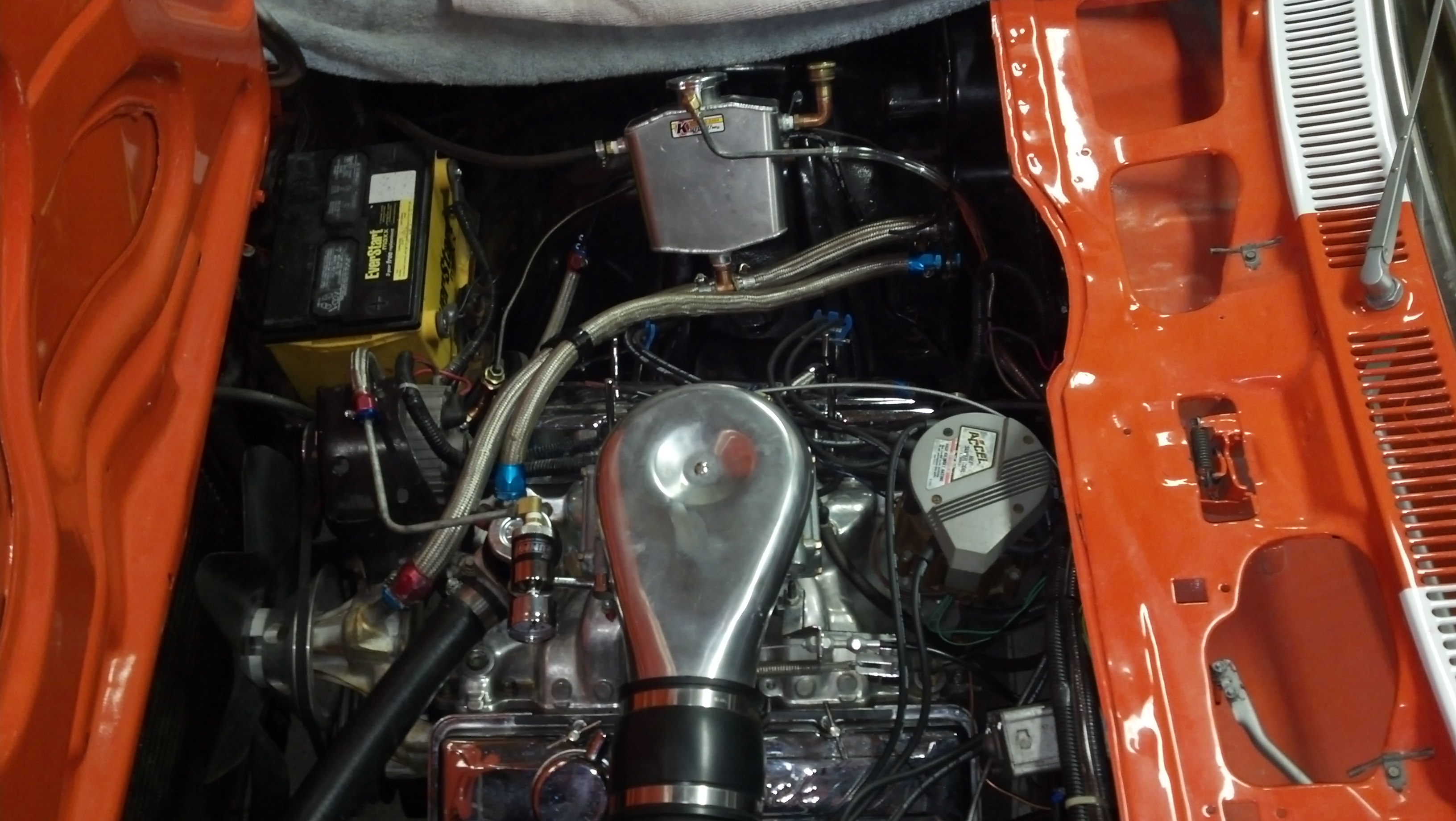
Here’s the expansion tank:
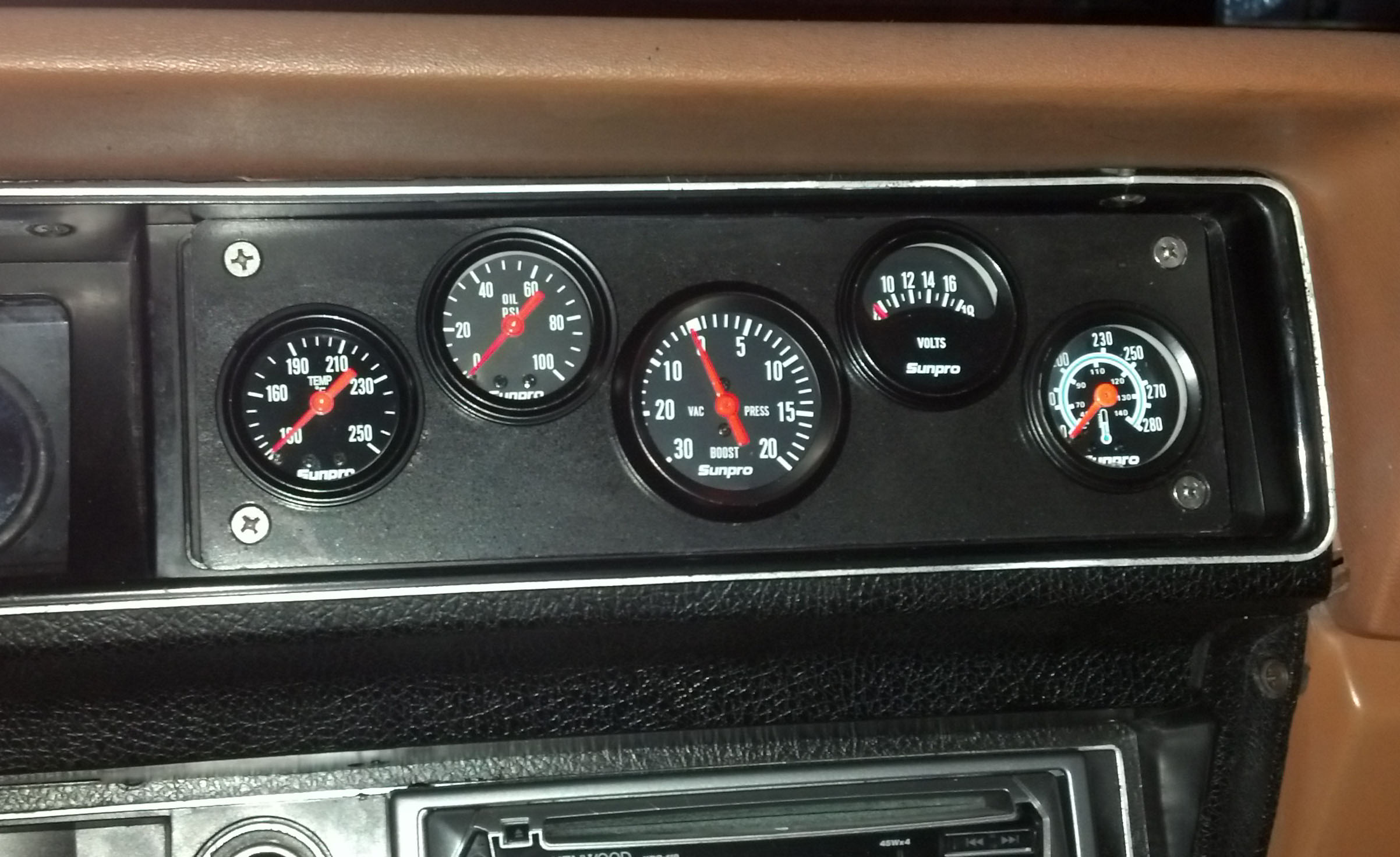
And here’s a recently installed gauge cluster:
Thread Starter
Melting Slicks
Joined: Apr 2010
Posts: 2,790
Likes: 108
From: On the coast North of SF bay
Have looked for those engine plugs previously and never found them - looked again a minute ago and found a plug like allen head on the passenger side center near the pan, but couldn't see one on the other side??? Does the allen head fitting fit the description of what you know to be the drain plug?
FWIW, the freeze plugs appear fresh and newer - certainly not 40 years old. The engine was said to be built by Britco in WA state, so it is likely they boiled it out???
Thanks again,
Nick
FWIW, the freeze plugs appear fresh and newer - certainly not 40 years old. The engine was said to be built by Britco in WA state, so it is likely they boiled it out???
Thanks again,
Nick
Last edited by pcguy2u; Jul 12, 2013 at 12:19 PM.
Instructor
Joined: Dec 2012
Posts: 118
Likes: 2
From: rancho cucamonga ca
I had a 71 v8 vega back in the late 70"s, 302 no electric fan, no hood vents, ran gm water pump and a flex fan. not a problem even thru the desert. how big is the motor bored, this could be a problem and try using one fan, get rid of the push fan. Have fun with the car, they are a blast!! by the way mooneyes makes a vert. tank that should fit
Race Director
Joined: Mar 2006
Posts: 14,112
Likes: 28
From: Florida
Good pics
I assume that copper elbow on the right of the exp tank is just a hose fill fitting.
While it's still roadworthy, try capping off the heater line from the expansion tank to the heater. That should prevent some hot coolant from bypassing the rad. And always record upper and lower rad port temps with each trail.
What brand and type of water pump is it?
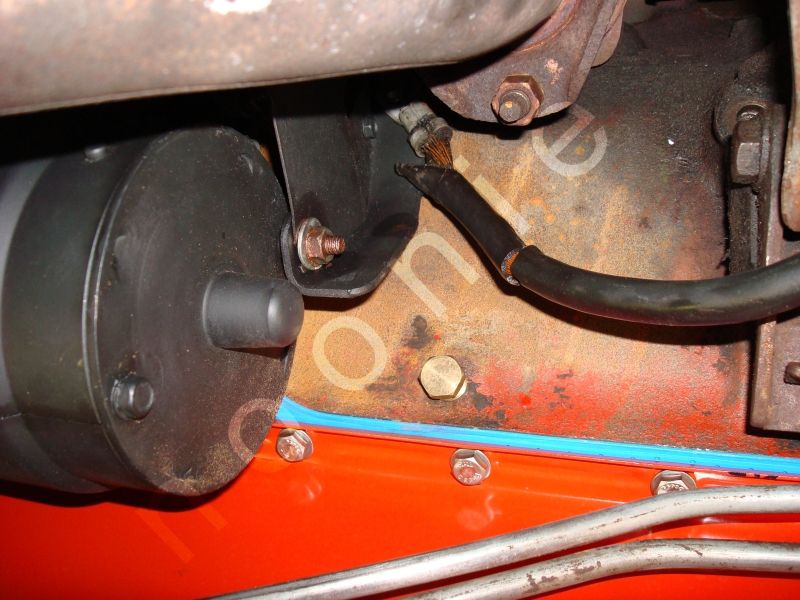
Here is a pic of the pass side plug (brass hexhead)
And while I'm in Photobucket, here is the compartment hood vents in an original Shelby. A lot of cars had them including C3s, Vipers, new Ford trucks etc, so air extraction is somewhat important.

Racing Corvette


I assume that copper elbow on the right of the exp tank is just a hose fill fitting.
While it's still roadworthy, try capping off the heater line from the expansion tank to the heater. That should prevent some hot coolant from bypassing the rad. And always record upper and lower rad port temps with each trail.
What brand and type of water pump is it?
Here is a pic of the pass side plug (brass hexhead)
And while I'm in Photobucket, here is the compartment hood vents in an original Shelby. A lot of cars had them including C3s, Vipers, new Ford trucks etc, so air extraction is somewhat important.
Racing Corvette
Thread Starter
Melting Slicks
Joined: Apr 2010
Posts: 2,790
Likes: 108
From: On the coast North of SF bay
I had a 71 v8 vega back in the late 70"s, 302 no electric fan, no hood vents, ran gm water pump and a flex fan. not a problem even thru the desert. how big is the motor bored, this could be a problem and try using one fan, get rid of the push fan. Have fun with the car, they are a blast!! by the way mooneyes makes a vert. tank that should fit
Thanks for that. Do you have a number or link for that radiator - assuming it's a vertical radiator you're referring to?