












Balancer installation question

Thread Starter
Melting Slicks


Joined: Mar 2008
Posts: 2,023
Likes: 6
From: Austin Tx
 Balancer installation question
My balancer started to slip, I started to smell some burnt rubber, and I noticed the timing mark was off.
I used a puller, and managed to remove the old balancer without any problem - the outer portion was about 3/4 an inch off the inner.
My question is - how do I stop the engine was turning so I can install the balancer?
I used a puller, and managed to remove the old balancer without any problem - the outer portion was about 3/4 an inch off the inner.
My question is - how do I stop the engine was turning so I can install the balancer?

Le Mans Master


Joined: Oct 2006
Posts: 7,123
Likes: 433
From: Gladstone MO
C3 of Year Finalist (appearance mods) 2019
Manual trans- put it in gear and set the brakes.
Auto trans, remove the cover from the flexplate/convertor and wedge it with a prybar or big screwdriver.
Auto trans, remove the cover from the flexplate/convertor and wedge it with a prybar or big screwdriver.
Corvette Stories
The Best of Corvette for Corvette Enthusiasts

150 hp to 1,250 hp: Every Corvette Generation Compared by the Specs That Matter
Joe Kucinski
8 Coolest Corvette Pace Cars (and Replicas) of All Time
Verdad Gallardo
Top 10 Corvette Engines RANKED by Peak Torque (70+ Years of Muscle!)
Joe Kucinski
Corvette ZR1X Will Be Pacing the Indy 500, And Could Probably Race, Too!
Verdad Gallardo
Top 10 Corvettes Coming to Mecum Indy 2026!
Brett Foote
Top 10 C9 Corvette MUST-HAVES to Fix These C8 Generation Flaws!
Michael S. Palmer
10 Revolutionary 'Corvette Firsts' Most People Don't Know
Joe Kucinski
5 Reasons to Upgrade to an LS6-Powered Corvette; 5 Reasons to Stay LT2
Michael S. Palmer
2027 Corvette vs The World: Every C8 vs Its Closest Competitor
Joe Kucinski
Advanced


Joined: Nov 2002
Posts: 58
Likes: 0
From: Mill Hall PA
It sounds like you are trying to use the retaining bolt to install the damper. Use this tool and avoid the extra work in trying to hold the engine. The retaining bolt is not meant to pull the damper on. And whatever you do, don't hammer on the damper unless you want to destroy the crankshaft thrust bearing.

Drifting


Joined: Jun 2013
Posts: 1,269
Likes: 226
From: Cocoa FL
It sounds like you are trying to use the retaining bolt to install the damper. Use this tool and avoid the extra work in trying to hold the engine. The retaining bolt is not meant to pull the damper on. And whatever you do, don't hammer on the damper unless you want to destroy the crankshaft thrust bearing.
 You really should be using an installation tool, not the bolt that holds it.

Racer
Joined: Feb 2012
Posts: 261
Likes: 3
From: Clawson Michigan
Here is a tool to hold the flywheel while you torque the balancer bolt.
http://www.ebay.com/itm/Flywheel-Turner-Turning-Tool-Wrench-Flex-Plate-Holder-For-Most-Vehicles-/261127332579?pt=Motors_Automotive_Tools&hash=item3ccc66e2e3&vxp=mtr
http://www.ebay.com/itm/Flywheel-Turner-Turning-Tool-Wrench-Flex-Plate-Holder-For-Most-Vehicles-/261127332579?pt=Motors_Automotive_Tools&hash=item3ccc66e2e3&vxp=mtr

Melting Slicks
Joined: Dec 2009
Posts: 3,225
Likes: 654
From: Thunder Bay
I use the correct tool as shown above and an impact wrench. The engine doesn't turn. I also throw the damper in the oven at about 170 degrees for about a half hour (when my wife isn't home) before I install it.
Thread Starter
Melting Slicks
Joined: Mar 2008
Posts: 2,023
Likes: 6
From: Austin Tx
Sorry, I should have mentioned that it is an automatic, and I have the installation tool. And yes, "was" should have been "from" in the original post - I'm on my phone, and not sure how autocorrect came up with that.
I was considering using a TDC stop, but was afraid of damaging the piston. I wasnt sure if that was the correct way to stop the engine from turning. I imagine there is a LOT of force being exerted on the crank when turning the installation nut.
I'm feeling a bit more comfortable with the idea of the prybar in the flexplate method, but wanted to hear what people who have actually done the job have done. Does anyone know of a con of this method versus a piston stop? I'm guessing the screwdriver should go between the flexplate and starter gears?
I was considering using a TDC stop, but was afraid of damaging the piston. I wasnt sure if that was the correct way to stop the engine from turning. I imagine there is a LOT of force being exerted on the crank when turning the installation nut.
I'm feeling a bit more comfortable with the idea of the prybar in the flexplate method, but wanted to hear what people who have actually done the job have done. Does anyone know of a con of this method versus a piston stop? I'm guessing the screwdriver should go between the flexplate and starter gears?
Last edited by Mashman; Feb 10, 2014 at 04:11 AM.
Thread Starter
Melting Slicks
Joined: Mar 2008
Posts: 2,023
Likes: 6
From: Austin Tx
Here is a tool to hold the flywheel while you torque the balancer bolt.
Flywheel Turner Turning Tool Wrench Flex Plate Holder for Most Vehicles | eBay
Flywheel Turner Turning Tool Wrench Flex Plate Holder for Most Vehicles | eBay

Team Owner


Joined: Apr 1999
Posts: 21,953
Likes: 1,445
From: Reno Nevada
2024 C3 of the Year Finalist- Modified
Sorry, I should have mentioned that it is an automatic, and I have the installation tool. And yes, "was" should have been "from" in the original post - I'm on my phone, and not sure how autocorrect came up with that.
I was considering using a TDC stop, but was afraid of damaging the piston. I wasnt sure if that was the correct way to stop the engine from turning. I imagine there is a LOT of force being exerted on the crank when turning the installation nut.
I'm feeling a bit more comfortable with the idea of the prybar in the flexplate method, but wanted to hear what people who have actually done the job have done. Does anyone know of a con of this method versus a piston stop? I'm guessing the screwdriver should go between the flexplate and starter gears?
I was considering using a TDC stop, but was afraid of damaging the piston. I wasnt sure if that was the correct way to stop the engine from turning. I imagine there is a LOT of force being exerted on the crank when turning the installation nut.
I'm feeling a bit more comfortable with the idea of the prybar in the flexplate method, but wanted to hear what people who have actually done the job have done. Does anyone know of a con of this method versus a piston stop? I'm guessing the screwdriver should go between the flexplate and starter gears?

Team Owner
Joined: Mar 2002
Posts: 24,160
Likes: 78
The torque spec for a gen 1 balancer is only 85 ft-lbs. If the spark plugs are in, I don't think you're going to turn the engine over (much). I've never done anything special or used any particular tool for installing gen 1 balancers ... manual nor auto. 
Thread Starter
Melting Slicks
Joined: Mar 2008
Posts: 2,023
Likes: 6
From: Austin Tx
I'm a bit confused. Since the install tool screws into the crankshaft nose, and then you use the large nut to draw the balancer on, what is supposed to keep the crankshaft from turning?
Team Owner
Joined: Apr 1999
Posts: 21,953
Likes: 1,445
From: Reno Nevada
2024 C3 of the Year Finalist- Modified
Like the picture of the tool in the above post. the tool has rotating spacers between the nut and the damper. The nut spins down not the damper and crank. This forum has posters that have probably never done these jobs.
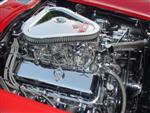
this is picture of assembling my 427. I have a black impact socket on the front of the tool and I just ran down this ATI super Damper. No piston stops or something Holding the back of the crank.

Thread Starter
Melting Slicks
Joined: Mar 2008
Posts: 2,023
Likes: 6
From: Austin Tx
Like the picture of the tool in the above post. the tool has rotating spacers between the nut and the damper. The nut spins down not the damper and crank. This forum has posters that have probably never done these jobs.
this is picture of assembling my 427. I have a black impact socket on the front of the tool and I just ran down this ATI super Damper. No piston stops or something Holding the back of the crank.
this is picture of assembling my 427. I have a black impact socket on the front of the tool and I just ran down this ATI super Damper. No piston stops or something Holding the back of the crank.
I think I see the confusion.
If I understand correctly, you have a socket on the end of the tool, and while holding the socket, you tighten the nut, which runs down the rod, pushing the damper as it goes - is that correct?
If that's correct, what would you do if the engine is in the car, and you can't get a socket, or wrench, on the end of the tool?

Melting Slicks
Joined: Nov 2010
Posts: 2,216
Likes: 113
From: Michigan
LOL I broke two of those tools in a row! 1st I had used once before and the part that goes into he crank necked down too almost nothing(cheap tool, metal was junk). It seemed to be never ending and when I pulled the tool too check, I saw the almost bad time. Went out got a rent a tool too finish the job and that one snapped right off in the crank just as it got tight, but the end was loose after the break and I was able too get it out with ,my fingers. 3rd tool(a brand new one) I finished it and made sure it was nice and snug.