




Brake problem here
Thread Starter
Racer

Joined: Jan 2014
Posts: 407
Likes: 14
From: Mulberry Florida
 Brake problem here
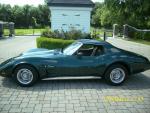
Hello again, I'm posting for about the third time so be kind to me.I'm still learning how to do it thanks. I took the car out today to get some picture and problem came up with the brakes, the brake light on the dash came on. I got the car home to see what might be the problem. I could not see any fluid on any inside of the tiers or the calipers from just laying on the ground. I checked the master cylinder and it was full, no leaks under the hood. Will the light come on if the brake pads are worn down? I thought if I could see fluid then I would have idea the problem. The pedals does go down pretty far to the floor like it is low on fluid, or air in the line. But if that was the case there should fluid leaking some where for air, or to be low on fluid. The hoses look to be new, so I don't think they are the problem. Thanks for any help to solve this . Larry

Racer

Joined: Feb 2007
Posts: 337
Likes: 1
From: Clyde Ohio
If the pedal is going down far don't drive it anymore till you figure out the problem. Take the wheels off and inspect the brakes better, follow EVERY line from front to back not just bending down and looking for a puddle. Get a light and follow the lines and inspect them thoroughly. Yes air will get in the lines from setting all winter also. If you don't see any leaks inspect the pads for thickness, do a brake bleed see if that'll help.

Le Mans Master

Joined: Aug 2006
Posts: 7,426
Likes: 1,559
From: mount holly NC
2025 c3 ('74-'82) of the Year Finalist - Unmodified
2019 C3 of Year Finalist (appearance mods)
Welcome again,
Bleed the brakes and note which caliper gives up the most air.
If this gives you a good pedal then drive cautiously and if the pedal goes down again check for rotor run out.
If you have too much run out either from a warped rotor or falling bearings the pistons suck air in and you get a low pedal but no leaks.
If this gives you a good pedal then drive cautiously and if the pedal goes down again check for rotor run out.
If you have too much run out either from a warped rotor or falling bearings the pistons suck air in and you get a low pedal but no leaks.
Thread Starter
Racer
Joined: Jan 2014
Posts: 407
Likes: 14
From: Mulberry Florida
larry
Thanks tak82 & petes74 I will check and see. I have had the car for two years and drive it about every weekend to car shows, this is the first time I had problem with the brakes. I still can't figure why the brake light came on and stayed. I guess like you all have said there is always something that will go wrong with these cars. But it is worth it in the end. Thanks again to the both of you.
Bleed the brakes and note which caliper gives up the most air.
If this gives you a good pedal then drive cautiously and if the pedal goes down again check for rotor run out.
If you have too much run out either from a warped rotor or falling bearings the pistons suck air in and you get a low pedal but no leaks.
If this gives you a good pedal then drive cautiously and if the pedal goes down again check for rotor run out.
If you have too much run out either from a warped rotor or falling bearings the pistons suck air in and you get a low pedal but no leaks.

Race Director


Joined: Apr 2009
Posts: 19,294
Likes: 2,754
From: Charlotte NC
Because you have air in the system...or your hand brake light circuit is grounded out.
Once you bleed your brakes and get the light out...do yourself a favor and note the mileage.
The reason being...if you have NO LEAKS or loss of fluid in the master cylinder...then your calipers are sucking in air.
The mileage will let you know how severe something is off. So 50 miles later the brake light comes on...it will be something that can be found easily and tolerances will be off a lot. Is it is 5000 miles...then it is going to be something really small and be hard to find.
Remember...your brake system is NOT like most other cars. The wheel bearing run-out and the rotor run-out MAKE A BIG DIFFERENCE...and should be in the designed tolerances...or you can have what you have now....a brake light on. NOT writing that is what it is...but I encounter it a lot every year on Corvettes.
DUB
Once you bleed your brakes and get the light out...do yourself a favor and note the mileage.
The reason being...if you have NO LEAKS or loss of fluid in the master cylinder...then your calipers are sucking in air.
The mileage will let you know how severe something is off. So 50 miles later the brake light comes on...it will be something that can be found easily and tolerances will be off a lot. Is it is 5000 miles...then it is going to be something really small and be hard to find.
Remember...your brake system is NOT like most other cars. The wheel bearing run-out and the rotor run-out MAKE A BIG DIFFERENCE...and should be in the designed tolerances...or you can have what you have now....a brake light on. NOT writing that is what it is...but I encounter it a lot every year on Corvettes.
DUB
Thread Starter
Racer
Joined: Jan 2014
Posts: 407
Likes: 14
From: Mulberry Florida
Because you have air in the system...or your hand brake light circuit is grounded out.
Once you bleed your brakes and get the light out...do yourself a favor and note the mileage.
The reason being...if you have NO LEAKS or loss of fluid in the master cylinder...then your calipers are sucking in air.
The mileage will let you know how severe something is off. So 50 miles later the brake light comes on...it will be something that can be found easily and tolerances will be off a lot. Is it is 5000 miles...then it is going to be something really small and be hard to find.
Remember...your brake system is NOT like most other cars. The wheel bearing run-out and the rotor run-out MAKE A BIG DIFFERENCE...and should be in the designed tolerances...or you can have what you have now....a brake light on. NOT writing that is what it is...but I encounter it a lot every year on Corvettes.
DUB
Once you bleed your brakes and get the light out...do yourself a favor and note the mileage.
The reason being...if you have NO LEAKS or loss of fluid in the master cylinder...then your calipers are sucking in air.
The mileage will let you know how severe something is off. So 50 miles later the brake light comes on...it will be something that can be found easily and tolerances will be off a lot. Is it is 5000 miles...then it is going to be something really small and be hard to find.
Remember...your brake system is NOT like most other cars. The wheel bearing run-out and the rotor run-out MAKE A BIG DIFFERENCE...and should be in the designed tolerances...or you can have what you have now....a brake light on. NOT writing that is what it is...but I encounter it a lot every year on Corvettes.
DUB
Larry

Melting Slicks


Joined: Apr 2004
Posts: 2,008
Likes: 38
From: Space Coast Gator Territory
Thanks Dub for the help, I will have to check and what the problem is. The hardest thing is jacking the car up on all four. I have read where guys jack the car up and put jack stands, but I'm trying to visualize how to do it and keep the car from falling of the stands when I jack up the other side. I really thank you for the help, I see you always respond to someone problem thanks.
Larry
Larry
http://www.ebay.com/itm/like/400678700905?lpid=82
Thread Starter
Racer
Joined: Jan 2014
Posts: 407
Likes: 14
From: Mulberry Florida
I used to put a floor jack under each control arm and jack the front simultaneously using both jacks in unison. Then I became aware of this tool, new to me at the time and bought one. It works best in conjunction with ramps, or 2 X 10 steps to raise the front for jack clearance. The jack will only require a few inches for clearance. Place this tool on your jack pad and adjust so the beam arms under the lower control arms. This will enable you to lift the entire front at one time and evenly. Once to the height you require, place the jack stands under the control arms, I usually place a rubber pad on the stand to keep from harming my paint there. Here is the cross beam:
2 Ton Capacity Cross Beam Adapter Fits Floor Jack 4000 lb Extends 28” to 40” | eBay
2 Ton Capacity Cross Beam Adapter Fits Floor Jack 4000 lb Extends 28” to 40” | eBay
Larry
Corvette Stories
The Best of Corvette for Corvette Enthusiasts

Top 10 Most Expensive Corvettes Ever Sold on Bring A Trailer
Brett Foote
10 Things Every Corvette Owner Needs (2026 Edition)
Michael S. Palmer
8 Most "Only Corvette Owners Understand" Quirks and Problems
Pouria Savadkouei
10 Reasons the C6 Z06 is Still A Performance Benchmark After 20 Years
Joe Kucinski
How Much Horsepower Every Corvette Engine "LOST" in 1972
Joe Kucinski
Top 10 DOs and DON'Ts for Protecting Your Convertible Top!
Michael S. Palmer
Top 10 Most Explosive Corvettes Ever Made: Power-to-Weight Ratio Ranked!
Joe Kucinski
150 hp to 1,250 hp: Every Corvette Generation Compared by the Specs That Matter
Joe Kucinski
8 Coolest Corvette Pace Cars (and Replicas) of All Time
Verdad Gallardo
Le Mans Master
Joined: Oct 2007
Posts: 7,453
Likes: 976
From: RI, Now Franklin/Nashville TN
The brakes are really not that hard to deal with if you have a sense of what to look for:
1. Leaks from the calipers or lines
2. Air getting into the system from the calipers, usually a rotor runout issue or sometimes bad seals on the calipers. My regular OEM type seals-SS calipers- have been on my car since 1985 with zero issues. Change the brake fluid every 2-3 years, religiously.I had the brake pedal go to the floor once after hammering away at a Lower ball joint for removal-air got past the seal in the caliper, as an example. Rebled and no issues!
3. Bad master cylinder will also cause a soft brake pedal.
Hope that helps!
1. Leaks from the calipers or lines
2. Air getting into the system from the calipers, usually a rotor runout issue or sometimes bad seals on the calipers. My regular OEM type seals-SS calipers- have been on my car since 1985 with zero issues. Change the brake fluid every 2-3 years, religiously.I had the brake pedal go to the floor once after hammering away at a Lower ball joint for removal-air got past the seal in the caliper, as an example. Rebled and no issues!
3. Bad master cylinder will also cause a soft brake pedal.
Hope that helps!
Thread Starter
Racer
Joined: Jan 2014
Posts: 407
Likes: 14
From: Mulberry Florida
The brakes are really not that hard to deal with if you have a sense of what to look for:
1. Leaks from the calipers or lines
2. Air getting into the system from the calipers, usually a rotor runout issue or sometimes bad seals on the calipers. My regular OEM type seals-SS calipers- have been on my car since 1985 with zero issues. Change the brake fluid every 2-3 years, religiously.I had the brake pedal go to the floor once after hammering away at a Lower ball joint for removal-air got past the seal in the caliper, as an example. Rebled and no issues!
3. Bad master cylinder will also cause a soft brake pedal.
Hope that helps!
1. Leaks from the calipers or lines
2. Air getting into the system from the calipers, usually a rotor runout issue or sometimes bad seals on the calipers. My regular OEM type seals-SS calipers- have been on my car since 1985 with zero issues. Change the brake fluid every 2-3 years, religiously.I had the brake pedal go to the floor once after hammering away at a Lower ball joint for removal-air got past the seal in the caliper, as an example. Rebled and no issues!
3. Bad master cylinder will also cause a soft brake pedal.
Hope that helps!
Thanks!
Larry
Race Director
Joined: Apr 2009
Posts: 19,294
Likes: 2,754
From: Charlotte NC
I do not know if this will help...but along with my past post....which is a "beginning point" of information. mainly dealing with you bleeding the system and noting your mileage and then drive the car and either have no problems or have the light come back on again.
I would remove the master cylinder from the booster with the lines still attached and see if the master cylinder is leaking in the back...but usually it will leak out the bottom and you can see that....and you stating that you were not low on fluid...I doubt that is is the master cylinder. If I were doing it and the master cylinder was dry. I would begin to bleed the system
When bleeding the system...keep a close eye on the clear plastic tube that will show that you have air in that particular caliper.
I have a brake system pressure gauge where I can check the pressure that the master cylinder is producing....which...when I open up the system after bleeding...I check and verify that the master cylinder is OK....then bleed the system again...which is not an issue due to have a pressure bleeder.
Then with the rotor minimal thickness and run-outs and bearing run-outs checked and in designed limits...I drive it and give it back to the customer. More time will be spend in getting your run-out in designed limits than anywhere else...from what I have experienced....and IF these are not checked and repaired if they are out...you will be more than likely looking a brake light again and a mooshy pedal. Especially if you have lipped seal calipers ...versus...the "O"-ring style.
DUB
I would remove the master cylinder from the booster with the lines still attached and see if the master cylinder is leaking in the back...but usually it will leak out the bottom and you can see that....and you stating that you were not low on fluid...I doubt that is is the master cylinder. If I were doing it and the master cylinder was dry. I would begin to bleed the system
When bleeding the system...keep a close eye on the clear plastic tube that will show that you have air in that particular caliper.
I have a brake system pressure gauge where I can check the pressure that the master cylinder is producing....which...when I open up the system after bleeding...I check and verify that the master cylinder is OK....then bleed the system again...which is not an issue due to have a pressure bleeder.
Then with the rotor minimal thickness and run-outs and bearing run-outs checked and in designed limits...I drive it and give it back to the customer. More time will be spend in getting your run-out in designed limits than anywhere else...from what I have experienced....and IF these are not checked and repaired if they are out...you will be more than likely looking a brake light again and a mooshy pedal. Especially if you have lipped seal calipers ...versus...the "O"-ring style.
DUB
Thread Starter
Racer
Joined: Jan 2014
Posts: 407
Likes: 14
From: Mulberry Florida
I do not know if this will help...but along with my past post....which is a "beginning point" of information. mainly dealing with you bleeding the system and noting your mileage and then drive the car and either have no problems or have the light come back on again.
I would remove the master cylinder from the booster with the lines still attached and see if the master cylinder is leaking in the back...but usually it will leak out the bottom and you can see that....and you stating that you were not low on fluid...I doubt that is is the master cylinder. If I were doing it and the master cylinder was dry. I would begin to bleed the system
When bleeding the system...keep a close eye on the clear plastic tube that will show that you have air in that particular caliper.
I have a brake system pressure gauge where I can check the pressure that the master cylinder is producing....which...when I open up the system after bleeding...I check and verify that the master cylinder is OK....then bleed the system again...which is not an issue due to have a pressure bleeder.
Then with the rotor minimal thickness and run-outs and bearing run-outs checked and in designed limits...I drive it and give it back to the customer. More time will be spend in getting your run-out in designed limits than anywhere else...from what I have experienced....and IF these are not checked and repaired if they are out...you will be more than likely looking a brake light again and a mooshy pedal. Especially if you have lipped seal calipers ...versus...the "O"-ring style.
DUB
I would remove the master cylinder from the booster with the lines still attached and see if the master cylinder is leaking in the back...but usually it will leak out the bottom and you can see that....and you stating that you were not low on fluid...I doubt that is is the master cylinder. If I were doing it and the master cylinder was dry. I would begin to bleed the system
When bleeding the system...keep a close eye on the clear plastic tube that will show that you have air in that particular caliper.
I have a brake system pressure gauge where I can check the pressure that the master cylinder is producing....which...when I open up the system after bleeding...I check and verify that the master cylinder is OK....then bleed the system again...which is not an issue due to have a pressure bleeder.
Then with the rotor minimal thickness and run-outs and bearing run-outs checked and in designed limits...I drive it and give it back to the customer. More time will be spend in getting your run-out in designed limits than anywhere else...from what I have experienced....and IF these are not checked and repaired if they are out...you will be more than likely looking a brake light again and a mooshy pedal. Especially if you have lipped seal calipers ...versus...the "O"-ring style.
DUB
Thanks again Dub!
Larry