




383 timing question

Thread Starter
Safety Car


Joined: May 2004
Posts: 4,628
Likes: 397
From: Madison Wi

Vacuum is 12.5" at a ~750 RPM idle now. It's a manual, so there is no in-gear idle.
Power valves are on my list to check and replace.
Would a blown power valve cause the problems I'm experiencing?
Last edited by TraceZ; May 17, 2014 at 07:07 PM.
Le Mans Master


Joined: Apr 2011
Posts: 6,284
Likes: 1,171
From: Hermosa
I suppose you could experiment with wiring the mechanical advance so that it cannot move then advance the initial timing until it's happy at idle and see where you are at.
Then if it's over 32* to 34*(as Lars suggested) you could back it down to that.
Then take it for a drive see how it reacts. It would be a lot of timing for WOT off the line, but by maybe 2500 rpm or so it would be ok.
Then if it's over 32* to 34*(as Lars suggested) you could back it down to that.
Then take it for a drive see how it reacts. It would be a lot of timing for WOT off the line, but by maybe 2500 rpm or so it would be ok.
Thread Starter
Safety Car
Joined: May 2004
Posts: 4,628
Likes: 397
From: Madison Wi
I performed this test:
And it passes the test.
If you still suspect the power valve is blown out, start your engine and allow it to idle and get to normal operating temperature. Then, turn the idle mixture screws all the way in. If the engine dies the power valve is not blown.
Racer


Joined: Jan 2005
Posts: 499
Likes: 0
From: Enfield CT
Your heads are good heads, and don't need 36 total timing: They will make best power at 32 - 34 degrees, so you need to back off your total just a tad. Make sure the full total comes in at about 2500 rpm.
If you chose to run without vacuum advance, you need more initial: I would shorten the curve so you can run about 22-24 initial with the 32-34 total. This will require a very short advance curve.
If I were you, I'd consider dropping in a distributor with vacuum advance - you can run one successfully with the amount of vacuum you're pulling: Run a B28 vacuum advance limited to 12 degrees; run 18 degrees initial with 32-34 total. The 18 initial with 12 degrees vacuum will allow the engine to idle at 30 degrees of advance, and it will get you very nice off-idle throttle response (it won't increase peak power, but backing it off to 32-34 total will improve the top end a little with the AFR heads).
Lars
If you chose to run without vacuum advance, you need more initial: I would shorten the curve so you can run about 22-24 initial with the 32-34 total. This will require a very short advance curve.
If I were you, I'd consider dropping in a distributor with vacuum advance - you can run one successfully with the amount of vacuum you're pulling: Run a B28 vacuum advance limited to 12 degrees; run 18 degrees initial with 32-34 total. The 18 initial with 12 degrees vacuum will allow the engine to idle at 30 degrees of advance, and it will get you very nice off-idle throttle response (it won't increase peak power, but backing it off to 32-34 total will improve the top end a little with the AFR heads).
Lars
Thread Starter
Safety Car
Joined: May 2004
Posts: 4,628
Likes: 397
From: Madison Wi
Your heads are good heads, and don't need 36 total timing: They will make best power at 32 - 34 degrees, so you need to back off your total just a tad. Make sure the full total comes in at about 2500 rpm.
If you chose to run without vacuum advance, you need more initial: I would shorten the curve so you can run about 22-24 initial with the 32-34 total. This will require a very short advance curve.
If I were you, I'd consider dropping in a distributor with vacuum advance - you can run one successfully with the amount of vacuum you're pulling: Run a B28 vacuum advance limited to 12 degrees; run 18 degrees initial with 32-34 total. The 18 initial with 12 degrees vacuum will allow the engine to idle at 30 degrees of advance, and it will get you very nice off-idle throttle response (it won't increase peak power, but backing it off to 32-34 total will improve the top end a little with the AFR heads).
Lars
If you chose to run without vacuum advance, you need more initial: I would shorten the curve so you can run about 22-24 initial with the 32-34 total. This will require a very short advance curve.
If I were you, I'd consider dropping in a distributor with vacuum advance - you can run one successfully with the amount of vacuum you're pulling: Run a B28 vacuum advance limited to 12 degrees; run 18 degrees initial with 32-34 total. The 18 initial with 12 degrees vacuum will allow the engine to idle at 30 degrees of advance, and it will get you very nice off-idle throttle response (it won't increase peak power, but backing it off to 32-34 total will improve the top end a little with the AFR heads).
Lars
The black bushing in this MSD dist gives the least amount of mechanical advance, the same as the model I currently have. 18*
If I buy one of these, set the base timing to 16* with the 18* mechanical advance I'll have 34* total advance at WOT.
The 12* vacuum advance connected directly to unported manifold vacuum will then bump the idle to 28* at idle.
Does this sound reasonable?
The MSD vacuum advance kit does not seem to meet these requirements, however.
http://static.summitracing.com/globa...7_frm29618.pdf
To get 12* vacuum advance I'd need to have a maximum of 10.8" vacuum at idle, which is too much compared to the 12.5 I have.
the furthest it could be adjusted would be 15*
16* base plus 15* vacuum would get me 31* advance at idle.
Your thoughts? I was unable to locate a B28 for sale anywhere.

Safety Car
Joined: Jan 2009
Posts: 3,736
Likes: 56
From: anchorage ak
Nice ride. Were did you get the kit from?
I think that 38* is to much timing for the initial and mechanical. When I did the l48 I got the best performance at 32* and the 400" is at 34* but I haven't had it on the dyno to confirm the best timing setting just seat of the pants on the 400" for now. I'm using the light weight springs and have the initial at 21* with 13* advance by 2700 rpm. The more lift and duration the more initial you'll need at idle to burn all the fuel.
I think that 38* is to much timing for the initial and mechanical. When I did the l48 I got the best performance at 32* and the 400" is at 34* but I haven't had it on the dyno to confirm the best timing setting just seat of the pants on the 400" for now. I'm using the light weight springs and have the initial at 21* with 13* advance by 2700 rpm. The more lift and duration the more initial you'll need at idle to burn all the fuel.
Last edited by bluedawg; May 17, 2014 at 10:29 PM.
Thread Starter
Safety Car
Joined: May 2004
Posts: 4,628
Likes: 397
From: Madison Wi
Nice ride. Were did you get the kit from?
I think that 38* is to much timing for the initial and mechanical. When I did the l48 I got the best performance at 32* and the 400" is at 34* but I haven't had it on the dyno to confirm the best timing setting just seat of the pants on the 400" for now. I'm using the light weight springs and have the initial at 21* with 13* advance by 2700 rpm. The more lift and duration the more initial you'll need at idle to burn all the fuel.
I think that 38* is to much timing for the initial and mechanical. When I did the l48 I got the best performance at 32* and the 400" is at 34* but I haven't had it on the dyno to confirm the best timing setting just seat of the pants on the 400" for now. I'm using the light weight springs and have the initial at 21* with 13* advance by 2700 rpm. The more lift and duration the more initial you'll need at idle to burn all the fuel.
The body was hand carved from foam, then built up with fiberglass and filler to make a plug. Then molds were taken off the plug and finally body panels were made using the molds.
The chassis was also entirely hand fabricated.
I'm trying to work all the bugs out of it and make it live up to its full potential.
Last edited by TraceZ; May 18, 2014 at 11:02 AM.
Corvette Stories
The Best of Corvette for Corvette Enthusiasts

Top 10 Most Explosive Corvettes Ever Made: Power-to-Weight Ratio Ranked!
Joe Kucinski
150 hp to 1,250 hp: Every Corvette Generation Compared by the Specs That Matter
Joe Kucinski
8 Coolest Corvette Pace Cars (and Replicas) of All Time
Verdad Gallardo
Top 10 Corvette Engines RANKED by Peak Torque (70+ Years of Muscle!)
Joe Kucinski
Corvette ZR1X Will Be Pacing the Indy 500, And Could Probably Race, Too!
Verdad Gallardo
Top 10 Corvettes Coming to Mecum Indy 2026!
Brett Foote
Top 10 C9 Corvette MUST-HAVES to Fix These C8 Generation Flaws!
Michael S. Palmer
10 Revolutionary 'Corvette Firsts' Most People Don't Know
Joe Kucinski
5 Reasons to Upgrade to an LS6-Powered Corvette; 5 Reasons to Stay LT2
Michael S. Palmer
Thread Starter
Safety Car
Joined: May 2004
Posts: 4,628
Likes: 397
From: Madison Wi
http://www.summitracing.com/parts/cr...a/instructions
it appears this adjustable vacuum advance kit fits in that MSD distributor.
Here is a thread I found discussing it.
http://www.hotrodders.com/forum/msd-...ce-186032.html
it appears this adjustable vacuum advance kit fits in that MSD distributor.
Here is a thread I found discussing it.
http://www.hotrodders.com/forum/msd-...ce-186032.html
Last edited by TraceZ; May 18, 2014 at 01:32 PM.
Thread Starter
Safety Car
Joined: May 2004
Posts: 4,628
Likes: 397
From: Madison Wi
ok, update.
Going with Lars advice I forced it to idle at 30* by removing the weights and springs and wiring the mechanical advance tight.
I put the timing light on it and set the timing to 30* at idle. I readjusted the carb again and it's still smelling pig ritch at idle.
How many turns out on the idle screws is typical? I'm at 2.5 turns out each. I can turn them in a little without impacting the idle vacuum too much, but the last thing I want is richer.
I also notice some play in the distributor/cam gears. Is that normal? When I put my timing light on it the timing jumps around sporadically around 8*. I set it for the lowest 0 reading with my light dialed to 30*.
Going with Lars advice I forced it to idle at 30* by removing the weights and springs and wiring the mechanical advance tight.
I put the timing light on it and set the timing to 30* at idle. I readjusted the carb again and it's still smelling pig ritch at idle.
How many turns out on the idle screws is typical? I'm at 2.5 turns out each. I can turn them in a little without impacting the idle vacuum too much, but the last thing I want is richer.
I also notice some play in the distributor/cam gears. Is that normal? When I put my timing light on it the timing jumps around sporadically around 8*. I set it for the lowest 0 reading with my light dialed to 30*.
Safety Car
Joined: Jan 2009
Posts: 3,736
Likes: 56
From: anchorage ak
ok, update.
Going with Lars advice I forced it to idle at 30* by removing the weights and springs and wiring the mechanical advance tight.
I put the timing light on it and set the timing to 30* at idle. I readjusted the carb again and it's still smelling pig ritch at idle.
How many turns out on the idle screws is typical? I'm at 2.5 turns out each. I can turn them in a little without impacting the idle vacuum too much, but the last thing I want is richer.
I also notice some play in the distributor/cam gears. Is that normal? When I put my timing light on it the timing jumps around sporadically around 8*. I set it for the lowest 0 reading with my light dialed to 30*.
Going with Lars advice I forced it to idle at 30* by removing the weights and springs and wiring the mechanical advance tight.
I put the timing light on it and set the timing to 30* at idle. I readjusted the carb again and it's still smelling pig ritch at idle.
How many turns out on the idle screws is typical? I'm at 2.5 turns out each. I can turn them in a little without impacting the idle vacuum too much, but the last thing I want is richer.
I also notice some play in the distributor/cam gears. Is that normal? When I put my timing light on it the timing jumps around sporadically around 8*. I set it for the lowest 0 reading with my light dialed to 30*.
Le Mans Master
Joined: Mar 2008
Posts: 5,948
Likes: 72
From: Oxford MA-----You just lost the game!!!!
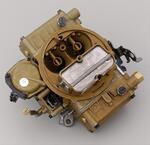
Has this thing sat without running for a long time? You may just need to rebuild the carb. Rebuild kit is pretty cheap, and Holley's are easy to work on.
Scott
Scott

 I love replicas, especially when they have GM engines. I hope to get a Lamborghini replica one day
Racer

Joined: Jul 2008
Posts: 258
Likes: 1
From: Gippsland, VIC Australia
just a fyi- msd recommend not to use a dial back timing light with multi-spark -a search shows they work for somepeople and not others.
if that's a 10 year old pro-billet it probably won't have the protective coating that the newer ones have, they can replace the internals but i'd look at one of the e-curve pro billets -no springs or weights
http://www.msdperformance.com/produc...&terms=E-Curve
if that's a 10 year old pro-billet it probably won't have the protective coating that the newer ones have, they can replace the internals but i'd look at one of the e-curve pro billets -no springs or weights
http://www.msdperformance.com/produc...&terms=E-Curve
Thread Starter
Safety Car
Joined: May 2004
Posts: 4,628
Likes: 397
From: Madison Wi
Thread Starter
Safety Car
Joined: May 2004
Posts: 4,628
Likes: 397
From: Madison Wi
Thread Starter
Safety Car
Joined: May 2004
Posts: 4,628
Likes: 397
From: Madison Wi
just a fyi- msd recommend not to use a dial back timing light with multi-spark -a search shows they work for somepeople and not others.
if that's a 10 year old pro-billet it probably won't have the protective coating that the newer ones have, they can replace the internals but i'd look at one of the e-curve pro billets -no springs or weights
http://www.msdperformance.com/produc...&terms=E-Curve
if that's a 10 year old pro-billet it probably won't have the protective coating that the newer ones have, they can replace the internals but i'd look at one of the e-curve pro billets -no springs or weights
http://www.msdperformance.com/produc...&terms=E-Curve
The timing light seems to be working perfectly. It's just a cheapo one from Harbor Freight.
Thread Starter
Safety Car
Joined: May 2004
Posts: 4,628
Likes: 397
From: Madison Wi
Ok guys!! You ready for the news!!! You are NOT going to believe this.
I pulled the carb and disassembled it.
5 things. I'll save the best for last so don't read ahead and spoil it.
1) There was a thin 1/2" nylon disc on the carb flange that made a dent in the gasket, but didn't appear to be causing a vacuum leak as the gasket had formed to it. Someone must of dropped it there and whoever installed the carb missed it.
2) The throttle cable was in the big eyelet at the top of the throttle lever instead of the smaller one closer in. I'm suspecting the car never saw 100% open throttle. I will verify when re-installing the carb.
3) There is no power valve in the secondary metering block on this carb. the stock jetting is 69front-78rear. Someone put in 72s in the front and 73s in the rear. 73s without a powervalve should of been a problem. You are only supposed to put the same or nealy same jets in all 4 corners if there is a secondary power valve.
4) The secondary throttle blades were adjusted 100% closed. It is my understanding you are supposed to give them a little crack open. This would force it to pull all its idle air from the primaries, where the idle slots are lower and come in sooner. The idle slots on the secondaries are up higher so they can be cracked open without adding fuel to the idle.
and... drumroll....
5) It had a 2.5" power valve in the primaries. With the engine making 12.5" at idle, that power valve would of opened up and run the primaries at idle, resulting in the throat stinging eye watering idle I had.
I pulled the carb and disassembled it.
5 things. I'll save the best for last so don't read ahead and spoil it.
1) There was a thin 1/2" nylon disc on the carb flange that made a dent in the gasket, but didn't appear to be causing a vacuum leak as the gasket had formed to it. Someone must of dropped it there and whoever installed the carb missed it.
2) The throttle cable was in the big eyelet at the top of the throttle lever instead of the smaller one closer in. I'm suspecting the car never saw 100% open throttle. I will verify when re-installing the carb.
3) There is no power valve in the secondary metering block on this carb. the stock jetting is 69front-78rear. Someone put in 72s in the front and 73s in the rear. 73s without a powervalve should of been a problem. You are only supposed to put the same or nealy same jets in all 4 corners if there is a secondary power valve.
4) The secondary throttle blades were adjusted 100% closed. It is my understanding you are supposed to give them a little crack open. This would force it to pull all its idle air from the primaries, where the idle slots are lower and come in sooner. The idle slots on the secondaries are up higher so they can be cracked open without adding fuel to the idle.
and... drumroll....
5) It had a 2.5" power valve in the primaries. With the engine making 12.5" at idle, that power valve would of opened up and run the primaries at idle, resulting in the throat stinging eye watering idle I had.