



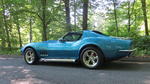


1978 Pace Car Factory Alarm System Problem

Thread Starter
Cruising

Joined: Jun 2014
Posts: 11
Likes: 0
 1978 Pace Car Factory Alarm System Problem
Hey guys,
Im new to the forum and im in despirate need of help, I have tried everything with this, Long story short, Two days ago I drove the car to a show and parked it and set the alarm with the key in the drivers door, This was the first time I ever tried the alarm as I really dont use it at all, About 5 minutes later the security horn starts going of by itself, It kept going off until it blew the fuse for the courtesy lamps, I waited until I got home to investigate it further, Anyway now when I put a new fuse in the horn goes off no matter what, I tried cycling the switch on the door and I can hear the security relay clicking but the horn doesnt stop, I unplugged the horn to stop the alarm from sounding any further, The orange wire coming off the horn I tested with a meter and it has 12 volts all the time now, I tried unplugging the security relay, flasher relay and the wire at the horn wont drop the 12 volts, What could have shorted to give that horn 12 volts all the time with all the relays unplugged????
Im new to the forum and im in despirate need of help, I have tried everything with this, Long story short, Two days ago I drove the car to a show and parked it and set the alarm with the key in the drivers door, This was the first time I ever tried the alarm as I really dont use it at all, About 5 minutes later the security horn starts going of by itself, It kept going off until it blew the fuse for the courtesy lamps, I waited until I got home to investigate it further, Anyway now when I put a new fuse in the horn goes off no matter what, I tried cycling the switch on the door and I can hear the security relay clicking but the horn doesnt stop, I unplugged the horn to stop the alarm from sounding any further, The orange wire coming off the horn I tested with a meter and it has 12 volts all the time now, I tried unplugging the security relay, flasher relay and the wire at the horn wont drop the 12 volts, What could have shorted to give that horn 12 volts all the time with all the relays unplugged????
Thread Starter
Cruising
Joined: Jun 2014
Posts: 11
Likes: 0
Yes all three relays in the center console I unplugged to see if I could get the 12 volts to disappear at the horn, Even with all of them unplugged, The Horn still has 12 volts all the time, Is there anything else that could have shorted that im missing? Is there another relay that I dont know about?
Last edited by 1978Pace; Jun 25, 2014 at 05:03 PM.

Race Director


Joined: Apr 2009
Posts: 19,294
Likes: 2,754
From: Charlotte NC
Hopefully this helps.
AS you have noticed...and I have mentioned that this alarm system is quite worthless other than making noise.
This should make it so you know that you have the correct relay and flasher disconnected.
http://corvetteforum.net/c3/tunedpor.../index24.shtml
DUB
AS you have noticed...and I have mentioned that this alarm system is quite worthless other than making noise.
This should make it so you know that you have the correct relay and flasher disconnected.
http://corvetteforum.net/c3/tunedpor.../index24.shtml
DUB
Thread Starter
Cruising
Joined: Jun 2014
Posts: 11
Likes: 0
Hopefully this helps.
AS you have noticed...and I have mentioned that this alarm system is quite worthless other than making noise.
This should make it so you know that you have the correct relay and flasher disconnected.
http://corvetteforum.net/c3/tunedpor.../index24.shtml
DUB
AS you have noticed...and I have mentioned that this alarm system is quite worthless other than making noise.
This should make it so you know that you have the correct relay and flasher disconnected.
http://corvetteforum.net/c3/tunedpor.../index24.shtml
DUB

Instructor
Joined: Mar 2014
Posts: 104
Likes: 0
From: Frankfort IL
What alarm system is that? Did it come stock? I have an 81 and in the car I found the original instructions, wiring diagram for the UNGBO (sp?) alarm for my car. I could upload it here if anyone might need it...

Race Director

Joined: Oct 2000
Posts: 12,684
Likes: 3,137
From: Shamong, NJ
Have you checked your switches?
You have 5 switches. One under the hood, one for each door (incorporated into the courtesy light switches, installed in the jam, between the door hinges), and one in each rear T-top pin receiver.
Your 81 wiring diagram, won't be of any help to the OP. 1980 and earlier OEM alarms, were strictly a siren, while the 81 factory alarm, included a starter interrupt feature.
You have 5 switches. One under the hood, one for each door (incorporated into the courtesy light switches, installed in the jam, between the door hinges), and one in each rear T-top pin receiver.
Your 81 wiring diagram, won't be of any help to the OP. 1980 and earlier OEM alarms, were strictly a siren, while the 81 factory alarm, included a starter interrupt feature.
Thread Starter
Cruising
Joined: Jun 2014
Posts: 11
Likes: 0
I dont believe I have the T-Top switches as from what I understand that was a late production 78 option, I took one of them off and theres no switch that I can see, My hood switch is bad, the terminals on the switch itself are broke off but the wires are loose there but not touching anything to cause a closed circuit there to sound the alarm, I was going to replace that switch but I dont believe thats whats causing this issue, I checked the door jams switches and disconnected those to see if the horn would stop and it did not so im assuming there still functioning correctly, Also the courtesy lights in the foot wells go out when the doors are closed like their suppose to so I believe their adjusted properly, Im going to connect the security horn and unplug the security relay and see if that stops it, Have these relays been known to stick? Looking at all the wiring under the hood and in the center console it all appears to be in really good shape for its age, Id hate for it to be a wire problem.
Corvette Stories
The Best of Corvette for Corvette Enthusiasts

Top 10 Most Expensive Corvettes Ever Sold on Bring A Trailer
Brett Foote
10 Things Every Corvette Owner Needs (2026 Edition)
Michael S. Palmer
8 Most "Only Corvette Owners Understand" Quirks and Problems
Pouria Savadkouei
10 Reasons the C6 Z06 is Still A Performance Benchmark After 20 Years
Joe Kucinski
How Much Horsepower Every Corvette Engine "LOST" in 1972
Joe Kucinski
Top 10 DOs and DON'Ts for Protecting Your Convertible Top!
Michael S. Palmer
Top 10 Most Explosive Corvettes Ever Made: Power-to-Weight Ratio Ranked!
Joe Kucinski
150 hp to 1,250 hp: Every Corvette Generation Compared by the Specs That Matter
Joe Kucinski
8 Coolest Corvette Pace Cars (and Replicas) of All Time
Verdad Gallardo
Thread Starter
Cruising
Joined: Jun 2014
Posts: 11
Likes: 0
Yes this came with the car, Nothing was ever added after the fact...


Thread Starter
Cruising
Joined: Jun 2014
Posts: 11
Likes: 0
Ok I have some more information that maybe someone can point me into the direction of whats wrong here, I re-attached the wire to the horn and unplugged the Security relay even with that relay unplugged the horn still goes off, Now if I unplug the horn flasher that will stop the horn, Looking in that wire schematic that one member posted for me Im interested into where the Anti Theft Protector switch is as it appears if that switch is remaining closed that will give the circuit a direct path to ground even with the security relay out of the circuit. Does anyone knows where this switch is located? Heres a picture of that wire diagram and the switch in question is circled in red.
Race Director
Joined: Apr 2009
Posts: 19,294
Likes: 2,754
From: Charlotte NC
COME ON.....REALLY.
DID YOU LOOK at and READ ALL the PAGES and DIAGRAMS and ILLUSTRATIONS of the link I posted. The answer is right there. LOOK really close.... NOT in what you posted out of this link. BUT it is CLEARLY telling you where this switch is located.
See if you can find it. HINT: FIGURE D
DUB
DID YOU LOOK at and READ ALL the PAGES and DIAGRAMS and ILLUSTRATIONS of the link I posted. The answer is right there. LOOK really close.... NOT in what you posted out of this link. BUT it is CLEARLY telling you where this switch is located.
See if you can find it. HINT: FIGURE D
DUB
Thread Starter
Cruising
Joined: Jun 2014
Posts: 11
Likes: 0
Ok I appreciate your reply however Im not good with electrical work, So im sorry if I cant follow every diagram and illustration to a T, I take it from your reply that the problem lies in the control switch on the drivers door, Which is where I was suspecting it after todays tests.
Race Director
Joined: Apr 2009
Posts: 19,294
Likes: 2,754
From: Charlotte NC
Ok I appreciate your reply however Im not good with electrical work, So im sorry if I cant follow every diagram and illustration to a T, I take it from your reply that the problem lies in the control switch on the drivers door, Which is where I was suspecting it after todays tests.
I can relate to electrical work. I used to HATE it..now I LOVE it. If you are going to own this type of car...do not be afraid of electrical. Once to take the time to understand how things work...you will soon be able to figure out more than you though you could.
DO not stop asking questions...and sorry about not just giving you the answer. I knew you would find it if you took the time and looked.
DUB
Thread Starter
Cruising
Joined: Jun 2014
Posts: 11
Likes: 0
YES...and it is possible that you might have a tamper switch that is a part of the clip that holds the door lock cylinder in place....which is separate from the switch that is secured to the end of the lock cylinder itself.
I can relate to electrical work. I used to HATE it..now I LOVE it. If you are going to own this type of car...do not be afraid of electrical. Once to take the time to understand how things work...you will soon be able to figure out more than you though you could.
DO not stop asking questions...and sorry about not just giving you the answer. I knew you would find it if you took the time and looked.
DUB
I can relate to electrical work. I used to HATE it..now I LOVE it. If you are going to own this type of car...do not be afraid of electrical. Once to take the time to understand how things work...you will soon be able to figure out more than you though you could.
DO not stop asking questions...and sorry about not just giving you the answer. I knew you would find it if you took the time and looked.
DUB
Race Director
Joined: Apr 2009
Posts: 19,294
Likes: 2,754
From: Charlotte NC
I got the door apart, and there are two switches in there the tamper switch against the lock cylinder as you mentioned and the other switch mounted on the end of the lock cylinder, The harness for those two switches plugs in at the bottom of the door right under the window motor, I unplugged that harness connector and the horn immediatly stopped, So Im pretty sure one of them is the problem, Im replacing both as I just want to be done with this already and not have to worry about it again or take the door apart.
I...personally would use an ohm meter and see which one of these two is/are bad.
The switch that is mounted on the back of the lock cylinder is TOUCHY and has a plastic provision in it which is CRITICAL!!!!! AND this plastic provision can easy break or get stuck on the lock cylinder when you are trying to remove it.
The switch that holds the lock cylinder to the door should be OPEN and NOT having an ohm reading when tested....or being infinite. If when you test it and you get a reading...then the system is 'thinking' that someone is trying to remove the lock cylinder and steal you car...thus set off the alarm.
AS I wrote...and I know it is your car...but this alarm system is so prehistoric.....and does nothing more than make noise.
You have to verify also that the switch at the back of the lock cylinder is doing its job. And I have seen....MANY, MANY, MANY TIMES that the pawl on the pack of the lock cylinder has eaten a groove in the lock cylinder shaft...thus increasing the sweep of the pawls free-play...and thus makes the switch ineffective because of the wear on the shaft of the lock cylinder.
You may also find that when returning the door key to the straight up and down position...so you can remove the key....that the alarm can EASILY be set again...IF you go past the up and down position and cross over to the other side...EVEN JUST A LITTLE BIT...which I have found is due to cylinder wear on the shaft. The alarm switch is fine due to how it is attached...but it has EVERYTHING due to you trying to unlock the door and disarm the alarm...and then turn the cylinder back to remove the key and you re-arm it and basically are trying to lock the door...which is how the wear on the shaft becomes a BIG ISSUE.
Like I tell customers.....when you unlocked the door and disarmed the alarm...when turning the key to get it out...pull on it SLIGHTLY...so when you get it to the point the key will come out....it will come out.....and you do not go PAST THIS POINT...because you can re-set the alarm again and set it off when you open the door.
DUB
Thread Starter
Cruising
Joined: Jun 2014
Posts: 11
Likes: 0
This is not as easy as you may think.
I...personally would use an ohm meter and see which one of these two is/are bad.
The switch that is mounted on the back of the lock cylinder is TOUCHY and has a plastic provision in it which is CRITICAL!!!!! AND this plastic provision can easy break or get stuck on the lock cylinder when you are trying to remove it.
The switch that holds the lock cylinder to the door should be OPEN and NOT having an ohm reading when tested....or being infinite. If when you test it and you get a reading...then the system is 'thinking' that someone is trying to remove the lock cylinder and steal you car...thus set off the alarm.
AS I wrote...and I know it is your car...but this alarm system is so prehistoric.....and does nothing more than make noise.
You have to verify also that the switch at the back of the lock cylinder is doing its job. And I have seen....MANY, MANY, MANY TIMES that the pawl on the pack of the lock cylinder has eaten a groove in the lock cylinder shaft...thus increasing the sweep of the pawls free-play...and thus makes the switch ineffective because of the wear on the shaft of the lock cylinder.
You may also find that when returning the door key to the straight up and down position...so you can remove the key....that the alarm can EASILY be set again...IF you go past the up and down position and cross over to the other side...EVEN JUST A LITTLE BIT...which I have found is due to cylinder wear on the shaft. The alarm switch is fine due to how it is attached...but it has EVERYTHING due to you trying to unlock the door and disarm the alarm...and then turn the cylinder back to remove the key and you re-arm it and basically are trying to lock the door...which is how the wear on the shaft becomes a BIG ISSUE.
Like I tell customers.....when you unlocked the door and disarmed the alarm...when turning the key to get it out...pull on it SLIGHTLY...so when you get it to the point the key will come out....it will come out.....and you do not go PAST THIS POINT...because you can re-set the alarm again and set it off when you open the door.
DUB
I...personally would use an ohm meter and see which one of these two is/are bad.
The switch that is mounted on the back of the lock cylinder is TOUCHY and has a plastic provision in it which is CRITICAL!!!!! AND this plastic provision can easy break or get stuck on the lock cylinder when you are trying to remove it.
The switch that holds the lock cylinder to the door should be OPEN and NOT having an ohm reading when tested....or being infinite. If when you test it and you get a reading...then the system is 'thinking' that someone is trying to remove the lock cylinder and steal you car...thus set off the alarm.
AS I wrote...and I know it is your car...but this alarm system is so prehistoric.....and does nothing more than make noise.
You have to verify also that the switch at the back of the lock cylinder is doing its job. And I have seen....MANY, MANY, MANY TIMES that the pawl on the pack of the lock cylinder has eaten a groove in the lock cylinder shaft...thus increasing the sweep of the pawls free-play...and thus makes the switch ineffective because of the wear on the shaft of the lock cylinder.
You may also find that when returning the door key to the straight up and down position...so you can remove the key....that the alarm can EASILY be set again...IF you go past the up and down position and cross over to the other side...EVEN JUST A LITTLE BIT...which I have found is due to cylinder wear on the shaft. The alarm switch is fine due to how it is attached...but it has EVERYTHING due to you trying to unlock the door and disarm the alarm...and then turn the cylinder back to remove the key and you re-arm it and basically are trying to lock the door...which is how the wear on the shaft becomes a BIG ISSUE.
Like I tell customers.....when you unlocked the door and disarmed the alarm...when turning the key to get it out...pull on it SLIGHTLY...so when you get it to the point the key will come out....it will come out.....and you do not go PAST THIS POINT...because you can re-set the alarm again and set it off when you open the door.
DUB
Race Director
Joined: Apr 2009
Posts: 19,294
Likes: 2,754
From: Charlotte NC
I noticed about that switch being very touchy when I was trying to dis-arm the car as I heard the relay clicking, That plastic piece your talking about was broken off when I removed it from the lock cylinder, I believe this occured when the body shop last year did a repaint on my door and had to remove the lock cylinder from the door, This was the first time this year after that repair on the paint that I had a problem with the Alarm, So my belief is the bodyshop damaged that control switch that attaches to the end of the lock cylinder and didnt replace it....
I have used the control switches from a 1984-1996....but it takes some testing to make sure the switch will work correctly when turned....due to the 84-96 Corvettes position this switch differently than the way yours is currently.
I do quite a lot of alarm repairs on the later C3 Corvettes with power locks and the theft deterrent control modules and starter interrupt/enable relays. And using the 84-96 control switch for the lock cylinders work...but it is not easy and does require some soldering.
DUB
Thread Starter
Cruising
Joined: Jun 2014
Posts: 11
Likes: 0
I noticed that it cant be found anywhere, Not sure about this but the switch assembly on the harness if you buy it new from one of these places would the plastic insert be included with the new unit? In the picture it looks like the plastic piece is included and incorporated in the new switch.
http://www.mamotorworks.com/Corvette...ff-lh-617560-1
http://www.mamotorworks.com/Corvette...ff-lh-617560-1
Last edited by 1978Pace; Jun 30, 2014 at 08:35 AM.
Race Director
Joined: Apr 2009
Posts: 19,294
Likes: 2,754
From: Charlotte NC
I noticed that it cant be found anywhere, Not sure about this but the switch assembly on the harness if you buy it new from one of these places would the plastic insert be included with the new unit? In the picture it looks like the plastic piece is included and incorporated in the new switch.
http://www.mamotorworks.com/Corvette...ff-lh-617560-1
http://www.mamotorworks.com/Corvette...ff-lh-617560-1
DUB