


Corvette Winter Storage ?


Racer


Joined: May 2008
Posts: 404
Likes: 4
From: Keswick Ontario

I store mine up in Barrie in my mother-in-laws garage, and while I'm not an Armageddon type.. there are a couple of extra things I do..so here goes...the full list..
1) Change the oil mid October
2) As mentioned, fill the fuel tank and add stabilizer (let engine run a bit to work the stabilizer through)
3) Add @ 5 to 10 psi extra to each tire (helps to prevent flat spots)
4) Lay down plastic on concrete garage floor (moisture barrier)
5) Open windows a crack (so it can breathe), bounce sheets in back and on the floor
6) Use Fogging Agent spray down carburetor as per instructions
7) Remove battery
8) Stuff old socks into tailpipes
9) I have a lightweight nylon cover I then place over it
10) Leave it alone
In the spring, I put the battery on a charger day before I'm about to bring it back out. Install battery, remove socks from tailpipe, remove excess air from tires, start it up, and away I go !!
(Oh, and due to the deal I get, I have to clean out the garage..but you probably won't have to do that part!)
-Stephen
1) Change the oil mid October
2) As mentioned, fill the fuel tank and add stabilizer (let engine run a bit to work the stabilizer through)
3) Add @ 5 to 10 psi extra to each tire (helps to prevent flat spots)
4) Lay down plastic on concrete garage floor (moisture barrier)
5) Open windows a crack (so it can breathe), bounce sheets in back and on the floor
6) Use Fogging Agent spray down carburetor as per instructions
7) Remove battery
8) Stuff old socks into tailpipes
9) I have a lightweight nylon cover I then place over it
10) Leave it alone
In the spring, I put the battery on a charger day before I'm about to bring it back out. Install battery, remove socks from tailpipe, remove excess air from tires, start it up, and away I go !!
(Oh, and due to the deal I get, I have to clean out the garage..but you probably won't have to do that part!)
-Stephen
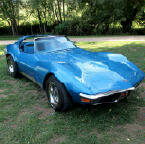


Melting Slicks


Joined: Oct 2011
Posts: 3,453
Likes: 67
From: Midland Ontario
NCM Sinkhole Donor
Well personally; if mine has to sit parked for six months of the year, I'd rather it have fresh oil in the crankcase than contaminated oil that's got a few thousand km's on it.

Thread Starter
Intermediate
Joined: Aug 2014
Posts: 49
Likes: 0
From: Innisfil Ontario
Oh Happy Day and Special Thanks To Brian,
Big lesson learned, I had the wrong kind of appraiser and also talking to our existing car insurer was wrong.
I had a Classic Car Appraiser here and I'm beside myself with joy.
I don't have the final results but I was told on the spot it's somewhere around $14,000. The final figure is negotiable, but $15,000 would make me happy. He gave me info for 3 insurance companies that specialize in insuring Classic cars. Hagerty wasn't one of them, he said a lot guys are switching from Hagerty to Canadian based companies. I don't know that that matters, just quoting him.
He arrived in a 1978 Blue Trans Am, that was a good sign. He also will provide me with info for parts resources, he has done the work on his.
The first appraiser was nothing like this, between him and my existing insurer they are only interested or qualified for commuter cars. That was my mistake.
Thanks Guys,
David
PS Just realized I posted this in the wrong thread, too excited I guess !
Big lesson learned, I had the wrong kind of appraiser and also talking to our existing car insurer was wrong.
I had a Classic Car Appraiser here and I'm beside myself with joy.
I don't have the final results but I was told on the spot it's somewhere around $14,000. The final figure is negotiable, but $15,000 would make me happy. He gave me info for 3 insurance companies that specialize in insuring Classic cars. Hagerty wasn't one of them, he said a lot guys are switching from Hagerty to Canadian based companies. I don't know that that matters, just quoting him.
He arrived in a 1978 Blue Trans Am, that was a good sign. He also will provide me with info for parts resources, he has done the work on his.
The first appraiser was nothing like this, between him and my existing insurer they are only interested or qualified for commuter cars. That was my mistake.
Thanks Guys,
David
PS Just realized I posted this in the wrong thread, too excited I guess !
Last edited by adsvette; Sep 25, 2014 at 06:52 PM.

Race Director

Joined: Jul 2001
Posts: 15,892
Likes: 42


1st Gear
Joined: Apr 2015
Posts: 1
Likes: 0
From: Louisville KY
Starting it back up...
This will be my first spring to start the car back up after winter storage. It's been sitting since October will a full tank of gas with fuel stabilizer. I'm a newbie to owning a classic car - is there anything I should know about starting it up after that long? Is it good or bad to "rev" the engine after it starts to get it warmed up? Is the gas really still going be good?
1977 with rebuilt engine (in the last 7 years)
1977 with rebuilt engine (in the last 7 years)

Le Mans Master


Joined: Apr 2008
Posts: 9,446
Likes: 240
From: Powassan ON
This will be my first spring to start the car back up after winter storage. It's been sitting since October will a full tank of gas with fuel stabilizer. I'm a newbie to owning a classic car - is there anything I should know about starting it up after that long? Is it good or bad to "rev" the engine after it starts to get it warmed up? Is the gas really still going be good?
1977 with rebuilt engine (in the last 7 years)
1977 with rebuilt engine (in the last 7 years)
I know some will spin the motor over to get the oil into the valves before starting it. I dont.
dodosmike





