




Suspension Upgrade Help

Thread Starter
Intermediate

Joined: Sep 2014
Posts: 28
Likes: 0
From: Ohio
 Suspension Upgrade Help
Hey guys! I am basically new to Corvettes, but recently purchased a 1979 L-82 that my dad bought back in 94. He had intentions of restoring it, but never really found the time. I am doing a body off restoration and I am just finishing up a few repairs on the frame.
So I need some help on a suspension upgrade and hoped you guys could point me in the right direction if I told you what I am hoping to achieve. I don't plan to race the car, but may do an autocross event here or there for fun. I want a nice lowered stance, but I would like to have the ability to change ride height depending on wheel and tire combo or other reasons. I want to stay around $2K or less. I have been looking at the coil over kits like Shark Bite and Vansteel. I think coil overs are the only way I can get ride height adjustment. If I had to put a label on the what I am going for I would say I am going for more of a pro-touring set up.
Thanks
So I need some help on a suspension upgrade and hoped you guys could point me in the right direction if I told you what I am hoping to achieve. I don't plan to race the car, but may do an autocross event here or there for fun. I want a nice lowered stance, but I would like to have the ability to change ride height depending on wheel and tire combo or other reasons. I want to stay around $2K or less. I have been looking at the coil over kits like Shark Bite and Vansteel. I think coil overs are the only way I can get ride height adjustment. If I had to put a label on the what I am going for I would say I am going for more of a pro-touring set up.
Thanks
Drifting


Joined: Oct 2012
Posts: 1,524
Likes: 61
From: Medina Ohio
Drifting
Joined: Oct 2012
Posts: 1,524
Likes: 61
From: Medina Ohio
This is the only one in your budget...
http://www.vbandp.com/auto-parts.htm...category_id=54
(Don't forget VB&P gives you a 10% forum discount too - but not positive if it applies to the kits?)
http://www.vbandp.com/auto-parts.htm...category_id=54
(Don't forget VB&P gives you a 10% forum discount too - but not positive if it applies to the kits?)
Thread Starter
Intermediate
Joined: Sep 2014
Posts: 28
Likes: 0
From: Ohio
Thanks for the suggestion on the VB&P I'll check it out. I didn't mean to suggest that $2K was the top of my budget that was just the high end of the range I was looking to stay around. The Shark Bite kit is around $2,400, which is fine if that is a good way to go for my needs. Maybe I am too hung up on the adjustable ride height. I just don't want to get the body back on and bolt up new wheels and tires and hate the stance. It would be nice to be able to dial it in without making permanent changes like cutting coils.

Intermediate
Joined: Dec 2008
Posts: 47
Likes: 0
From: cary nc
although the shark bite suspension looks totally awesome, ive seen quite a few posts where people feel that it is more Bling than functional. i didnt buy a complete vb and p suspension kit all at once, but over the years i now have all vb and p suspension and have never had any problems. that kit posted above with the dual mount f and r springs would be a good choice and it would have ride height adjustment also. i have the dual mount front that comes with tubular lower arms since i needed new ball joints and lower bushings and didnt feel like rebuilding the old arms.

Le Mans Master


Joined: Apr 2007
Posts: 7,353
Likes: 72
From: Graceland in a Not Correctly Restored Stingray

More important than the arrangement of how the springs and shocks are actuated is to get their rates and valving right for the task at hand. And, anytime you start heading towards the AX/RR corner of the performance envelope, adjustability is increasing valuable. That said, coil-overs in and of themselves are the superior technology, so long as you have sufficient funding for everything else needed to take full advantage of them.
Suggest reading up on the Chevy Power C3 Corvette chassis section, at a minimum. It doesn't cover everything, and may be showing a few signs of becoming dated, but it's still a solid foundation on which to build when getting serious about setting up the C3 chassis. The following are a few tips from my setup philosophy, a good bit applicable to any car, tho vastly oversimplified here...
Kits - Don't assume that any pre-packaged kit is necessarily going to be the optimum combination of bits right out of the box. The perfect setup is hard to come by, even at the top levels of racing, so it isn't very likely that you're going to get there with a single click of the mouse. Take advice as to specific specs the same way. In any event, you might as well go ahead and accept that you'll probably end up with a collection of various springs, bars and other such items before you're done.
Tires - Don't skimp here, or you won't ever get the most out of the rest of the bits you install. And, put them on appropriately sized wheels. It is vital to have a pyrometer (preferable a tire probe type, but an IR is better than none) and to learn how to read tire temps. This info will tell you things about your setup that you just can't get from a stopwatch or feel with your backside.
Chassis - Stiffen it as much as is practical so as to better facilitate the suspension being left to do its job. At a minimum install a spreader bar.
Weight - Remove unnecessary (to you) weight without compromising safety or stiffness. Reducing unsprung weight is always a good thing.
Geometry - For track day ride heights, see the Chevy Power specs. Bumpsteer your front end. Also, I highly suggest taking appropriate steps to minimize the affects of adverse rear toe-steer inherent to the C2/C3 IRS and to reduce (not necessarily eliminate) rear camber gain.
Springs - This will admittedly run contrary to everything those who prescribe to the BBSS (big bars, soft springs) school hold true and holy... Since springs contribute to anti-roll stiffness without the penalty of increased weight transfer (as results with adding bar), and AX/RR courses are typically smoother than the street, I'd urge you to run the highest front springs tolerable on the roads you most often drive. This will minimize how much you must rely on bar(s) for anti-roll. Besides, bars don't do anything to combat nose dive under hard braking. Try not to run more rear spring than is necessary to control anti-roll stiffness relative to the front, and to combat excessive squat under heavy acceleration. If you're not on the high-banks or drag racing, an F41 rear spring will be plenty in many cases.
Shocks - Again, don't skimp here. They're not only for dampening unsprung weight oscillations, but can and should be used to regulate how weight transfers as the car enters into and exits from corners. Of course, you can't tune them if they're not adjustables, preferably 2-way if you're new to them. Order thru the racing/tech department of whatever resource you choose (Koni, QA1, Penske...), who should definitely be asking you a number of questions important to matching a set to your individual needs.
Bars - Think of them as crutches for supplemental anti-roll and balance tuning, rather than as the primary tool for such. Despite what you may have seen or heard, it is entirely possible, even preferable, to sort a C2/C3 chassis without a rear bar. Remember, adding bar, while increasing anti-roll, actually reduces available grip at the end of the car in question, and no car can corner any harder than the end with the least grip.
Alignment - Once everything is in place, this detail can make or break how the package operates. Consider any recommended specs as only a baseline from which to work.
Tuning - Only make one change at a time so you know what actually helps and what doesn't, and only test how those changes affect your car at its limits in a safe environment. Other than possibly on a skid pad or at less than a car's actual limits, there is really no such thing as "neutral" balance. Get steady state balance dialed in first, then use the shocks to change how the car transitions into and out of the corners. Beware of getting caught up in your own (or anyone else's) preconceptions, and don't be afraid to try new things, especially shock settings when arriving at a new course. That's how you'll learn.
There's obviously much more to this, and I've left out a good bit regarding just how to go about putting the above into action. But, I do hope that helps get you going in the right direction, or at least gives you a decent reference point against which to gauge where you're heading.

TSW
Last edited by TheSkunkWorks; Sep 17, 2014 at 10:26 PM.
Corvette Stories
The Best of Corvette for Corvette Enthusiasts

Top 10 Most Expensive Corvettes Ever Sold on Bring A Trailer
Brett Foote
10 Things Every Corvette Owner Needs (2026 Edition)
Michael S. Palmer
8 Most "Only Corvette Owners Understand" Quirks and Problems
Pouria Savadkouei
10 Reasons the C6 Z06 is Still A Performance Benchmark After 20 Years
Joe Kucinski
How Much Horsepower Every Corvette Engine "LOST" in 1972
Joe Kucinski
Top 10 DOs and DON'Ts for Protecting Your Convertible Top!
Michael S. Palmer
Top 10 Most Explosive Corvettes Ever Made: Power-to-Weight Ratio Ranked!
Joe Kucinski
150 hp to 1,250 hp: Every Corvette Generation Compared by the Specs That Matter
Joe Kucinski
8 Coolest Corvette Pace Cars (and Replicas) of All Time
Verdad Gallardo
Pro

Joined: May 2008
Posts: 582
Likes: 9
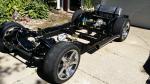
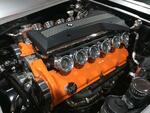
Take a look at my build it may give you ideas.
https://www.corvetteforum.com/forums...ld-thread.html
https://www.corvetteforum.com/forums...ld-thread.html
Le Mans Master


Joined: May 2003
Posts: 8,877
Likes: 3,556
From: Fernandina Beach FL
2023 Restomod of the Year finalist
2020 C3 of the Year Winner - Modified
To be close to your budget-
For the Rear-
I'd recommend the Vansteel rear coilovers- you can sell you old stuff and ask Vansteel for 10% off for being a Forum member...Nets out to a little over $1K after you sell the old stuff
For the front-
The full deal coilover from Vansteels is nice and expensive...You can fudge a little here and run the semi-coil overs. After new balljoints and redoing your stock A-arms you are under $1K. I originally bought the semi but then decided to go w/ the full coilovers and tubular A -Arms- at a budget busting $2k+...However I sold my restored a-arms for about $450....
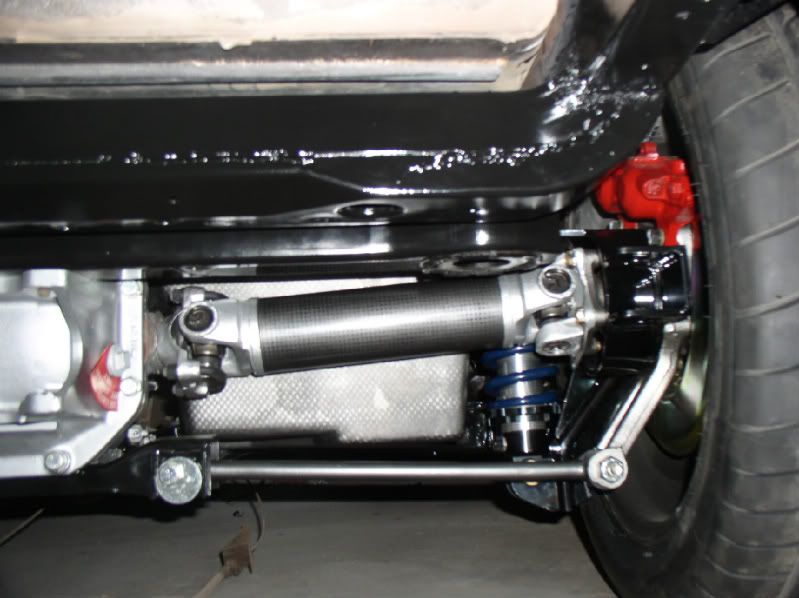


Budget buster-

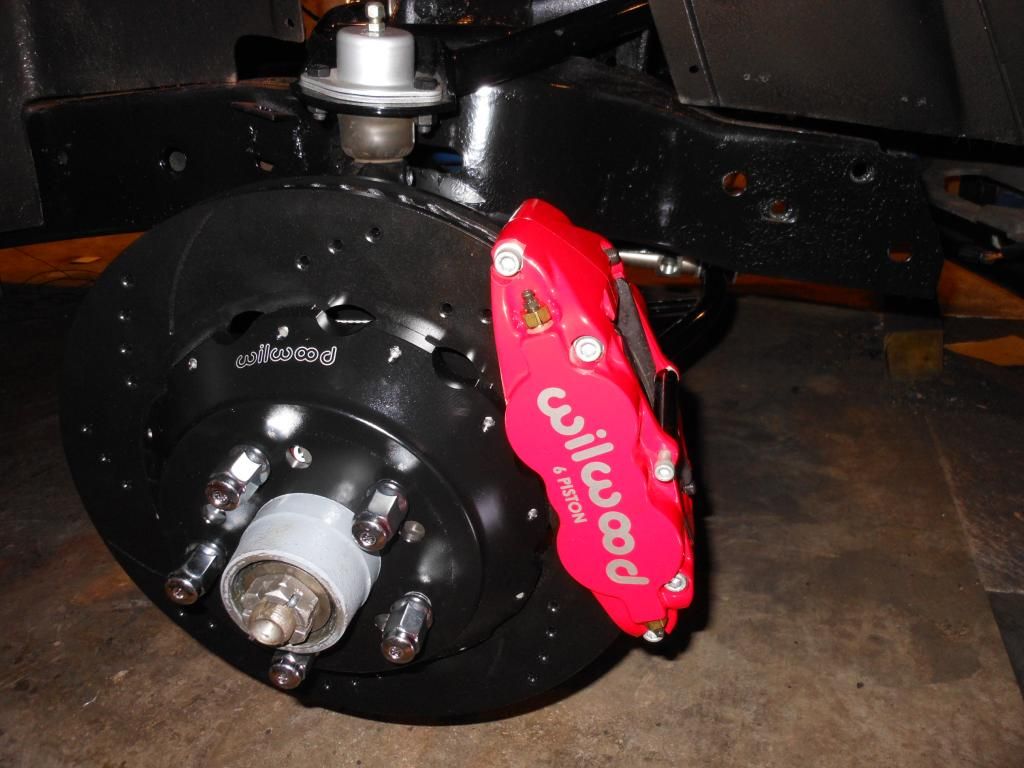
For the Rear-
I'd recommend the Vansteel rear coilovers- you can sell you old stuff and ask Vansteel for 10% off for being a Forum member...Nets out to a little over $1K after you sell the old stuff
For the front-
The full deal coilover from Vansteels is nice and expensive...You can fudge a little here and run the semi-coil overs. After new balljoints and redoing your stock A-arms you are under $1K. I originally bought the semi but then decided to go w/ the full coilovers and tubular A -Arms- at a budget busting $2k+...However I sold my restored a-arms for about $450....


Budget buster-


Thread Starter
Intermediate
Joined: Sep 2014
Posts: 28
Likes: 0
From: Ohio
More important than the arrangement of how the springs and shocks are actuated is to get their rates and valving right for the task at hand. And, anytime you start heading towards the AX/RR corner of the performance envelope, adjustability is increasing valuable. That said, coil-overs in and of themselves are the superior technology, so long as you have sufficient funding for everything else needed to take full advantage of them.
Suggest reading up on the Chevy Power C3 Corvette chassis section, at a minimum. It doesn't cover everything, and may be showing a few signs of becoming dated, but it's still a solid foundation on which to build when getting serious about setting up the C3 chassis. The following are a few tips from my setup philosophy, a good bit applicable to any car, tho vastly oversimplified here...
Kits - Don't assume that any pre-packaged kit is necessarily going to be the optimum combination of bits right out of the box. The perfect setup is hard to come by, even at the top levels of racing, so it isn't very likely that you're going to get there with a single click of the mouse. Take advice as to specific specs the same way. In any event, you might as well go ahead and accept that you'll probably end up with a collection of various springs, bars and other such items before you're done.
Tires - Don't skimp here, or you won't ever get the most out of the rest of the bits you install. And, put them on appropriately sized wheels. It is vital to have a pyrometer (preferable a tire probe type, but an IR is better than none) and to learn how to read tire temps. This info will tell you things about your setup that you just can't get from a stopwatch or feel with your backside.
Chassis - Stiffen it as much as is practical so as to better facilitate the suspension being left to do its job. At a minimum install a spreader bar.
Weight - Remove unnecessary (to you) weight without compromising safety or stiffness. Reducing unsprung weight is always a good thing.
Geometry - For track day ride heights, see the Chevy Power specs. Bumpsteer your front end. Also, I highly suggest taking appropriate steps to minimize the affects of adverse rear toe-steer inherent to the C2/C3 IRS and to reduce (not necessarily eliminate) rear camber gain.
Springs - This will admittedly run contrary to everything those who prescribe to the BBSS (big bars, soft springs) school hold true and holy... Since springs contribute to anti-roll stiffness without the penalty of increased weight transfer (as results with adding bar), and AX/RR courses are typically smoother than the street, I'd urge you to run the highest front springs tolerable on the roads you most often drive. This will minimize how much you must rely on bar(s) for anti-roll. Besides, bars don't do anything to combat nose dive under hard braking. Try not to run more rear spring than is necessary to control anti-roll stiffness relative to the front, and to combat excessive squat under heavy acceleration. If you're not on the high-banks or drag racing, an F41 rear spring will be plenty in many cases.
Shocks - Again, don't skimp here. They're not only for dampening unsprung weight oscillations, but can and should be used to regulate how weight transfers as the car enters into and exits from corners. Of course, you can't tune them if they're not adjustables, preferably 2-way if you're new to them. Order thru the racing/tech department of whatever resource you choose (Koni, QA1, Penske...), who should definitely be asking you a number of questions important to matching a set to your individual needs.
Bars - Think of them as crutches for supplemental anti-roll and balance tuning, rather than as the primary tool for such. Despite what you may have seen or heard, it is entirely possible, even preferable, to sort a C2/C3 chassis without a rear bar. Remember, adding bar, while increasing anti-roll, actually reduces available grip at the end of the car in question, and no car can corner any harder than the end with the least grip.
Alignment - Once everything is in place, this detail can make or break how the package operates. Consider any recommended specs as only a baseline from which to work.
Tuning - Only make one change at a time so you know what actually helps and what doesn't, and only test how those changes affect your car at its limits in a safe environment. Other than possibly on a skid pad or at less than a car's actual limits, there is really no such thing as "neutral" balance. Get steady state balance dialed in first, then use the shocks to change how the car transitions into and out of the corners. Beware of getting caught up in your own (or anyone else's) preconceptions, and don't be afraid to try new things, especially shock settings when arriving at a new course. That's how you'll learn.
There's obviously much more to this, and I've left out a good bit regarding just how to go about putting the above into action. But, I do hope that helps get you going in the right direction, or at least gives you a decent reference point against which to gauge where you're heading.
TSW
Thread Starter
Intermediate
Joined: Sep 2014
Posts: 28
Likes: 0
From: Ohio
Take a look at my build it may give you ideas.
https://www.corvetteforum.com/forums...ld-thread.html
https://www.corvetteforum.com/forums...ld-thread.html
Pro
Joined: May 2008
Posts: 582
Likes: 9
I am glad you like. I am really happy with how it turned out. The ride is firm but not harsh, the steering is firm and responsive and there is no wondering on the highway. I feel that on the street the front sway bar may be to big, but it is very neutral on the track. I think the big limiting factor is my tire and rim size. If you have any questions about any of the parts I used let me know.


Melting Slicks


Joined: Jun 2003
Posts: 2,802
Likes: 241
From: Niles, MI
In addition to the Chevy Power Manual mentioned above I would read "Vette Improvement Program" by John Greenwood and "Corvette Handling - A Performance Workbook" by Herb Adams. All are available for download at VetteMOD.com. Its best to learn as much as you can before starting any modifications. By the way, both Adams and Greenwood were soft spring-big sway bar guys.
Also, here's a link to an article on Danny Popp's '72 Vette who won the 2013 Holley LS Fest and missed winning this year by 1 point.
Danny Popp's Raw C3
By the way Danny runs a rear antisway bar as well. Just sayin'.
Also, here's a link to an article on Danny Popp's '72 Vette who won the 2013 Holley LS Fest and missed winning this year by 1 point.
Danny Popp's Raw C3
By the way Danny runs a rear antisway bar as well. Just sayin'.
Last edited by Kid Vette; Sep 20, 2014 at 03:04 AM.
Le Mans Master
Joined: Apr 2007
Posts: 7,353
Likes: 72
From: Graceland in a Not Correctly Restored Stingray
...I'd welcome the opportunity to debate/explain the whys, wherefores, misconceptions, and pros and cons of BBSS versus more conventional setups.
TSW
update - FWIW, I haven't forgotten about creating a stand-alone thread on this, just haven't yet had the time to write an opening post worthy of the topic... And, BTW, the presence of bars isn't necessarily evidence of a BBSS setup. Just sayin'.
.
TSW
update - FWIW, I haven't forgotten about creating a stand-alone thread on this, just haven't yet had the time to write an opening post worthy of the topic... And, BTW, the presence of bars isn't necessarily evidence of a BBSS setup. Just sayin'.
.
Last edited by TheSkunkWorks; Jan 24, 2015 at 01:59 PM.
Thread Starter
Intermediate
Joined: Sep 2014
Posts: 28
Likes: 0
From: Ohio
In addition to the Chevy Power Manual mentioned above I would read "Vette Improvement Program" by John Greenwood and "Corvette Handling - A Performance Workbook" by Herb Adams. All are available for download at VetteMOD.com. Its best to learn as much as you can before starting any modifications. By the way, both Adams and Greenwood were soft spring-big sway bar guys.
Also, here's a link to an article on Danny Popp's '72 Vette who won the 2013 Holley LS Fest and missed winning this year by 1 point.
Danny Popp's Raw C3
By the way Danny runs a rear antisway bar as well. Just sayin'.
Also, here's a link to an article on Danny Popp's '72 Vette who won the 2013 Holley LS Fest and missed winning this year by 1 point.
Danny Popp's Raw C3
By the way Danny runs a rear antisway bar as well. Just sayin'.


