





Spark Plug Help

Thread Starter
Instructor


Joined: Oct 2012
Posts: 222
Likes: 11
From: Johnston, Rhode Island
 Spark Plug Help
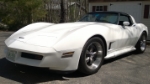
I have a 1972 Corvette with headers, an Edelbrock Performer intake manifold and an Accel HEI ignition. All emissions equipment has been removed from the car. What would be the best spark plug and heat range to purchase? I only drive the car on weekends in good weather and do 40-60% city / highway driving.

Safety Car

Joined: Jan 2009
Posts: 3,736
Likes: 56
From: anchorage ak
I'd run the stock plug. There's plenty of spark plug Reading information on the web that you can reference for how engine is working with the heat range of the plug. Being basically stock with the intake and ignition mods, a stock plug will probably be sufficient. Good luck.
oops!
oops!

Le Mans Master


Joined: Apr 2011
Posts: 6,284
Likes: 1,171
From: Hermosa
I have a 1972 Corvette with headers, an Edelbrock Performer intake manifold and an Accel HEI ignition. All emissions equipment has been removed from the car. What would be the best spark plug and heat range to purchase? I only drive the car on weekends in good weather and do 40-60% city / highway driving.
http://www.ngksparkplugs.com/product...r.asp?mode=nml
Hotter ones if you spend more of your time at low rpm and cruising, cooler ones if it's hot where you are 100*f + and or spend more of your time at WOT.
Last edited by REELAV8R; Sep 22, 2014 at 09:45 AM.

Race Director

Joined: Nov 2002
Posts: 12,142
Likes: 54
From: Taylor Michigan
If its a small block, AC R45S and big block R45XLS...good at all but a very few engines no matter what the HP...Plug gap is .035.....those wild gaps from the 70`s is the result of car companies trying to make the engines comply with emmissions and giving performance people like us headaches removing that junk or changing our cars to run better.....
But whatever.....
.035
But whatever.....
.035

Melting Slicks


Joined: May 2002
Posts: 2,717
Likes: 121
From: Sulphur LA
St. Jude Donor '05-'06,'11,'13-'14,'16,'18,'19,'24, '25
The stock plugs will work as they did when the engineers put them in there as OE.
There are much better plugs today with modern technology that will work in your car.
Cost is usually the driving factor as to what plug people use in their cars.
Neal
There are much better plugs today with modern technology that will work in your car.
Cost is usually the driving factor as to what plug people use in their cars.
Neal
Corvette Stories
The Best of Corvette for Corvette Enthusiasts

Top 10 Most Expensive Corvettes Ever Sold on Bring A Trailer
Brett Foote
10 Things Every Corvette Owner Needs (2026 Edition)
Michael S. Palmer
8 Most "Only Corvette Owners Understand" Quirks and Problems
Pouria Savadkouei
10 Reasons the C6 Z06 is Still A Performance Benchmark After 20 Years
Joe Kucinski
How Much Horsepower Every Corvette Engine "LOST" in 1972
Joe Kucinski
Top 10 DOs and DON'Ts for Protecting Your Convertible Top!
Michael S. Palmer
Top 10 Most Explosive Corvettes Ever Made: Power-to-Weight Ratio Ranked!
Joe Kucinski
150 hp to 1,250 hp: Every Corvette Generation Compared by the Specs That Matter
Joe Kucinski
8 Coolest Corvette Pace Cars (and Replicas) of All Time
Verdad Gallardo
 .....another vote for stock!


Le Mans Master
Joined: Apr 2011
Posts: 6,284
Likes: 1,171
From: Hermosa
Can anyone comment on the OPs conversion to HEI from points.
I have heard a .045 gap works better with HEI type ignitions? Or do you stay with the stock .035 gap used for stock points setup?
09-22-2014 02:47 PM
I have heard a .045 gap works better with HEI type ignitions? Or do you stay with the stock .035 gap used for stock points setup?
09-22-2014 02:47 PM
Is the best spark plug gap .040-.045 or still .035 when using an HEI ignition
As your CR (cylinder pressure) increases the gap will need to be smaller to prevent misfire.
Larger gap is a larger spark. Better chance of lighting the fuel effeciently creating a better burn. A good burn starts with a good spark.
If you go too large of a gap you can get misfire.
I run .045 with good results at 9.9:1 CR up to 6000 RPM. However my cylinder pressure is reduced due to high altitude.
You may need to experiment some to find the best results.
Running a larger gap may also require advancing the timing to a small degree to get it to run the same as a previously smaller gap.

Race Director
Joined: Jul 2001
Posts: 15,892
Likes: 42
People will dream up all sorts of theories of why one is better than the other. Makes no tangible difference in real life.
Le Mans Master
Joined: Apr 2011
Posts: 6,284
Likes: 1,171
From: Hermosa
Here is what David Vizard has to say on the subject.
That is advice from an expert. From his book "How to build horsepower"
Keep in mind that every little bit counts. Add up a lot of little things and you get a big thing.
It take 100 pennies to get a dollar. So the penny in of itself is worth little, get enough of them and it equals a significant amount.
Any casino with penny slots proves this.
"Assuming the plug temperature rating is on the mark, the next issue to deal with is the plug gap and the form of the electrode. A very important issue to appreciate here is that ignition performance is a function of spark temperature and energy input. If the plug gap is very small , it takes minimal voltage to fire it and the energy involved is consequently low.
From this, it follows that a bigger gap discharges a spark at a higher energy level and that is exactly so. But a big gap uses coil output and, to an equal extent, causes a drop in the RPM to which the system can run before misfiring.
A general rule here is that you should run as large a plug gap as possible, consistent with the engines peak RPM. Another factor here is that the bigger the plug gap the more difficult it becomes for the plug cables to do their job before breaking down and firing sparks at random due to the higher resistance that the wide plug gap presents. Big plug gaps then require plug cables with a higher/better insulation value."
From this, it follows that a bigger gap discharges a spark at a higher energy level and that is exactly so. But a big gap uses coil output and, to an equal extent, causes a drop in the RPM to which the system can run before misfiring.
A general rule here is that you should run as large a plug gap as possible, consistent with the engines peak RPM. Another factor here is that the bigger the plug gap the more difficult it becomes for the plug cables to do their job before breaking down and firing sparks at random due to the higher resistance that the wide plug gap presents. Big plug gaps then require plug cables with a higher/better insulation value."
Keep in mind that every little bit counts. Add up a lot of little things and you get a big thing.
It take 100 pennies to get a dollar. So the penny in of itself is worth little, get enough of them and it equals a significant amount.
Any casino with penny slots proves this.

Race Director

Joined: Oct 2008
Posts: 19,216
Likes: 1,671
From: Long Island
In my 72 - stock engine, I run A/C or NGK - 1 heat range colder than stock with an Electronic points and a .040 gap.
I also use Autolite 24's. In all cases I use 93 gas.
The only plug that does not work is Champion - they foul.
I also use Autolite 24's. In all cases I use 93 gas.
The only plug that does not work is Champion - they foul.

Team Owner

Joined: Oct 2004
Posts: 81,241
Likes: 3,063
From: altered state
St. Jude Donor '05
Theories dont always work in real life, dont care who wrote a book. Use the recommended gap with points or HEI, stock heat range that is ALL you need.
Dig into that carb if youre timing is correct, that is your problem. Opening gap is wasting your time and a band aid.
Find a buddy with a good known carb and try it out. Keep it simple!
Dig into that carb if youre timing is correct, that is your problem. Opening gap is wasting your time and a band aid.
Find a buddy with a good known carb and try it out. Keep it simple!

Le Mans Master
Joined: Mar 2004
Posts: 7,493
Likes: 1,502
From: Little Rock AR
Gaps were opened up and ignitions were upgraded to HEI because lean emissions engines REQUIRED the bigger gaps to fire the lean mixture reliably. If you are not running a lean emissions mixture you can close those gaps down to .035" and put less stress on your ignition system. Once the fire is lit, the job is done. More RPM available before ignition limits with regular gaps.
Le Mans Master
Joined: Apr 2011
Posts: 6,284
Likes: 1,171
From: Hermosa
Proper jetting and setting the float height correctly is important for mixture control.
Could also be that your choke is not opening fully.
Playing with the plugs is like a bandaid. That is unless you actually are using a plug too cold for the conditions you operate in. The plug has to achieve a certain temperature to self clean. Too cold and it will soot up.
Plug gap is not particularly relevant to weather the plug fowls or not.

Burning Brakes

Joined: Mar 2006
Posts: 829
Likes: 131
From: Spartanburg SC
Two things people over think when it comes to cars. Spark plugs and motor oil wt. Never seen anyone have a problem when using stock plugs. Have seen many issues when using something other than stock.