





Engine color

Thread Starter
Pro


Joined: Oct 2011
Posts: 554
Likes: 82
From: San Jose CA
 Engine color
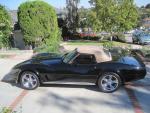
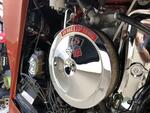
A few days ago someone asked my why I painted the engine in my '77 orange, he thought Chevy engines were blue. My car is matching numbers and there is no sign that the engine was ever anything but orange but that got me to do a little searching. I found that Chevy made the switch from Chevy Orange to GM Corporate Blue in....1977. My car is an early '77, with a build date of Sept 1976 so is that why my engine is orange and not blue? Could my car be among the last of the orange engine cars?

Race Director


Joined: Jan 2000
Posts: 12,399
Likes: 247
From: San Jose CA
I don't honestly know, but it sounds feasible. Do you still have the original intake or valve covers? Scratching off some of the paint would probably tell you the history of paint jobs.
An L-48 would have been painted from the manifold to the bottom of the pan, one color.
An L-48 would have been painted from the manifold to the bottom of the pan, one color.
Racer


Joined: Mar 2011
Posts: 480
Likes: 42
From: Los Angeles CA
Try this.
http://www.vettefacts.com/C3/1977.aspx
Or
Model Year Highlights
• Between August 23 and September 7, 1976, the Flint, Michigan Engine Assembly Plant changed the paint colors used on Corvette engines from orange to blue. Some early production 1977 Corvettes were still built with the orange painted engines..
• Leather seats became standard for the first time in 1977.
http://www.vettefacts.com/C3/1977.aspx
Or
Model Year Highlights
• Between August 23 and September 7, 1976, the Flint, Michigan Engine Assembly Plant changed the paint colors used on Corvette engines from orange to blue. Some early production 1977 Corvettes were still built with the orange painted engines..
• Leather seats became standard for the first time in 1977.
Last edited by Frank_Nesta; Jan 22, 2015 at 01:06 AM. Reason: Added info
Thread Starter
Pro
Joined: Oct 2011
Posts: 554
Likes: 82
From: San Jose CA
I do still have the valve covers and intake manifold and there is no trace of blue on either one. Frank, thanks, looks like that explains it. The last 6 digits on my VIN are 402722, they all started with "4" so mine is car 2722 out of about 49000. It looks like my engine was cast in early August 1976 so it jives with that statement on your link.
Mystery solved...
Mystery solved...

Team Owner


Joined: Jun 2000
Posts: 38,923
Likes: 1,481
From: Southbound
Cruise-In II Veteran
Keep in mind engines were ordered in advance for each Corvette built. They were assembled, shipped to St. Louis, and stock piled before assembly of your Corvette was begun. Your engine could have been received from Flint before they changed to GM corporate blue.
2722 would have been assembled in early September. Check your time built code on the trim tag. Last August car was #1602. Yours came along 1120 later. Estimate about 120 cars a day, excluding Sundays and Labor Day.

2722 would have been assembled in early September. Check your time built code on the trim tag. Last August car was #1602. Yours came along 1120 later. Estimate about 120 cars a day, excluding Sundays and Labor Day.
Last edited by Easy Mike; Jan 22, 2015 at 08:36 AM.
Drifting

Joined: Nov 2013
Posts: 1,546
Likes: 281
From: Scottsdale Arizona
I do still have the valve covers and intake manifold and there is no trace of blue on either one. Frank, thanks, looks like that explains it. The last 6 digits on my VIN are 402722, they all started with "4" so mine is car 2722 out of about 49000. It looks like my engine was cast in early August 1976 so it jives with that statement on your link.
Mystery solved...
Mystery solved...

Race Director
Joined: Jul 2001
Posts: 15,892
Likes: 42
I do still have the valve covers and intake manifold and there is no trace of blue on either one. Frank, thanks, looks like that explains it. The last 6 digits on my VIN are 402722, they all started with "4" so mine is car 2722 out of about 49000. It looks like my engine was cast in early August 1976 so it jives with that statement on your link.
Mystery solved...
Mystery solved...
Should be Vxxxxyyy where x is digits and y is alpha characters.
Corvette Stories
The Best of Corvette for Corvette Enthusiasts

8 Coolest Corvette Pace Cars (and Replicas) of All Time
Verdad Gallardo
Top 10 Corvette Engines RANKED by Peak Torque (70+ Years of Muscle!)
Joe Kucinski
Corvette ZR1X Will Be Pacing the Indy 500, And Could Probably Race, Too!
Verdad Gallardo
Top 10 Corvettes Coming to Mecum Indy 2026!
Brett Foote
Top 10 C9 Corvette MUST-HAVES to Fix These C8 Generation Flaws!
Michael S. Palmer
10 Revolutionary 'Corvette Firsts' Most People Don't Know
Joe Kucinski
5 Reasons to Upgrade to an LS6-Powered Corvette; 5 Reasons to Stay LT2
Michael S. Palmer
2027 Corvette vs The World: Every C8 vs Its Closest Competitor
Joe Kucinski
10 Most Common Corvette Problems of the Last 20 Years!
Joe Kucinski
Thread Starter
Pro
Joined: Oct 2011
Posts: 554
Likes: 82
From: San Jose CA
Mike: two numbers were there, both are gone as they fell victim to the decking operation. The first was the partial VIN - 17S402722 and the second the one you mention - VO810CLO. That second number does not seem to mesh with the Heritage Center document for the 1977 Corvette, which gives a reference example of F1210CKZ. F=Flint,1210 production month and date (Dec 10), CKZ - regular engine, 4-spd, 4bbl. What is the V and CLO? Looks like my engine was built on August 10, though. There is also another sequence of raised characters cast into the rear of the block: H, a number that looks kind of like a 9, and 76. Is that a casting date of Aug 9, 1976?
Last edited by Jim__H; Jan 22, 2015 at 11:15 AM.
Race Director
Joined: Jul 2001
Posts: 15,892
Likes: 42
Mike: two numbers were there, both are gone as they fell victim to the decking operation. The first was the partial VIN - 17S402722 and the second the one you mention - VO810CLO. That second number does not seem to mesh with the Heritage Center document for the 1977 Corvette, which gives a reference example of F1210CKZ. F=Flint,1210 production month and date (Dec 10), CKZ - regular engine, 4-spd, 4bbl. What is the V and CLO? Looks like my engine was built on August 10, though. There is also another sequence of raised characters cast into the rear of the block: H, a number that looks kind of like a 9, and 76. Is that a casting date of Aug 9, 1976?
 Too late now.
The numbers on your pad are exactly what should be expected. 'VO810CLO' was actually 'VO8I0CLC' The engine plant used a capital I instead of the numeral 1, a quirky but standard practice across GM. The code CLO does not exist, I am presuming it was CLC which was used early in the '77 production year.
Translation:
V= Flint MI engine plant were it, and all Corvette SBC's were assembled
08I0= August 10th assembly date. Engines were built anywhere from a few days to six months-ish before the car completion date. If your car was assembled Sept. 1, then an engine ***'y date of Aug. 10 is about average.
CLC is L48 with auto trans. built to meet California emissions. This code was replaced by CHD early in the production year.
All makes sense.
The H976 could possibly be the casting date and should translate to Aug 9 1976. Could you have a look again and see if the block casting number is 3970014 instead of the expected 3970010?

Melting Slicks

Joined: Mar 2008
Posts: 2,023
Likes: 6
From: Austin Tx
Keep in mind engines were ordered in advance for each Corvette built. They were assembled, shipped to St. Louis, and stock piled before assembly of your Corvette was begun. Your engine could have been received from Flint before they changed to GM corporate blue.
2722 would have been assembled in early September. Check your time built code on the trim tag. Last August car was #1602. Yours came along 1120 later. Estimate about 120 cars a day, excluding Sundays and Labor Day.
2722 would have been assembled in early September. Check your time built code on the trim tag. Last August car was #1602. Yours came along 1120 later. Estimate about 120 cars a day, excluding Sundays and Labor Day.
Team Owner
Joined: Jun 2000
Posts: 38,923
Likes: 1,481
From: Southbound
Cruise-In II Veteran
That's my first mistake of the New Year.

Thread Starter
Pro
Joined: Oct 2011
Posts: 554
Likes: 82
From: San Jose CA
Oh dear, another clueless engine shop needlessly decking a block. Too late now.
The numbers on your pad are exactly what should be expected. 'VO810CLO' was actually 'VO8I0CLC' The engine plant used a capital I instead of the numeral 1, a quirky but standard practice across GM. The code CLO does not exist, I am presuming it was CLC which was used early in the '77 production year.
Translation:
V= Flint MI engine plant were it, and all Corvette SBC's were assembled
08I0= August 10th assembly date. Engines were built anywhere from a few days to six months-ish before the car completion date. If your car was assembled Sept. 1, then an engine ***'y date of Aug. 10 is about average.
CLC is L48 with auto trans. built to meet California emissions. This code was replaced by CHD early in the production year.
All makes sense.
The H976 could possibly be the casting date and should translate to Aug 9 1976. Could you have a look again and see if the block casting number is 3970014 instead of the expected 3970010?
Too late now.The numbers on your pad are exactly what should be expected. 'VO810CLO' was actually 'VO8I0CLC' The engine plant used a capital I instead of the numeral 1, a quirky but standard practice across GM. The code CLO does not exist, I am presuming it was CLC which was used early in the '77 production year.
Translation:
V= Flint MI engine plant were it, and all Corvette SBC's were assembled
08I0= August 10th assembly date. Engines were built anywhere from a few days to six months-ish before the car completion date. If your car was assembled Sept. 1, then an engine ***'y date of Aug. 10 is about average.
CLC is L48 with auto trans. built to meet California emissions. This code was replaced by CHD early in the production year.
All makes sense.
The H976 could possibly be the casting date and should translate to Aug 9 1976. Could you have a look again and see if the block casting number is 3970014 instead of the expected 3970010?
I just happen to have a photo handy of the numbers before the block was decked, yeah I guess that is a “C” so as you say it all makes sense. Thanks for the info, and yes the casting number is 3970014. So back to the orange block, is it safe to assume that it was hit or miss around the time mine and Easy Mike’s cars were being built?
As for my engine builder, I talked to three shops about what I wanted to do with my build, then made my decision and it has worked out great. We did talk about the stamped numbers and the techniques that were available to save them. My builder thought that they were bodges but would have done it if I insisted so in the end it was my decision. The machine work quality on the block is excellent and I am a degreed mechanical engineer so I think I am qualified to say that. For example after I finished the short block I checked the deck height with a dial indicator and three corners were within a thou and the fourth was -0.003”, that was on the 0.015” in the hole that I specified. Getting the CR that I wanted was more important than saving the numbers and let’s face it, these cars are not worth big bucks anyway. I am after the fun factor here, but what we did do is my builder took the photo below and pasted it onto his spreadsheet invoice along with the numbers written into a comment section so at least I do have some documentation. My engine builder: cautious, yes. Clueless, hardly.
Race Director
Joined: Jul 2001
Posts: 15,892
Likes: 42
I asked about the engine casting number being 3970014 as the 3970010 which is far more common in '77 would not have had a two digit code for the year in the casting date, only a single digit.
The 0014 blocks were cast in Tonawanda NY and shipped to Flint for final assembly. Pretty rare to see them. The 0010 blocks were cast in Saginaw and assembled in Flint.
These unusual circumstances may/may not have an influence on the colour of your engine. Let's wait to see what the other poster has for an assembly date.
Thread Starter
Pro
Joined: Oct 2011
Posts: 554
Likes: 82
From: San Jose CA
Any decent machine shop can and will stop the rotary mill short of the engine stamp pad info to preserve the numbers. Not a bodge at all. There's no advantage to milling them off.
I asked about the engine casting number being 3970014 as the 3970010 which is far more common in '77 would not have had a two digit code for the year in the casting date, only a single digit.
The 0014 blocks were cast in Tonawanda NY and shipped to Flint for final assembly. Pretty rare to see them. The 0010 blocks were cast in Saginaw and assembled in Flint.
These unusual circumstances may/may not have an influence on the colour of your engine. Let's wait to see what the other poster has for an assembly date.
I asked about the engine casting number being 3970014 as the 3970010 which is far more common in '77 would not have had a two digit code for the year in the casting date, only a single digit.
The 0014 blocks were cast in Tonawanda NY and shipped to Flint for final assembly. Pretty rare to see them. The 0010 blocks were cast in Saginaw and assembled in Flint.
These unusual circumstances may/may not have an influence on the colour of your engine. Let's wait to see what the other poster has for an assembly date.
I used to live near Tonawanda in the late 60s...
Race Director
Joined: Jul 2001
Posts: 15,892
Likes: 42
Being that 0014 blocks from Tonawanda were shipped to Flint for special inter-plant compatibility testing, your engine might have been processed differently than a standard Flint 0010 block. This might explain why it has orange paint. Dunno.

Le Mans Master

Joined: Dec 2003
Posts: 5,727
Likes: 38
From: Fremont CA
Clueless engine builder? Sheez isn’t that a bit harsh when you don’t even know the background?
I just happen to have a photo handy of the numbers before the block was decked, yeah I guess that is a “C” so as you say it all makes sense. Thanks for the info, and yes the casting number is 3970014. So back to the orange block, is it safe to assume that it was hit or miss around the time mine and Easy Mike’s cars were being built?
As for my engine builder, I talked to three shops about what I wanted to do with my build, then made my decision and it has worked out great. We did talk about the stamped numbers and the techniques that were available to save them. My builder thought that they were bodges but would have done it if I insisted so in the end it was my decision. The machine work quality on the block is excellent and I am a degreed mechanical engineer so I think I am qualified to say that. For example after I finished the short block I checked the deck height with a dial indicator and three corners were within a thou and the fourth was -0.003”, that was on the 0.015” in the hole that I specified. Getting the CR that I wanted was more important than saving the numbers and let’s face it, these cars are not worth big bucks anyway. I am after the fun factor here, but what we did do is my builder took the photo below and pasted it onto his spreadsheet invoice along with the numbers written into a comment section so at least I do have some documentation. My engine builder: cautious, yes. Clueless, hardly.
I just happen to have a photo handy of the numbers before the block was decked, yeah I guess that is a “C” so as you say it all makes sense. Thanks for the info, and yes the casting number is 3970014. So back to the orange block, is it safe to assume that it was hit or miss around the time mine and Easy Mike’s cars were being built?
As for my engine builder, I talked to three shops about what I wanted to do with my build, then made my decision and it has worked out great. We did talk about the stamped numbers and the techniques that were available to save them. My builder thought that they were bodges but would have done it if I insisted so in the end it was my decision. The machine work quality on the block is excellent and I am a degreed mechanical engineer so I think I am qualified to say that. For example after I finished the short block I checked the deck height with a dial indicator and three corners were within a thou and the fourth was -0.003”, that was on the 0.015” in the hole that I specified. Getting the CR that I wanted was more important than saving the numbers and let’s face it, these cars are not worth big bucks anyway. I am after the fun factor here, but what we did do is my builder took the photo below and pasted it onto his spreadsheet invoice along with the numbers written into a comment section so at least I do have some documentation. My engine builder: cautious, yes. Clueless, hardly.
Your my kind of Vette guy......perfection above all. Mike makes the gross assumption that all machine shops have the same surfacing machines, the Storm Vulcan RT7 my shop uses cannot be stopped at some imaginary demarcation line as it requires a complete pass over the surface by the CBN cutter to get a proper surface finish. What said machine will do is machine a perfectly flat surface within 0.001" over 24" of travel after 35 years of shop use. There are guys out there who will rest amp blocks anyhow and others who offer overpriced machine services to the NCRS Koolaide drinkers to make non original blocks exact copies of the prehistoric GM assembly line surface finish....that won't hold a modern MLS head gasket against the forces of combustion. I really don't know of any rotary surfacing machines that could be stopped short of a block stamping while giving the proper surface finish to the head gasket mating area? Most surfacing machines I know of run on a 10" or larger cutting diameter....what's a guy like me know?


Racer
Joined: Jun 2013
Posts: 484
Likes: 43
From: NJ


Thread Starter
Pro
Joined: Oct 2011
Posts: 554
Likes: 82
From: San Jose CA
Your my kind of Vette guy......perfection above all. Mike makes the gross assumption that all machine shops have the same surfacing machines, the Storm Vulcan RT7 my shop uses cannot be stopped at some imaginary demarcation line as it requires a complete pass over the surface by the CBN cutter to get a proper surface finish. What said machine will do is machine a perfectly flat surface within 0.001" over 24" of travel after 35 years of shop use. There are guys out there who will rest amp blocks anyhow and others who offer overpriced machine services to the NCRS Koolaide drinkers to make non original blocks exact copies of the prehistoric GM assembly line surface finish....that won't hold a modern MLS head gasket against the forces of combustion. I really don't know of any rotary surfacing machines that could be stopped short of a block stamping while giving the proper surface finish to the head gasket mating area? Most surfacing machines I know of run on a 10" or larger cutting diameter....what's a guy like me know?
And thanks to all for all the history, I learned a lot about my car that I did not know a couple of days ago.

Team Owner


Joined: Jan 2006
Posts: 37,637
Likes: 3,114
From: Crossville TN
Curious.... I've never experienced a milling machine that couldn't terminate a cut. There are special-purpose machines that only do certain tasks, but they can still be stopped or have the milling head raised during a cut.