When you click on links to various merchants on this site and make a purchase, this can result in this site earning a commission. Affiliate programs and affiliations include, but are not limited to, the eBay Partner Network.
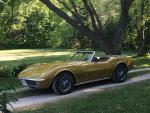
1969 L46 Manual with disc brakes on all corners. I have had it about 6 months. It was manual brakes when I bought it and the behavior was crap, you needed an elephant leg to stop the car. I quickly converted to the zip corvette power brake conversion kit (master cylinder, booster, other bits and pieces). Now the brakes are so sharp it is dangerous. I understand there are 2 master cylinder bores (1" for manual, 1 1/8" for power). Short of taking this new one back off (and re-bleeding brakes) to check I have received the correct one, I and not clear why the brakes are so sharp. I would expect that the kit has correctly matched/balanced parts. The circuit is well bled, the pedal with no power is rock hard, but when you press brakes there is a lot of assist and pedal goes down easy; and 1/2 way down the brakes clamp really hard really quickly. If you aren't careful you can easily lock up the tires, especially if you are reacting to a road emergency and are not being cautious modulating the pedal force. Has anyone else had similar results with this kit? Any suggestions on how to tone it down a bit, short of a large bore cylinder? I don't really want to install and vacuum regulation. I suppose my next contact should be zip themselves. If I recall correctly my manifold vacuum was around 15 at idle (not sure, its been a while). The car is a decent restoration with stock brakes/rotors.
Thanks for the quick reply. All suggestions and help are welcome. I followed the instructions in the kit and yes, the booster rod clevis gets relocated down one hole (to where the old brake switch bracket was previously installed). I did this, so there is less pedal leverage, however more stroke comes with that. There is no rod adjustment on the zip booster rod to the pedal (see attached photo). The clevice is right up against the rod shoulder.
I think you may just need to drive it and get used to the new system. It sometimes takes a learning curve.
Here is how it works for the different master bore sizes:
The smaller bore needs a longer stroke to move the same fluid, but it is easier to push.
The larger bore needs less stroke, or pedal movement, but is harder to push.
So you can see it can be pretty much a wash, and either one could take some getting used to.
And - as I have said before, when you do brake upgrades, you need tires that can handle it. Your tires may be sliding before it can take advantage of improved braking.
Last edited by 74modified; Feb 22, 2015 at 05:26 PM.
Garry,
Sorry to hear about the issues. It does sound like you need to get used from a standard non power to power. On any of these cars if you emergency stop the brake pedal you are going to lock them up. All of the parts in the kit are OEM or reproduction of the OEM. The pedal should be allot closer to floor than what it was on the standard brakes, but it also takes some getting used to.
You now have to put your right foot in to "power brakes" mode. Just a go to the main menu in your brain, choose deceleration, and switch to "power brake " setting. Bam, your done. LOL. Cheers.
I bought a new booster when I did my manual transmission conversion. The booster had to come out, was original, and there was no better time to do it.
Big mistake - the new booster was awful. It had a beautiful finish and installed easily, but that's about where the good ended. It had very minimal brake engagement until you hit a certain threshold - and then you were walking a fine line between easy braking and locking the brakes.
I traded it for a Cardone replacement, I believe it was. Nowhere near as pretty, but the car is much easier to drive and it basically feels identical to the brakes I had before.
Of course, this is a 78 and not a 69.
I know that you can make adjustments to the master cylinder pushrod size on earlier cars - have you tried that?
This might sound silly, but has the brake booster's reaction disk fallen out? I had a car with a failed reaction disk and the pedal was insensitive over half of the travel and then extremely grabby after that.
This might sound silly, but has the brake booster's reaction disk fallen out? I had a car with a failed reaction disk and the pedal was insensitive over half of the travel and then extremely grabby after that.
Hmmmmmmmm.....what is a reaction disc.........Ohhhh....I see......
The exact opposite of the way my brakes act, I push the pedal down to or past the gas pedal and do not like it. To many times have I not had my foot far enough over and felt the gas pedal under my foot. Bore sizes may be 1 and 1 1/8 for stock master cylinders, but a couple friends of mine run Wilwood manual brakes using a 3/4 master and say the car stops as easy as power and better pedal feel.
The exact opposite of the way my brakes act, I push the pedal down to or past the gas pedal and do not like it. To many times have I not had my foot far enough over and felt the gas pedal under my foot. Bore sizes may be 1 and 1 1/8 for stock master cylinders, but a couple friends of mine run Wilwood manual brakes using a 3/4 master and say the car stops as easy as power and better pedal feel.
The last time my brake pedal worked it's way to the floor over a period of months, it was the internal parts in the booster that gradually "gave out".
I'm not sure how low engine vacuum would affect pedal height.
Originally Posted by Kacyc3
The exact opposite of the way my brakes act, I push the pedal down to or past the gas pedal and do not like it. To many times have I not had my foot far enough over and felt the gas pedal under my foot. Bore sizes may be 1 and 1 1/8 for stock master cylinders, but a couple friends of mine run Wilwood manual brakes using a 3/4 master and say the car stops as easy as power and better pedal feel.
My car stops well without power brakes.....the problem is Louisiana drivers.....I need POWER when one of my fellow clowns pulls out or locks up their brakes in front of me because they missed their turn-in!
Last edited by doorgunner; Feb 24, 2015 at 11:03 PM.
With manual brakes on a C3, you reall need to use some leg to get firm application of the brakes. With power brakes, you just need to leave your heel on the floormat and press downward with your toe....unless doing a 'panic' stop.
If you are already doing as listed above, you either have a hardware problem somewhere in the system; or the brake pads selected for use with the MANUAL brakes were a very aggressive type of material. If the pad type is your problem, you may just need to change out the brake pads. I would suggest a good brand of ceramic pad for general use with power brakes.
The last time my brake pedal worked it's way to the floor over a period of months, it was the internal parts in the booster that gradually "gave out".
I'm not sure how low engine vacuum would affect pedal height.
My car stops well without power brakes.....the problem is Louisiana drivers.....I need POWER when one of my fellow clowns pulls out or locks up their brakes in front of me because they missed their turn-in!
I have a plenty of vacuum for the brakes just don't like how far down the the pedal goes.
Designer Imagines A Corvette That Looks More Like a Corvette Than the Corvette
Slideshow: A Jaguar designer's personal project imagines what a modern front-engined Corvette might look like if Chevrolet revisited the golden age of the Stingray.








 Power Brake Conversion is too aggressive