







Tach Drive Distributor Question

Former Vendor
Joined: Aug 2006
Posts: 76,656
Likes: 1,853
From: Jeffersonville Indiana 812-288-7103
St. Jude Donor '08-'09-'10-'11-'12-'13-'14-'15

The brass (or steel) is normally used for 1969 and older cars. The 1969 and new cars had the plastic button inside and you can tell from the hole in the side of the housing. You can see in the picture below.

I wonder if the brass button failure is due to customers installing it themselves, not realizing that it's more than just drill a hole in the side of the distributor to install the wall button. We machine the housing wall so when the button is installed the wall is the thickness it was originally.
The bushings upper and lower... boy there is a topic. I posted above that the bushings in most cases have to be re-sized after installed. If the bushings are driven in the housing and the clearance isn't correct the bushings will cease up on the shaft. I have to say that you at home builders need to be on your game when your own distributor.
IMHO,
Willcox
I wonder if the brass button failure is due to customers installing it themselves, not realizing that it's more than just drill a hole in the side of the distributor to install the wall button. We machine the housing wall so when the button is installed the wall is the thickness it was originally.
The bushings upper and lower... boy there is a topic. I posted above that the bushings in most cases have to be re-sized after installed. If the bushings are driven in the housing and the clearance isn't correct the bushings will cease up on the shaft. I have to say that you at home builders need to be on your game when your own distributor.
IMHO,
Willcox

Burning Brakes


Joined: Mar 2014
Posts: 904
Likes: 46
From: Crestline CA
I drilled and tapped mine and used a long 5/16" set screw with the tip ground flat and polished(overkill?)and a jamb nut. Gives the ability to fine tune end play and should be hard enough to not wear out. So far so good!

Thread Starter
Melting Slicks


Joined: Oct 2013
Posts: 2,569
Likes: 126
From: San Diego California
On my distributor, when I went to push out the button through the hole (from the exterior), all that came out was the button's stem, and all that was left of the button inside was a washer-like remanent. It was of a plastic material.
I threw it away before I took a photo, dammit.
Steve
I threw it away before I took a photo, dammit.
Steve
Former Vendor
Joined: Aug 2006
Posts: 76,656
Likes: 1,853
From: Jeffersonville Indiana 812-288-7103
St. Jude Donor '08-'09-'10-'11-'12-'13-'14-'15
On my distributor, when I went to push out the button through the hole (from the exterior), all that came out was the button's stem, and all that was left of the button inside was a washer-like remanent. It was of a plastic material.
I threw it away before I took a photo, dammit.
Steve
I threw it away before I took a photo, dammit.
Steve

Melting Slicks

Joined: Oct 2001
Posts: 2,065
Likes: 1,395
From: Halifax, Nova Scotia, Canada
The brass (or steel) is normally used for 1969 and older cars. The 1969 and new cars had the plastic button inside and you can tell from the hole in the side of the housing. You can see in the picture below.
I wonder if the brass button failure is due to customers installing it themselves, not realizing that it's more than just drill a hole in the side of the distributor to install the wall button. We machine the housing wall so when the button is installed the wall is the thickness it was originally.
The bushings upper and lower... boy there is a topic. I posted above that the bushings in most cases have to be re-sized after installed. If the bushings are driven in the housing and the clearance isn't correct the bushings will cease up on the shaft. I have to say that you at home builders need to be on your game when your own distributor.
IMHO,
Willcox
I wonder if the brass button failure is due to customers installing it themselves, not realizing that it's more than just drill a hole in the side of the distributor to install the wall button. We machine the housing wall so when the button is installed the wall is the thickness it was originally.
The bushings upper and lower... boy there is a topic. I posted above that the bushings in most cases have to be re-sized after installed. If the bushings are driven in the housing and the clearance isn't correct the bushings will cease up on the shaft. I have to say that you at home builders need to be on your game when your own distributor.
IMHO,
Willcox
I purchased a new main shaft and cross gear (with brass button). There was minimal wear in the housing, I drilled a partial hole in the housing from the inside, for the "peg" on the brass button.
I machined the surface of the brass button to achieve the correct end play.
Greased it up and re assembled.
Last summer I read here about the early failure of the brass buttons. I removed the dist and had a look, the button had no wear, just a bit shinny from the rotation of the cross gear, end play was still within spec.
I don't know if I have a good brass button or just good grease. I'll check it again in a few years.

Drifting

Joined: Aug 2005
Posts: 1,443
Likes: 65
From: Wauconda IL
I'm starting to think the load on the cross gear has more to do with the gears and housings/buttons wearing out that anything else.
The assembly itself with nothing (cable / tach) attached would probably last quite a few years and many miles with normal maintenance.
I think where the huge disparity between totally trashed vs mildly worn distributors comes in has a lot to do with the condition of the tach drive cable and the tach itself.
If the cable is dry or kinked, it's going to place a much bigger load on that side gear- Same with if the tach doesn't spin freely.
I've seen many a C3 with the tach cable running at all sorts of awkward angles as it attempts to attach to the distributor and that can't be good.
It's just a theory but believe it's very plausible.

The assembly itself with nothing (cable / tach) attached would probably last quite a few years and many miles with normal maintenance.
I think where the huge disparity between totally trashed vs mildly worn distributors comes in has a lot to do with the condition of the tach drive cable and the tach itself.
If the cable is dry or kinked, it's going to place a much bigger load on that side gear- Same with if the tach doesn't spin freely.
I've seen many a C3 with the tach cable running at all sorts of awkward angles as it attempts to attach to the distributor and that can't be good.
It's just a theory but believe it's very plausible.
Thread Starter
Melting Slicks
Joined: Oct 2013
Posts: 2,569
Likes: 126
From: San Diego California
I'm starting to think the load on the cross gear has more to do with the gears and housings/buttons wearing out that anything else.
The assembly itself with nothing (cable / tach) attached would probably last quite a few years and many miles with normal maintenance.
I think where the huge disparity between totally trashed vs mildly worn distributors comes in has a lot to do with the condition of the tach drive cable and the tach itself.
If the cable is dry or kinked, it's going to place a much bigger load on that side gear- Same with if the tach doesn't spin freely.
I've seen many a C3 with the tach cable running at all sorts of awkward angles as it attempts to attach to the distributor and that can't be good.
It's just a theory but believe it's very plausible.
The assembly itself with nothing (cable / tach) attached would probably last quite a few years and many miles with normal maintenance.
I think where the huge disparity between totally trashed vs mildly worn distributors comes in has a lot to do with the condition of the tach drive cable and the tach itself.
If the cable is dry or kinked, it's going to place a much bigger load on that side gear- Same with if the tach doesn't spin freely.
I've seen many a C3 with the tach cable running at all sorts of awkward angles as it attempts to attach to the distributor and that can't be good.
It's just a theory but believe it's very plausible.

Steve
Corvette Stories
The Best of Corvette for Corvette Enthusiasts

Top 10 Most Expensive Corvettes Ever Sold on Bring A Trailer
Brett Foote
10 Things Every Corvette Owner Needs (2026 Edition)
Michael S. Palmer
8 Most "Only Corvette Owners Understand" Quirks and Problems
Pouria Savadkouei
10 Reasons the C6 Z06 is Still A Performance Benchmark After 20 Years
Joe Kucinski
How Much Horsepower Every Corvette Engine "LOST" in 1972
Joe Kucinski
Top 10 DOs and DON'Ts for Protecting Your Convertible Top!
Michael S. Palmer
Top 10 Most Explosive Corvettes Ever Made: Power-to-Weight Ratio Ranked!
Joe Kucinski
150 hp to 1,250 hp: Every Corvette Generation Compared by the Specs That Matter
Joe Kucinski
8 Coolest Corvette Pace Cars (and Replicas) of All Time
Verdad Gallardo
Team Owner


Joined: Aug 1999
Posts: 30,995
Likes: 99
From: Ontario
I'm starting to think the load on the cross gear has more to do with the gears and housings/buttons wearing out that anything else.
The assembly itself with nothing (cable / tach) attached would probably last quite a few years and many miles with normal maintenance.
I think where the huge disparity between totally trashed vs mildly worn distributors comes in has a lot to do with the condition of the tach drive cable and the tach itself.
If the cable is dry or kinked, it's going to place a much bigger load on that side gear- Same with if the tach doesn't spin freely.
I've seen many a C3 with the tach cable running at all sorts of awkward angles as it attempts to attach to the distributor and that can't be good.
It's just a theory but believe it's very plausible.
The assembly itself with nothing (cable / tach) attached would probably last quite a few years and many miles with normal maintenance.
I think where the huge disparity between totally trashed vs mildly worn distributors comes in has a lot to do with the condition of the tach drive cable and the tach itself.
If the cable is dry or kinked, it's going to place a much bigger load on that side gear- Same with if the tach doesn't spin freely.
I've seen many a C3 with the tach cable running at all sorts of awkward angles as it attempts to attach to the distributor and that can't be good.
It's just a theory but believe it's very plausible.
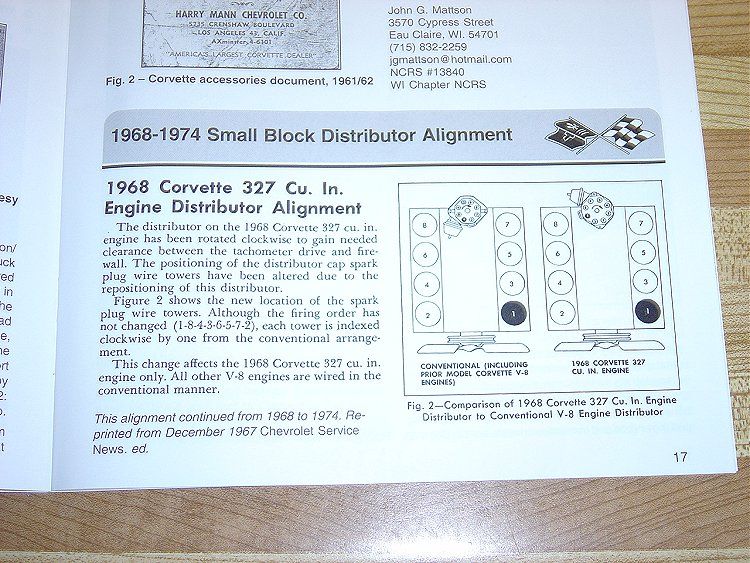
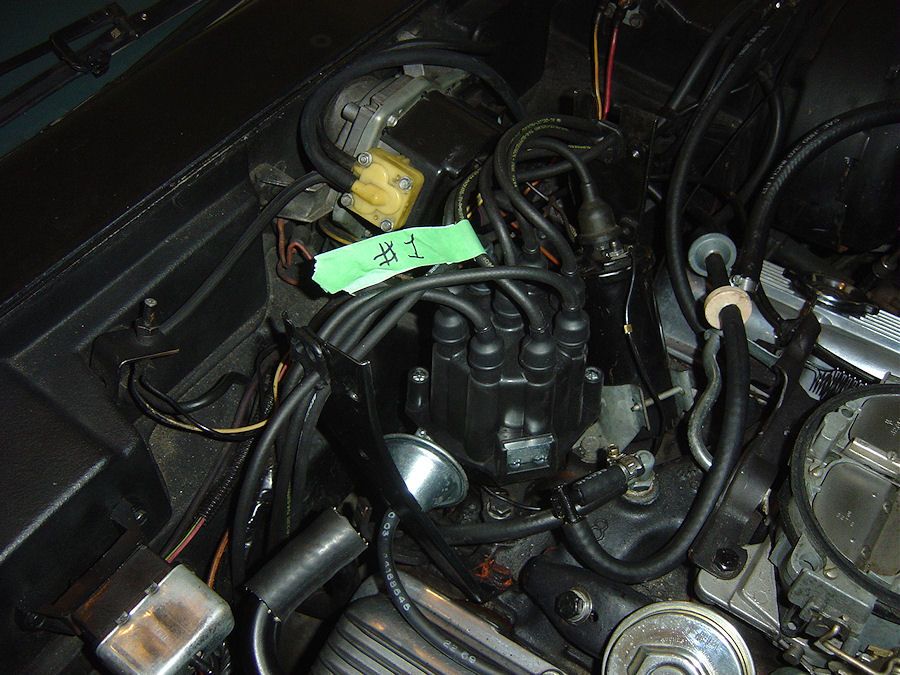
Last edited by Paul L; Feb 28, 2015 at 08:24 AM.
Drifting
Joined: Aug 2005
Posts: 1,443
Likes: 65
From: Wauconda IL
Exactly!
I've even gone as far as rotating the position of the plug wires in relation to the cap just to ensure the tach cable is not unnecessarily bent when I set the advance where it needs to be on my 409 SBC.
I've even gone as far as rotating the position of the plug wires in relation to the cap just to ensure the tach cable is not unnecessarily bent when I set the advance where it needs to be on my 409 SBC.
Team Owner
Joined: Aug 1999
Posts: 30,995
Likes: 99
From: Ontario
The Bubbafied intake vacuum fitting and hoses have since been cleaned up. You gotta love these cars to drive them. The vacuum feed back to the TH400 was entirely rubber and rotted near the vacuum modulator. Some funny shifts at times! I replaced the modulator and installed a proper steel vacuum line last year.
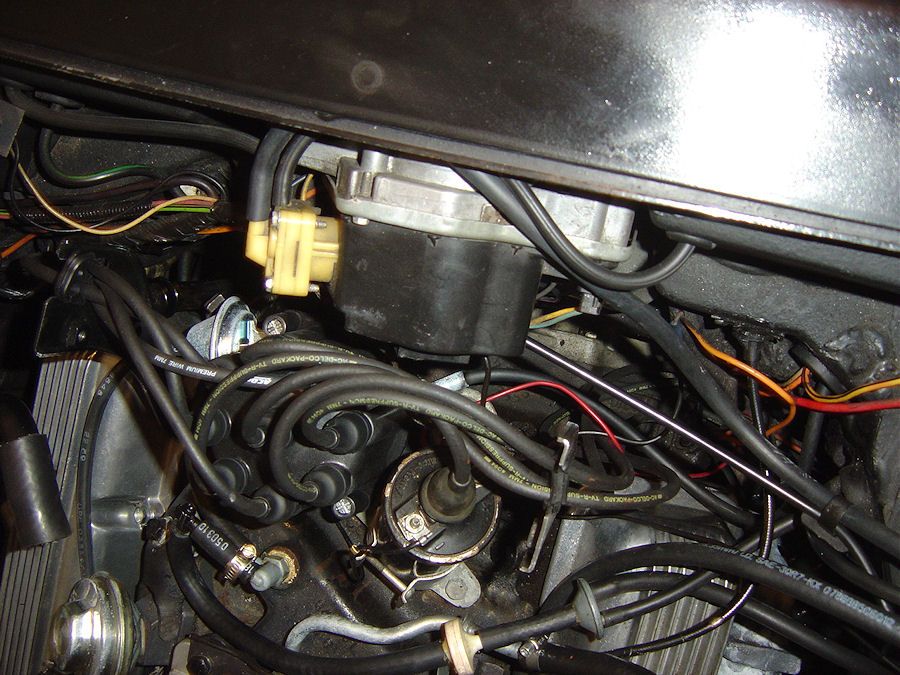
Last edited by Paul L; Feb 28, 2015 at 04:50 PM.
Drifting
Joined: Aug 2005
Posts: 1,443
Likes: 65
From: Wauconda IL
I had lunch today with a good engineer friend of mine that's worked on distributors for decades and pointed out another detail that is often overlooked-
The length of the tach cable itself.
With cars that are 45+ years old, there is a good chance that someone has replace the tach cable at one time or another.
How many people verify the length when replacing the cable to make sure that the cable isn't just a bit too long and bottoms out on the side gear, which in turn pre-loads the gear when you crank down the collar nut to the tach drive coupling?
You can ensure all day long that the gear has the appropriate clearance but if the cable is too long, it doesn't matter because the gear is forced to the bottom (back) of the housing.
Folks rebuilding these distributors would normally never see or know there was an issue because all they get is the distributor with munched gears.
I venture to guess that a majority of premature wear and destruction of cross gears and housings has more to do with binding/non-lubricated, too long cables than any manufacturing or design "defect" from Delco.
Just my .02, your mileage may vary.
The length of the tach cable itself.
With cars that are 45+ years old, there is a good chance that someone has replace the tach cable at one time or another.
How many people verify the length when replacing the cable to make sure that the cable isn't just a bit too long and bottoms out on the side gear, which in turn pre-loads the gear when you crank down the collar nut to the tach drive coupling?
You can ensure all day long that the gear has the appropriate clearance but if the cable is too long, it doesn't matter because the gear is forced to the bottom (back) of the housing.
Folks rebuilding these distributors would normally never see or know there was an issue because all they get is the distributor with munched gears.
I venture to guess that a majority of premature wear and destruction of cross gears and housings has more to do with binding/non-lubricated, too long cables than any manufacturing or design "defect" from Delco.
Just my .02, your mileage may vary.
Thread Starter
Melting Slicks
Joined: Oct 2013
Posts: 2,569
Likes: 126
From: San Diego California
I had lunch today with a good engineer friend of mine that's worked on distributors for decades and pointed out another detail that is often overlooked-
The length of the tach cable itself.
With cars that are 45+ years old, there is a good chance that someone has replace the tach cable at one time or another.
How many people verify the length when replacing the cable to make sure that the cable isn't just a bit too long and bottoms out on the side gear, which in turn pre-loads the gear when you crank down the collar nut to the tach drive coupling?
You can ensure all day long that the gear has the appropriate clearance but if the cable is too long, it doesn't matter because the gear is forced to the bottom (back) of the housing.
Folks rebuilding these distributors would normally never see or know there was an issue because all they get is the distributor with munched gears.
I venture to guess that a majority of premature wear and destruction of cross gears and housings has more to do with binding/non-lubricated, too long cables than any manufacturing or design "defect" from Delco.
Just my .02, your mileage may vary.
The length of the tach cable itself.
With cars that are 45+ years old, there is a good chance that someone has replace the tach cable at one time or another.
How many people verify the length when replacing the cable to make sure that the cable isn't just a bit too long and bottoms out on the side gear, which in turn pre-loads the gear when you crank down the collar nut to the tach drive coupling?
You can ensure all day long that the gear has the appropriate clearance but if the cable is too long, it doesn't matter because the gear is forced to the bottom (back) of the housing.
Folks rebuilding these distributors would normally never see or know there was an issue because all they get is the distributor with munched gears.
I venture to guess that a majority of premature wear and destruction of cross gears and housings has more to do with binding/non-lubricated, too long cables than any manufacturing or design "defect" from Delco.
Just my .02, your mileage may vary.
My problem: This car/project came to me without a distributor or cable. I have no idea what a proper length a factory cable should be. I do have a significant "wow" in my aftermarket cable/distributor.

Steve
Thread Starter
Melting Slicks
Joined: Oct 2013
Posts: 2,569
Likes: 126
From: San Diego California

Steve
Team Owner
Joined: Aug 1999
Posts: 30,995
Likes: 99
From: Ontario
Not sure where Paul. This one came from Corvette Central, and others I've seen advertised never mentioned their length. It does have about 4" too many. Or, I could change the #1 cap tower to another and have the Vacuum Advance positioned behind the Shield Strut. But I don't think that would help "shorten" it that much, and it might just strain the cable near the Distributor more with a bend there.
Steve
Steve
Thread Starter
Melting Slicks
Joined: Oct 2013
Posts: 2,569
Likes: 126
From: San Diego California
Melting Slicks
Joined: Oct 2001
Posts: 2,065
Likes: 1,395
From: Halifax, Nova Scotia, Canada
I still have the original cable, and the dist is "clocked" the same as Paul's.
It lasted 100,000 mi, and likely would have lasted longer if I had greased it every 10 years or so.