



 Just an observation.

Correct Carb

Thread Starter
Burning Brakes

Joined: Sep 2010
Posts: 799
Likes: 26
From: Lexington Park Maryland
 Correct Carb
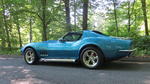
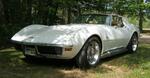
I was at a local Wednesday cruise tonight, it might as well be a show. There was so many cars, several took interest with my 72 LT1. The same individual who'd seen my C7, so I was telling them what I've been trying to fix on it. One guy quickly said I the carb on it was too big. The original carb that came with it when I got it was a 750 CFM double pumper, so I replaced it with a newer version. when I told him what the car those at high speed (105 mph), how it was popping and had some hesitation.
Again he quickly said the carb is too big. Hence my question: this a stock engine, well .030 over from being refresh a year ago. He said 600-650 would be better for it. What size carb should this 72 LT1 should have to perform.
Again he quickly said the carb is too big. Hence my question: this a stock engine, well .030 over from being refresh a year ago. He said 600-650 would be better for it. What size carb should this 72 LT1 should have to perform.

Burning Brakes


Joined: Jan 2006
Posts: 1,073
Likes: 331
From: Clear Lake Shores Texas
2016 C3 of Year Finalist
The 70-72 LT-1 came with a 780 CFM dual feed Holley, I believe. I am currently running a 670 CFM Holley Street Avenger on my stock 72 LT-1 and I think it runs a little better than with the stock carb which was recently rebuilt. I'm sure there will be a lot of other opinions.
Last edited by dan1495; May 21, 2015 at 11:27 AM. Reason: Nit picking.

Team Owner


Joined: Jan 2006
Posts: 37,637
Likes: 3,118
From: Crossville TN
GM generally over-carbed most of their performance cars. Customers equated performance with large carbs (750 cfm or more) and had a predisposed bias that Holleys were the better performance carb. So, BIG Holley carbs were put on the High Performance engines in GM cars. That's what the public wanted....that's what they got.
The actual needs of those engines (except for the L-88's, of course) didn't match with the carbs installed...except with the Hi-Po big block engines. The '70 LT-1's would have needed the carb that was installed IF the owner actually installed good headers and did all the tricks needed to get it to wind to more than 7000 rpm. Few owners actually did those things needed to get the most out of that engine.
Hey, tri-powers and dual-quads looks great!!! But, they were not really necessary for getting the fuel that was actually NEEDED into the intake.
P.S. I still love tri-powers, though.
The actual needs of those engines (except for the L-88's, of course) didn't match with the carbs installed...except with the Hi-Po big block engines. The '70 LT-1's would have needed the carb that was installed IF the owner actually installed good headers and did all the tricks needed to get it to wind to more than 7000 rpm. Few owners actually did those things needed to get the most out of that engine.
Hey, tri-powers and dual-quads looks great!!! But, they were not really necessary for getting the fuel that was actually NEEDED into the intake.
P.S. I still love tri-powers, though.
Thread Starter
Burning Brakes
Joined: Sep 2010
Posts: 799
Likes: 26
From: Lexington Park Maryland
GM generally over-carbed most of their performance cars. Customers equated performance with large carbs (750 cfm or more) and had a predisposed bias that Holleys were the better performance carb. So, BIG Holley carbs were put on the High Performance engines in GM cars. That's what the public wanted....that's what they got.
The actual needs of those engines (except for the L-88's, of course) didn't match with the carbs installed...except with the Hi-Po big block engines. The '70 LT-1's would have needed the carb that was installed IF the owner actually installed good headers and did all the tricks needed to get it to wind to more than 7000 rpm. Few owners actually did those things needed to get the most out of that engine.
Hey, tri-powers and dual-quads looks great!!! But, they were not really necessary for getting the fuel that was actually NEEDED into the intake.
P.S. I still love tri-powers, though.
The actual needs of those engines (except for the L-88's, of course) didn't match with the carbs installed...except with the Hi-Po big block engines. The '70 LT-1's would have needed the carb that was installed IF the owner actually installed good headers and did all the tricks needed to get it to wind to more than 7000 rpm. Few owners actually did those things needed to get the most out of that engine.
Hey, tri-powers and dual-quads looks great!!! But, they were not really necessary for getting the fuel that was actually NEEDED into the intake.
P.S. I still love tri-powers, though.

Le Mans Master


Joined: Oct 2010
Posts: 6,937
Likes: 848
From: melbourne florida
2023 C3 of the Year Finalist - Modified
thats the reason why chevy used the vacum secondary dual feed, and not a "double Pumper" , they would regulate themselves better. i ran a 750 double pumper on my old 70 LT-1 and id ran very well but it was tuned very well. there in lies the problem with these guys that always say the carb is too big, they apparently can't tune them. nothing out of the box is going to work perfectly. i have always run double pumpers as they are less "soggy" in response.
and a side note the 70's era engines were LT-1 , the 90's era engines were LT1, completely different engines and confusing to some people.
and a side note the 70's era engines were LT-1 , the 90's era engines were LT1, completely different engines and confusing to some people.

Had a 1976 L-82, 4-sp


Joined: Mar 2011
Posts: 5,338
Likes: 1,213
From: Some days your the dog and some days your the hydrant.
Royal Canadian Navy

Safety Car

Joined: Aug 2000
Posts: 3,711
Likes: 43
From: San Antonio TX
You might also suspect a high-load, sustained rpm fuel delivery issue like a fuel filter, weak pump, low floats and the like.
What's causing it very much depends upon very fine details in the description of the issue.
I agree with most here; the carburetor is not too big especially since the factory put a 780cfm on the thing. My base-engined '72 runs really good with a very old Holley 3310 (750cfm). What you can run into with carburetor sizing issues is some lazy or sagging throttle response when the carburetor is on the big cfm side and inadequate higher rpm power when it is too small. You can't tune the small carburetor to act bigger, but you can tune a big carburetor to respond similarly to a smaller carburetor as far a fuel trim and booster response. The most important issue to address when using an aftermarket carburetor is understanding your fuel trim throughout the operating range of the engine. You will be kind of in the ballpark with an out-of-the-box carburetor but not really well-tailored to your engines needs. Unless it's running lean, you would probably never notice the performance shortfall and most folks never bother to address it if it isn't causing a noticeable problem.
Corvette Stories
The Best of Corvette for Corvette Enthusiasts

Top 10 Most Expensive Corvettes Ever Sold on Bring A Trailer
Brett Foote
10 Things Every Corvette Owner Needs (2026 Edition)
Michael S. Palmer
8 Most "Only Corvette Owners Understand" Quirks and Problems
Pouria Savadkouei
10 Reasons the C6 Z06 is Still A Performance Benchmark After 20 Years
Joe Kucinski
How Much Horsepower Every Corvette Engine "LOST" in 1972
Joe Kucinski
Top 10 DOs and DON'Ts for Protecting Your Convertible Top!
Michael S. Palmer
Top 10 Most Explosive Corvettes Ever Made: Power-to-Weight Ratio Ranked!
Joe Kucinski
150 hp to 1,250 hp: Every Corvette Generation Compared by the Specs That Matter
Joe Kucinski
8 Coolest Corvette Pace Cars (and Replicas) of All Time
Verdad Gallardo
Team Owner
Joined: Jan 2006
Posts: 37,637
Likes: 3,118
From: Crossville TN
resdoggie:
I agree with you completely. MOST of the GM engines with Q-Jet installed NEVER could have needed what that carb could have delivered. But, the Q-Jet was a "demand" carb for secondary action; it would open the secondaries only as much as the engine required. That's exactly WHY GM put those carbs on about every engine that needed more than a 2-barrel carb to run it. They even put the Q-Jet on the Pontiac 6-cyl. overhead cam engine!!
The inherent design flexibility of the Q-Jet made it the "Go To" carb for GM from the mid-60's and into the 80's. The carb had the capability to produce 750 cfm flow (a few of them could supply 800 cfm), but they could be placed on engines of ANY size. The Q-Jet was as much....or more...carb than was needed on every SBC 350 engine produced at the GM factories. It would have been fine on top of the LT-1 engines...but buyers preferred a Holley carb on them [a Holley with vacuum-operated secondaries, I might add...not a double-pumper].
The Q-Jet is a great carb...but it had lots more flow CAPABILITY than most GM engines needed.
I agree with you completely. MOST of the GM engines with Q-Jet installed NEVER could have needed what that carb could have delivered. But, the Q-Jet was a "demand" carb for secondary action; it would open the secondaries only as much as the engine required. That's exactly WHY GM put those carbs on about every engine that needed more than a 2-barrel carb to run it. They even put the Q-Jet on the Pontiac 6-cyl. overhead cam engine!!
The inherent design flexibility of the Q-Jet made it the "Go To" carb for GM from the mid-60's and into the 80's. The carb had the capability to produce 750 cfm flow (a few of them could supply 800 cfm), but they could be placed on engines of ANY size. The Q-Jet was as much....or more...carb than was needed on every SBC 350 engine produced at the GM factories. It would have been fine on top of the LT-1 engines...but buyers preferred a Holley carb on them [a Holley with vacuum-operated secondaries, I might add...not a double-pumper].
The Q-Jet is a great carb...but it had lots more flow CAPABILITY than most GM engines needed.
Last edited by 7T1vette; May 21, 2015 at 01:35 PM.
Thread Starter
Burning Brakes
Joined: Sep 2010
Posts: 799
Likes: 26
From: Lexington Park Maryland
You are probably dealing with an ignition issue; too much advance, breakdown in the secondary ignition (plugs, wires, cap, rotor, condenser, coil).
You might also suspect a high-load, sustained rpm fuel delivery issue like a fuel filter, weak pump, low floats and the like.
What's causing it very much depends upon very fine details in the description of the issue.
I agree with most here; the carburetor is not too big especially since the factory put a 780cfm on the thing. My base-engined '72 runs really good with a very old Holley 3310 (750cfm). What you can run into with carburetor sizing issues is some lazy or sagging throttle response when the carburetor is on the big cfm side and inadequate higher rpm power when it is too small. You can't tune the small carburetor to act bigger, but you can tune a big carburetor to respond similarly to a smaller carburetor as far a fuel trim and booster response. The most important issue to address when using an aftermarket carburetor is understanding your fuel trim throughout the operating range of the engine. You will be kind of in the ballpark with an out-of-the-box carburetor but not really well-tailored to your engines needs. Unless it's running lean, you would probably never notice the performance shortfall and most folks never bother to address it if it isn't causing a noticeable problem.
You might also suspect a high-load, sustained rpm fuel delivery issue like a fuel filter, weak pump, low floats and the like.
What's causing it very much depends upon very fine details in the description of the issue.
I agree with most here; the carburetor is not too big especially since the factory put a 780cfm on the thing. My base-engined '72 runs really good with a very old Holley 3310 (750cfm). What you can run into with carburetor sizing issues is some lazy or sagging throttle response when the carburetor is on the big cfm side and inadequate higher rpm power when it is too small. You can't tune the small carburetor to act bigger, but you can tune a big carburetor to respond similarly to a smaller carburetor as far a fuel trim and booster response. The most important issue to address when using an aftermarket carburetor is understanding your fuel trim throughout the operating range of the engine. You will be kind of in the ballpark with an out-of-the-box carburetor but not really well-tailored to your engines needs. Unless it's running lean, you would probably never notice the performance shortfall and most folks never bother to address it if it isn't causing a noticeable problem.
One more to add from last nights observation, while I was showing the engine to the on lookers. I noticed a cracked vacuum plug, I got and a plugged it back up. On the way home with the vacuum leak plugged up, the car ran bad. to the point it would back fire during deaccell, then it was rough starting out and had a poor throttle response. I guess the vacuum leak was augmenting the current carb setting.
I am goin to replace ignition parts: cap and rotor, plugs and wires. I noticed that the plug wires at the spark plug end are showing the affect of the headers. I am replacing the wires after I received the spark plug heat shield boot.
Timing is at the 4 degree BTDC, before this was happebing. I had it at 10 BTDC.
Race Director

Joined: May 2006
Posts: 18,735
Likes: 2,582
1. exactly what list number 750 is on the car now?
2. have you changed the jetting on carb from stock?
3. You do have a single fuel line going to the carb with no return line anywhere?
4. In addition to no points are the weights and springs in the distributor stock?
2. have you changed the jetting on carb from stock?
3. You do have a single fuel line going to the carb with no return line anywhere?
4. In addition to no points are the weights and springs in the distributor stock?
Thread Starter
Burning Brakes
Joined: Sep 2010
Posts: 799
Likes: 26
From: Lexington Park Maryland
I have not changed the jetting from stock
No, return line for the fuel
Yes, the spring and the weight are stock
Since all of the ignition components might play into this issue (stock spring and weights). I have a new Mallory dist I got for another SBC, I'll still it to eliminate the spring and weight as the posibility.
I recently swapped out the electric fuel pump back to the mechanical.
Last edited by newbie2vette; May 21, 2015 at 03:01 PM.
Race Director
Joined: May 2006
Posts: 18,735
Likes: 2,582
the springs and weights wont cause popping at 105mph.
1. Did you check the float levels?
2. Can you look at the front of the airhorn of the carburetor, where the choke flap is located, and check the list number?
3. How many miles on the plugs?
4. What octane gas are you using?
1. Did you check the float levels?
2. Can you look at the front of the airhorn of the carburetor, where the choke flap is located, and check the list number?
3. How many miles on the plugs?
4. What octane gas are you using?
Thread Starter
Burning Brakes
Joined: Sep 2010
Posts: 799
Likes: 26
From: Lexington Park Maryland
the springs and weights wont cause popping at 105mph.
1. Did you check the float levels?
2. Can you look at the front of the airhorn of the carburetor, where the choke flap is located, and check the list number?
3. How many miles on the plugs?
4. What octane gas are you using?
1. Did you check the float levels?
2. Can you look at the front of the airhorn of the carburetor, where the choke flap is located, and check the list number?
3. How many miles on the plugs?
4. What octane gas are you using?
plugs have 5k on them
on this tank I accidently filled up with regular.
Over the week end, I switch carb to the 600 CFM edelbrock. With this carb the cars great and no issue as long as I don't get caught in a stop and go traffic. Taking it to the dragon in July but will test it for long range drive first. Thank you again for the great inputs.

Melting Slicks

Joined: Apr 2009
Posts: 2,632
Likes: 112
From: Great Plains Iowa
The factory never put larger carburetors on engines just to satisfy public demand. They sized them for the very highest rpm the engine would ever see and at 100% volumetric efficiency; meaning the carburetor was big enough plus a bit more to ensure 0" Hg at wide open throttle.
Melting Slicks
Joined: Apr 2009
Posts: 2,632
Likes: 112
From: Great Plains Iowa
I was at a local Wednesday cruise tonight, it might as well be a show. There was so many cars, several took interest with my 72 LT1. The same individual who'd seen my C7, so I was telling them what I've been trying to fix on it. One guy quickly said I the carb on it was too big. The original carb that came with it when I got it was a 750 CFM double pumper, so I replaced it with a newer version. when I told him what the car those at high speed (105 mph), how it was popping and had some hesitation.
Again he quickly said the carb is too big. Hence my question: this a stock engine, well .030 over from being refresh a year ago. He said 600-650 would be better for it. What size carb should this 72 LT1 should have to perform.
Again he quickly said the carb is too big. Hence my question: this a stock engine, well .030 over from being refresh a year ago. He said 600-650 would be better for it. What size carb should this 72 LT1 should have to perform.
The popping at 105 mph sounds like you have a broken valve spring. Not unusual at all.
Thread Starter
Burning Brakes
Joined: Sep 2010
Posts: 799
Likes: 26
From: Lexington Park Maryland
Melting Slicks
Joined: Oct 2001
Posts: 2,065
Likes: 1,395
From: Halifax, Nova Scotia, Canada
thats the reason why chevy used the vacum secondary dual feed, and not a "double Pumper" , they would regulate themselves better. i ran a 750 double pumper on my old 70 LT-1 and id ran very well but it was tuned very well. there in lies the problem with these guys that always say the carb is too big, they apparently can't tune them. nothing out of the box is going to work perfectly. i have always run double pumpers as they are less "soggy" in response.
and a side note the 70's era engines were LT-1 , the 90's era engines were LT1, completely different engines and confusing to some people.
and a side note the 70's era engines were LT-1 , the 90's era engines were LT1, completely different engines and confusing to some people.
In the gas crunch in the '80s, I decided to replace the 750 DP with a 600 Holley. (Gas mileage reasons) The 600 ran well, however when you "got on it", the best description was that it felt like you had a 30 ft travel trailer attached. It had no go above 4k rpm., seemed like forever to get to 6K.
I put up with that for about a week, re installed the 750 and it's been there ever since.

Le Mans Master
Joined: Oct 2007
Posts: 7,453
Likes: 976
From: RI, Now Franklin/Nashville TN
I don't know but maybe the thinking has changed quite a bit since 1970 but a 750-780 CFM on a SBC 350 with 370 GROSS HP, even 400 GROSS HP, is an awful lot of carb for that size motor. It is well recognized by engine experts, too numerous car enthusiast magazines, and my personal experience with my built L-82 355 with 10.2:1 compression, AFR 180 heads, and roller cam .525/,525 that most small block 350's with up to 450-500 GROSS HP do not need a carb with more than 650 CFM. The engine builder who built my L-82 short block cautioned me about just using my Holley 4175 650 CFM vacuum secondary carb and NOT to go to a 750 CFM. He did say that all the 650 carb needs is bigger primary jets and secondary metering block but 650 CFM was more than appropriate for the 355 and 400-425 Gross HP...bigger carb would actually hurt low and mid range power and do nothing for top end. The engine runs like a monster with the 650 Holley and would easily outperform a stock 70 LT-1 so for the life of me I can't figure how GM came up with a 750 CFM Holley for that motor? Makes one wonder about that size carb on a 370 GROSS HP LT-1 unless the engine was actually making over 500 Gross HP which I seriously doubt based on my build....
Last edited by jb78L-82; May 27, 2015 at 05:22 PM.
Melting Slicks
Joined: Apr 2009
Posts: 2,632
Likes: 112
From: Great Plains Iowa
Not at all. If the spring has a broken bottom coil it'll easily rev to as high as 3500-4000 rpm and then start popping when it exceeds that rpm as the valve can't close tight enough to prevent the flame from blowing back into the intake manifold. It's an rpm issue; not a load issue.