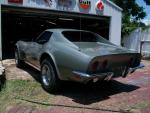
Trans. Cooler question...? ;)

Thread Starter
Racer

Joined: Feb 2012
Posts: 462
Likes: 0
From: Virginia
 Trans. Cooler question...? ;)
Hallo guys,
my 1973 vette needs a transmission cooler and I was wondering which one should I put on..one that sits in front with radiator or one with independent fan ??
I really dont want to have the radiator pulled out to install this thing as it is a big job and would like to know where and which one you guys are using?? with pics if possible
..is this a good choice?..and is there a simpler way to install withOUT removing the Radiator??
http://www.summitracing.com/parts/hd...model/corvette
Thank you
my 1973 vette needs a transmission cooler and I was wondering which one should I put on..one that sits in front with radiator or one with independent fan ??
I really dont want to have the radiator pulled out to install this thing as it is a big job and would like to know where and which one you guys are using?? with pics if possible
..is this a good choice?..and is there a simpler way to install withOUT removing the Radiator??
http://www.summitracing.com/parts/hd...model/corvette
Thank you

Melting Slicks

Joined: Apr 2009
Posts: 2,632
Likes: 112
From: Great Plains Iowa
Hallo guys,
my 1973 vette needs a transmission cooler and I was wondering which one should I put on..one that sits in front with radiator or one with independent fan ??
I really dont want to have the radiator pulled out to install this thing as it is a big job and would like to know where and which one you guys are using?? with pics if possible
..is this a good choice?..and is there a simpler way to install withOUT removing the Radiator??
http://www.summitracing.com/parts/hd...model/corvette
Thank you
my 1973 vette needs a transmission cooler and I was wondering which one should I put on..one that sits in front with radiator or one with independent fan ??
I really dont want to have the radiator pulled out to install this thing as it is a big job and would like to know where and which one you guys are using?? with pics if possible
..is this a good choice?..and is there a simpler way to install withOUT removing the Radiator??
http://www.summitracing.com/parts/hd...model/corvette
Thank you
The stock cooler in your radiator is all you'll ever need unless you are track racing your C3 under a near full throttle for extended periods of time or pulling very heavy trailers over long distances.
Thread Starter
Racer
Joined: Feb 2012
Posts: 462
Likes: 0
From: Virginia
...I have a Champion aluminum rad. and changed the torque converter to a Huggies high perf. one....?
Last edited by Cattiva73; Jan 3, 2016 at 01:04 PM.
Le Mans Master


Joined: May 2006
Posts: 9,993
Likes: 1,136
From: League City Tx
I used a B&M stacked plate style cooler, I laid it down flat on some braces I made. Clears the hood, doesn't restrict the radiator flow... It feeds up from the license plate area. Works great with my 3200 converter.
On my Z06, I used the B&M 70297 with the fan and it also works great.. It's about $180 tho...
On my Z06, I used the B&M 70297 with the fan and it also works great.. It's about $180 tho...
Last edited by ajrothm; Jan 3, 2016 at 01:32 PM.

Melting Slicks

Joined: May 2006
Posts: 2,590
Likes: 403
From: Nashville TN
St. Jude Donor '09
I'm running 2600 convertor with Dewitts aluminum radiator with built in trans cooler, but it would hit 180-200* while driving in town. I added one same size/type as the Hayden you show and put in line. Now runs consistant 150*. Install was easy. I mounted on front of my radiator, but hood was off for easy access.
Thread Starter
Racer
Joined: Feb 2012
Posts: 462
Likes: 0
From: Virginia
I'm running 2600 convertor with Dewitts aluminum radiator with built in trans cooler, but it would hit 180-200* while driving in town. I added one same size/type as the Hayden you show and put in line. Now runs consistant 150*. Install was easy. I mounted on front of my radiator, but hood was off for easy access.
Thread Starter
Racer
Joined: Feb 2012
Posts: 462
Likes: 0
From: Virginia
I used a B&M stacked plate style cooler, I laid it down flat on some braces I made. Clears the hood, doesn't restrict the radiator flow... It feeds up from the license plate area. Works great with my 3200 converter.
On my Z06, I used the B&M 70297 with the fan and it also works great.. It's about $180 tho...
On my Z06, I used the B&M 70297 with the fan and it also works great.. It's about $180 tho...
Last edited by Cattiva73; Jan 3, 2016 at 03:18 PM.

Drifting

Joined: Aug 2009
Posts: 1,346
Likes: 160
From: new iberia la
Hallo guys,
my 1973 vette needs a transmission cooler and I was wondering which one should I put on..one that sits in front with radiator or one with independent fan ??
I really dont want to have the radiator pulled out to install this thing as it is a big job and would like to know where and which one you guys are using?? with pics if possible
..is this a good choice?..and is there a simpler way to install withOUT removing the Radiator??
http://www.summitracing.com/parts/hd...model/corvette
Thank you
my 1973 vette needs a transmission cooler and I was wondering which one should I put on..one that sits in front with radiator or one with independent fan ??
I really dont want to have the radiator pulled out to install this thing as it is a big job and would like to know where and which one you guys are using?? with pics if possible
..is this a good choice?..and is there a simpler way to install withOUT removing the Radiator??
http://www.summitracing.com/parts/hd...model/corvette
Thank you
Corvette Stories
The Best of Corvette for Corvette Enthusiasts

Top 10 Most Expensive Corvettes Ever Sold on Bring A Trailer
Brett Foote
10 Things Every Corvette Owner Needs (2026 Edition)
Michael S. Palmer
8 Most "Only Corvette Owners Understand" Quirks and Problems
Pouria Savadkouei
10 Reasons the C6 Z06 is Still A Performance Benchmark After 20 Years
Joe Kucinski
How Much Horsepower Every Corvette Engine "LOST" in 1972
Joe Kucinski
Top 10 DOs and DON'Ts for Protecting Your Convertible Top!
Michael S. Palmer
Top 10 Most Explosive Corvettes Ever Made: Power-to-Weight Ratio Ranked!
Joe Kucinski
150 hp to 1,250 hp: Every Corvette Generation Compared by the Specs That Matter
Joe Kucinski
8 Coolest Corvette Pace Cars (and Replicas) of All Time
Verdad Gallardo
Thread Starter
Racer
Joined: Feb 2012
Posts: 462
Likes: 0
From: Virginia
You don't need to remove radiator to install an auxillary cooler.. you can put it directly in front of your A/C Condenser ,or anywhere it will get plenty moving air . plumb it in series with your existing radiator internal trans cooler... do not rely on just the auxillary cooler.Let it provide additional cooling to the fluid after it exits the radiator and before returning to trans .... Not a difficult job.
Le Mans Master
Joined: May 2006
Posts: 9,993
Likes: 1,136
From: League City Tx
I run to the external cooler only.. It's hot where I live, no need to heat the radiator up with transmission fluid... That or run the risk of mixing fluids if one the internal coolers spring a leak.
Make sure to use real transmission fluid hose and double clamp everything if you are using hose/barbs/clamps.

Racer

Joined: Mar 2013
Posts: 423
Likes: 25
From: Boca Raton Florida
I am running a fan/cooler setup mounted under the tank in the rear. My batteries and relays for the twin fuel pump are there as well. Trying to keep as much clearance in front of the engine and radiator as I can to keep it cool. Its always pretty warm here in South Florida and the blower makes plenty of its own heat lol.

Race Director


Joined: Jan 2000
Posts: 13,018
Likes: 2,262
From: Corsicana, Tx
2020 C2 of the Year - Modified Winner
2020 Corvette of the Year (performance mods)
C2 of Year Winner (performance mods) 2019
2017 C2 of Year Finalist
An external air to liquid cooler is perfect. Install in front of radiator without a fan.
Trans coolers within the radiator work as much like an engine warmer as they do as a trans cooler. With the engine running around at 200*+ it's going to have a tough time keeping trans temp down.
Trans life is greatly influenced by fluid temps.
The general rule of thumb is that for each 20 to 25 degree increase in temperature the transmission's life expectancy is cut in half. Keeping your transmission cool is the key to longevity.
Heat Temperature Failure Chart
175 Degrees: 100,000+ miles (Normal is typically 179 to 195 degrees)
200 Degrees: 90,000 miles
225 Degrees: 55,000 miles (Pressure Drops)
250 Degrees: 25,000 miles (Valves Stick)
275 Degrees: 17,000 miles (Varnish Forms)
300 Degrees: 4,000 miles (Seals & Clutches Burn)
325 Degrees: TRANSMISSION FAILURE
JIM
Trans coolers within the radiator work as much like an engine warmer as they do as a trans cooler. With the engine running around at 200*+ it's going to have a tough time keeping trans temp down.
Trans life is greatly influenced by fluid temps.
The general rule of thumb is that for each 20 to 25 degree increase in temperature the transmission's life expectancy is cut in half. Keeping your transmission cool is the key to longevity.
Heat Temperature Failure Chart
175 Degrees: 100,000+ miles (Normal is typically 179 to 195 degrees)
200 Degrees: 90,000 miles
225 Degrees: 55,000 miles (Pressure Drops)
250 Degrees: 25,000 miles (Valves Stick)
275 Degrees: 17,000 miles (Varnish Forms)
300 Degrees: 4,000 miles (Seals & Clutches Burn)
325 Degrees: TRANSMISSION FAILURE
JIM
Last edited by 427Hotrod; Jan 4, 2016 at 12:15 PM.

Team Owner

Joined: Apr 1999
Posts: 21,953
Likes: 1,445
From: Reno Nevada
2024 C3 of the Year Finalist- Modified
I ran the biggest B&M cooler mounted up front nearly parallel to the ground. I thought of convection air flow and not impeding any air to my aluminum radiator.
http://www.summitracing.com/parts/bmm-70274/overview/
http://www.summitracing.com/parts/bmm-70274/overview/
Last edited by gkull; Jan 4, 2016 at 01:26 PM.
Drifting
Joined: Aug 2009
Posts: 1,346
Likes: 160
From: new iberia la
An external air to liquid cooler is perfect. Install in front of radiator without a fan.
Trans coolers within the radiator work as much like an engine warmer as they do as a trans cooler. With the engine running around at 200*+ it's going to have a tough time keeping trans temp down.
Trans life is greatly influenced by fluid temps.
The general rule of thumb is that for each 20 to 25 degree increase in temperature the transmission's life expectancy is cut in half. Keeping your transmission cool is the key to longevity.
Heat Temperature Failure Chart
175 Degrees: 100,000+ miles (Normal is typically 179 to 195 degrees)
200 Degrees: 90,000 miles
225 Degrees: 55,000 miles (Pressure Drops)
250 Degrees: 25,000 miles (Valves Stick)
275 Degrees: 17,000 miles (Varnish Forms)
300 Degrees: 4,000 miles (Seals & Clutches Burn)
325 Degrees: TRANSMISSION FAILURE
JIM
Trans coolers within the radiator work as much like an engine warmer as they do as a trans cooler. With the engine running around at 200*+ it's going to have a tough time keeping trans temp down.
Trans life is greatly influenced by fluid temps.
The general rule of thumb is that for each 20 to 25 degree increase in temperature the transmission's life expectancy is cut in half. Keeping your transmission cool is the key to longevity.
Heat Temperature Failure Chart
175 Degrees: 100,000+ miles (Normal is typically 179 to 195 degrees)
200 Degrees: 90,000 miles
225 Degrees: 55,000 miles (Pressure Drops)
250 Degrees: 25,000 miles (Valves Stick)
275 Degrees: 17,000 miles (Varnish Forms)
300 Degrees: 4,000 miles (Seals & Clutches Burn)
325 Degrees: TRANSMISSION FAILURE
JIM
Race Director
Joined: Jan 2000
Posts: 13,018
Likes: 2,262
From: Corsicana, Tx
2020 C2 of the Year - Modified Winner
2020 Corvette of the Year (performance mods)
C2 of Year Winner (performance mods) 2019
2017 C2 of Year Finalist
I didn't say it wasn't effective at all....I know where the cooler is...which is why I said it was a great engine warmer. Radiators drop temp "X" degrees depending on all factors and then we run trans cooler on the return side which releases heat right back into engine.
I agree putting one in series can be more effective than just in the radiator...just like a double or triple pass radiator can also...and liquid cools better than air....but if I can keep trans cool with air...I'll keep the heat away from my engine. Putting them in the radiator is cost effective...not necessarily the best way. Look at just about any heavy duty application for transmissions, PS systems etc and see the air to liquid coolers used to do the job without overloading the cooling system.
But hey...that's just me....
JIM
I agree putting one in series can be more effective than just in the radiator...just like a double or triple pass radiator can also...and liquid cools better than air....but if I can keep trans cool with air...I'll keep the heat away from my engine. Putting them in the radiator is cost effective...not necessarily the best way. Look at just about any heavy duty application for transmissions, PS systems etc and see the air to liquid coolers used to do the job without overloading the cooling system.
But hey...that's just me....
JIM
Drifting
Joined: Aug 2009
Posts: 1,346
Likes: 160
From: new iberia la
I didn't say it wasn't effective at all....I know where the cooler is...which is why I said it was a great engine warmer. Radiators drop temp "X" degrees depending on all factors and then we run trans cooler on the return side which releases heat right back into engine.
I agree putting one in series can be more effective than just in the radiator...just like a double or triple pass radiator can also...and liquid cools better than air....but if I can keep trans cool with air...I'll keep the heat away from my engine. Putting them in the radiator is cost effective...not necessarily the best way. Look at just about any heavy duty application for transmissions, PS systems etc and see the air to liquid coolers used to do the job without overloading the cooling system.
But hey...that's just me....
JIM
I agree putting one in series can be more effective than just in the radiator...just like a double or triple pass radiator can also...and liquid cools better than air....but if I can keep trans cool with air...I'll keep the heat away from my engine. Putting them in the radiator is cost effective...not necessarily the best way. Look at just about any heavy duty application for transmissions, PS systems etc and see the air to liquid coolers used to do the job without overloading the cooling system.
But hey...that's just me....
JIM


Drifting
Joined: Nov 2002
Posts: 1,691
Likes: 206
From: Loveland, CO
I am installing a transmission from Bowtie Overdrives, and they recommend keeping the fluid temp in the 150 range. The tranny comes with a 20 page installation instruction manual, and they are very **** about you testing pressures, temps. and TV cables.
Just some interesting reading.
Ralph
Just some interesting reading.
Ralph
Drifting
Joined: Aug 2009
Posts: 1,346
Likes: 160
From: new iberia la
I am installing a transmission from Bowtie Overdrives, and they recommend keeping the fluid temp in the 150 range. The tranny comes with a 20 page installation instruction manual, and they are very **** about you testing pressures, temps. and TV cables.
Just some interesting reading.
Ralph
Just some interesting reading.
Ralph

Le Mans Master
Joined: Oct 2007
Posts: 7,453
Likes: 976
From: RI, Now Franklin/Nashville TN
I didn't say it wasn't effective at all....I know where the cooler is...which is why I said it was a great engine warmer. Radiators drop temp "X" degrees depending on all factors and then we run trans cooler on the return side which releases heat right back into engine.
I agree putting one in series can be more effective than just in the radiator...just like a double or triple pass radiator can also...and liquid cools better than air....but if I can keep trans cool with air...I'll keep the heat away from my engine. Putting them in the radiator is cost effective...not necessarily the best way. Look at just about any heavy duty application for transmissions, PS systems etc and see the air to liquid coolers used to do the job without overloading the cooling system.
But hey...that's just me....
JIM
I agree putting one in series can be more effective than just in the radiator...just like a double or triple pass radiator can also...and liquid cools better than air....but if I can keep trans cool with air...I'll keep the heat away from my engine. Putting them in the radiator is cost effective...not necessarily the best way. Look at just about any heavy duty application for transmissions, PS systems etc and see the air to liquid coolers used to do the job without overloading the cooling system.
But hey...that's just me....
JIM
I have found over 30+ years that running a cooler outside of the radiator will keep the fluid the coolest and contribute to the longest life of a transmission. As Jim states, the primary reason for running a cooler after the radiator cooling (in conjunction with the radiator cooling) is to warm the transmission fluid quickly in cooler climates when the transmission fluid is cold. This method accounts for all weather conditions but is not optimal for cars run in warmer climates or even necessary for cold weather. My first tranny cooler setup was in my 73 Nova SS which ran 2 tube and fin coolers outside of the radiator. Even in very cold New England, I never had an issue except that the tranny would take longer to get up to operating temp. That Turbo 350 had 168,000 miles on it when I sold it in 1990 after beating it to death for years....working perfectly when sold. My DD Pontiac GP today has 180,000 miles on the crap FWD tranny 4T65E and has 2 18,000 GVW Long (Dana) double stack coolers in the grill that do all the trans fluid cooling....works perfectly in all weather but below 20 degrees takes about 5 miles to shift into OD once the trans fluid reaches 88 degrees. Also, have 2 Long Double stack coolers outside of the radiator on my 94 Mustang GT AODE tranny (24,000 + 18,000 GVW) but that car only is driven in warmer temps....trans fluid in the heat of summer is about 145-150 degrees, almost perfect. BTW-about to install a 28,000 Long GVW cooler on my 2008 Chrysler 300 which uses an air to air tranny cooler stock....no radiator cooling. The Long/Dana Double stack coolers have a built in temperature controller that only allows full tranny fluid cooling based on the viscosity of the tranny fluid...look up Long/Dana Coolers. Also, Jim is correct that most heavy duty cooling applications for transmission/PS steering systems do NOT use radiator cooling in conjunction with the external coolers....think police applications...Maximum cooling equals stand alone coolers.
Last edited by jb78L-82; Jan 4, 2016 at 07:55 PM.