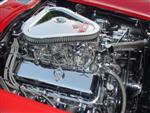

vacuum advance question

Is my vette stock?? HAHA


Joined: Oct 2015
Posts: 20,149
Likes: 9,279
From: Im not allowed to tell you
2020 C3 of the Year Finalist - Modified
2020 Corvette of the Year Finalist (performance mods)
2019 C3 of Year Winner (performance mods)
2016 C3 of Year Finalist

If you cant get it down to where you like with mainfold vacuum, just use the ported. Its for idling mostly any way

Tech Contributor


Joined: Jun 2004
Posts: 20,847
Likes: 959
From: I tend to be leery of any guy who doesn't own a chainsaw or a handgun.
An engine at idle is not somehow inherently different than an engine at other speeds and loads (it's just a matter of degrees of difference). So why choose to not use the benefits of additional advance (via the VA canister) at idle that you use at other speeds and loads?
At idle the cylinder pressure is very low due to the intake air being throttled by the closed throttle blades. Low pressure A/F mixtures burn slowly. This means that the exhaust gas temperature (EGT) ends up higher at the exhaust stroke. The net effect is more heat in the exhaust valves and more heat into the cooling system. Additional advance (via a hooked up vacuum canister) puts the location of peak cylinder pressure (LPP) closer to the ideal 20* ATDC (best mechanical/thermal efficiency point). By timing the engine correctly at idle (and all other speeds and loads, obviously) the engine uses less fuel to maintain that speed/load (versus adjusting the throttle plates more open, burning more fuel in the process, just to get the same idle speed), and the EGT is also lower, making life easier for the exhaust valves and cooling system.
Another issue at idle and low load speeds is the residual exhaust gas that remains in the cylinder at TDC exhaust stroke. This already burned (ie: now inert) gas dilutes the fresh air/fuel mixture coming in on the intake stroke. This residual exhaust slows down the combustion burn rate of the air/fuel mixture, and the effect is as if you retarded the timing (result: hot exhaust valves, reduced thermal efficiency and torque). Advancing the timing (or simply hooking the VA canister to manifold vacuum) bumps the timing up a touch to compensate for the slower burn rate of the diluted mixture in the cylinder. (ECM vehicles do a similar thing. When the EGR valve is cycled to admit exhaust gas into the cylinders to reduce emissions, the ECM usually, if not always, advances the timing to compensate for the slower burn rate of the now diluted mixture.)
And for our carbureted antiques, using a vacuum advance connected to manifold vacuum significantly helps reduce dieseling due the improved thermal/mechanical efficiency of the combustion burn, allowing the throttle plates to be adjusted further closed, reducing the amount of air and fuel needed to cause the dieseling action.
It's a win-win-win thing for the engine.

Thread Starter
Advanced

Joined: Jul 2012
Posts: 71
Likes: 3
From: grandfield ok
400 hp engine. What is your goal. Off the line drag racing all the time or a street cruiser with a helluva punch.
If your racing then no ported vacuum, use manifold or disconnect it.
Cruising and you want some gas mileage and drivability use the ported. Ive read and reread posts here, other performance sites and racing sites. That is how the majority will tell you to set it up.
I did the following on a 72 lt1 motor solid lifter and 600 cfm carb with headers. Roughly 330 horse. No dyno numbers yet. The performance jump from stock 4* to 36* was ridiculous.
Go buy a good timing light and read the reviews. Craftsman has lousy reviews.. sears, autozone ,summit racing all sell a $90 light that has advance and a built in tach that works great. I lke it cause I dont have to buy the right timing tape, didn't have to set up a seperate tach, and you can see everythng right where your pointing the gun.
For an old school 350 use 36*, newer use 32*- 34* I believe. If you get pinging retard or advance til it goes away, that point is your max
Close off the vacuum.
Set your timing light to 36* advance and work up the throttle to see where it comes in.
Adjust the 36* to match tdc on the timing mark at the point where yours comes in.
It will depend on the distributor. Mine is all in at 2300 rpm.
You can go higher to see if it advances higher but mine didn't change from 2300 to 3000. If you cant reach 36* you may need to disconnect a mechnical advance spring to make it come in easier. This means you need to buy a lighter spring setup
Reset idle and reset timing light to 0 and recnnect the spring.
Check timing at zero at idle. It will be between 12 and 16 probably. Right where your mechanic wants it. This is your new idle timing mark. Reconnect the vacuum advance to the port you want. Mine is on ported and idles down to 900 rpm easily.
This is from information I researched and found and from personal experience on a car for the street not the strip. It will get out of its own way easily.
I would love to feel 400hp in a vette. I know in my GTO it was powerful, and that was a car almost 800lbs heavier.
If your racing then no ported vacuum, use manifold or disconnect it.
Cruising and you want some gas mileage and drivability use the ported. Ive read and reread posts here, other performance sites and racing sites. That is how the majority will tell you to set it up.
I did the following on a 72 lt1 motor solid lifter and 600 cfm carb with headers. Roughly 330 horse. No dyno numbers yet. The performance jump from stock 4* to 36* was ridiculous.
Go buy a good timing light and read the reviews. Craftsman has lousy reviews.. sears, autozone ,summit racing all sell a $90 light that has advance and a built in tach that works great. I lke it cause I dont have to buy the right timing tape, didn't have to set up a seperate tach, and you can see everythng right where your pointing the gun.
For an old school 350 use 36*, newer use 32*- 34* I believe. If you get pinging retard or advance til it goes away, that point is your max
Close off the vacuum.
Set your timing light to 36* advance and work up the throttle to see where it comes in.
Adjust the 36* to match tdc on the timing mark at the point where yours comes in.
It will depend on the distributor. Mine is all in at 2300 rpm.
You can go higher to see if it advances higher but mine didn't change from 2300 to 3000. If you cant reach 36* you may need to disconnect a mechnical advance spring to make it come in easier. This means you need to buy a lighter spring setup
Reset idle and reset timing light to 0 and recnnect the spring.
Check timing at zero at idle. It will be between 12 and 16 probably. Right where your mechanic wants it. This is your new idle timing mark. Reconnect the vacuum advance to the port you want. Mine is on ported and idles down to 900 rpm easily.
This is from information I researched and found and from personal experience on a car for the street not the strip. It will get out of its own way easily.
I would love to feel 400hp in a vette. I know in my GTO it was powerful, and that was a car almost 800lbs heavier.

Melting Slicks


Joined: Jul 2006
Posts: 2,285
Likes: 487
From: Salmon Arm, BC
Move it to the manifold vacuum source, readjust your idle to where you like it, and like others have said here your engine will run cooler as well as run smoother.

Pro

Joined: Mar 2015
Posts: 681
Likes: 31
From: Nebraska
Simple laws of physics.
An engine at idle is not somehow inherently different than an engine at other speeds and loads (it's just a matter of degrees of difference). So why choose to not use the benefits of additional advance (via the VA canister) at idle that you use at other speeds and loads?
At idle the cylinder pressure is very low due to the intake air being throttled by the closed throttle blades. Low pressure A/F mixtures burn slowly. This means that the exhaust gas temperature (EGT) ends up higher at the exhaust stroke. The net effect is more heat in the exhaust valves and more heat into the cooling system. Additional advance (via a hooked up vacuum canister) puts the location of peak cylinder pressure (LPP) closer to the ideal 20* ATDC (best mechanical/thermal efficiency point). By timing the engine correctly at idle (and all other speeds and loads, obviously) the engine uses less fuel to maintain that speed/load (versus adjusting the throttle plates more open, burning more fuel in the process, just to get the same idle speed), and the EGT is also lower, making life easier for the exhaust valves and cooling system.
Another issue at idle and low load speeds is the residual exhaust gas that remains in the cylinder at TDC exhaust stroke. This already burned (ie: now inert) gas dilutes the fresh air/fuel mixture coming in on the intake stroke. This residual exhaust slows down the combustion burn rate of the air/fuel mixture, and the effect is as if you retarded the timing (result: hot exhaust valves, reduced thermal efficiency and torque). Advancing the timing (or simply hooking the VA canister to manifold vacuum) bumps the timing up a touch to compensate for the slower burn rate of the diluted mixture in the cylinder. (ECM vehicles do a similar thing. When the EGR valve is cycled to admit exhaust gas into the cylinders to reduce emissions, the ECM usually, if not always, advances the timing to compensate for the slower burn rate of the now diluted mixture.)
And for our carbureted antiques, using a vacuum advance connected to manifold vacuum significantly helps reduce dieseling due the improved thermal/mechanical efficiency of the combustion burn, allowing the throttle plates to be adjusted further closed, reducing the amount of air and fuel needed to cause the dieseling action.
It's a win-win-win thing for the engine.
An engine at idle is not somehow inherently different than an engine at other speeds and loads (it's just a matter of degrees of difference). So why choose to not use the benefits of additional advance (via the VA canister) at idle that you use at other speeds and loads?
At idle the cylinder pressure is very low due to the intake air being throttled by the closed throttle blades. Low pressure A/F mixtures burn slowly. This means that the exhaust gas temperature (EGT) ends up higher at the exhaust stroke. The net effect is more heat in the exhaust valves and more heat into the cooling system. Additional advance (via a hooked up vacuum canister) puts the location of peak cylinder pressure (LPP) closer to the ideal 20* ATDC (best mechanical/thermal efficiency point). By timing the engine correctly at idle (and all other speeds and loads, obviously) the engine uses less fuel to maintain that speed/load (versus adjusting the throttle plates more open, burning more fuel in the process, just to get the same idle speed), and the EGT is also lower, making life easier for the exhaust valves and cooling system.
Another issue at idle and low load speeds is the residual exhaust gas that remains in the cylinder at TDC exhaust stroke. This already burned (ie: now inert) gas dilutes the fresh air/fuel mixture coming in on the intake stroke. This residual exhaust slows down the combustion burn rate of the air/fuel mixture, and the effect is as if you retarded the timing (result: hot exhaust valves, reduced thermal efficiency and torque). Advancing the timing (or simply hooking the VA canister to manifold vacuum) bumps the timing up a touch to compensate for the slower burn rate of the diluted mixture in the cylinder. (ECM vehicles do a similar thing. When the EGR valve is cycled to admit exhaust gas into the cylinders to reduce emissions, the ECM usually, if not always, advances the timing to compensate for the slower burn rate of the now diluted mixture.)
And for our carbureted antiques, using a vacuum advance connected to manifold vacuum significantly helps reduce dieseling due the improved thermal/mechanical efficiency of the combustion burn, allowing the throttle plates to be adjusted further closed, reducing the amount of air and fuel needed to cause the dieseling action.
It's a win-win-win thing for the engine.
Last edited by COOLTED; Apr 20, 2016 at 04:56 PM.
Tech Contributor
Joined: Jun 2004
Posts: 20,847
Likes: 959
From: I tend to be leery of any guy who doesn't own a chainsaw or a handgun.

Drifting

Joined: Feb 2005
Posts: 1,879
Likes: 38
From: Los Gatos CA
Corvette Stories
The Best of Corvette for Corvette Enthusiasts

150 hp to 1,250 hp: Every Corvette Generation Compared by the Specs That Matter
Joe Kucinski
8 Coolest Corvette Pace Cars (and Replicas) of All Time
Verdad Gallardo
Top 10 Corvette Engines RANKED by Peak Torque (70+ Years of Muscle!)
Joe Kucinski
Corvette ZR1X Will Be Pacing the Indy 500, And Could Probably Race, Too!
Verdad Gallardo
Top 10 Corvettes Coming to Mecum Indy 2026!
Brett Foote
Top 10 C9 Corvette MUST-HAVES to Fix These C8 Generation Flaws!
Michael S. Palmer
10 Revolutionary 'Corvette Firsts' Most People Don't Know
Joe Kucinski
5 Reasons to Upgrade to an LS6-Powered Corvette; 5 Reasons to Stay LT2
Michael S. Palmer
2027 Corvette vs The World: Every C8 vs Its Closest Competitor
Joe Kucinski
Tech Contributor
Joined: Jun 2004
Posts: 20,847
Likes: 959
From: I tend to be leery of any guy who doesn't own a chainsaw or a handgun.