






knock sensor ???
Thread Starter
Instructor


Joined: Jun 2014
Posts: 185
Likes: 10
From: S W pa. pa
 knock sensor ???
Hi guys My hearing is shot. I have never heard any pinging in my 76 , but that doesn't mean its not. I have advanced the timing as much as 38* at 2800 rpm but I haven't heard any. Is it possible to rig up a knock sensor with a light on the dash to warn me of the dreaded knock? If so, a P/N of a sensor to use would be very helpful.
Thanks in advance...
Thanks in advance...
Race Director


Joined: Apr 2007
Posts: 11,150
Likes: 890
From: South Western Ontario
Well, I've read the sensor and ESC module from a 88-90 GM truck would work to do that. I've never tried it though. The ESC module basically outputs a switched signal to the computer in those trucks meaning it could be used to run a small light bulb instead. Try connecting the light bulb between power and the ESC output terminal.

Tech Contributor

Joined: Jun 2004
Posts: 20,847
Likes: 959
From: I tend to be leery of any guy who doesn't own a chainsaw or a handgun.
I'm away from all my paperwork stuff, but the (5.6 kHz, 100kOhm) sensor and (HKR broadcast code, IIRC) module from an early C4 works well for what you want to do (as I mentioned, I can't tell you at the moment what other models may have similar filtering characteristics). I have this setup on my C4 turbo to help me with recalibrating the fuel and spark tables. An issue to consider is that most knock pulses are so damn fast that it's hard to see any light flash. On my setup I use a pulse stretcher circuit (very easy to make) attached to the ESC module output, feeding a retina burning BA LED. This setup puts out a bright flash that's easily seen while I'm on-track with the car.
The reason I recommend early C4 ESC calibrations is that they have sufficient noise filtering to ignore most valvetrain noise, and also put up with a reasonable amount of piston slap due to worn engines or larger piston/wall clearances.
The reason I recommend early C4 ESC calibrations is that they have sufficient noise filtering to ignore most valvetrain noise, and also put up with a reasonable amount of piston slap due to worn engines or larger piston/wall clearances.
Thread Starter
Instructor
Joined: Jun 2014
Posts: 185
Likes: 10
From: S W pa. pa
I'm away from all my paperwork stuff, but the (5.6 kHz, 100kOhm) sensor and (HKR broadcast code, IIRC) module from an early C4 works well for what you want to do (as I mentioned, I can't tell you at the moment what other models may have similar filtering characteristics). I have this setup on my C4 turbo to help me with recalibrating the fuel and spark tables. An issue to consider is that most knock pulses are so damn fast that it's hard to see any light flash. On my setup I use a pulse stretcher circuit (very easy to make) attached to the ESC module output, feeding a retina burning BA LED. This setup puts out a bright flash that's easily seen while I'm on-track with the car.
The reason I recommend early C4 ESC calibrations is that they have sufficient noise filtering to ignore most valvetrain noise, and also put up with a reasonable amount of piston slap due to worn engines or larger piston/wall clearances.
The reason I recommend early C4 ESC calibrations is that they have sufficient noise filtering to ignore most valvetrain noise, and also put up with a reasonable amount of piston slap due to worn engines or larger piston/wall clearances.
Your set up sounds excellent but I'm just not that smart. I could get a hearing aid, but there's things I'd rather not hear nowadays.
Tech Contributor
Joined: Jun 2004
Posts: 20,847
Likes: 959
From: I tend to be leery of any guy who doesn't own a chainsaw or a handgun.
First off, I want to thank you for your response. However, what you are suggesting is waaaay over my head. I was thinking of a sensor, a light and a 12 volt source. I grew up with the breaker points crowd.
Your set up sounds excellent but I'm just not that smart. I could get a hearing aid, but there's things I'd rather not hear nowadays.
Your set up sounds excellent but I'm just not that smart. I could get a hearing aid, but there's things I'd rather not hear nowadays.
Give me a little time to take care of some issues keeping me away from the garage, and maybe we can come up with a plan, if you're interested.
Corvette Stories
The Best of Corvette for Corvette Enthusiasts

8 Coolest Corvette Pace Cars (and Replicas) of All Time
Verdad Gallardo
Top 10 Corvette Engines RANKED by Peak Torque (70+ Years of Muscle!)
Joe Kucinski
Corvette ZR1X Will Be Pacing the Indy 500, And Could Probably Race, Too!
Verdad Gallardo
Top 10 Corvettes Coming to Mecum Indy 2026!
Brett Foote
Top 10 C9 Corvette MUST-HAVES to Fix These C8 Generation Flaws!
Michael S. Palmer
10 Revolutionary 'Corvette Firsts' Most People Don't Know
Joe Kucinski
5 Reasons to Upgrade to an LS6-Powered Corvette; 5 Reasons to Stay LT2
Michael S. Palmer
2027 Corvette vs The World: Every C8 vs Its Closest Competitor
Joe Kucinski
10 Most Common Corvette Problems of the Last 20 Years!
Joe Kucinski
Team Owner


Joined: Jan 2006
Posts: 37,637
Likes: 3,114
From: Crossville TN
You won't get any detonation (spark knock...pinging) just by revving the engine to 2800 rpm. The engine needs to be under LOAD to have significant level of spark knock. Take the car out on the road and you will likely hear spark knock, if the ignition is advanced too far.


Team Owner
Joined: Jan 2006
Posts: 37,637
Likes: 3,114
From: Crossville TN
I have a '71 with 8.5 compression, also. And it WILL 'ping' if the ignition is advanced too far. If it does, just back it off a few degrees and try it again.
P.S. I wouldn't worry about sticking a 'knock sensor' on your C3 engine...unless a replacement crate engine comes with one already on it.
P.S. I wouldn't worry about sticking a 'knock sensor' on your C3 engine...unless a replacement crate engine comes with one already on it.
Thread Starter
Instructor
Joined: Jun 2014
Posts: 185
Likes: 10
From: S W pa. pa
You won't get any detonation (spark knock...pinging) just by revving the engine to 2800 rpm. The engine needs to be under LOAD to have significant level of spark knock. Take the car out on the road and you will likely hear spark knock, if the ignition is advanced too far.
I said ,my timing is set at 38* all in by 2800 rpm . I know that you must have a load on the engine. My problem is hearing it.
Team Owner
Joined: Jan 2006
Posts: 37,637
Likes: 3,114
From: Crossville TN
If you have [WOT] load on the engine at 2800 rpm and you don't hear any knocking/pinging/pre-detonation....then you don't have any. It would sound like a can of hex nuts rattling around; you would hear it.

Tech Contributor
Joined: Jun 2004
Posts: 20,847
Likes: 959
From: I tend to be leery of any guy who doesn't own a chainsaw or a handgun.
It's not that simple. Every engine type has different knock frequency and background noise levels. A correct operating system (meaning sensor and module/filter/processor) needs to be calibrated to be able to accurately pick out the knock noise/signal amongst all the engine background noise (think Signal to Noise ratio). It's doable, but it takes either a decent amount of (manual) data acquisition over the entire engine speed range, or a decent amount of software in the module to be able to discern the difference between valvetrain noise, transmission gear induced noise, piston slap, or detonation. Both options are doable, but there's a cost involved and the market for this tool is rather small.
Tech Contributor
Joined: Jun 2004
Posts: 20,847
Likes: 959
From: I tend to be leery of any guy who doesn't own a chainsaw or a handgun.
Also, with louder mufflers or hearing damage, as the OP stated, it's easy to not be able to hear detonation going on.
I still have quite good hearing, thankfully, but that doesn't mean I can always tell if there's knock going on. I can hook an oscilloscope probe to the knock sensor output terminal, and by looking at the screen I can tell exactly when the engine is knocking (even though there's no audible noise). To be heard in the cabin, the knock has to be intense enough/loud enough to drown out the other vehicle noises, and also be of a high enough amplitude to be noticed by our eardrums.
Most newer model cars will knock on occasion, but most drivers will never notice. If the knock control system is correctly tuned/calibrated it will hear any cylinder knock at a small enough audible level (and then adjust the spark advance) that the driver will never know that detonation ever occurred.
Thread Starter
Instructor
Joined: Jun 2014
Posts: 185
Likes: 10
From: S W pa. pa
Not necessarily. Knock noise is just like your car stereo. It can be any volume. It's not just either quiet or ear bleeding level.
Also, with louder mufflers or hearing damage, as the OP stated, it's easy to not be able to hear detonation going on.
I still have quite good hearing, thankfully, but that doesn't mean I can always tell if there's knock going on. I can hook an oscilloscope probe to the knock sensor output terminal, and by looking at the screen I can tell exactly when the engine is knocking (even though there's no audible noise). To be heard in the cabin, the knock has to be intense enough/loud enough to drown out the other vehicle noises, and also be of a high enough amplitude to be noticed by our eardrums.
Most newer model cars will knock on occasion, but most drivers will never notice. If the knock control system is correctly tuned/calibrated it will hear any cylinder knock at a small enough audible level (and then adjust the spark advance) that the driver will never know that detonation ever occurred.
Also, with louder mufflers or hearing damage, as the OP stated, it's easy to not be able to hear detonation going on.
I still have quite good hearing, thankfully, but that doesn't mean I can always tell if there's knock going on. I can hook an oscilloscope probe to the knock sensor output terminal, and by looking at the screen I can tell exactly when the engine is knocking (even though there's no audible noise). To be heard in the cabin, the knock has to be intense enough/loud enough to drown out the other vehicle noises, and also be of a high enough amplitude to be noticed by our eardrums.
Most newer model cars will knock on occasion, but most drivers will never notice. If the knock control system is correctly tuned/calibrated it will hear any cylinder knock at a small enough audible level (and then adjust the spark advance) that the driver will never know that detonation ever occurred.

Melting Slicks

Joined: Feb 2006
Posts: 3,105
Likes: 96
From: Sunrise FL
Wait, why not create a knock app for your smart phone and bolt it to the engine? A little DSP magic and voila
These phones can do amazing things

Last edited by mikem350; May 21, 2016 at 04:59 PM.
Tech Contributor
Joined: Jun 2004
Posts: 20,847
Likes: 959
From: I tend to be leery of any guy who doesn't own a chainsaw or a handgun.
I would like to try this O-scope trick and see whats happening. My car is VERY loud at WOT. Taking a step further, you could hook up an amplifier (maybe with headphones) and LISTEN to it. A knock sensor works like a rugged microphone....
Wait, why not create a knock app for your smart phone and bolt it to the engine? A little DSP magic and voila
These phones can do amazing things
Wait, why not create a knock app for your smart phone and bolt it to the engine? A little DSP magic and voila
These phones can do amazing things
Le Mans Master


Joined: May 2003
Posts: 8,874
Likes: 3,551
From: Fernandina Beach FL
2023 Restomod of the Year finalist
2020 C3 of the Year Winner - Modified
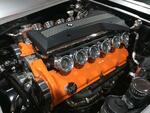
Years back - a friend of mine use to race boats- they were very common- he had one for the left AND right motor.
Here's one-

Here's one-