When you click on links to various merchants on this site and make a purchase, this can result in this site earning a commission. Affiliate programs and affiliations include, but are not limited to, the eBay Partner Network.
I have a 1969 Coupe 4 spd 350/300hp freshly rebuilt engine, everything is stock except for a Federal-Mogul camshaft CS-1171R: Lobe Separation 112, Duration at .050 Lift 224/234, Intake Valve Lift 0.465, Exhaust Valve Lift 0.488. And the heads have been reconditioned with stainless steel back cut valves, springs, lifters etc.
The carburetor is not the original 7029203 for a 300hp engine it has the 350hp 7029207 carburetor. The carb has the proper primary jets 66, rods 37B and secondary BG rods (.040, medium length).
If I understand the document "How to tune a Q-Jet" correctly using the "Jet % change chart" I can safely jump up to a .069 jet with a .042 rod. Instructions on upgrading the secondary rods are little in the gray area other than the mention of short tip rods may produce better performance.
I noticed "Figure 1: Carb part number listing & stock jetting" a similar original vehicle setup "69 Chev 350 300hp Camaro Best Tuned" has been noted under carburetor # 7040503 uses a 74 jet 43 rod and AK .057 short secondary rods are being used which is much higher then my 10% increase. Would this be a good starting point for my similar engine or am I not comparing apples to apples. "Best Tuned" meaning what?
With the cam that I have does anyone have experience to recommend a better starting point?
If I was you I'd spend the few bucks (around $150) and get one of those wideband air/fuel gauges and use that to see where you are and where you need to go.
It was the best money I spent, and made tuning my carb very easy.
Be wary of the replacement primary rods because they have .036 tips, not the .026 tips of the originals. Also, your 350 engine will use the secondaries only above about 3500 rpm. Tuning the primary side is of much more importance. Increasing the jet size will enrich the entire A/F ratio from idle to WOT. Decreasing the rod size will enrich the part throttle to WOT. Make any changes in small increments- the engineers that designed these combinations knew what they were doing. While tuning my engines I went through a "more gas is better" phase, only to find out that is definitely not the case.
Yes, you can change to jet to a 69, but you may find (as I mentioned in my post) that the A/F ratio may be too rich. When I tuned my cars (two BBCs and a SBC) I rebuilt he stock distributors and set the timing curve to allow about 20* mechanical advance and limited the vacuum advance to 11*. I bought several junk carbs on ebay for about $25 (after I researched Lars' papers to determine what rods and jets they had) and played with many combinations in an effort to change the idle and WOT A/F ratios. I rebuilt the carbs using Cliff Ruggles book and Lars' papers and achieved excellent results. Instant throttle response (the BBC would break the tires loose from a 20MPH roll in 1st, and pull in any gear without a bog). But I always found that going very much richer that the original settings would be detrimental to performance-hence my "more gas is better" phase proved to be wrong.
Ok I will keep my changes minimal, thanks for the responses. I am interested in giving it a go so I’ll just have to get a selection and do some trail and error. I was hoping more people would have chimed in to share some notes with similar setups. I’ll get it figured out. The documents alone are a get help (“How to Tune a Q-Jet” & the others). I’ll post an update.
If anyone knows a link to an older post let me know. Thanks
I'm trying to do this the best way that I know based on what I've been reading correct me if I've got this wrong.
Lars' (your) Q-Jet documents are great but he needs to do a video. It's so easy when you know what you're doing but when it's the first time around it's not so.
Anyway I popped off the carb top to swap out the jets and rods that was really easy.
I bought (Carbs Unlimited) 68, 69, 71 jets 42 rods and CE secondary rods to test. Before I removed the carb top I tried tech tip # 3. I removed the accelerator pump lever to test for a lean condition by flicking the throttle a few times to check for throttle response or puffs of black smoke, the engine hesitated a lot more but no black smoke (wasn't sure how heavy to flick). With the accelerator pump still disconnected I coved the air horn with my hand to see if the idle changed and it did rise. So I thought I would start at the 10% increase point, I put in the 69 jet 42 rod combination. With the accelerator still disconnected and a few throttle flicks the engine still hesitated but not as bad. After putting it back together I readjusted mixture screws which still seemed best at 3 turns out. Next I did a road test the car feels all good nothing worse, better maybe faster hard to tell. I also next changed the secondary rods from my BG to CE same results as primary side nothing worse maybe better. BTW this is a 4 speed car which makes it more difficult and less accurate than an automatic in my opinion to feel for improvements. I'm going to try the 71 jet next and see if it gets worse or better.
On another note, when rejetting does proper jetting have an effect on reducing detonation?
Thanks again everyone for any comments
Last edited by RickDett; Aug 18, 2016 at 02:15 PM.
With your 350 engine, most of the WOT is on the primary side of the carb so the secondary rods won't have much effect until it's really reving. Apply a thin coat of silicon grease to the gasket and it won't stick to the metal carb body and make disassembly easier.
2020 Corvette of the Year Finalist (performance mods)
2019 C3 of Year Winner (performance mods)
2016 C3 of Year Finalist
Originally Posted by sstocker31
If I was you I'd spend the few bucks (around $150) and get one of those wideband air/fuel gauges and use that to see where you are and where you need to go.
It was the best money I spent, and made tuning my carb very easy.





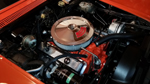


 Jets and rods tuning document