


Con Rod ends


Thread Starter
Drifting


Joined: Oct 2006
Posts: 1,875
Likes: 779
From: Persona Non Grata
2022 C3 of the Year Finalist - Unmodified
 Con Rod ends
This is my fourth time inside and engine, second time in this one, and I don't ever remember them being so stubborn.
I've used a brass drift and tapped on the side by the bolts, mostly, of course, just one side as the other isn't very accessible. I tried a few taps on the ends of the bolts, too. In the end I managed a very small gap, haven't measured it, but a piece of paper wouldn't fit. I've also turned the crank back and fourth, hoping that might do something useful.
Suggestions welcomed. (My Bubba thought is a suitable piece of wood against the back of the wristpin boss of the piston. Haven't done that.
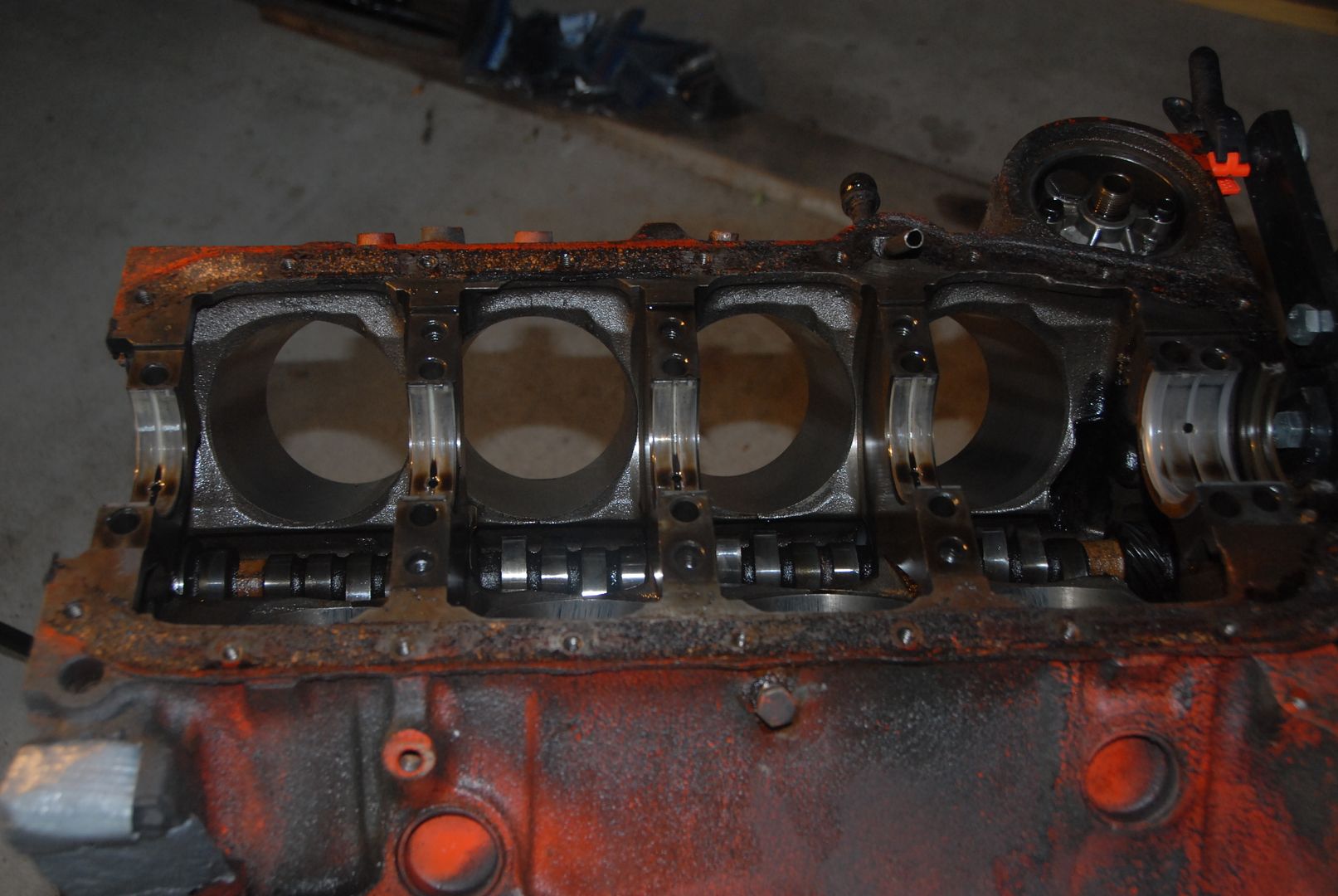
Success. A big brass mallet did the job. Thank you.
I've used a brass drift and tapped on the side by the bolts, mostly, of course, just one side as the other isn't very accessible. I tried a few taps on the ends of the bolts, too. In the end I managed a very small gap, haven't measured it, but a piece of paper wouldn't fit. I've also turned the crank back and fourth, hoping that might do something useful.
Suggestions welcomed. (My Bubba thought is a suitable piece of wood against the back of the wristpin boss of the piston. Haven't done that.

Success. A big brass mallet did the job. Thank you.
Last edited by Dirty Dalton; Sep 3, 2016 at 11:19 PM.
Le Mans Master


Joined: Oct 2002
Posts: 7,098
Likes: 378
From: Las Vegas - Just stop perpetuating myths please.
I can't recall the rod caps being that difficult. Well I think you just need to back the nuts off some and wedge in a long lever arm. Hitting the cap hard enough to leave marks is not good for the rod as it can make stress risers though most rod failures are from the bolts or on the beam.
Let us know what you find.
Let us know what you find.

Le Mans Master


Joined: Apr 2015
Posts: 9,430
Likes: 124
I have built a lot of engines, and I have a giant pair of Channelock pliers that will adjust large enough to grab the cap with a parallel grip on both sides. Then I just clamp on and pull while doing a slight back and forth wiggle off the rod bolts. I agree that some of them are really tight.


Safety Car

Joined: Jan 2009
Posts: 3,736
Likes: 56
From: anchorage ak
If you cam see both sides, spray the exposed ends of the bolts with penetentary liberally and walk away for 2 hours. Come back with a really sharp chisel and gently tap into the gaps making sure to keep the rod bolts between the chisel and the crank. Once the gap gets big enough tap into the gap perpendicular so that the edge protrudes on the oposite side, usually you get enough gap a pair of channel lacks on the center and ot will come.
Le Mans Master
Joined: Apr 2015
Posts: 9,430
Likes: 124
It is really important not to hit the mating surfaces even on the sides, or try to wedge anything in between them because the surfaces need to be perfectly flat when they mate. If the surfaces are damaged in any way it will mess up the bearing clearance, and the torque/integrity of the rod.









