






Gen/Fuel Light with Autometer Gauges
Thread Starter
Instructor


Joined: May 2005
Posts: 245
Likes: 5
From: Layton, UT
 Gen/Fuel Light with Autometer Gauges
I've been going through all the threads I can find regarding aftermarket Autometer gauges for my 1980 corvette. Everything I finding just shows everyone wiring up the gauges, but there is no mention of keeping the Low Fuel or Generator lights. Does everyone just discard the low fuel/gen lights? If not, how do you install them without the original metal housing that the stock gauges were in?
Second, I thought we needed the gen light to be functional for the alternator/charging system to work correctly. Is this not the case?
Any help would be appreciated. Pictures would be great. Thanks
Second, I thought we needed the gen light to be functional for the alternator/charging system to work correctly. Is this not the case?
Any help would be appreciated. Pictures would be great. Thanks

Melting Slicks


Joined: Mar 2008
Posts: 2,989
Likes: 198
From: Meriden CT
Racer


Joined: Oct 2001
Posts: 420
Likes: 11
From: tuttle ok
Hope this helps.
Thread Starter
Instructor
Joined: May 2005
Posts: 245
Likes: 5
From: Layton, UT
Thanks for the reply. I'm trying to visualize what you did. Did you keep using the original printed circuit board then, or only the metal plate?
Racer
Joined: Oct 2001
Posts: 420
Likes: 11
From: tuttle ok
BBB
I did not use the stock circuit board. I took a schematic and figured out what wires in the stock harness went where and then just soldered into the harness and made my own harness for the idiot lights and the gauges. To make room for the gauges you cannot use the circuit board.
This is not the best shot of the gauges but here it is.
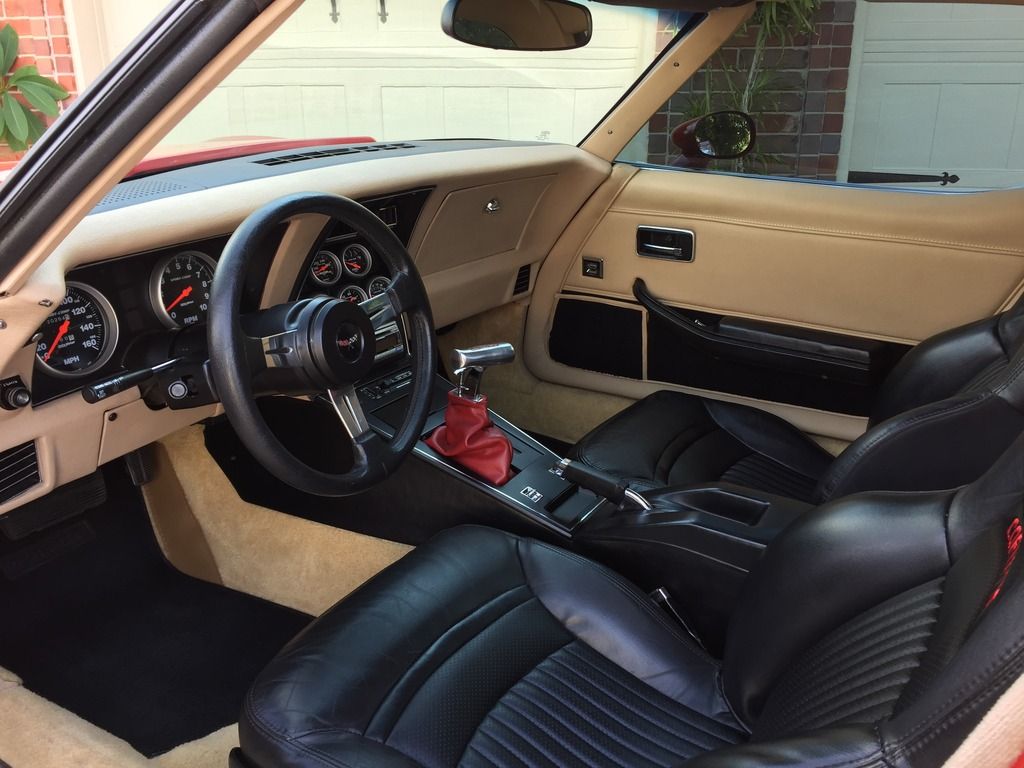
I used the angle rings to angle the center stack toward the driver. The gauges are not recessed at all.
This is not the best shot of the gauges but here it is.

I used the angle rings to angle the center stack toward the driver. The gauges are not recessed at all.
Racer
Joined: Apr 2015
Posts: 412
Likes: 12
From: Carrollton, Georgia
BBB
I did not use the stock circuit board. I took a schematic and figured out what wires in the stock harness went where and then just soldered into the harness and made my own harness for the idiot lights and the gauges. To make room for the gauges you cannot use the circuit board.
This is not the best shot of the gauges but here it is.
I used the angle rings to angle the center stack toward the driver. The gauges are not recessed at all.
I did not use the stock circuit board. I took a schematic and figured out what wires in the stock harness went where and then just soldered into the harness and made my own harness for the idiot lights and the gauges. To make room for the gauges you cannot use the circuit board.
This is not the best shot of the gauges but here it is.
I used the angle rings to angle the center stack toward the driver. The gauges are not recessed at all.
Corvette Stories
The Best of Corvette for Corvette Enthusiasts

Top 10 Most Expensive Corvettes Ever Sold on Bring A Trailer
Brett Foote
10 Things Every Corvette Owner Needs (2026 Edition)
Michael S. Palmer
8 Most "Only Corvette Owners Understand" Quirks and Problems
Pouria Savadkouei
10 Reasons the C6 Z06 is Still A Performance Benchmark After 20 Years
Joe Kucinski
How Much Horsepower Every Corvette Engine "LOST" in 1972
Joe Kucinski
Top 10 DOs and DON'Ts for Protecting Your Convertible Top!
Michael S. Palmer
Top 10 Most Explosive Corvettes Ever Made: Power-to-Weight Ratio Ranked!
Joe Kucinski
150 hp to 1,250 hp: Every Corvette Generation Compared by the Specs That Matter
Joe Kucinski
8 Coolest Corvette Pace Cars (and Replicas) of All Time
Verdad Gallardo
Racer
Joined: Oct 2001
Posts: 420
Likes: 11
From: tuttle ok
Yes. So does the seat belt and in my case the check engine light.
Thread Starter
Instructor
Joined: May 2005
Posts: 245
Likes: 5
From: Layton, UT
BBB
I did not use the stock circuit board. I took a schematic and figured out what wires in the stock harness went where and then just soldered into the harness and made my own harness for the idiot lights and the gauges. To make room for the gauges you cannot use the circuit board.
This is not the best shot of the gauges but here it is.
I used the angle rings to angle the center stack toward the driver. The gauges are not recessed at all.
I did not use the stock circuit board. I took a schematic and figured out what wires in the stock harness went where and then just soldered into the harness and made my own harness for the idiot lights and the gauges. To make room for the gauges you cannot use the circuit board.
This is not the best shot of the gauges but here it is.
I used the angle rings to angle the center stack toward the driver. The gauges are not recessed at all.
Wouldn't it be easier to just use the plastic line splicers that just snap onto the original wire? Why go the soldering route?
Melting Slicks
Joined: Mar 2008
Posts: 2,989
Likes: 198
From: Meriden CT
Thanks for the info, your car looks great. I've been noticing a lot of people when they're talking about wiring up the gauges, many say they soldered into the original harness. I'm guessing you didn't cut the original plug off. Did you just strip some insulation off of each wire, wrap the new wire into it, and then solder them together?
Wouldn't it be easier to just use the plastic line splicers that just snap onto the original wire? Why go the soldering route?
Wouldn't it be easier to just use the plastic line splicers that just snap onto the original wire? Why go the soldering route?
I know your dash doesn't have to be waterproof, but even the moisture in the air can eventually corrode wire. You can solder if you want, but even solder can corrode and should be protected from the environment, and obviously insulated at a minimum. I know go a little overboard, but it's because I build wire harnesses for a living.

Racer
Joined: Oct 2001
Posts: 420
Likes: 11
From: tuttle ok
Thanks for the info, your car looks great. I've been noticing a lot of people when they're talking about wiring up the gauges, many say they soldered into the original harness. I'm guessing you didn't cut the original plug off. Did you just strip some insulation off of each wire, wrap the new wire into it, and then solder them together?
Wouldn't it be easier to just use the plastic line splicers that just snap onto the original wire? Why go the soldering route?
Wouldn't it be easier to just use the plastic line splicers that just snap onto the original wire? Why go the soldering route?