When you click on links to various merchants on this site and make a purchase, this can result in this site earning a commission. Affiliate programs and affiliations include, but are not limited to, the eBay Partner Network.
I set my timing to the 8 degree as specified it barely stays running. Looking from the front of the engine lets call 8 degrees the 2 o'clock mark, I have to rotate the distributor so the timing mark is at 12 o'clock it get it to run better. But it has a slight backfire as I hit the throttle. It also bogs a little as I hit the gas. Is it possible the distributor was installed one or two teeth off? Would this cause the backfire and bogging I describe.
Pull #1 spark plug. Stick finger in hole, have buddy bump the engine over till it blows this finger out of the hole. Look at timing mark on balancer should be at ZERO remove dizzy cap see where rotor is pointing. Remove valve cover make sure both rocker arms are in the up position and that both valves are closed. This is top dead center or close to it. If thats the case then leave the timing at 8 degrees or factory spec and turn the idle up. Are you checking the initial timing with the vac advance hose off the dizzy and plugged? the idle should increase once that hose goes back on, if it doesnt then the vac advance is not working in the dizzy. Lots of things to look at.
Was the car running fine prior to this did something happen or did you just decide to tune the engine?
Last edited by Grumpy 427; Aug 5, 2017 at 09:39 PM.
I just got the car running. It sat in a barn from 1979 until a couple months ago. It has 6800 miles on it. A friend worked on for me and he mentioned he pull the distributor. I'm suspecting he installed it a couple degrees off.
He also cleaned the gas tank, the carb which I took completely apart to make sure it was assembled correctly. The acc pump in the carb is brand new. I also replaced all the brake lines and the fuel lines.
When I checked the timing I did plug the vac line. When I plugged the vac line back up to the vac advance it picked it ran even better.
The timing mark did move as I gave it throttle. Does that mean the vac advance is good?
Quote: Timing mark moved when you advanced the throttle = means the mechanical advance in the dizzy is working. The Vacuum portion can be checked with a handpump ($25) with the engine off, distributor cap off. Apply vac to dizzy with tool and watch the plate rotate under the rotor. Or, with engine running and timing light on your marks, disconnect vac line to dizzy (place golf T in the hose) to verify the vacuum canister is even doing anything.
And it still may not affect timing if its plumbed to "ported" on the carb.
Pull #1 spark plug. Stick finger in hole, have buddy bump the engine over till it blows this finger out of the hole. Look at timing mark on balancer should be at ZERO remove dizzy cap see where rotor is pointing. Remove valve cover make sure both rocker arms are in the up position and that both valves are closed. This is top dead center or close to it. If thats the case then leave the timing at 8 degrees or factory spec and turn the idle up. Are you checking the initial timing with the vac advance hose off the dizzy and plugged? the idle should increase once that hose goes back on, if it doesnt then the vac advance is not working in the dizzy. Lots of things to look at.
Was the car running fine prior to this did something happen or did you just decide to tune the engine?
I did this to my 1981 and found that the timing mark was wrong (I think the balancer has slipped) AND my dizzy was wrong (was pointing straight at the carb instead of at #1). Reset my dizzy and it purrs now. The timing mark is still off until I replace the balancer.
I checked my vacuum advance with my pneumatic brake bleeder and the vacuum advance moved back and forth freely. When I hook my vacuum gage to the vacuum advance hose from the carb it reads lateing timing about 15psi (see photo). It doesn't get to the green area at 20 psi.
When I pull the hose off the vacuum advance it barely stays running. Smooths right out when I reconnect the hose but bogs and I get some minor backfiring.
What do I check next?
Last edited by mbeltowski; Aug 9, 2017 at 09:47 PM.
Hi, if it smooths right out with the vac advance connected it sounds like the initial timing is a little too late, try moving the dist very slightly 1/8" anti clockwise and see if it improves (make a line on the dist body and the inlet manifold with a pencil or marker so that you can easily return the timing to where it was if need be).This will advance the timing slightly. If this works you really need to check the timing at full advance to make sure it is not over 36 deg(with the vac can disconnected and the line plugged.
You can do this easily enough with a dial back timing light or a timing tape fixed around the balancer. To save having to rev the heck out of the engine you can remove one of the springs from the weights in the dist so that total timing will be in at a lower rpm.
15in of Mercury or Hg which is what you are measuring the vac level in is not uncommon if the engine has been modified with a more radical cam, the green area on the gauge is where you would expect to see the vac level on a std engine in good condition. JMPO
Contact Lars and get his papers on carb tuning and setting up your timing. If your carb isn't set up correctly you'll chase timing forever and vice versa. They go hand in hand. I was really surprised at how the two interrelate. Using his vast knowledge and excellent papers I was able to get mine purring like a 40 year old kitten after several years in storage.
If you have a decent timing lite, set total timing first. Mine is 35 total which works out to around 25 initial. I really dont care about initial timing, for a sbc more is better regardless. The carb is a separate issue all together, which will have its own problems.
Thank you all for all the advice. Ignition timing is not my forte. But I'm learning every day.
Tonight I set my timing mark at zero and verified that the rotor was facing the #1 wire on the cap. Check.
I reset the initial timing back to 8 degrees with the vacuum line and vacuum advance plugged with no issues. It did smooth right out when I reconnected the vacuum line. Check.
My 44 year old timing light is not capable of setting the total timing. This will be my next purchase. Thanks to YouTube for the lesson on Total Timing.
It seems to run a little better but still has a slight bog and backfires a little when I stomp on the gas but not as bad as before.
Overall not too bad for a car that hasn't run for 37 years.
Contact Lars and get his papers on carb tuning and setting up your timing. If your carb isn't set up correctly you'll chase timing forever and vice versa. They go hand in hand. I was really surprised at how the two interrelate. Using his vast knowledge and excellent papers I was able to get mine purring like a 40 year old kitten after several years in storage.
Good luck!
Can you provide contact info for Lars, I'd really appreciate it.
Hi, if it smooths right out with the vac advance connected it sounds like the initial timing is a little too late, try moving the dist very slightly 1/8" anti clockwise and see if it improves (make a line on the dist body and the inlet manifold with a pencil or marker so that you can easily return the timing to where it was if need be).This will advance the timing slightly. If this works you really need to check the timing at full advance to make sure it is not over 36 deg(with the vac can disconnected and the line plugged.
You can do this easily enough with a dial back timing light or a timing tape fixed around the balancer. To save having to rev the heck out of the engine you can remove one of the springs from the weights in the dist so that total timing will be in at a lower rpm.
15in of Mercury or Hg which is what you are measuring the vac level in is not uncommon if the engine has been modified with a more radical cam, the green area on the gauge is where you would expect to see the vac level on a std engine in good condition. JMPO
What could cause a std engine in good condition to be at 15HG. I doubt the car had any mods. The car sat from 1979 until I had it pulled out of a garage 2 years ago. It has 6830 miles on it as of tonight. I did not recheck the vacuum tonight after I reset the timing to see if I had any improvement. When I get my new timing light and set the total timing could this raise the HG level to 20? Or would it be a carb issue? Basically how can I raise the vacuum to 20HG?
What could cause a std engine in good condition to be at 15HG. I doubt the car had any mods. The car sat from 1979 until I had it pulled out of a garage 2 years ago. It has 6830 miles on it as of tonight. I did not recheck the vacuum tonight after I reset the timing to see if I had any improvement. When I get my new timing light and set the total timing could this raise the HG level to 20? Or would it be a carb issue? Basically how can I raise the vacuum to 20HG?
Thanks in advance, Matt
The vacuum figure may increase when you set the idle mixture screws correctly, read up on this before you mess with them or you may make things worse.
You don't have to have a dial back timing light, what you have will work if you stick a timing tape around the balancer. Dial back light is easier though:-)
Thank you all for all the advice. Ignition timing is not my forte. But I'm learning every day.
Tonight I set my timing mark at zero and verified that the rotor was facing the #1 wire on the cap. Check.
I reset the initial timing back to 8 degrees with the vacuum line and vacuum advance plugged with no issues. It did smooth right out when I reconnected the vacuum line. Check.
My 44 year old timing light is not capable of setting the total timing. This will be my next purchase. Thanks to YouTube for the lesson on Total Timing.
It seems to run a little better but still has a slight bog and backfires a little when I stomp on the gas but not as bad as before.
Overall not too bad for a car that hasn't run for 37 years.
I recently put up a post 'bog fixed' about something very similar. Apart from carb issues I used my equally old timing light and just tweaked the initial timing up & down a degree or two until I hit the right spot. The GM Service manual said 4* but it turned out to be more like 6*. I had to adjust the master idle screw each time I did this. Car consistently wanted a 650rpm idle speed or it would diesel. Good luck
Last edited by pigfarmer; Aug 11, 2017 at 09:13 AM.




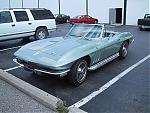


 Need Timing help for 1977 Corvette