When you click on links to various merchants on this site and make a purchase, this can result in this site earning a commission. Affiliate programs and affiliations include, but are not limited to, the eBay Partner Network.
That controlled vacuum leak has always kind of made me wonder a little,
Some say you will ruin your engine without one, others say open valve cover breathers will work, some say its just an emmissions idea,
Okay, i admit being around so few stock engines i have seen lots of set ups but what is really right for a mild street engine, and how to pick the correct valve,
In the early 90s i dropped a 60s 327 in my 66 modded vette, seems that engine had a breather on an oil fill in the front of the intake no pvc, but i dont see many aftermarket intakes with the oil fill hole, why did it die off?
That controlled vacuum leak has always kind of made me wonder a little,
Some say you will ruin your engine without one, others say open valve cover breathers will work, some say its just an emmissions idea,
Okay, i admit being around so few stock engines i have seen lots of set ups but what is really right for a mild street engine, and how to pick the correct valve,
In the early 90s i dropped a 60s 327 in my 66 modded vette, seems that engine had a breather on an oil fill in the front of the intake no pvc, but i dont see many aftermarket intakes with the oil fill hole, why did it die off?
Okay, go wild,
On older pre PCV valve cars, they had a draft tube that hung down under the car so that air passing under the car would pass by the draft tube and create a low pressure (Bernoulli's principle). The low pressure at the draft tube would cause air to enter the breather on top in the engine compartment and contaminated air to pass back out the draft tube. In other words, a draft was created through the engine, hence the term draft tube.
The PCV valve does the same thing. You need air flowing through the engine to keep water and other combustion by products moving out of the engine and lessening contamination of the oil. These byproducts will cause rust, corrosion and sludge if left in the engine.
Open breathers are fine for race engines as they are under throttle in low or zero vacuum conditions more than not, the opposite of street cars. Of course, vacuum pumps are the optimum option for race cars.
The old intakes with a oil fill tube in the front were meant for blocks that had the draft tube in the rear of the block. Basically, the fill tube was the intake of fresh air while the road draft tube was the exhaust. If an engine had blow-by, all that mist of oil ended up on the ground, dead center on the road. The environmentalist would frown on that today. With leaky rear axles, tranny leaks, oil pan drips, it made a motorcyclist shudder at first rain.
On older pre PCV valve cars, they had a draft tube that hung down under the car so that air passing under the car would pass by the draft tube and create a low pressure (Bernoulli's principle). The low pressure at the draft tube would cause air to enter the breather on top in the engine compartment and contaminated air to pass back out the draft tube. In other words, a draft was created through the engine, hence the term draft tube.
The PCV valve does the same thing. You need air flowing through the engine to keep water and other combustion by products moving out of the engine and lessening contamination of the oil. These byproducts will cause rust, corrosion and sludge if left in the engine.
Open breathers are fine for race engines as they are under throttle in low or zero vacuum conditions more than not, the opposite of street cars. Of course, vacuum pumps are the optimum option for race cars.
^ exactly. PCV = positive crankcase ventilation....these systems are to ventilate the engine crankcase to keep nasties out and to relieve internal pressures due to piston travel/rotating mass air displacement/compression, blow-by, etc in a controlled manner, not an emissions thing...actually quite the opposite! If you eliminate the system....be it a road draft tube system or a PCV system....you'll find that oil will get pushed out here there and everywhere.
From: Some days your the dog and some days your the hydrant.
Royal Canadian Navy
Originally Posted by The13Bats
Some say you will ruin your engine without one. I haven't ruined mine.
Others say open valve cover breathers will work. Yep. No oil misting all over my engine compartment.
Some say its just an emmissions idea. For the most part because it's routed back into the carb.
Regular oil changes rid the engine of contaminants because thats where those cats hang out. My engine shows no signs of any corrosion and I change my oil annually..
^ exactly. PCV = positive crankcase ventilation....these systems are to ventilate the engine crankcase to keep nasties out and to relieve internal pressures due to piston travel/rotating mass air displacement/compression, blow-by, etc in a controlled manner, not an emissions thing...actually quite the opposite! If you eliminate the system....be it a road draft tube system or a PCV system....you'll find that oil will get pushed out here there and everywhere.
Actually it is a primitive type of emisssions system because it recyles the nasties back into and through the intake system where its burned off.
all that mist of oil ended up on the ground, dead center on the road. The environmentalist would frown on that today. With leaky rear axles, tranny leaks, oil pan drips, it made a motorcyclist shudder at first rain.
Every time I take my old red 62 out stomping... (it's had the hardest 3000 miles ever put on a car in 37 years... but when I drive it I drive it like I stole it)....
Then I park it over a rubber mat drip drip drip... but I still love the old beast..
Every time I take my old red 62 out stomping... (it's had the hardest 3000 miles ever put on a car in 37 years... but when I drive it I drive it like I stole it)....
Then I park it over a rubber mat drip drip drip... but I still love the old beast..
I used to work on and ride old Harley Panheads and Knuckle heads back in the 70's and 80's. They had no seal on the input shaft of the tranny and there was an adjustable oiler that exited into the tin primary cover over the primary chain. When you park them, they really mark their spot. People who didn't know any better, thought they just leaked, but they were designed to leak for oiling the primary and rear chains. I loved them just the same. Wish I had my Panheads today.
There was not much concern for the environment back in those days.
Mike
Last edited by v2racing; Sep 28, 2017 at 02:46 AM.
2020 Corvette of the Year Finalist (performance mods)
2019 C3 of Year Winner (performance mods)
2016 C3 of Year Finalist
edelbrock still makes the intakes either with the oil fill tube(EPS) or with a provision for it to be drilled out (RPM).
added pics of my RPM with a 67 camaro oil fill tube. the correct pn for the pvc for this is gm 6422721, replacements can be found for under $10, replicas start at $38 plus shipping= $50+
Last edited by Rescue Rogers; Sep 28, 2017 at 01:06 PM.
Versus where did it use to end up with the old road draft system????
Both systems accomplish the same thing. I never said otherwise. My only disagreement is with the emmissions thing; neither system minimizes emissions to any significant degree. A catalytic converter would be necessary....
I was building engines before and after the road draft tubes. The engines with the tubes always had heavy sludge buildup inside the engine (at low mileage too), after the tubes were replaced with PCV valves the sludge went away. Only the PCV engines that did NOT have their oil changed on time had sludge in them. The intention was for clean air but the result also made for cleaner engines internally. Since the toxic vapor was burned and out the exhaust pipes the overall emissions a PVC engine put out (exhaust plus added PCV fumes) was lower than without PCV.
Another benefit of PCV was it maintained a partial vacuum inside the engine reducing the amount of oil carried by the wind currents created by the whirling crankshaft. The benefit was no aerated oil going through the PCV and slightly better horspower output, the primary reason for putting dry sump systems on engines for high performance. If the crank has to spin a tornado full of oil the air drag wastes horsepower. Another benefit of the PCV system is that seals are now engineered to seal tighter with vacuum applied, reducing oil leakage past the seals and valve cover gaskets. Seals only leak now when they are worn so much they let air IN, negating the PCV vacuum.
The next change to lower emissions was the charcoal canister, which collected and stored fuel tank vapors. After the engine began running these vapors were fed to the intake system for burning. The effect on the vehicle from these early emissions improvements was slightly better fuel mileage as all of the vapors burned, improving efficiency. Filling the tank to the top floods the vapor system with raw gas, some of which escapes into the atmosphere and is wasted. Later, the gas cap was sealed to pressurize the tank and reduce evaporation. Now if you leave your gas cap loose or off, a code is set by the PCM.
I'll probably get a lot of noise from people who think that the most important contribution of a dry sump oil system is to prevent low oil pressure caused by braking and cornering forces, but the fact is that oil pans can be engineered to collect oil and return it to the sump pickup almost as effectively as a dry sump system. I remember seeing racing engines with collector tubes attached to the valve covers to allow oil a route back to the sump during high 'G' conditions. This was complex, but it worked, and is much cheaper than a dry sump oil system.
If I owned an early engine that still had a road draft tube I would install a PCV system to enjoy the benefits and longer, cleaner, engine life it gives us.
So when it went from draft tube to pvc,
Was to pvc added to the valve cover to keep gases and nasties from being trapped ( so to speak ) up in there, or?
Could a pvc valve been attached where the draft tube vented on the intake?
So when it went from draft tube to pvc,
Was to pvc added to the valve cover to keep gases and nasties from being trapped ( so to speak ) up in there, or?
Could a pvc valve been attached where the draft tube vented on the intake?
Yes......here is a 1964 331 I built three years ago......
The earliest PCV installations replaced the draft tube grommet in the rear with a grommet that fit the PVC valve. I don't remember if the PVC intake was in the valve cover (also as an oil filler) at that time or if it was moved to the air filter, a tube that ran from the air filter to the valve cover. I have seen many different versions of PCV installations.
Eventually the rear hole was closed and the PCV got a grommet in a valve cover and the PCV air intake tube went from the air filter to the opposite valve cover. All of these PCV versions worked and were changed over time to make it cheaper to build the engine. If you want your engine to be engine year specific you need to look at what is installed on the older engines.





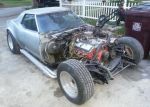


 before pvc valves?
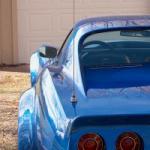


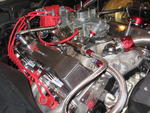













 drip drip drip... but I still love the old beast..