When you click on links to various merchants on this site and make a purchase, this can result in this site earning a commission. Affiliate programs and affiliations include, but are not limited to, the eBay Partner Network.
I replaced the brakes, rotors, calipers, master cylinder and vacuum assist last year. Everything went well. This fall I took the car out for a spin and the passenger rear caliper was sticking. So I replaced it the rotor and pads. My problem is I can't seem to bleed the lines. I tried a vacuum bleed the system, but to no avail... I even went to the drivers side rear and tried that and it worked. Then I had my wife push on the pedal while I bleed the valve. Nothing was coming out... I ended up starting the car and bleeding it manually while she pressed on the brake pedal and that worked... I was finally getting fluid. I even disconnected the the break line and nothing was coming out until we started the motor... I looked at the lines and everything looks good.
you didn't mention flexible lines in your list ? If you didn't change them that could be the problem , especially if you used a clamp on them when you did previous work .They can be damaged internal and not show any visual sign of problem but can act like a one way valve (let pressure in but not out.) I had that exact problem with my 77 .
Not being able to get fluid through is another (possible) effect of the damage ,having to start the vacuum pump(motor) to get it to flow is normally not necessary .
you didn't mention flexible lines in your list ? If you didn't change them that could be the problem , especially if you used a clamp on them when you did previous work .They can be damaged internal and not show any visual sign of problem but can act like a one way valve (let pressure in but not out.)
Not being able to get fluid through is another (possible) effect of the damage ,having to start the vacuum pump(motor) to get it to flow is normally not necessary .
X2.
The factory rubber style hoses MUST be replaced when doing calipers.
Also, as an added note, it's entirely possible that this is why the caliper was sticking in the first place. Over time the fabric lines can deteriorate inside and the rubber break down and act as a check valve. At the very least, restricting the fluids ability to move through the line.
By the way, welcome to the Corvette Forum. It's a great place to seek information on your Corvette as inevitably someone here has already encountered any problem you are trying to solve.
Good luck... GUSTO
Last edited by GUSTO14; Nov 8, 2017 at 07:44 PM.
Reason: added additional info
yes I know , but I was referring to when he says he had to start the motor to get the fluid to run
Thank you guys for your help. I will start by replacing the rubber hose. I think you are right about the cause for the failure. I won’t be able to get to it to next week but I will keep you all informed.
Thank you guys for your help. I will start by replacing the rubber hose. I think you are right about the cause for the failure. I won’t be able to get to it to next week but I will keep you all informed.
If your going to be replacing those hoses ,presuming they are of all the same age , now is the time to consider braided line(s) to give a better pedal feel .
To gravity bleed brakes you must remove the master cylinder lid first so atmospheric pressure can push on the fluid. And be sure to keep the master cylinder's front and rear reservoirs full while you're bleeding your brake lines and calipers.
To gravity bleed brakes you must remove the master cylinder lid first so atmospheric pressure can push on the fluid. And be sure to keep the master cylinder's front and rear reservoirs full while you're bleeding your brake lines and calipers.
I tried gravity bleed it did not work on the passenger rear. I am veering towards a bad rubber hose. I did have the cap off the master cylinder and an auto brake fluid filler hooked up to the master cylinder.
If your going to be replacing those hoses ,presuming they are of all the same age , now is the time to consider braided line(s) to give a better pedal feel .
I agree with Barry, if you're going to the trouble to replace them, braided stainless lines are the way to go. They will improve brake feel, especially when replacing old originals and it's a job you should never have to do again. Most vendors sell them for not a lot more than the original fabric/rubber lines.
If you do go this route, be sure to verify that they are DOT Street legal, (meets D.O.T. FMVSS-571.106 requirements). Any of the top vendors, such as Russell, Goodridge Stop-Tech, Longacre Racing, Earl's, Aeroquip, SSBC, Wilwood and others will readily identify their products as such.
The braided brake hoses are a GREAT upgrade...BUT...if you want to use the rubber hoses...just make sure that when you get them and take them out of the box...IF they are bent due to packaging. Get them it out on a table in the sun to warm up and slowly work them straight.
DO NOT take them right out of the box and install them IF they are bent over 180 degrees onto itself.
If you get them and they are straight...then you are good to go and can install them...BUT if you are doing this and these hoses are COLD...I would warm them up a bit before I installed them.
Change the rubber hoses to braided. Mine were replaced years ago from the PO and since I am doing a whole front suspension replacement I am also replacing the SS again since the old ones are rusted. You can also order the Russel brand through Advance Auto online for the same price with free shipping and use your AA perks too.





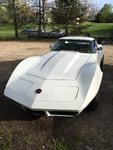

 Bleeding Brakes 1973


 X2.
X2.