





Holly Carburetor.

Le Mans Master


Joined: Oct 2007
Posts: 7,453
Likes: 976
From: RI, Now Franklin/Nashville TN


A 650 CFM carb is all that your 383 will need...using a 750 CFM carb can be done with proper tuning but the engine will still only need up to 650 CFM carb air requirements...you basically will just be rejetting the 750 carb to act more like a 650.....

Race Director


Joined: Jan 2003
Posts: 18,341
Likes: 101
When it comes to selecting carburetors for 85% volumetric efficient street engines bigger isn't always better. It's always best to follow Holley's guidelines: https://www.bing.com/videos/search?q...tail&mid=D29F5
........ on ALL OUT RACE MOTORS...... a Bigger Carb can match up better vs small, though you can get too big even for a racy motor.The real question the OP wants to ask of himself:
Where in in the RPM range do I want my very best performance and what am I willing to give up to get it?
There is no ONE ANSWER.......but as a general rule smaller carbs make for sharper crisper power delivery in the low to mid-range RPMs while usually not costing you too much until reaching the maximum RPM.
This brings up another thought every bit as important as the size.
Do you want to run a Double pump or Vacuum secondary?
With the Double Pump you give up gas mileage for sure........and sizing is super important here. Get it right though and this is the winning carb for MAXIMUM PERFORMANCE.
On the vast majority of Street driven cars .....there is an awful lot to like in a Vacuum Secondary carb far more forgiving of larger size on a motor that doesn't really need so much carb and obviously better MPG.
But really use the table supplied by Holley and be really honest with yourself about both the efficiency of your motor concerning it's ability to move the extra air and where you REALLY expect to spend most of your time in the RPM Range while driving,
Last edited by Krystal; Dec 4, 2017 at 11:09 AM.
Race Director
Joined: Jan 2003
Posts: 18,341
Likes: 101
........I look at all the Chevys we've had in our garage over the years......the SINGLE BEST street/drag strip performance carb we used on both my old Corvette and my husband's old Camaro has been the 650CFM double pump......... the 383 I just got from Blueprint engines came supplied with a 750CFM Vacuum Secondary.......but I have little doubt that the reason this carb was supplied probably boils down to a much lower cost vs a mechanical Holley.
Last edited by Krystal; Dec 4, 2017 at 11:06 AM.
Race Director
Joined: Jan 2003
Posts: 18,341
Likes: 101
Just like today......Holley has those two sizes of "univesal" inexpensive 4 barrel carbs vs their more expensive choices today it's the vacuum secondary 600 and 750 offerings.......back in the day of those LT1s it was a 600CFM and the 780CFM.
I'm not at all sure I'd be so quick to point to the old 780 Vacuum carb as anything even remotely close to the best choice for the LT1 from 1970-72 either.
GM is profit driven company.......that Carb was probably chosen for it's forgiving street manners and inexpensive cost more so than anything related to best possible performance.
Even that old LT1 pushed HARD in the 1/4 mile or on the street would have done better with a more specifically sized carb for the job.......best all around performance Street/strip? I'd bet anything this engine would run STRONGER with a smaller mechanical secondary carb........but it would get worse gas mileage and GM if they had supplied it would have seen the inflation adjusted equivalent of an extra $100-$150 per car to give it to you from the factory.
Last edited by Krystal; Dec 4, 2017 at 11:06 AM.

Tech Contributor
Joined: Jun 2004
Posts: 20,905
Likes: 962
From: I tend to be leery of any guy who doesn't own a chainsaw or a handgun.
A carburetor is a restriction in the intake tract. A 650 will have more restriction (and a more negative impact on VE) than a 750 will.
And, WTH does "jetting the 750 carb to act more like a 650" even mean?

Had a 1976 L-82, 4-sp


Joined: Mar 2011
Posts: 5,338
Likes: 1,213
From: Some days your the dog and some days your the hydrant.
Royal Canadian Navy
Afaik, CFM ratings are based on two methods of testing - wet flow and dry flow. Holley's are wet flow tested, QJ's dry flow tested. Wet flow being the denser medium will not flow as much as air being less dense. Apllying a correction factor of about 0.9 for the Holley will yield a 650 equivalent to a 725 cfm dry flow testing.
At steady cruise a mechanical secondary carb with proper primary jetting will get about the same mileage as a vacuum secondary carb. The engine don't care what carb is on it as long as it gets the correct afr into the cylinders. Holley's can be tuned to achieve the desired afr from idle to wot. Not gonna happen out of the box.
Why do people care about gas mileage in these cars when they came from the factory as gas guzzlers, expensive to repair and cost lots to hot rod???

At steady cruise a mechanical secondary carb with proper primary jetting will get about the same mileage as a vacuum secondary carb. The engine don't care what carb is on it as long as it gets the correct afr into the cylinders. Holley's can be tuned to achieve the desired afr from idle to wot. Not gonna happen out of the box.
Why do people care about gas mileage in these cars when they came from the factory as gas guzzlers, expensive to repair and cost lots to hot rod???
Race Director
Joined: Jan 2003
Posts: 18,341
Likes: 101
Afaik, CFM ratings are based on two methods of testing - wet flow and dry flow. Holley's are wet flow tested, QJ's dry flow tested. Wet flow being the denser medium will not flow as much as air being less dense. Apllying a correction factor of about 0.9 for the Holley will yield a 650 equivalent to a 725 cfm dry flow testing.
At steady cruise a mechanical secondary carb with proper primary jetting will get about the same mileage as a vacuum secondary carb. The engine don't care what carb is on it as long as it gets the correct afr into the cylinders. Holley's can be tuned to achieve the desired afr from idle to wot. Not gonna happen out of the box.
Why do people care about gas mileage in these cars when they came from the factory as gas guzzlers, expensive to repair and cost lots to hot rod???
At steady cruise a mechanical secondary carb with proper primary jetting will get about the same mileage as a vacuum secondary carb. The engine don't care what carb is on it as long as it gets the correct afr into the cylinders. Holley's can be tuned to achieve the desired afr from idle to wot. Not gonna happen out of the box.
Why do people care about gas mileage in these cars when they came from the factory as gas guzzlers, expensive to repair and cost lots to hot rod???
Then again....like you said already.....I'm not sure why anyone's priority with a Sunday cruiser and occasional drag strip runner would be "MPG".
Last edited by Krystal; Dec 4, 2017 at 11:47 AM.
Corvette Stories
The Best of Corvette for Corvette Enthusiasts

Top 10 Most Expensive Corvettes Ever Sold on Bring A Trailer
Brett Foote
10 Things Every Corvette Owner Needs (2026 Edition)
Michael S. Palmer
8 Most "Only Corvette Owners Understand" Quirks and Problems
Pouria Savadkouei
10 Reasons the C6 Z06 is Still A Performance Benchmark After 20 Years
Joe Kucinski
How Much Horsepower Every Corvette Engine "LOST" in 1972
Joe Kucinski
Top 10 DOs and DON'Ts for Protecting Your Convertible Top!
Michael S. Palmer
Top 10 Most Explosive Corvettes Ever Made: Power-to-Weight Ratio Ranked!
Joe Kucinski
150 hp to 1,250 hp: Every Corvette Generation Compared by the Specs That Matter
Joe Kucinski
8 Coolest Corvette Pace Cars (and Replicas) of All Time
Verdad Gallardo
Race Director


Joined: Jan 2000
Posts: 13,018
Likes: 2,262
From: Corsicana, Tx
2020 C2 of the Year - Modified Winner
2020 Corvette of the Year (performance mods)
C2 of Year Winner (performance mods) 2019
2017 C2 of Year Finalist
For normal scootin' around a nice 650 double pumper will do fine. I would expect it to outrun a 780 vacuum unless someone spent some time tuning the opening rate of the 780 just right.
To me, a 750 double pumper Holley is about the most universal carb out there. It will run pretty well on anything from a 302 to a 454 with little drama with basic tuning. A dual plane intake "likes" a larger carb because each cylinder only "sees" two BBL's vs a single plane intake where it will see all four openings.
The Holley Street HP double pumpers work very well. They are tuned for cars with "normal" hot rod type cams that folks normally use. The regular double pumpers are tuned for more radical cams because they have no idea what you're going to bolt it to. When you put a milder cam under one with a strong vacuum signal...they move more fuel than a race cam will at low speeds and run rich etc. That said....a buddy has my 750 Street HP on his 388" in his '65 Vette. Makes around 525 HP with a solid roller cam, big heads etc....but drives perfectly because of the strong vacuum signal of the solid roller. I'm not sure I'll ever get it back!
And yes...a double pumper can get great mileage....but people have so much fun with the added response they use it a lot!
JIM
To me, a 750 double pumper Holley is about the most universal carb out there. It will run pretty well on anything from a 302 to a 454 with little drama with basic tuning. A dual plane intake "likes" a larger carb because each cylinder only "sees" two BBL's vs a single plane intake where it will see all four openings.
The Holley Street HP double pumpers work very well. They are tuned for cars with "normal" hot rod type cams that folks normally use. The regular double pumpers are tuned for more radical cams because they have no idea what you're going to bolt it to. When you put a milder cam under one with a strong vacuum signal...they move more fuel than a race cam will at low speeds and run rich etc. That said....a buddy has my 750 Street HP on his 388" in his '65 Vette. Makes around 525 HP with a solid roller cam, big heads etc....but drives perfectly because of the strong vacuum signal of the solid roller. I'm not sure I'll ever get it back!
And yes...a double pumper can get great mileage....but people have so much fun with the added response they use it a lot!
JIM
Last edited by 427Hotrod; Dec 4, 2017 at 12:01 PM.

Racer

Joined: Nov 2017
Posts: 289
Likes: 32
Bigger Ain't Always Better
A 350" street engine with an 85% VE can only swallow 517 cfm at 6000 rpm and 489 cfm at 5000 rpm.so it's pointless to install any carburetor that can flow 750 cfm unless the carburetor has an air valve or vacuum secondary to prevent an "over throttle" condition which causes a huge loss of power. When it comes to street engine carburetors and camshafts bigger is never better..
Race Director
Joined: Jan 2000
Posts: 13,018
Likes: 2,262
From: Corsicana, Tx
2020 C2 of the Year - Modified Winner
2020 Corvette of the Year (performance mods)
C2 of Year Winner (performance mods) 2019
2017 C2 of Year Finalist
LOL....my 427 sure liked the 1050 Dominator I put on it as compared to the 750!
Obviously there is a limit. I tested a 1400 CFM carb against the same 1050 on my 540. No difference. I've tested that 1050, an 1150 and a 1250 on a 632 on the dyno and found the 1150 was a little better. The 1150 on my 540 was no better.
Formulas are neat...but they have variables. 4BBL carbs are rated at a 1.5" drop....but getting closer to 1.0 or less can help power. Carbs are rated at around 20" of vacuum.....cylinder head flow benches use 28" usually. As mentioned...some are rated wet flow, some as dry flow. You have to use some experience because having a carb "maxed out" at WOT is a good way to get some weird fuel flow. Think of what some of the old Busch NASCAR engines had going on with a 390 cfm carb on top of them at 8000 RPM? That little 390 was flowing a LOT more than it's rating but the venturi/boosters/intake were designed to handle it. But even with all those accomodations...I've seen 40 HP swings between similar sized 390 cfm carbs on those motors due to who handled the exorbitant air speeds the best. And you should have seen what they made when a 750 was bolted to them!
As far as having max power on the street...I don't have to be racing to enjoy a little spirited driving running through the gears. When I do that...I want all the power I can get.
JIM
Obviously there is a limit. I tested a 1400 CFM carb against the same 1050 on my 540. No difference. I've tested that 1050, an 1150 and a 1250 on a 632 on the dyno and found the 1150 was a little better. The 1150 on my 540 was no better.
Formulas are neat...but they have variables. 4BBL carbs are rated at a 1.5" drop....but getting closer to 1.0 or less can help power. Carbs are rated at around 20" of vacuum.....cylinder head flow benches use 28" usually. As mentioned...some are rated wet flow, some as dry flow. You have to use some experience because having a carb "maxed out" at WOT is a good way to get some weird fuel flow. Think of what some of the old Busch NASCAR engines had going on with a 390 cfm carb on top of them at 8000 RPM? That little 390 was flowing a LOT more than it's rating but the venturi/boosters/intake were designed to handle it. But even with all those accomodations...I've seen 40 HP swings between similar sized 390 cfm carbs on those motors due to who handled the exorbitant air speeds the best. And you should have seen what they made when a 750 was bolted to them!
As far as having max power on the street...I don't have to be racing to enjoy a little spirited driving running through the gears. When I do that...I want all the power I can get.
JIM
Last edited by 427Hotrod; Dec 4, 2017 at 12:19 PM.
Drifting

Joined: Apr 2017
Posts: 1,377
Likes: 282
From: Bedford New York
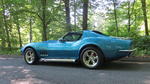
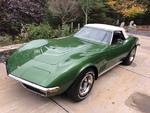
I have no dog in this fight, but I will say this; on my otherwise bone stock and healthy 1972 LT-1, going from the stock 780cfm Holly carb to a 650 Holly carb (vac secondaries on both) certainly work up it's low rpm (typical street driving rpm range) performance. Acceleration is crisper and part throttle control seems better. I'll stay with the smaller carb and keep the stock carb in a box.
Racer
Joined: Nov 2017
Posts: 289
Likes: 32
For Street Engines Bigger Is NOT Better
Over the years people have been led to believe their engine is like a giant vacuum cleaner that sucks in massive amounts of air like a jet engine. But a 350" engine can only consume 175 cubic inches of air with every revolution IF it's operating at 100% volumetric efficiency. But factor in a reasonable 85% VE and that 175 cubic inches drops to only 148 cubic inches. Multiply that by 6000 (rpm) and you get 888,000. Divide that 888,000 by 1728 (cubic inches in a cubic foot) and you end up with 514 cfm or roughly 68% of a 750 cfm carburetor. That means the vacuum secondaries of a 750 cfm carburetor will only open 18% of their maximum opening.
So what does a street driven 350" engine really need? A 500 cfm carburetor is more than adequate up to 6000 rpm so a 500 cfm Edelbrock or even a 465 cfm Holley would be enough and these small carburetors would operate at their peak efficiency throughout the entire rpm range. Same goes with a beefed 454" as it would only require a 670 or 750 cfm AVS or vacuum secondary carburetor.
So what does a street driven 350" engine really need? A 500 cfm carburetor is more than adequate up to 6000 rpm so a 500 cfm Edelbrock or even a 465 cfm Holley would be enough and these small carburetors would operate at their peak efficiency throughout the entire rpm range. Same goes with a beefed 454" as it would only require a 670 or 750 cfm AVS or vacuum secondary carburetor.
Had a 1976 L-82, 4-sp
Joined: Mar 2011
Posts: 5,338
Likes: 1,213
From: Some days your the dog and some days your the hydrant.
Royal Canadian Navy
The only problem with that "theoretically correct" comment is found in REAL WORLD driving....anything more than "cruising" and super light acceleration does get the second shot of "Squirt" happening....... and when this happens (not "if")........your theoretical "equal" to similar sized Vacuum carb MPG goes right out the window here in the "Real World".
Then again....like you said already.....I'm not sure why anyone's priority with a Sunday cruiser and occasional drag strip runner would be "MPG".
Then again....like you said already.....I'm not sure why anyone's priority with a Sunday cruiser and occasional drag strip runner would be "MPG".
But it doesn't need to be for anyone concerned about gas mileage.
Why would the second shot come into play under light acceleration? The throttle isn't open wide enough to cut in the secondaries. At steady cruise, the secondaries are closed and the primary jets are sized for economy. Not theoretical, sorry. On my car cruising at 60 mph, the primary throttle blades are barely open. Makes sense because it only takes about 50 hp to move the car along at that speed but I still have another 300+ at the wheels when needed. But I don't do the highway very often. And if I had a QJ, it would still take the same 50 hp. So, if my dp'r is tuned for 14:1 afr and my qj is tuned to 14:1 afr at same constant cruise speed, fuel consumption will be pretty close to the same.

Burning Brakes

Joined: Oct 2012
Posts: 1,152
Likes: 252
vacuum secondaries open when the vacuum overcomes the spring pressure in the diaphragm (and the linkage allows it). You can change the spring in the diaphragm. If the vacuum secondaries are not fully opening at zero vacuum (WOT) then there is something else wrong
Last edited by Dynra Rockets; Dec 4, 2017 at 01:19 PM.
Burning Brakes
Joined: Oct 2012
Posts: 1,152
Likes: 252
I do not agree with that statement.
fixed it for you.
Never bolt on a carb strait from the box and just run it. It will not be tuned to what the car wants. Can't tell you how many times people have told me that their car made way more power when they bolted on a 750 or 800 cfm carb. When I looked at it, their "power" increase was really because the squirter or PV or accel pump adjustment that came stock on the 750/800 was better suited to their engine. Those same changes could have been made to their 650. There is a thread I posted about a month ago on what I changed to get my carb to like my newly rebuilt engine.
........and TUNING is super important here. Get it right though and this is the winning carb for MAXIMUM PERFORMANCE.
Never bolt on a carb strait from the box and just run it. It will not be tuned to what the car wants. Can't tell you how many times people have told me that their car made way more power when they bolted on a 750 or 800 cfm carb. When I looked at it, their "power" increase was really because the squirter or PV or accel pump adjustment that came stock on the 750/800 was better suited to their engine. Those same changes could have been made to their 650. There is a thread I posted about a month ago on what I changed to get my carb to like my newly rebuilt engine.
Last edited by Dynra Rockets; Dec 4, 2017 at 01:21 PM.

Thread Starter
Burning Brakes
Joined: Apr 2013
Posts: 1,072
Likes: 61
From: Saint clair shores Michigan
My 383S. Only gets 6-8 miles to the gallon now. And that's without stomping it to the floor. And I don't care about gas mileage. But a 780 double pumper would probably knock it down to 3 miles to the gallon. Lol