









leaded or unleaded

Thread Starter
1st Gear

Joined: Jan 2018
Posts: 1
Likes: 0
From: BARRINGTON NH
 leaded or unleaded
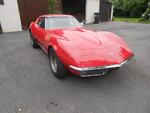
just got a 68 C3 and wondering about gasoline or additives for the leaded gas no longer available. What do I do if I cant find, probably cant, leaded gas?
I dont know if the valves have hardend seats or not. The guy I got it from put 100 or so miles on it in 20 years and he doesnt know.
I dont know if the valves have hardend seats or not. The guy I got it from put 100 or so miles on it in 20 years and he doesnt know.
Le Mans Master


Joined: Aug 2017
Posts: 8,336
Likes: 2,810
From: Cool Northern Michigan
Another old BS tale. Have yet to see damaged valveseats from unleaded gas. But the sale of the snake-oil, LEAD substitute in a bottle continues.
Last edited by HeadsU.P.; Jan 21, 2018 at 09:58 AM.

Race Director


Joined: Feb 2001
Posts: 11,308
Likes: 2,096
From: Grapevine Tx
2018 C3 of Year Finalist
2016 C3 of the Year Finalist
I think it's 71 and on. But he bought a 68.
As I understand it, you don't have to worry about hardened valve seats unless you are loading up the engine a lot, like towing, or at a constant high rpm like in a boat or airplane.
As I understand it, you don't have to worry about hardened valve seats unless you are loading up the engine a lot, like towing, or at a constant high rpm like in a boat or airplane.
Corvette Stories
The Best of Corvette for Corvette Enthusiasts

Top 10 Most Expensive Corvettes Ever Sold on Bring A Trailer
Brett Foote
10 Things Every Corvette Owner Needs (2026 Edition)
Michael S. Palmer
8 Most "Only Corvette Owners Understand" Quirks and Problems
Pouria Savadkouei
10 Reasons the C6 Z06 is Still A Performance Benchmark After 20 Years
Joe Kucinski
How Much Horsepower Every Corvette Engine "LOST" in 1972
Joe Kucinski
Top 10 DOs and DON'Ts for Protecting Your Convertible Top!
Michael S. Palmer
Top 10 Most Explosive Corvettes Ever Made: Power-to-Weight Ratio Ranked!
Joe Kucinski
150 hp to 1,250 hp: Every Corvette Generation Compared by the Specs That Matter
Joe Kucinski
8 Coolest Corvette Pace Cars (and Replicas) of All Time
Verdad Gallardo
Melting Slicks


Joined: Dec 2009
Posts: 3,233
Likes: 657
From: Thunder Bay
 Without lead the valve seats will slowly erode. That's why they started installing hardened seats and valve rotators when they took the lead out of our fuel. With that said, you may be all right if you don't drive the car much, or very hard. With my '66 I used Red Line Lead Substitute. Cheap insurance.
Le Mans Master
Joined: Aug 2017
Posts: 8,336
Likes: 2,810
From: Cool Northern Michigan
Thats the myth all right. Thousands of pre unlead cars still out there running with millions of miles and no valveseat issues. H-m-m-m-m-m-m. And how many decades ago was lead removed?

Race Director

Joined: Sep 2005
Posts: 18,640
Likes: 121
From: Farragut,TN

Safety Car

Joined: Aug 2000
Posts: 3,909
Likes: 26
From: Clymer PA
I agree. I ran heads on my 468 that had closed chambers and they didn't have hardened valve seats....never had a problem. The only time I could potentially see an issue is in extreme cases where a lot of spring pressure is experienced on the seat. That could potentially cause issues eventually. I personally never had a problem.
Last edited by bence13_33; Jan 22, 2018 at 05:38 PM.
Melting Slicks
Joined: Dec 2009
Posts: 3,233
Likes: 657
From: Thunder Bay
I agree. I ran heads on my 468 that had closed chambers and they didn't have hardened valve seats....never had a problem. The only time I could potentially see an issue is in extreme cases where a lot of spring pressure is experienced on the seat. That could potentially cause issues eventually. I personally never had a problem.

Drifting

Joined: Aug 2009
Posts: 1,346
Likes: 160
From: new iberia la
Back in the late 60 s and 70s , Amoco sold SUPER PREMIUM Fuel at its stations.. it was a high grade premium, 95 Octane if I remember correctly, and it was UNLEADED.. ZERO LEAD.....We all ran that stuff in every car we owned .. many of them only knew WOT or off.. a couple with 11 and 12 :1 compression.. We never had a valve seat issue.. not one..

Le Mans Master


Joined: Jan 2006
Posts: 6,506
Likes: 139
From: Butler Pa
My point is, unless you're pulling a heavy trailer with your vette, you don't need hardened seats, or lead additive.
Le Mans Master
Joined: Aug 2017
Posts: 8,336
Likes: 2,810
From: Cool Northern Michigan
Valve recession happens when the engine is heavily loaded for long periods of time. I've seen it several times in older vehicles, once in a pickup truck that was used to pull a 10,000 lb trailer and twice in dump trucks.
My point is, unless you're pulling a heavy trailer with your vette, you don't need hardened seats, or lead additive.
My point is, unless you're pulling a heavy trailer with your vette, you don't need hardened seats, or lead additive.