When you click on links to various merchants on this site and make a purchase, this can result in this site earning a commission. Affiliate programs and affiliations include, but are not limited to, the eBay Partner Network.
What is the difference between running an X pipe or and H pipe in the exhaust system in my 496 cu in 73 with headers?
Am I better off running 2 1/2 or 3 inch duals straight back through mufflers with no X or H pipe in the system?
The system will flow very slightly better with the x or H pipe, but probably not enough that you would notice. The main reason guys put the crossover pipe in is to quiet the system.
From: Las Vegas - Just stop perpetuating myths please.
I believe I posted this before but for those that can't seem to use the forum search function I'll mention it again. The X pipe, H pipe is used to equalize the pressure between the exhaust banks as in when one side is at higher pressure exhaust gas will flow to the lower pressure side through the cross pipe and lower the back pressure to the higher pressure bank.
They find the closer the cross pipe is to the collector the more effective it is. The X pipe is supposed to be more effective than the H pipe but the problem with the C3 corvette is it's difficult to mount the X pipe close to the collector and it usually ends up way down closer to the mufflers than the collectors while the H pipe can be installed looped under the trans and very close to the collectors.
Good luck and let us know what works for you. Feedback helps us all.
Here is a fact : an engine will only make as much power as it's most restrictive part.
if I took a 500 ci pro stock motor that makes 1400 hp and put a air cleaner on it with tiny dual cold air horns it might loose 1000 hp. Same thing if I installed a 500 cfm carb or a dual plane air gap intake manifold. Swap out the heads with iron small valve stock big block heads.
or restricted the exhaust. With some moronic 2.5 inch system that is barely adequate for a hopped up 350 chevy
as to X or H they are effective in decreasing back pressure in a restrictive exhaust system and double the frequency of the exhaust note so the procieved DB is less
The sad thing in the video is that they just pointed out how lean it went with the free flowing exhaust. But they should have dialed in the carb jetting for optimum A/F ratio power and you would have more dramatic differences. You always have to compare apples to apples.
You have to remember that the poster "OldCarBum" is installing a 496. So we are not talking about experiences with your grocery getter typical 350 chevy.
From a power perspective, my understanding is that if your exhaust is slightly undersized vs. what's needed at max RPM, an H-Pipe or X-Pipe may help.
On the placement front, PipeMax recommends placing it at a tuned length of your choosing dependant upon whether you want max torque, max HP, or a good balance between torque and HP. (In any event, it should be closer to the collectors; NOT back at the rear axle.)
I think the most significant change is helping with noise / droning. I can't imagine how bad the droning could be on a 496 inch motor with 3" dual exhaust. The exhaust drone in my car is right at the lower RPM range that I drive through on a regular commute all the time so it gets old quickly.
Here is the placement of my X-pipe on the 3" mandrel exhaust I built. I could have moved the X-pipe forward more, but I didn't want the heat from it under my transmission tail shaft.
Of course sound is about personal taste, but i prefer the sound of an X-pipe over an H-pipe or just straight duals. Mine has a really aggressive snarl to it.
Can't actually give comparative figures with my engine as it's 570 bhp 489 cu in was measured on an engine dyno and not on a rolling road. When initially installed in the car it was with Hedman 1 7/8" headers and a non-linked 2 1/2" system. I later installed a pair of 2 1/8" Super Comp's with a 3" system and 'X' crossover. No comparative figures other than 'seat of the pants' but the upper end performance increase increased significantly over 4000 rpm and seemed to rev much cleaner. It certainly sounds different at 5000 rpm and upwards - anyone following swears the engine is revving far, far higher than its 6200 rev limit and sounding like an old school 1960's Grand Prix car




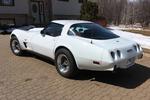




 exactly why i put a "H" pipe on my mild 350....



 X pipe H pipe or straight pipe