






'68 non-power brakes
Thread Starter
Intermediate

Joined: Mar 2018
Posts: 38
Likes: 2
 '68 non-power brakes
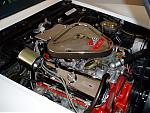
My '68 went to the shop originally right after we bought it. The brakes were trash (pads down to metal, rotors scored, VERY hard to stop the car with hard braking - pedal travel just about to the floor). We told our restoration guy that we just wanted the brakes to work like they did from the factor. He purchases all GM replacement parts where needed (all new rotors, calipers, and master cylinder - not sure what else).
This thing is hard to stop. I don't mean impossible, OMG we're gonna die hard, but I don't think I could lock these brakes up if I tried. It takes a LOT of pressure to slow down fast. I'm glad it's a 4 speed and not an automatic.
My question is, what SHOULD they feel like, and is there anything that I can do to improve things without adding power brakes, which L79 cars did not leave the factory with. Thanks!
This thing is hard to stop. I don't mean impossible, OMG we're gonna die hard, but I don't think I could lock these brakes up if I tried. It takes a LOT of pressure to slow down fast. I'm glad it's a 4 speed and not an automatic.
My question is, what SHOULD they feel like, and is there anything that I can do to improve things without adding power brakes, which L79 cars did not leave the factory with. Thanks!

Team Owner


Joined: Jan 2006
Posts: 37,637
Likes: 3,118
From: Crossville TN
I'm guessing that he purchased OEM-like brake pads which were not that aggressive. The stopping power of the manual brake vs. power brake C3's IS THE SAME. The difference is in the "pedal effort" it takes to apply them.
Get better quality metallic pads and it will stop just fine.
Get better quality metallic pads and it will stop just fine.

Melting Slicks


Joined: May 2012
Posts: 2,192
Likes: 343
From: Allenton Wisconsin
Their might also be the chance the wrong master cylinder was installed. The power brake master has a 1&1/8" in bore and the manual has a 1" bore, not that I'm trying to bore you, but the larger diameter bore cylinder in a manual application will give you a hard pedal with poor braking. T

Is my vette stock?? HAHA


Joined: Oct 2015
Posts: 20,222
Likes: 9,359
From: Im not allowed to tell you
2020 C3 of the Year Finalist - Modified
2020 Corvette of the Year Finalist (performance mods)
2019 C3 of Year Winner (performance mods)
2016 C3 of Year Finalist
I had the exact same symptoms in my 68 L79. MUltiple bleeds and flushings. never got better. I went to power brakes just to make it easy on myself and have the ability to stop on a dime when these idiots around here pull out in front of me when they see a 1 car gap.......
I would look at the master cylinder as being for a power brake car and not the manual you are needing. Parts store kids arent too bright now a days
I would look at the master cylinder as being for a power brake car and not the manual you are needing. Parts store kids arent too bright now a days
Last edited by Rescue Rogers; Apr 24, 2018 at 11:41 AM.
Pro

Joined: May 2016
Posts: 708
Likes: 150
From: Minnesota
Agree with the above. My 1970 has manual brakes, and yes takes peddle pressure but stops really well. Something is awry if you have to stand on them and still not confident.
Last edited by JoeMinnesota; Apr 24, 2018 at 08:40 AM.
Racer

Joined: Mar 2003
Posts: 448
Likes: 21
From: Klein Texas
My '67 is a manual brake car and my '72 is a PB car. Anyone that says the baking performance is the same isn't driving their car back to back like I do. Yes, they both stop but I much prefer the power brakes. The non-power brake car requires a LOT of pedal pressure.
Thread Starter
Intermediate
Joined: Mar 2018
Posts: 38
Likes: 2
Their might also be the chance the wrong master cylinder was installed. The power brake master has a 1&1/8" in bore and the manual has a 1" bore, not that I'm trying to bore you, but the larger diameter bore cylinder in a manual application will give you a hard pedal with poor braking. T

Corvette Stories
The Best of Corvette for Corvette Enthusiasts

Top 10 Most Expensive Corvettes Ever Sold on Bring A Trailer
Brett Foote
10 Things Every Corvette Owner Needs (2026 Edition)
Michael S. Palmer
8 Most "Only Corvette Owners Understand" Quirks and Problems
Pouria Savadkouei
10 Reasons the C6 Z06 is Still A Performance Benchmark After 20 Years
Joe Kucinski
How Much Horsepower Every Corvette Engine "LOST" in 1972
Joe Kucinski
Top 10 DOs and DON'Ts for Protecting Your Convertible Top!
Michael S. Palmer
Top 10 Most Explosive Corvettes Ever Made: Power-to-Weight Ratio Ranked!
Joe Kucinski
150 hp to 1,250 hp: Every Corvette Generation Compared by the Specs That Matter
Joe Kucinski
8 Coolest Corvette Pace Cars (and Replicas) of All Time
Verdad Gallardo
Thread Starter
Intermediate
Joined: Mar 2018
Posts: 38
Likes: 2
There don't appear to be any markings on this replacement master cylinder. Is there anything external that I could use to determine whether or not this has the correct (1") bore, or do I need to remove it to find out?

Thread Starter
Intermediate
Joined: Mar 2018
Posts: 38
Likes: 2
Good question. I have not broken these in at all, actually. I don't know what he put on them to tell you the truth so I'm not sure exactly how to go about it. I would help if I could apply enough pressure to heat them up but right now I'm not sure I can. I'm currently waiting for him to get me the information on the MC (p/n and source) so I can make sure it's for a manual brake car.
Last edited by ST68; Apr 25, 2018 at 11:52 PM.