When you click on links to various merchants on this site and make a purchase, this can result in this site earning a commission. Affiliate programs and affiliations include, but are not limited to, the eBay Partner Network.
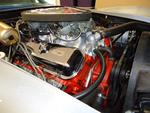
Tried to time my newly rebuilt 1971 LT-1 motor and the timing mark jumps all over the place and missfires. The engine builder said the engine ran fine on the dyno during breakin--only difference was he used his own plug wires and a regular distributor and no T.I system. Replaced the plug wires and still same problem. Sent the distributor, ignition coil and TI box back to Dave Fiedler--checked them out and replaced the ignition coil (GM new ignition coil) with an original TI coil. Still same problem. Am now in the process of replacing the TI wiring harness from Electric Limited with one from M & H Electric fabricators per Dave's recommendation. If this doesn't solve the problem, I don't what to try next. Have checked all the voltages but without an oscilloscope can't measure exact voltages while engine is running. Any suggestions? I will report back if new TI wiring harness solves the problem.
From: I tend to be leery of any guy who doesn't own a chainsaw or a handgun.
Originally Posted by wallifishrmn
Tried to time my newly rebuilt 1971 LT-1 motor and the timing mark jumps all over the place and missfires. The engine builder said the engine ran fine on the dyno during breakin--only difference was he used his own plug wires and a regular distributor and no T.I system. Replaced the plug wires and still same problem. Sent the distributor, ignition coil and TI box back to Dave Fiedler--checked them out and replaced the ignition coil (GM new ignition coil) with an original TI coil. Still same problem. Am now in the process of replacing the TI wiring harness from Electric Limited with one from M & H Electric fabricators per Dave's recommendation. If this doesn't solve the problem, I don't what to try next. Have checked all the voltages but without an oscilloscope can't measure exact voltages while engine is running. Any suggestions? I will report back if new TI wiring harness solves the problem.
Couple questions. Are the TI electronics an original circuit board or an aftermarket replacement? Was the "replaced" ignition coil a TI coil, or a points type coil?
The coil is an original TI coil and the circuit board was rebuilt and both were done and checked by D. Fiedler of TI Speciality. The engine was completely rebuilt and has 3 miles on it-no worn out parts.
From: I tend to be leery of any guy who doesn't own a chainsaw or a handgun.
Originally Posted by wallifishrmn
The coil is an original TI coil and the circuit board was rebuilt and both were done and checked by D. Fiedler of TI Speciality. The engine was completely rebuilt and has 3 miles on it-no worn out parts.
I understand that the replacement coil is an original TI coil, but I'm still unclear if the replaced/previous coil was also a TI coil.
Yes, the replaced coil was a GM licensed AC Delco TI ignition coil. The TI rebuilder said it puts out less voltage than a regular coil and should be replaced with a original coil. Numbers given to me were the following:
GM licensed AC Delco TI replacement coil: 22,000 volts
regular ignition coil: 24,000 volts
original GM TI ignition coil: 30,000+ volts
From: I tend to be leery of any guy who doesn't own a chainsaw or a handgun.
Originally Posted by wallifishrmn
Yes, the replaced coil was a GM licensed AC Delco TI ignition coil. The TI rebuilder said it puts out less voltage than a regular coil and should be replaced with a original coil. Numbers given to me were the following:
GM licensed AC Delco TI replacement coil: 22,000 volts
regular ignition coil: 24,000 volts
original GM TI ignition coil: 30,000+ volts
My first reaction is that sounds like some marketing claims, not engineering data. A coil when installed will only put out enough voltage to ionize/arc-over the plug gap. For the same plug gap and compression all three coils will put out the same voltage.
Maximum (theoretical open circuit) voltage out of a coil is determined by a combination of the primary inductance, the amperage, the turns ratio, and how fast the primary current is shut off. I doubt if any of those factors were used to come up with those numbers above.
The main concern when hooking up a coil to an original TI setup is to use a high Sec-Pri turns ratio coil to keep the primary winding flyback voltage "low" to keep from frying the TI internal switching transistor.
An oscilloscope, as you mentioned, would definitely help diagnose this issue.
02085 1971 Transistorized Ignition Extension Harness: ignition switch to t.i. harness $19.00 (M & H Electrical Fabricators)
Does a standard corvette without TI system have a different type harness/wires from the ignition switch to the TI harness??? Is this located inside the steering column or from the steering column connection to the TI harness??
The reason I am asking is when I purchased the car it had a HEI system and the TI system had been removed/disconnected. Any chance this harness was replaced with a standard harness or removed?? Would this cause the problem. I only replaced the TI harness and the ignition harness from the firewall to all the engine connections?
Hi w,
"Does a standard corvette without TI system have a different type harness/wires from the ignition switch to the TI harness??? Is this located inside the steering column or from the steering column connection to the TI harness??"
Have you looked at the sheet in the AIM that illustrates the installation of the T.I. system wiring and coil, and it's connection to the standard engine harness and to the ignition switch?
The TI harness has a 10ga PINK wire that goes to the ignition switch. That effectively bypasses the resistor wire built into the engine harness. At the ignition switch there is a 3 way jumper that plugs into the switch, then one leg to the TI and the other to the rest of the car. You have to remove the original wire from the switch connector and put the 3 way in it's place.
TimAT: does that mean if I replace the steering column or have it rebuilt they have to know it's for a TI system car? I had no idea there was a difference in the way the steering coulmn was wired between a regular corvette and a TI corvette. Can you tell if it''s wired correctly without removing the ignition switch--I assume the answer is No. Thank you for your help!!!!!
Yes-- look at the pink wire coming out of the ignition switch connector. If there is a single wire, it's not got the TI wiring. If there are 2 connectors from that pink one then it has the TI connector. IT's not the column that's different, only that jumper. Everything else is the same.
The one across the bottom of the print above- marked IGN Switch. That one runs thru the firewall to the pink wire at the connector. Unfortunatly, I don't have a picture of that jumper.
Sorry-- All that stuff is at home in MO and I'm in north Michigan until June. I do have a few pictures, but nothing that will help you..
I do have a couple .pdf files of wiring diagrams. I can map one out so you can tell which cavity the IGN wire for the TI tees into if that will help.
Take a look at the AIM-- K66, sheet 3. The AIM I have it's page 359. RH lower side of the page there is a note. See if that helps. The AIM I have is locked (@#*$Y^*@) so I can't print or even add bookmarks so I can find stuff.
The 71 TI system has a capacitor/condensor attached to the coil + terminal. This shown in the NCRS 1970-72 Corvette technical Information Manual and Judging Guide. J947452 DR 3MF is the number on the capacitor. What effect does it have on the TI system if it is bad???
Answer I found:Any external condenser should be connected to the coil (+) terminal only. As already pointed out, it is there for radio interference suppression only and plays no part in engine operation. For engine testing purposes it would be best to leave it disconnected.
Last edited by wallifishrmn; May 12, 2018 at 11:23 PM.
Reason: additional information









 T.I. System Problem