




AFR Head Broken Lash Cap

Team Owner


Joined: Apr 1999
Posts: 21,953
Likes: 1,445
From: Reno Nevada
2024 C3 of the Year Finalist- Modified

My caps are loose enough to pick off with a magnet or your fingers. It allows some oiling. My caps have a tiny hole in the middle.
Lighter weight valves in a sub 7500 rpm motor don't really need 235/625# You could unshim the valves to a taller installed height of something like 1.970 for example and your springs would run cooler and last longer. Another concern is the lifter wheels. Before going to the Crane Pro lifters I had wheel bearing failure. But I was also using excessive spring pressure.
Lighter weight valves in a sub 7500 rpm motor don't really need 235/625# You could unshim the valves to a taller installed height of something like 1.970 for example and your springs would run cooler and last longer. Another concern is the lifter wheels. Before going to the Crane Pro lifters I had wheel bearing failure. But I was also using excessive spring pressure.

Thread Starter
Melting Slicks

Joined: Nov 2000
Posts: 2,738
Likes: 53
From: Bogart GA
Update:
T&D sent me another set of stands that were much taller (B +150) but they were too tall. Had them send me the B +50 stands and using a 0.0550 shim, the geometry was nearly perfect. The pattern location could be better centered but I am happy with the overall results.
Any opinions regarding needle bearing roller tips? Are they worth the extra cost?
T&D sent me another set of stands that were much taller (B +150) but they were too tall. Had them send me the B +50 stands and using a 0.0550 shim, the geometry was nearly perfect. The pattern location could be better centered but I am happy with the overall results.
Any opinions regarding needle bearing roller tips? Are they worth the extra cost?
Last edited by KJL; Feb 26, 2019 at 05:08 PM.
Team Owner
Joined: Apr 1999
Posts: 21,953
Likes: 1,445
From: Reno Nevada
2024 C3 of the Year Finalist- Modified
Everybody has an idea about what is best. I think that the whole idea behind needle bearing is that oil can get in and lubricate better. Like high end motors even using roller cam bearings VS a flat bearing with an oil hole and groove.
Which ones are you looking at?
Which ones are you looking at?
Thread Starter
Melting Slicks
Joined: Nov 2000
Posts: 2,738
Likes: 53
From: Bogart GA
I am sending my T&D rockers in for inspection. I was thinking about having them swap out the current rollers to needle bearing rollers.
Also, do you correct the cam card lash values for rocker ratio?
I have read read convincing articles in support of doing this.
Also, do you correct the cam card lash values for rocker ratio?
I have read read convincing articles in support of doing this.
Team Owner
Joined: Apr 1999
Posts: 21,953
Likes: 1,445
From: Reno Nevada
2024 C3 of the Year Finalist- Modified
Yes there is science and math behind determing the correct lash numbers. But I started out working on solid roller motors back when the cam cards had big lash numbers
Those poorly designed cams just beat the crud out of the valve train and gave SR cam shafts a bad name for long term reliability. So you later started to see the lash settings get down to the high teens. Then people like me experimented with running 4-6 thou under the listed cam card without ill effects.
They have run spintron testing of race valve train under listed lash and it was determined that you have to have a certain amount of lash to make up for various heat indused expansion and binding is destructive
Right now on my. .685/.714 lift 434 sbc I have it cranked down to. 012/.014 hot which is. 004 less than the cam card using 1.6 RRs. I actually bought 8 of the 1.5s to drop exhaust lift because it is unneeded
What is it telling you to change the lash settings to
Those poorly designed cams just beat the crud out of the valve train and gave SR cam shafts a bad name for long term reliability. So you later started to see the lash settings get down to the high teens. Then people like me experimented with running 4-6 thou under the listed cam card without ill effects.
They have run spintron testing of race valve train under listed lash and it was determined that you have to have a certain amount of lash to make up for various heat indused expansion and binding is destructive
Right now on my. .685/.714 lift 434 sbc I have it cranked down to. 012/.014 hot which is. 004 less than the cam card using 1.6 RRs. I actually bought 8 of the 1.5s to drop exhaust lift because it is unneeded
What is it telling you to change the lash settings to
Thread Starter
Melting Slicks
Joined: Nov 2000
Posts: 2,738
Likes: 53
From: Bogart GA
The cam card specified in/ex at 0.018/0.02
correcred to 1.7 ratio 0.021/0.024. Seems like a lot. I am also in the process of measuring for my new push rods.
I also updated my spring pressure info in a previous post. Apparently my springs are heavier than I thought.
correcred to 1.7 ratio 0.021/0.024. Seems like a lot. I am also in the process of measuring for my new push rods.
I also updated my spring pressure info in a previous post. Apparently my springs are heavier than I thought.
Corvette Stories
The Best of Corvette for Corvette Enthusiasts

Top 10 Most Expensive Corvettes Ever Sold on Bring A Trailer
Brett Foote
10 Things Every Corvette Owner Needs (2026 Edition)
Michael S. Palmer
8 Most "Only Corvette Owners Understand" Quirks and Problems
Pouria Savadkouei
10 Reasons the C6 Z06 is Still A Performance Benchmark After 20 Years
Joe Kucinski
How Much Horsepower Every Corvette Engine "LOST" in 1972
Joe Kucinski
Top 10 DOs and DON'Ts for Protecting Your Convertible Top!
Michael S. Palmer
Top 10 Most Explosive Corvettes Ever Made: Power-to-Weight Ratio Ranked!
Joe Kucinski
150 hp to 1,250 hp: Every Corvette Generation Compared by the Specs That Matter
Joe Kucinski
8 Coolest Corvette Pace Cars (and Replicas) of All Time
Verdad Gallardo
Team Owner
Joined: Apr 1999
Posts: 21,953
Likes: 1,445
From: Reno Nevada
2024 C3 of the Year Finalist- Modified
All these were on high rpm racing motors with excessive spring pressures. so anyway years ago I was talking to a local sprint car building motor shop about what I needed for my Dart 227 cc heads in a sub 7500 rpm motor and the answer was with your valve train weight and racing type lobe ramps start with 210 to 215# and and replace then when they get down below 195#. 1.7's are a little harder on the springs with increased lift rates, but with light weight valve train I would be afraid of 225 and replace then when they weaken to the 205# range.
Another thing that people don't think about so often is the spring rate. You can have spring "A" with 210# seat and 600# at .700 lift and spring "B" with 260# seat and 600# at the same .700 lift. The 260 pound with a .024 lash and 1.7 rockers will beat up the wheels.
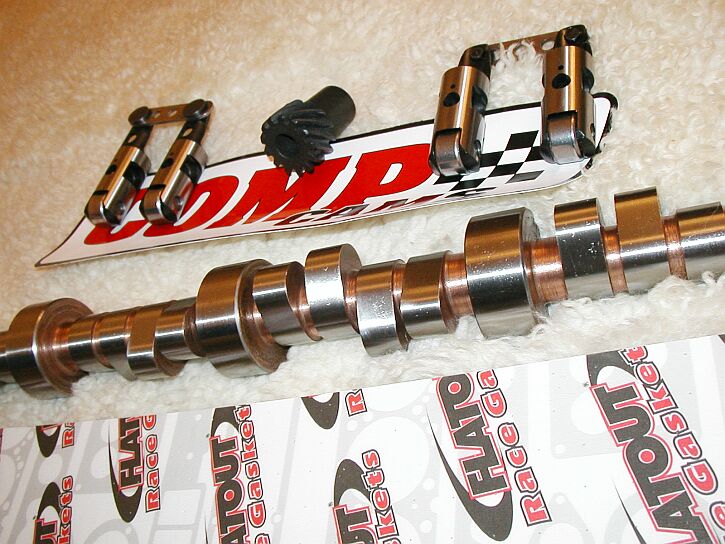
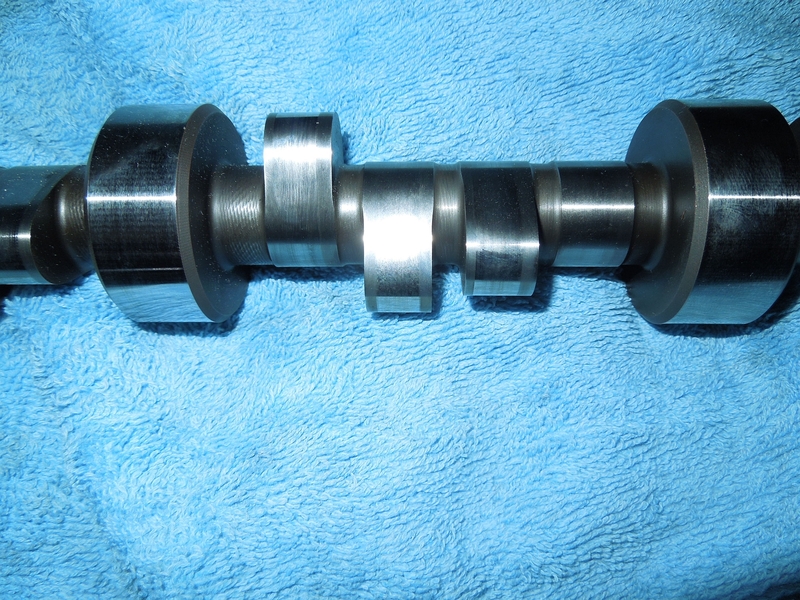
Lobe design. From the Comp Cams PDF sheets on lobe designs I order the high ramp rate high .200 lift durations and the slower closing ramp to not get valve bounce off the seat in the endurance racing lobe series of profiles.
These are my two motors present cams, Both are small base circles of about .980. billet custom grinds for lobes from the PDF designed to keep the valves open for the longest time at max CFM. Starting on page 71 for solid rollers.
http://www.compcams.com/Technical/Ca...terCatalog.pdf
Team Owner
Joined: Apr 1999
Posts: 21,953
Likes: 1,445
From: Reno Nevada
2024 C3 of the Year Finalist- Modified
Are you running new AFR eliminator heads with the small stem light weight valves. Tony Mamo posted on here about his new business and gave a link. He might be the true person to ask because he was in development of AFR heads for years.
I also use dual springs that are about $500 a set in my vette motors, so they have some superior harmonic properties and when I was racing replaced them kinda annually. I run taller installed heights to decrease seat and open pressure and have had good luck with longevity.
I also use dual springs that are about $500 a set in my vette motors, so they have some superior harmonic properties and when I was racing replaced them kinda annually. I run taller installed heights to decrease seat and open pressure and have had good luck with longevity.
Team Owner
Joined: Apr 1999
Posts: 21,953
Likes: 1,445
From: Reno Nevada
2024 C3 of the Year Finalist- Modified
Your installed height of under 2.00 inches would be slightly more than 250# seat and over 700# at your max lift. That is the type of springs used in 8600 rpm sprint car motors with .800 lift that might last a season
1.7 rockers with big lash gaps and big spring pressures is what destroyed your valve stem caps.

Race Director

Joined: Apr 2000
Posts: 17,676
Likes: 201
From: Who says "Nothing is impossible" ? I've been doing nothing for years.
AFR have been using smaller diameter valve stems for some time and you need to get the corrct lash caps or you will run into problems. You can't use the ordinary small block lash caps, they are too big.
Also the T&D rockers are designed to have the rocker roller tip to be straight across to the valve tip resulting in all the pushrods being in a perfect straight line from the lifter to valve pushrod pocket. One of the big problems with the shaft rockers is getting them aligned properly. I had to send mine back 2 times before I got the correct set.
Also the T&D rockers are designed to have the rocker roller tip to be straight across to the valve tip resulting in all the pushrods being in a perfect straight line from the lifter to valve pushrod pocket. One of the big problems with the shaft rockers is getting them aligned properly. I had to send mine back 2 times before I got the correct set.
Thread Starter
Melting Slicks
Joined: Nov 2000
Posts: 2,738
Likes: 53
From: Bogart GA
AFR have been using smaller diameter valve stems for some time and you need to get the corrct lash caps or you will run into problems. You can't use the ordinary small block lash caps, they are too big.
Also the T&D rockers are designed to have the rocker roller tip to be straight across to the valve tip resulting in all the pushrods being in a perfect straight line from the lifter to valve pushrod pocket. One of the big problems with the shaft rockers is getting them aligned properly. I had to send mine back 2 times before I got the correct set.
Also the T&D rockers are designed to have the rocker roller tip to be straight across to the valve tip resulting in all the pushrods being in a perfect straight line from the lifter to valve pushrod pocket. One of the big problems with the shaft rockers is getting them aligned properly. I had to send mine back 2 times before I got the correct set.