



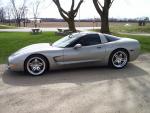

1982 Corvette Crossfire Injector Rebuild

Thread Starter
Heel & Toe


Joined: Feb 2017
Posts: 22
Likes: 3
From: Perth
 1982 Corvette Crossfire Injector Rebuild
I have a 1982 Crossfire and just about to Purchase New Injectors and Bits to fix, can anyone recommend anything else I should get whilst I am here, or advise if some parts are not needed?
So Far I have:
1 x ACDELCO 2173064 {#19160435} Professional - Front Injector
1 x ACDELCO 2173063 {#19160434} Professional -Rear Injector
2 x ACDELCO 2172382 {#19112316} Professional-Throttle Body Filter Kit
2 x WVE/AIRTEX/WELLS 2H1054 - Idle Air Control (IAC) Valve
1 x ACDELCO 2131545 Manifold Pressure (MAP) Sensor
1 x ACDELCO 213902 {#17111262}-Throttle Position Sensor (TPS)
1 x ACDELCO GF482 {#25055066} Professional - Fuel Filter
1 x ACDELCO 219606 {#19238101} Professional - Throttle Body Repair Kit (Can someone also tell me this will do both Units?)
Thanks in advance
So Far I have:
1 x ACDELCO 2173064 {#19160435} Professional - Front Injector
1 x ACDELCO 2173063 {#19160434} Professional -Rear Injector
2 x ACDELCO 2172382 {#19112316} Professional-Throttle Body Filter Kit
2 x WVE/AIRTEX/WELLS 2H1054 - Idle Air Control (IAC) Valve
1 x ACDELCO 2131545 Manifold Pressure (MAP) Sensor
1 x ACDELCO 213902 {#17111262}-Throttle Position Sensor (TPS)
1 x ACDELCO GF482 {#25055066} Professional - Fuel Filter
1 x ACDELCO 219606 {#19238101} Professional - Throttle Body Repair Kit (Can someone also tell me this will do both Units?)
Thanks in advance

Instructor
Joined: Aug 2016
Posts: 188
Likes: 40
From: Rockaway NJ
Many problems with the CFI are related to vacuum leaks and not individual components. Have you done your homework to understand how the crossfire works and have you purchased the shop manual? There’s a wealth of info in it. Have you identified specific issues that you are experiencing? Take advantage of the knowledge on this forum by posting a detailed description of your problems. Just replacing expensive components is not the way to go IMO.

Drifting


Joined: Mar 2008
Posts: 1,812
Likes: 441
From: Denver CO
Since your all in you also need the coolant temp sensor.You didnt say if its running bad or your just replacing .I have an 84 w/same set up and it ran like crap but threw no codes. After replacing everything like you and more, o2 sensor/cat. Still ran crappy. The only thing left was Computer. Replaced,runs like new.

Race Director


Joined: Apr 2009
Posts: 19,294
Likes: 2,754
From: Charlotte NC
As mentioned....due to I service these set-ups and have the tools to do it.
Knowing WHY you are doing this would be helpful. Erratic idle, 'hunting' idle and so on.
The TBI's are well known to wear at the point where the throttle shaft in the main body can wobble or have play in it due to NO BUSHINGS were used so it can wear out and have play in it...thus...causing a vacuum leak AFTER you Idle Air Control (IAC) valves. If they have play in the throttle shafts...they get sent out for rebuilding due to I do not waste my time doing this due to I do not have the reamers and bushing to do it correctly.
Having a scanner is a MUST but some tests can be done with a volt meter and jumper leads but it can be a royal pain in the backside doing it that way. Watching you values of your IAC's and MAP sensor voltage can tell you many things.
Setting up your balance of these TBI's requires either a manometer ( which I have) along with plugs for the IAC passages which I also have to get them balanced. This procedure of balancing is outlined in the 1982 Corvette service manual from GM. Now some have used a .0015" feeler gauge but I have never tried it do that because the manometer I have is so precise...why waste my time trying it another way when I know it works perfectly.
I also replace the intake gaskets and they are Fel-Pro part number MS 91440. If you do this pay very careful attention to ALL of the fasteners and WHERE they are located and put them back where they came out of. I draw the schematic of the shape of the top plate of the intake in a piece of cardboard and jab holes in it where the bolts are located and put these bolts in each corresponding hole in my schematic. I also make the schematic front and rear also.
Being able to correctly check your fuel pressure can be a pain due to a specific type of set-up is needed to do this so you KNOW that your fuel pressure is correct. IF the fuel pressure is NOT correct...you can be chasing your tail ASSUMING that it is fine.
The reason some of us are replying to you in this manner is that I have had customers who have had trouble codes and replaced every sensor they could ONLY to find out that they wasted their time and money due to not changing out the computer or the module in the distributor that is correct for a 1982, This is why kind of knowing what you are doing and having previous experience pays off when trying to find a particular drivability problem. Especially when no 'check engine' light is coming on So many issues can be fuel related such as water in the fuel tank and new fuel filter installed.....so it is hard to say any more about this because I can go on and on on what it can be...but not knowing what it is...if anything at all.....I am done.
DUB
Knowing WHY you are doing this would be helpful. Erratic idle, 'hunting' idle and so on.
The TBI's are well known to wear at the point where the throttle shaft in the main body can wobble or have play in it due to NO BUSHINGS were used so it can wear out and have play in it...thus...causing a vacuum leak AFTER you Idle Air Control (IAC) valves. If they have play in the throttle shafts...they get sent out for rebuilding due to I do not waste my time doing this due to I do not have the reamers and bushing to do it correctly.
Having a scanner is a MUST but some tests can be done with a volt meter and jumper leads but it can be a royal pain in the backside doing it that way. Watching you values of your IAC's and MAP sensor voltage can tell you many things.
Setting up your balance of these TBI's requires either a manometer ( which I have) along with plugs for the IAC passages which I also have to get them balanced. This procedure of balancing is outlined in the 1982 Corvette service manual from GM. Now some have used a .0015" feeler gauge but I have never tried it do that because the manometer I have is so precise...why waste my time trying it another way when I know it works perfectly.
I also replace the intake gaskets and they are Fel-Pro part number MS 91440. If you do this pay very careful attention to ALL of the fasteners and WHERE they are located and put them back where they came out of. I draw the schematic of the shape of the top plate of the intake in a piece of cardboard and jab holes in it where the bolts are located and put these bolts in each corresponding hole in my schematic. I also make the schematic front and rear also.
Being able to correctly check your fuel pressure can be a pain due to a specific type of set-up is needed to do this so you KNOW that your fuel pressure is correct. IF the fuel pressure is NOT correct...you can be chasing your tail ASSUMING that it is fine.
The reason some of us are replying to you in this manner is that I have had customers who have had trouble codes and replaced every sensor they could ONLY to find out that they wasted their time and money due to not changing out the computer or the module in the distributor that is correct for a 1982, This is why kind of knowing what you are doing and having previous experience pays off when trying to find a particular drivability problem. Especially when no 'check engine' light is coming on So many issues can be fuel related such as water in the fuel tank and new fuel filter installed.....so it is hard to say any more about this because I can go on and on on what it can be...but not knowing what it is...if anything at all.....I am done.
DUB

Melting Slicks


Joined: Oct 2003
Posts: 2,198
Likes: 840
From: Chapel Hill NC
2025 c3 ('68-'73) of the Year Finalist - Unmodified
2025 C4 of the Year Finalist - Unmodified
2025 C8 Stingray of the Year Finalist - Unmodified
What they said above.
I currently have my second 82. Don't drive is hardly at all but recently it started idling poorly and had slightly rough acceleration. Right away I though Cross Fire issues. Changed the plugs, cap, and rotor and it now purrs like a kitten.
I currently have my second 82. Don't drive is hardly at all but recently it started idling poorly and had slightly rough acceleration. Right away I though Cross Fire issues. Changed the plugs, cap, and rotor and it now purrs like a kitten.

Le Mans Master

Joined: May 1999
Posts: 6,692
Likes: 29
From: Texas
To plug the IAC passages, just cut about a 1-1/2" strip of bicycle tube, roll it up, stick in passage, put duct tape over top. Work. Guarantee it. Bought the plugs years ago and they could not completely block off air.
Get a vacuum guage to read in inches water vacuum. Very accurate also and easy to store.
Get a vacuum guage to read in inches water vacuum. Very accurate also and easy to store.
Thread Starter
Heel & Toe
Joined: Feb 2017
Posts: 22
Likes: 3
From: Perth
Thanks to all on your replies
I purchased this Vette 18 Months ago as I really like the 82's and car looked awesome, however I was told that they had not driven the Car for over 12 years, as it had a Fuel problem and they did not bother with it and just pulled a Tarp over and left it out in a yard, until they decided to sell.
When I got the Car home I checked the Fuel Pump, the Fuel Hose inside the Tank was all but gone so ordered a New Pump Kit and Filter & installed. Cleaned Tank and added New Fuel, Coolant etc. One Injectors started to work.
I cleaned up both Injectors and finally got both spraying, but had a Lot of Smoke & fumes.
As I am not a Mechanic I decided to get a Mobile mechanic around and he started working on my car, after a few months I got a 2nd mechanic involved. Now after 18 months I still have a Car that is not licensed and I really want it back on the road. To be fair both mechanics have done a good job as they have gone through most of the car and replaced what was required, however I think the Cross Fire was left till last as may have been the more problem area.
The Car doesn't smoke much now, however it still blows stuff out the exhaust.
It does start 1st time but runs rough and then gets worse before shutting down. I have taken it around the block but is running pretty poor.
I have taken a Video of it
Let me know your input as I am not sure where to go from here.
I did speak to another shop and they said they will fit Parts if I supply, hence I am now clutching at straws.
I am in Australia so if I need parts I will order them in from the States and get them shipped, just want to make sure I don't miss any out that may be required.
Thanks for your help
I purchased this Vette 18 Months ago as I really like the 82's and car looked awesome, however I was told that they had not driven the Car for over 12 years, as it had a Fuel problem and they did not bother with it and just pulled a Tarp over and left it out in a yard, until they decided to sell.
When I got the Car home I checked the Fuel Pump, the Fuel Hose inside the Tank was all but gone so ordered a New Pump Kit and Filter & installed. Cleaned Tank and added New Fuel, Coolant etc. One Injectors started to work.
I cleaned up both Injectors and finally got both spraying, but had a Lot of Smoke & fumes.
As I am not a Mechanic I decided to get a Mobile mechanic around and he started working on my car, after a few months I got a 2nd mechanic involved. Now after 18 months I still have a Car that is not licensed and I really want it back on the road. To be fair both mechanics have done a good job as they have gone through most of the car and replaced what was required, however I think the Cross Fire was left till last as may have been the more problem area.
The Car doesn't smoke much now, however it still blows stuff out the exhaust.
It does start 1st time but runs rough and then gets worse before shutting down. I have taken it around the block but is running pretty poor.
I have taken a Video of it
I did speak to another shop and they said they will fit Parts if I supply, hence I am now clutching at straws.
I am in Australia so if I need parts I will order them in from the States and get them shipped, just want to make sure I don't miss any out that may be required.
Thanks for your help
Last edited by rwlw67; Nov 24, 2018 at 10:40 PM. Reason: it has a hole lot of strange codes in this Section?
Corvette Stories
The Best of Corvette for Corvette Enthusiasts

5 Best & 5 Worst Corvette Daily Drivers
Joe Kucinski
The Headlights of Every Corvette Generation Explained
Joe Kucinski
5 Best & 5 Most Overrated Corvette Track Packages of All Time!
Joe Kucinski
Every 2027 Corvette Engine Explained
Joe Kucinski
Designer Imagines A Corvette That Looks More Like a Corvette Than the Corvette
Verdad Gallardo
10 Ugly Corvettes That We Still Kinda Love
Joe Kucinski
Top 10 Most Expensive Corvettes Ever Sold on Bring A Trailer
Brett Foote
10 Things Every Corvette Owner Needs (2026 Edition)
Michael S. Palmer
8 Most "Only Corvette Owners Understand" Quirks and Problems
Pouria Savadkouei
Thread Starter
Heel & Toe
Joined: Feb 2017
Posts: 22
Likes: 3
From: Perth
1982 Corvette Crossfire Injector Rebuild
Thanks All
A little bit more about this story. I Purchased this Vette some 18 months ago, Person I got it from said they had a Fuel Issue and parked it up in a Yard and threw a Tarp over it and forgot about it. That was some 12 years ago!!.
When I got it home I checked the Fuel Tank and found the Fuel Hose had just about dissolved in the Tank so replaced with new Fuel Pump, Filter and did all the other liquid replacements.
Got it started but only one injectors was working so did more cleaning and finally they both worked. Car was really smoking and spitting out stuff from Exhaust.
As I am not a mechanic I employed a Mobile Mechanic to do work on the car as he had time and he slowly went through the car replacing items as they came up. I have since had another Mechanic review but this has all taken a very long time as they have only been doing it when time permits. I now have the car back and would like to get it back on the road and the last thing that is required is for it to run properly, as it is running very rough. I have taken it around the block but runs very poor.
I have taken a Video
Doesn't really smoke now but still spitting stuff out exhaust and smells like fumes so not sure if running rich?
I have contacted another company now and they said that they will fit parts if I get them. I think my issue is trying to find a mechanic that knows Cross Fire Injection?
I am in Australia so any parts I get I need to order in and don't want to get caught short.
Thanks for all your input
A little bit more about this story. I Purchased this Vette some 18 months ago, Person I got it from said they had a Fuel Issue and parked it up in a Yard and threw a Tarp over it and forgot about it. That was some 12 years ago!!.
When I got it home I checked the Fuel Tank and found the Fuel Hose had just about dissolved in the Tank so replaced with new Fuel Pump, Filter and did all the other liquid replacements.
Got it started but only one injectors was working so did more cleaning and finally they both worked. Car was really smoking and spitting out stuff from Exhaust.
As I am not a mechanic I employed a Mobile Mechanic to do work on the car as he had time and he slowly went through the car replacing items as they came up. I have since had another Mechanic review but this has all taken a very long time as they have only been doing it when time permits. I now have the car back and would like to get it back on the road and the last thing that is required is for it to run properly, as it is running very rough. I have taken it around the block but runs very poor.
I have taken a Video
I have contacted another company now and they said that they will fit parts if I get them. I think my issue is trying to find a mechanic that knows Cross Fire Injection?
I am in Australia so any parts I get I need to order in and don't want to get caught short.
Thanks for all your input

Burning Brakes

Joined: Sep 2013
Posts: 1,206
Likes: 365
From: The Motor City
Good stuff here - thanks for your inquiry as it helps others.
My only insight from experience is to be very calculated and wary about doing a full-on parts replacements all at the same time even though "the patient's on the table". While it feels liberating to have all of the installed & rebuilt parts and bits behind you and a full step to peace of mind/driving nirvana, don't do it - - because, you'll complicate your inevitable back-tracking process. Something will need revisiting to correct or tweak so measure your steps. For example I replaced my original AIC motors just for precautionary purposes and not one, but both were defective (I find in my annual moments of weakness that I can trust the forum's parts sponsors stuff far more than the Rock Auto, eBay stuff, especially on niche parts - be careful). But, if I had overhauled the TB, and replaced ignition, driveability (MAP), and a couple of other sensors it would have required going back up stream, wasting hours (let alone money, but not really - some of the components you mention had a 10 year max design life.
As an aside, I replaced my fuel pump and sender a couple of years ago. The sender failed (defective sender ground weld) after two months. When I pulled it I noticed that the small pump-to-sender connector hose was already as soggy and degraded as the 34 year old OE hose was! The pump that I spontaneously picked up from O'Reillys Auto Parts (large US chain) included a peoples communist china made hose in the kit that was nowhere near fuel rated and was already nearing failure mode. I was grateful for the peoples communist china sender failure that time (only) because the failed hose would have stranded us.
Good luck mate
My only insight from experience is to be very calculated and wary about doing a full-on parts replacements all at the same time even though "the patient's on the table". While it feels liberating to have all of the installed & rebuilt parts and bits behind you and a full step to peace of mind/driving nirvana, don't do it - - because, you'll complicate your inevitable back-tracking process. Something will need revisiting to correct or tweak so measure your steps. For example I replaced my original AIC motors just for precautionary purposes and not one, but both were defective (I find in my annual moments of weakness that I can trust the forum's parts sponsors stuff far more than the Rock Auto, eBay stuff, especially on niche parts - be careful). But, if I had overhauled the TB, and replaced ignition, driveability (MAP), and a couple of other sensors it would have required going back up stream, wasting hours (let alone money, but not really - some of the components you mention had a 10 year max design life.
As an aside, I replaced my fuel pump and sender a couple of years ago. The sender failed (defective sender ground weld) after two months. When I pulled it I noticed that the small pump-to-sender connector hose was already as soggy and degraded as the 34 year old OE hose was! The pump that I spontaneously picked up from O'Reillys Auto Parts (large US chain) included a peoples communist china made hose in the kit that was nowhere near fuel rated and was already nearing failure mode. I was grateful for the peoples communist china sender failure that time (only) because the failed hose would have stranded us.
Good luck mate
Race Director
Joined: Apr 2009
Posts: 19,294
Likes: 2,754
From: Charlotte NC
Doesn't really smoke now but still spitting stuff out exhaust and smells like fumes so not sure if running rich?
I have contacted another company now and they said that they will fit parts if I get them. I think my issue is trying to find a mechanic that knows Cross Fire Injection?
I am in Australia so any parts I get I need to order in and don't want to get caught short.
Thanks for all your input
I have contacted another company now and they said that they will fit parts if I get them. I think my issue is trying to find a mechanic that knows Cross Fire Injection?
I am in Australia so any parts I get I need to order in and don't want to get caught short.
Thanks for all your input
This is one I made due to your car does NOT have a fuel test port. At the end of the rubber hose where the fitting is is where I thread on my fuel pressure gauge.

Having a scanner would be a help also but like some who own these cars do...they get around it by doing test with other tools. It is kind of hard to know if your engine is in OPEN LOOP or CLOSED LOOP without a scanner.
As for the rich smell of fuel that all depends on what the MAP voltage is. Which will tell you if you have a vacuum leak. And your fuel pressure can also add to this so there is a lot going on that could be wrong including any ignition issues you may have.
Also be aware that the Idle Air Control (IAC) valves will NOT be correctly set UNTIL you drive it and get it above 35 MPH for a short distance. So expecting that the engine will idle perfectly when all has been done is very likely NOT going to happen until it is driven.
DUB.
Thread Starter
Heel & Toe
Joined: Feb 2017
Posts: 22
Likes: 3
From: Perth
1982 Corvette Crossfire Injectors
Thanks guys, I think I am understanding it will not be Plug & Play!!
I am going to go through each thing starting from the top I guess, as I would love to be able to try and get this solved myself.
1st Item:
Purchase a Scanner - could you recommend any as have just done a Search and the ones my local Auto centre have seem to start from 1996 onwards, example http://www.boschdiytools.com.au/diy/obd2220?
Also found this, is this doing the same thing as what the Scanner would and / or is the Scanner better ?
1982 Corvette (L83 Crossfire) models had a more detailed ECM, much like later vehicles. The location of the ALDL connector is under the center console ash tray.
Pin "B" is the diagnostic enable pin and pin "A" is ground. Grounding pin "B" to enable the diagnostic readout of the ECM/PCM.
To recover the codes, short pins "A" and "B" together using a small section of electrical wire or paper clip.
With the ignition turned OFF, short pins "A" and "B" on the ALDL.
Turn IGN ON (but not to RUN).
The "Check Engine" light (early C4s) or "SYS" light (later C4s) will flash a Code 12 (a single flash followed by two flashes) and will repeat three times (Flash (pause) Flash Flash (long pause), Flash (pause) Flash Flash (long pause), Flash (pause) Flash Flash (long pause).
Code 12 is a delimiter or marker code to show where the error code string begins and ends.
After the three Code 12 flashes, you will either get an error code (or codes) or you will get another string of Code 12 flashes if there are no trouble codes stored.
All codes are repeated three times with a long pause between each code group (36 or Flash Flash Flash pause followed by six flashes, repeated three times, followed by a long pause with any additional codes stored then flashed).
The "Check Engine/System" light on with engine running means the condition(s) are currently present. If the light is not on during RUN operation, the limits were exceeded at some point in time and the event was recorded in memory, but the reading has since returned to the normal operating range.
Remember to remove the shorting device from the connector after you have read the codes.
Clearing the Codes
To clear the codes from memory, remove the negative battery cable for a minimum of 10 seconds.
Disconnecting the battery will clear all stored codes and any stored memory (radio button presets, clock, trip odometer, average gas mileage memory, power seats). Your ECM/PCM computer will also have to relearn timing/mixture/exhaust emissions.
Make absolutely certain the ignition key is turned OFF. If you connect the battery with the ignition switch ON, you can destroy the ECM/PCM module.
Once I get the codes I will go from there.
I am also expecting to receive next week the following Books I have ordered:
Haynes Repair manual 1968-1982
Motorbooks - Corvette 1966-1982 Shop Manual
I am going to go through each thing starting from the top I guess, as I would love to be able to try and get this solved myself.
1st Item:
Purchase a Scanner - could you recommend any as have just done a Search and the ones my local Auto centre have seem to start from 1996 onwards, example http://www.boschdiytools.com.au/diy/obd2220?
Also found this, is this doing the same thing as what the Scanner would and / or is the Scanner better ?
1982 Corvette (L83 Crossfire) models had a more detailed ECM, much like later vehicles. The location of the ALDL connector is under the center console ash tray.
Pin "B" is the diagnostic enable pin and pin "A" is ground. Grounding pin "B" to enable the diagnostic readout of the ECM/PCM.
To recover the codes, short pins "A" and "B" together using a small section of electrical wire or paper clip.
With the ignition turned OFF, short pins "A" and "B" on the ALDL.
Turn IGN ON (but not to RUN).
The "Check Engine" light (early C4s) or "SYS" light (later C4s) will flash a Code 12 (a single flash followed by two flashes) and will repeat three times (Flash (pause) Flash Flash (long pause), Flash (pause) Flash Flash (long pause), Flash (pause) Flash Flash (long pause).
Code 12 is a delimiter or marker code to show where the error code string begins and ends.
After the three Code 12 flashes, you will either get an error code (or codes) or you will get another string of Code 12 flashes if there are no trouble codes stored.
All codes are repeated three times with a long pause between each code group (36 or Flash Flash Flash pause followed by six flashes, repeated three times, followed by a long pause with any additional codes stored then flashed).
The "Check Engine/System" light on with engine running means the condition(s) are currently present. If the light is not on during RUN operation, the limits were exceeded at some point in time and the event was recorded in memory, but the reading has since returned to the normal operating range.
Remember to remove the shorting device from the connector after you have read the codes.
Clearing the Codes
To clear the codes from memory, remove the negative battery cable for a minimum of 10 seconds.
Disconnecting the battery will clear all stored codes and any stored memory (radio button presets, clock, trip odometer, average gas mileage memory, power seats). Your ECM/PCM computer will also have to relearn timing/mixture/exhaust emissions.
Make absolutely certain the ignition key is turned OFF. If you connect the battery with the ignition switch ON, you can destroy the ECM/PCM module.
Once I get the codes I will go from there.
I am also expecting to receive next week the following Books I have ordered:
Haynes Repair manual 1968-1982
Motorbooks - Corvette 1966-1982 Shop Manual

Heel & Toe
Joined: Jul 2017
Posts: 18
Likes: 1
From: Spring Hill KANSAS
Yes. You can pull codes without a scanner on your 82. Use a paperclip like you mentioned. You should get a code 12 when you check because you are not getting a pulse from the distributor. There is not a code 36 available for the 1982 model. If you do get a scanner make sure you get one for the ALDL connector since it is not the same as the newer vehicles with a OBD or a OBD2 connector. If you do check and have any codes post them and I will be glad to tell you what they are. If the check engine light is not on when the engine is running then there are no current faults that are detected by the computer.
Back when the car was newer the dealership used a monitor 2000. You can find them on ebay at times for a reasonable price. Any stored code on that model that was set but not active will be erased by the computer after 50 cycles of the ignition switch.
Back when the car was newer the dealership used a monitor 2000. You can find them on ebay at times for a reasonable price. Any stored code on that model that was set but not active will be erased by the computer after 50 cycles of the ignition switch.
Race Director
Joined: Apr 2009
Posts: 19,294
Likes: 2,754
From: Charlotte NC
The scanner you purchase MUST be capable to be used on your year model due to way GM sends the information to the scanner. So just make sure it will work on your year model/era . Call their tech line or contact them in whatever way you can and MAKE SURE it will work.
Your car is and OBD-1 and NOT an OBD-2( often times written using Roman numerals such as OBD-I and OBD-II)...thus the trouble code will stay in the ECM's memory until you clear it out manually. An OBD 2 system WILL remove the trouble code if it is no longer present after 50 cycles of the ignition.
As written in the GM service manual on page 6E-16.
" The trouble code memory is fed a continuous 12 volts even with the key in the "OFF" position. After a fault has been corrected, it will be necessary to remove this voltage to clear any stored coeds. Voltage is removed by removing the 20 amp fuse located next to the battery for 10 seconds." So NO NEED in removing your negative battery cable.
Some scanners also have the capability in the tool and software to 'CLEAR CODES" and thus makes it so you do not have to do anything but press a few selective buttons on your scanner.
Every time I 'CLEAR CODES'...I verify that I have done so and NOT assume they are cleared out. So in the event you have the CHECK ENGINE light come on you still do not have the pervious trouble code in the system. I work on these cars and I can often times have 5 or 6 codes. I record them and then clear them out and go drive the car and see which ones come back on so I am NOT running diagnostics on a trouble code that was not cleared out by the last technician.
The trouble codes you may see are:
Code 13- Oxygen sensor issue
Code 14- Coolant sensor voltage is low
Code15- Coolant sensor voltage is too high
Code 21-Throttle Position Sensor (TPS)voltage is too high
Code 22- Throttle opposition Sensor (TPS) voltage is too low
Code 24- Vehicle Speed Sensor ( VSS) EMC is not receiving the signal
Code 33- Manifold Air Pressure Sensor circuit ( MAP)
Code 34- Manifold Air Pressure Sensor circuit (MAP)
Code 42- Electronic Spark Timing monitor (EST) is open or grounded
Code 43- Electronic Spark Control signal (ESC) is in retard mode.
Code 44- Lean exhaust system This Means you have LEAN OXYGEN in the exhaust...thus means your fuel is RICH
Code 45 Rich exhaust system This means you have RICH OXYGEN in the exhaust...thus you are LEAN on fuel. *** This can be due to vacuum leaks and also an exhaust gasket leak near the Oxygen sensor or at the exhaust manifold at the cylinder heads.
Code 51- PROM check
Code 55- ECM. Indicates an faulty or bad ECM.
FUEL PRESSUE is critical also due to if it is too low it can set codes that deal with the lean/rich exhaust.
DUB
Your car is and OBD-1 and NOT an OBD-2( often times written using Roman numerals such as OBD-I and OBD-II)...thus the trouble code will stay in the ECM's memory until you clear it out manually. An OBD 2 system WILL remove the trouble code if it is no longer present after 50 cycles of the ignition.
As written in the GM service manual on page 6E-16.
" The trouble code memory is fed a continuous 12 volts even with the key in the "OFF" position. After a fault has been corrected, it will be necessary to remove this voltage to clear any stored coeds. Voltage is removed by removing the 20 amp fuse located next to the battery for 10 seconds." So NO NEED in removing your negative battery cable.
Some scanners also have the capability in the tool and software to 'CLEAR CODES" and thus makes it so you do not have to do anything but press a few selective buttons on your scanner.
Every time I 'CLEAR CODES'...I verify that I have done so and NOT assume they are cleared out. So in the event you have the CHECK ENGINE light come on you still do not have the pervious trouble code in the system. I work on these cars and I can often times have 5 or 6 codes. I record them and then clear them out and go drive the car and see which ones come back on so I am NOT running diagnostics on a trouble code that was not cleared out by the last technician.
The trouble codes you may see are:
Code 13- Oxygen sensor issue
Code 14- Coolant sensor voltage is low
Code15- Coolant sensor voltage is too high
Code 21-Throttle Position Sensor (TPS)voltage is too high
Code 22- Throttle opposition Sensor (TPS) voltage is too low
Code 24- Vehicle Speed Sensor ( VSS) EMC is not receiving the signal
Code 33- Manifold Air Pressure Sensor circuit ( MAP)
Code 34- Manifold Air Pressure Sensor circuit (MAP)
Code 42- Electronic Spark Timing monitor (EST) is open or grounded
Code 43- Electronic Spark Control signal (ESC) is in retard mode.
Code 44- Lean exhaust system This Means you have LEAN OXYGEN in the exhaust...thus means your fuel is RICH
Code 45 Rich exhaust system This means you have RICH OXYGEN in the exhaust...thus you are LEAN on fuel. *** This can be due to vacuum leaks and also an exhaust gasket leak near the Oxygen sensor or at the exhaust manifold at the cylinder heads.
Code 51- PROM check
Code 55- ECM. Indicates an faulty or bad ECM.
FUEL PRESSUE is critical also due to if it is too low it can set codes that deal with the lean/rich exhaust.
DUB
Thread Starter
Heel & Toe
Joined: Feb 2017
Posts: 22
Likes: 3
From: Perth
To all who came back to me in my Thread, thanks so much for your input.
After going through a couple of mechanics I was starting to clutch at straws by wanting to but anything to get my Car on the road, turns out that the 3rd Mechanic had a look and found out the one of the Plugs was Bad, so after a New Set she is purring like a Kitten.
Yesterday took it over the Transport Department and got it passed, today I got it registered so Saturday will be out for a Drive - Yah
After nearly 2 years off the road in my garage I can sigh a breath of relief.
Thanks again for your input and saving in $$$ not buying parts that I did not need. Now I can spend the money on making her look the part.
Richard
After going through a couple of mechanics I was starting to clutch at straws by wanting to but anything to get my Car on the road, turns out that the 3rd Mechanic had a look and found out the one of the Plugs was Bad, so after a New Set she is purring like a Kitten.
Yesterday took it over the Transport Department and got it passed, today I got it registered so Saturday will be out for a Drive - Yah
After nearly 2 years off the road in my garage I can sigh a breath of relief.
Thanks again for your input and saving in $$$ not buying parts that I did not need. Now I can spend the money on making her look the part.
Richard

Safety Car


Joined: Nov 2005
Posts: 3,532
Likes: 1,185
From: Arizona - If you don’t know CFI, STOP proliferating the myths around it...
Curious, where in Australia are you exactly? If you're close, I have a guy in Australia that I can hook you up with and as far as I know has the fasted 84 NA CFI car in the world that now runs 12.20s with our manifold on it. Ben73 is his screen name and he is VERY knowledgeable about CFI and knows how to make em run. I also know that he recently purchased a dyno dynamics dyno for his garage, must be nice. I used a DD dyno to tune mine, but didn't go to Australia to do it. LOL Good luck and post up where you are at. 