When you click on links to various merchants on this site and make a purchase, this can result in this site earning a commission. Affiliate programs and affiliations include, but are not limited to, the eBay Partner Network.
Once again I am requesting your experienced input . I am well into my first C3 Corvette project and need advice regarding the conflicting oppinions I am reading on many Chevy Hot Rod and muscle car forums. I have a moderate 77' SBC motor set up with a stroker crank (383) , small B&M 162 street blower, Quick Fuel blower carb, AFR heads, mild street/strip cam and long tube headers. I am using an ACCEL HEI distributor with MSD 8.5 plug wires. This setup runs fine with a fair amount of spirit with no misfiring through 5,500 RPM which I will not exceed. I've read in 50% of the online forum posts that I should drill holes in the HEI cap to release corrosive ionized -charged air that builds within the cap or risk serious corrosion of my distributor. Now if this is true, how about water in the air here in New England's climate entering the cap through drilled holes and creating trouble. Note-I don't drive the car in the rain and don't wet down the entire car for washing either but often we have fog and heavy humidity spring and summer off and on.
I'd like to preserve the parts I have so I would appreciate hearing from mechanics who have experience with HEI set ups .
Thank you many times over . These past seven years I have learned a great deal about these cars here and been able to apply it to my own modestly bugeted Corvette build
.
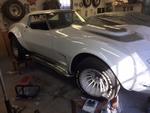
I'm glad that you think so, compared to the amazing builds that I have seen here and online, it's pretty blue collar basic! It sure could use a good exterior clean up and polishing but with a great deal of repairs and upgrades throughout this car remaining , that will have to wait . This motor has many rebuilt used parts to keep it on a very modest budget.
MSD has been advising the holes in the cap forever. It's to allow the ionized air out of the cap. Ionized air allows electricity to jump a gap easier and so allows cross firing from jumping between terminals. I have never had to do this but I have heard of people having a miss they say they got rid of from drilling holes in the cap.
Even though a points distributor or an HEI never had hole in it for the ozone rich environment . I DO KNOW for FACT that GM did change the Opti-spark distributors in the later C4 era models that DID have a ported vacuum hose going to the distributor cap that was redesigned for this hose and also a fitting in the housing so air can flow thorough it. And they also installed a check valve so no chance of fuel vapors getting into the distributor.
DO I do it on a points distributor or HEI...no I do not. I do work for customers who may or may not keep the car. And if they keep an eye on parts..they should catch it before it goes to a catastrophic state of despair.
I've seen both points & HEI distributors with pencil eraser-size holes in BASE which are covered with fine metal mesh screen (spark arrestor?). I may still have a NOS Bluepoint/Accel or Mallory dist with same. Seems those VENTED distributors were for MARINE use and recall it seems it is (or was) a US Coast Guard safety requirement to prevent gas-fume explosions. I don't see any need for this in a car much less holes in cap. I do agree with periodic spraying dist innards with some light oil.
-edit-
correction above NOS dist is not Bluepoint, instead it is Echlin. Company-brand Accel was formed from Echlin. The NOS dual-point, tach-drive Echlin piece I have (somewhere) is very well designed and made.
Last edited by jackson; Dec 14, 2018 at 08:57 AM.
Reason: correct from bluepoint to echlin
I've been running these SB Chevys for 40+ years, and have never drilled a hole, or had much in the way of ignition problems. Keep things in that distributor clean and well serviced and you should have zero problems.
I've seen both points & HEI distributors with pencil eraser-size holes in BASE which are covered with fine metal mesh screen (spark arrestor?). I may still have a NOS Bluepoint/Accel or Mallory dist with same. Seems those VENTED distributors were for MARINE use and recall it seems it is (or was) a US Coast Guard safety requirement to prevent gas-fume explosions. I don't see any need for this in a car much less holes in cap. I do agree with periodic spraying dist innards with some light oil.
Yes. I have rebuilt marine dizzys and alternators. The Mallory marine caps are blue, street are red, and have a small o-ring at the bottom.
MSD has been advising the holes in the cap forever. It's to allow the ionized air out of the cap. Ionized air allows electricity to jump a gap easier and so allows cross firing from jumping between terminals.
Why they do that?? and every once in a while my 355 engine will get a rough idle and sometimes just slightly, and most times smooth as silk.....I thinking it was the plugs....Ford auto---- parts house outta stock on the L98 plugs by GM or others......Never heard of drilling holes in the dizzy cap, much less where....my engine is a highly modified LT1 FI injecton setup with HEI up top where God intended everyone knows sparks and water don't mix......
Why they do that?? and every once in a while my 355 engine will get a rough idle and sometimes just slightly, and most times smooth as silk.....I thinking it was the plugs....Ford auto---- parts house outta stock on the L98 plugs by GM or others......Never heard of drilling holes in the dizzy cap, much less where....my engine is a highly modified LT1 FI injecton setup with HEI up top where God intended everyone knows sparks and water don't mix......
I think you might have read into the previous comment incorrectly. The HEI cap is a larger diameter thus the contact points where the spark plug wires are attached a further apart....versus a small diameter cap like on an MSD cap which would obviously bring them much closer together add allow arching.. It is not the air gap between the rotor button and contact point inside the cap that he was referring to...unless I read it wrong and you read it correctly.
As for spark plugs. I just got a set of the AC Delco FR5LS plugs that are correct for a 1989 Corvette....which is an L98 engine. I was told by GM POWERTRAIN when I called then that the 41-808 and 41-627 are also acceptable plugs to use also.













 Corvette Mechanics please assist :